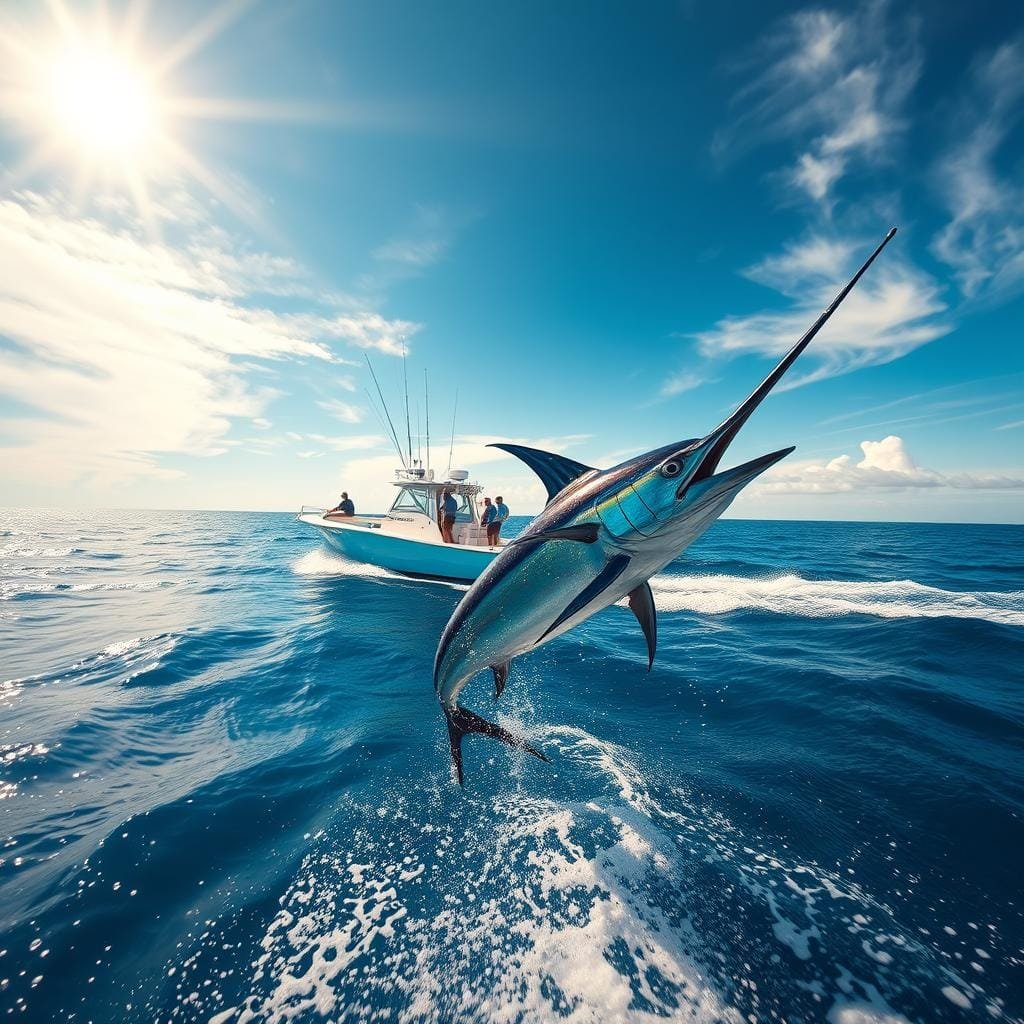
Marlin fishing is exciting and shows off an angler’s skill. It’s not just about the fight. It’s a dance with the sea’s biggest creatures.
Marlin are huge and full of energy. They are the top goal for sportfishers everywhere. This guide will help you catch these ocean giants.
Knowing how to catch marlin is key. Marlin are strong and can empty a spool. They also jump high, making fishing a real challenge.
It’s not just a sport. It’s a battle that needs a smart captain, good tackle, and the right techniques. Slow trolling with live baits or fast trolling with lures works well.
So, get ready and go fishing with these tips. You’ll get better and have fun. The journey from baiting hooks to winning starts now.
Understanding Marlin: Biology and Behavior
Marlin biology is full of interesting facts. The Blue Marlin and Black Marlin are two main types. They live in different places around the world, making them great for fishing.
Distinctive Characteristics of Blue and Black Marlin
The Black Marlin has stiff fins and a strong body. The Blue Marlin has flexible fins and can jump high. These features help them survive in their homes, from the Pacific to the Atlantic.
Marlin Habitats: Best Global Spots for Marlin Fishing
To catch marlin, you need to know where they live. Black Marlins like warm waters in the Indian and Pacific Oceans. They can be found near Mexico, Costa Rica, and Australia’s Great Barrier Reef.
Blue Marlins prefer the Atlantic’s warm waters. You can find them in places like Hawaii, Bermuda, and the Dominican Republic.
Knowing where marlin live helps us understand them better. It also shows why we need to fish responsibly. This way, future generations can also enjoy fishing these amazing fish.
Preparation for Marlin Fishing: Tackle and Gear
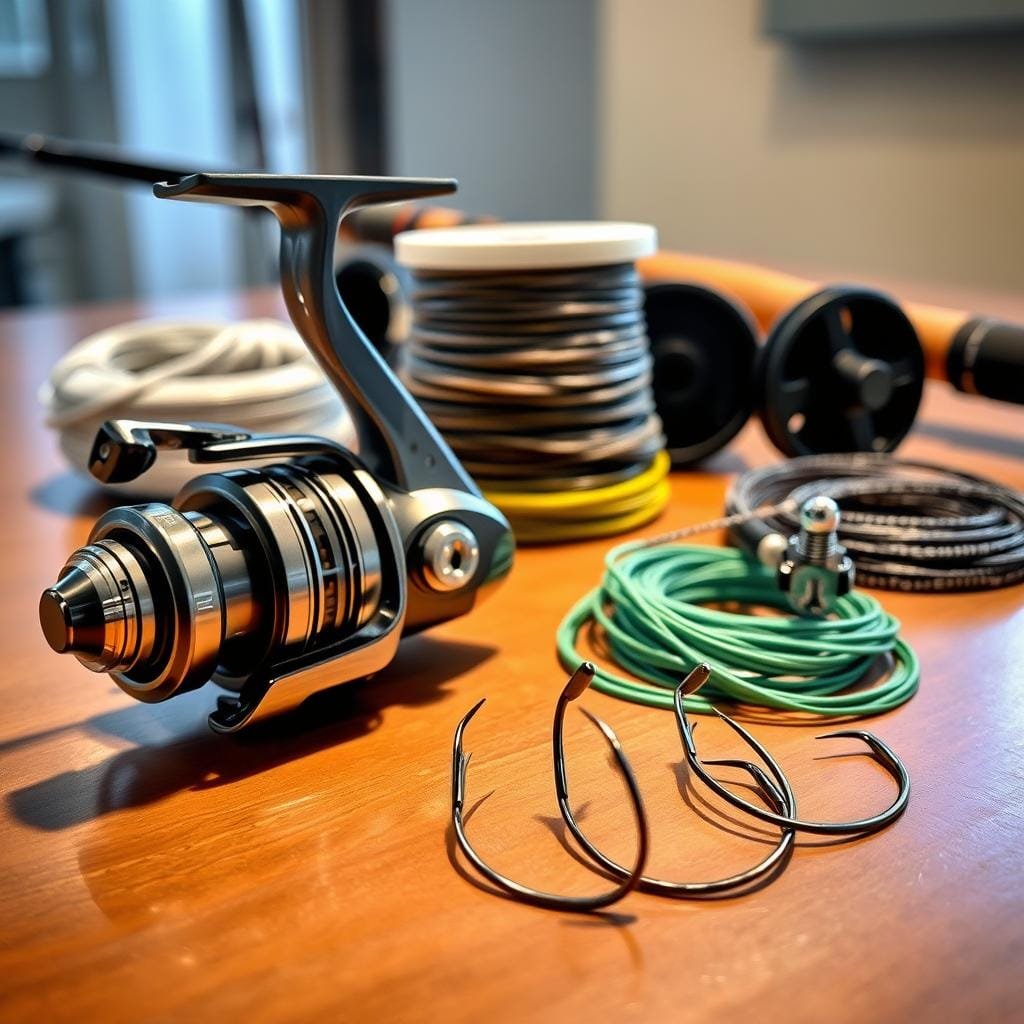
Getting the right marlin fishing tackle is key before you go. You need the rod and reel combo and other gear. The goal is to catch a marlin and handle its challenge with good gear.
Choosing the Right Rod and Reel Combo
Choosing the right rod and reel combo is very important. You need a heavy-action setup for marlin fishing. Reels like the Accurate Platinum ATD 50 are strong and durable.
Rods that can handle tough fights are also key. A good combo makes your marlin fishing better.
Essential Tackle: From Lures to Leaders
Marlin fishing needs more than just rods and reels. You also need good lures, hooks, and leaders. Big hooks, like 10/0 to 12/0, are best for catching marlin.
Leaders should be strong, from 150 to 300-pound test. This helps them handle marlin’s strong lunges. You’ll also need lures and live bait that look like marlin food. This helps you catch more fish.
For more on marlin fishing gear, check out articles on the best tackle. They give detailed lists of what you need and how to set it up right.
Best Bait and Lures for Attracting Marlin
To catch a marlin, you need the right bait and lures. Knowing what marlin like to eat helps a lot. This part talks about the best baits and lures for catching marlin.
Live bait like Skipjack tuna works well because it swims like real fish. It looks like a distressed fish when trolled. Dead baits are also good because they look natural in the water.
- Rubber skirted lures like Moldcraft soft heads attract marlin with their movements and colors.
- Black Bart lures are strong and fast, perfect for marlin. They’re a favorite among experienced anglers.
- Pakula original series lures have special shapes and colors. They catch marlin’s attention.
For Blue Marlin, skirted trolling lures that look like flying fish work great. These lures move like marlin’s prey. Trolling them at different depths and speeds looks like a school of fish fleeing.
Choosing between artificial lures and live bait depends on what marlin like. Using the right tactics can make your fishing trip exciting. It could even lead to catching a marlin.
The Art of Trolling for Marlin
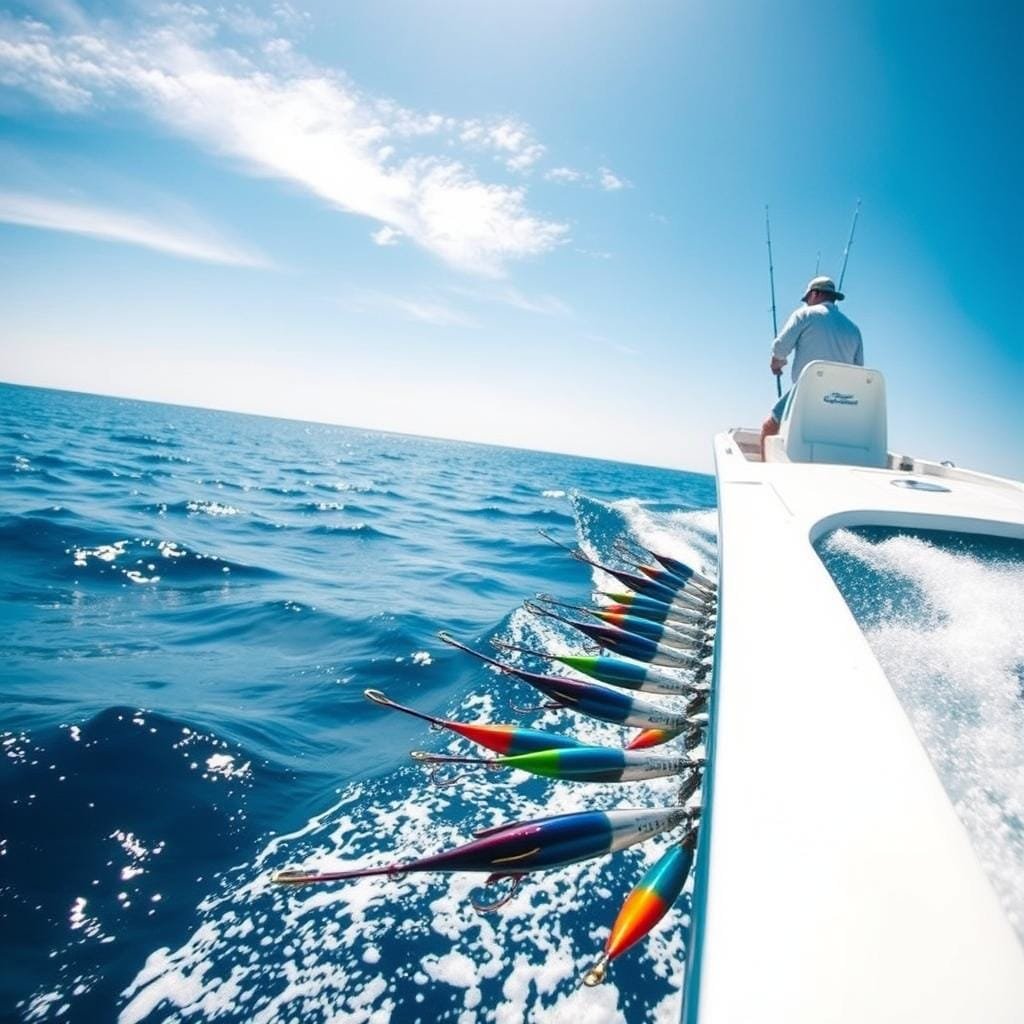
Trolling for marlin is more than fishing. It’s a dance on the waves that needs precision and planning. It uses a marlin trolling spread to attract these big fish. Knowing about trolling speed, depth, and fishing strategy is key.
Deploying the Perfect Trolling Spread
Getting marlin to bite starts with the right lure spread. Anglers mix different lure sizes and types to draw them in. A good spread looks like a school of fish underwater.
This setup attracts marlin and covers more water. It makes each boat pass more effective.
Speed, Depth, and Technique: Maximizing Your Chances
The speed of your trolling is very important. It affects how your lures move underwater. The best speed is usually 8-10 knots, depending on the sea and the fish you’re after.
The depth is also key. Marlin like to be 100-500 feet deep. You can use weighted lures or special gear to reach these depths.
Your fishing technique is just as important. It’s about how you troll, how you set up your lures, and how you adjust based on the fish. For tips, check out expert advice on marlin trolling.
Putting together the right spread, speed, depth, and technique can really help you catch marlin. Each part is a piece of a puzzle. When you put them together right, you can catch one of the ocean’s top predators.
How to Catch Marlin: Techniques and Strategies
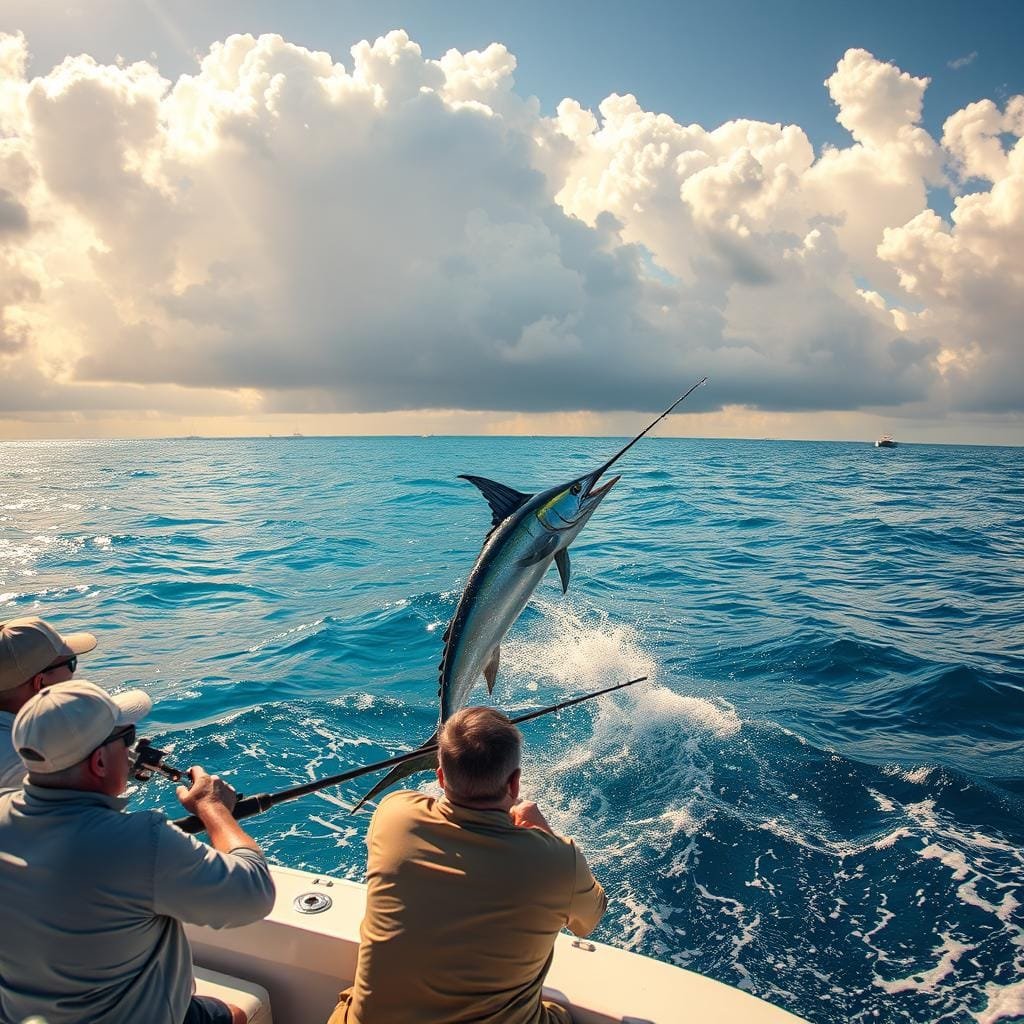
Catching marlin is an art that needs the right mix of fishing techniques. It doesn’t matter if you’re new or experienced. Knowing these strategies is key for a good fishing trip.
Slow trolling with big baits is very effective. These baits move like injured fish, drawing marlin in. Fast trolling with bright lures is also good. It covers more area and gets marlin’s attention from far away.
When marlin are near, pitching a bait is smart. This means using a heavy rod with a bait or lure ready to go. Cast the bait to the marlin for a surprise. This method needs good timing and aim to catch the fish.
Dead baits work better than live ones for trolling. They swim like fish naturally. Live baits might scare marlin off because they move too much.
- Slow Trolling: Use large live or dead baits for more natural motion.
- Fast Trolling: Employ colorful, skirted lures to generate visual appeal and noise under water.
- Pitch Baiting: Strategically throw the bait towards visible marlin to incite immediate action.
- Proper Hook Setting: Allow the marlin to fully ingest the bait before tightening the line to ensure the hook is firmly set.
Learning these marlin fishing techniques will make you better. Each method works best in different situations. The best anglers know how to change with the sea’s mood.
Picking the Perfect Location: Where to Find Marlin
Knowing the best marlin locations is key to catching them. These big fish live in different parts of the ocean. Each place has its own special conditions that marlins like.
Places near underwater mountains and where currents meet are great for marlin. These spots have lots of small fish for marlins to eat. The Woods Wall, near Key West, is famous for marlin, thanks to the right seasons.
Identifying Marlin Feeding Grounds and Structures
Finding where marlin eat is important. Look for areas with lots of food, like wrecks and reefs. These places are full of life and attract marlin, making them great fishing spots.
Seasonal Movements and Migration Patterns
Marlin move with the seasons and sea temperatures. In warmer months, they go to cooler waters. Knowing when and where they move helps fishermen find the best fishing spots.
- Marlin like warm water, between 70°F to 85°F for Blue Marlin.
- Seasonal marlin migration shows the best fishing spots at different times.
- Destin, Florida is known for big marlin and fishing tournaments, showing its importance.
Understanding marlin locations, what they eat, and their migration helps anglers. This knowledge improves their chances of catching these ocean giants.
The Role of Weather and Ocean Conditions in Marlin Fishing
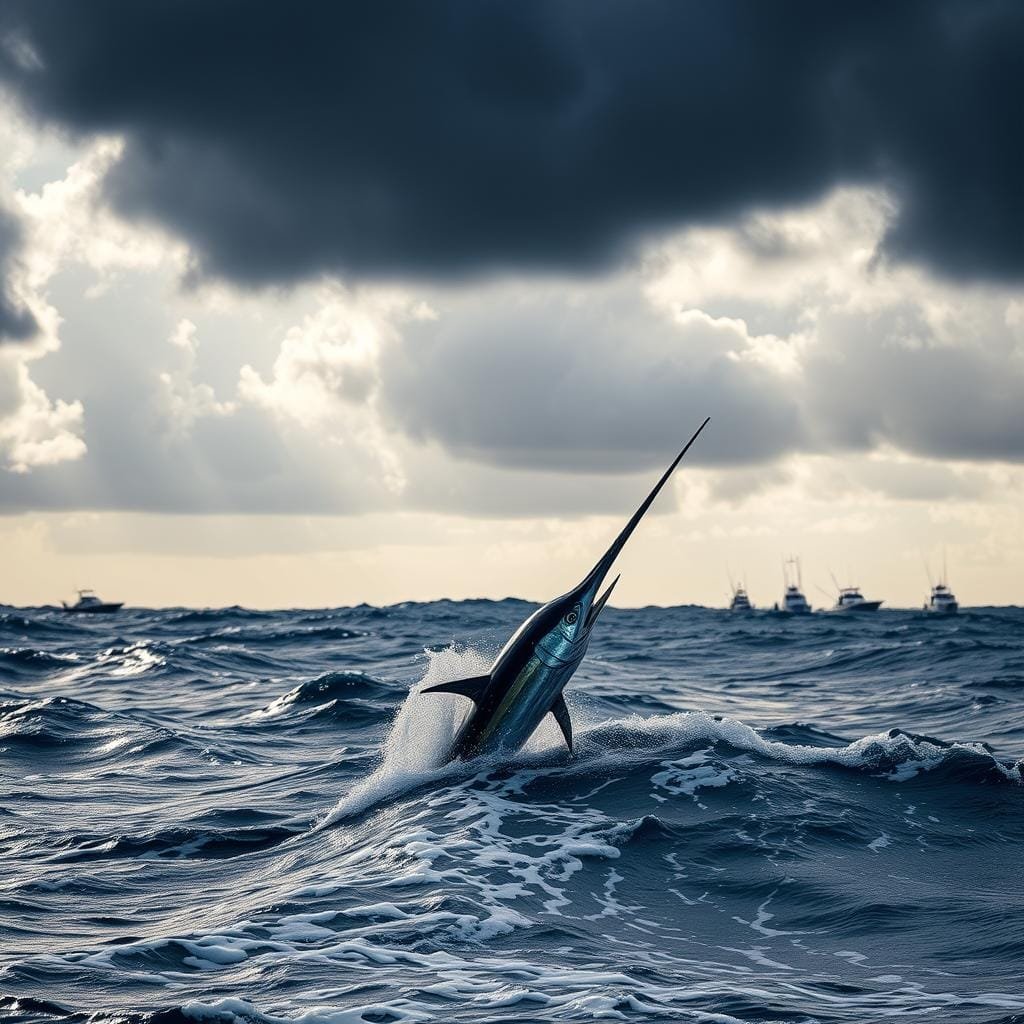
Weather and ocean conditions are key to catching marlin. Sea surface temperature and weather patterns help find these big fish. Knowing these helps anglers catch more marlin.
Understanding the Impact of Sea Surface Temperature
Sea surface temperature is very important for marlin. They move and eat based on temperature. Tracking this helps find where marlin are.
How Weather Patterns Influence Marlin Behavior
Weather is more than just sunny days for marlin fishing. It affects how marlin act. For example, high pressure makes them more active near the surface.
Wind also changes things. It can make it easier or harder to catch marlin.
Sea surface temperature and weather together make a changing world for anglers. They need to adjust their plans. Here’s how:
| Weather/Ocean Condition | Impact on Marlin | Angler Action |
|---|---|---|
| Rising Sea Surface Temperature | Promotes marlin migration to cooler waters | Target deeper waters or shift to northern/southern fishing grounds |
| Strong Wind Conditions | Can stir up baitfish, leading marlin to feed aggressively | Use choppier surface conditions to conceal fishing gear |
| High Barometric Pressure | Often correlates with increased surface activity | Implement surface lures and high-speed trolling techniques |
Knowing about sea surface temperature and weather is key for marlin fishing. By watching these, anglers can catch more marlin. They get to enjoy the thrill of fishing.
Fighting a Marlin: Techniques for a Successful Catch
Fighting a marlin is thrilling. Marlin fighting techniques are key. These fish are strong and can dive deep. Knowing how to battle marlin can help you catch them.
Anglers use a key technique: keeping the line tight. This stops the marlin from throwing the hook. It also wears it down, making it easier to catch.
Knowing when to reel in is important. Letting the fish run sometimes is okay. Adjusting the drag helps you control the fight.
| Technique | Application | Result |
|---|---|---|
| Constant Line Tension | Keep steady pull to prevent the marlin from getting slack and escaping | Higher marlin catch success |
| Strategic Reeling | Reel in during low tension; allow runs during high tension | Prevent breaking the line |
| Drag Adjustment | Modify drag settings based on marlin’s behavior and energy | Control over the battling marlin |
Where you sit on the boat matters too. Move the boat to put pressure on the fish. This saves your energy and tires out the marlin.
Staying straight with the fish helps too. It lets you predict and react to its moves.
Using these techniques can make catching marlin more likely. It turns long fights into exciting wins. Each fight is different, so being flexible is key.
Conservation Practices: Ensuring Sustainable Marlin Fisheries
The need to protect marlin conservation is very important. Anglers must fish responsibly. This helps keep marlin populations healthy for the future.
Catch and release fishing is key. It lets anglers enjoy fishing while helping marlin populations. Using circle hooks helps marlin survive better after being caught.
Catch and Release Techniques: Minimizing Harm
Good handling is vital in catch and release fishing. It helps marlin survive better after being caught. Keeping marlin in water as little as possible is important.
The Importance of Adhering to Regulations and Sizes
Fishing rules are very important. They help keep marlin numbers healthy. For example, in the Gulf of America, Blue Marlin must be at least 99 inches long to be kept.
- Use barbless hooks to make removal easier.
- Avoid using heavy tackle that can tire marlin too much.
- Make sure to revive marlin well before releasing them.
Following these sustainable fisheries tips helps a lot. It shows that anglers care about the ocean and its creatures. This way, fishing can stay fun for everyone without harming the ocean.
Learning from the Pros: Insider Tips and Tricks
Getting expert fishing tips from pros can really boost your marlin fishing skills. Kevin Hibbard shows how great it is to learn from the best. His videos cover everything from setting up tackle to how to present bait.
Reading Marlin magazine and other marinelife sites gives anglers professional angling advice. You’ll learn cool insider fishing tricks. Like how to use pitch baits for sight fishing and how to spread lures.
| Expert Tip | Description | Benefits |
|---|---|---|
| Proper Tackle Setup | Detailed customization of rod, reel, and line according to the marlin’s size and habits. | Enhances control and increases success rate in catching larger marlin. |
| Bait Presentation | Techniques on how to attract marlin using live and artificial baits expertly. | Improves bait visibility and attractiveness, leading to more bites. |
| Understanding Marlin Behavior | Insights into the behavioral patterns of marlin, including their feeding habits. | Allows anglers to predict movements and strike times more accurately. |
Learning from these fishing experts is a goldmine of knowledge. It can help anyone catch the marlin they dream of.
Common Mistakes in Marlin Fishing and How to Avoid Them
Many anglers make marlin fishing mistakes that hurt their chances. Knowing these errors and how to fix them can lead to better catches. Mistakes include wrong bait, not enough gear, and bad hook setting.
- Choose bait that fits the marlin and sea conditions. Local advice helps a lot.
- Use strong gear to handle marlin’s power. Light tackle can break or lose fish.
- Wait a bit to set the hook. Marlin’s mouths are tough, and early sets miss fish.
- Keep your trolling speed steady. This makes bait look natural to marlin.
Here are more tips to avoid angling errors:
| Common Mistake | Suggested Improvement |
|---|---|
| Inconsistent trolling speed | Maintain a steady speed suited to the bait type |
| Incorrect hook size and type | Opt for larger, circle hooks to ensure better jaw penetration |
| Ignoring marlin behavior | Study marlin strike patterns and adjust techniques |
| Misjudging the strike timing | Await definitive bait take before hook setting |
By fixing common mistakes, you can catch more marlin. Each fishing trip is a chance to learn and get better. This helps you catch more fish and helps protect marlin for the future.
Advancing Your Skills: Next Steps After Catching Your First Marlin
After catching your first marlin, your journey is just starting. To get better at marlin fishing, keep learning and practicing. It takes time to master advanced techniques.
Study how marlins move and read the ocean. Knowing how they act in different conditions is key. It’s not just about knowing the fish; it’s about understanding their behavior in the ocean.
Expand your network and learn from others. Talk to experienced captains and anglers. They can teach you a lot.
Join marlin fishing tournaments to show your skills. You’ll also see how pros fish. Always follow conservation rules to help protect marlins.
Use resources like In The Spread’s videos to learn. They offer tips for different fishing situations. Learning from these resources helps you grow as an angler.
As you get better, you become a respected fisherman. You help keep the ocean healthy. You’ll always be learning and improving your fishing skills.