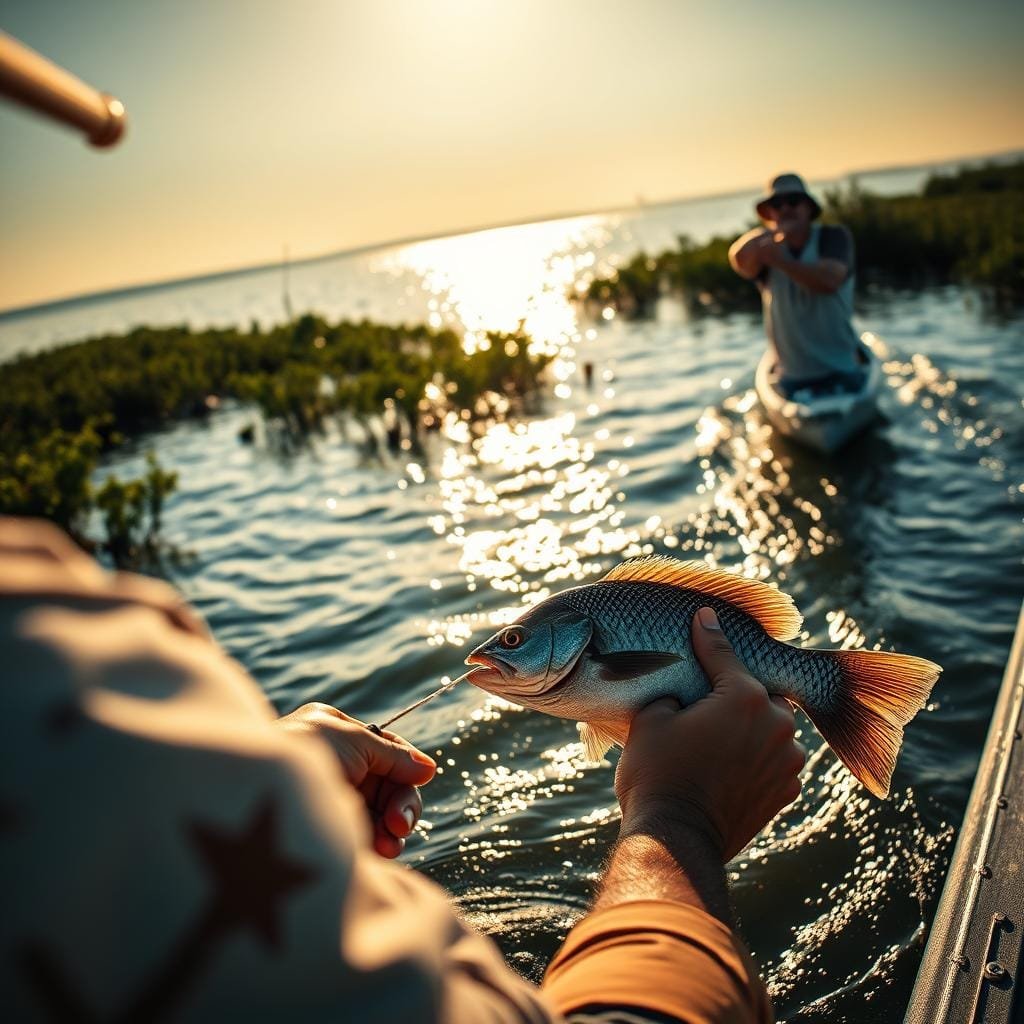
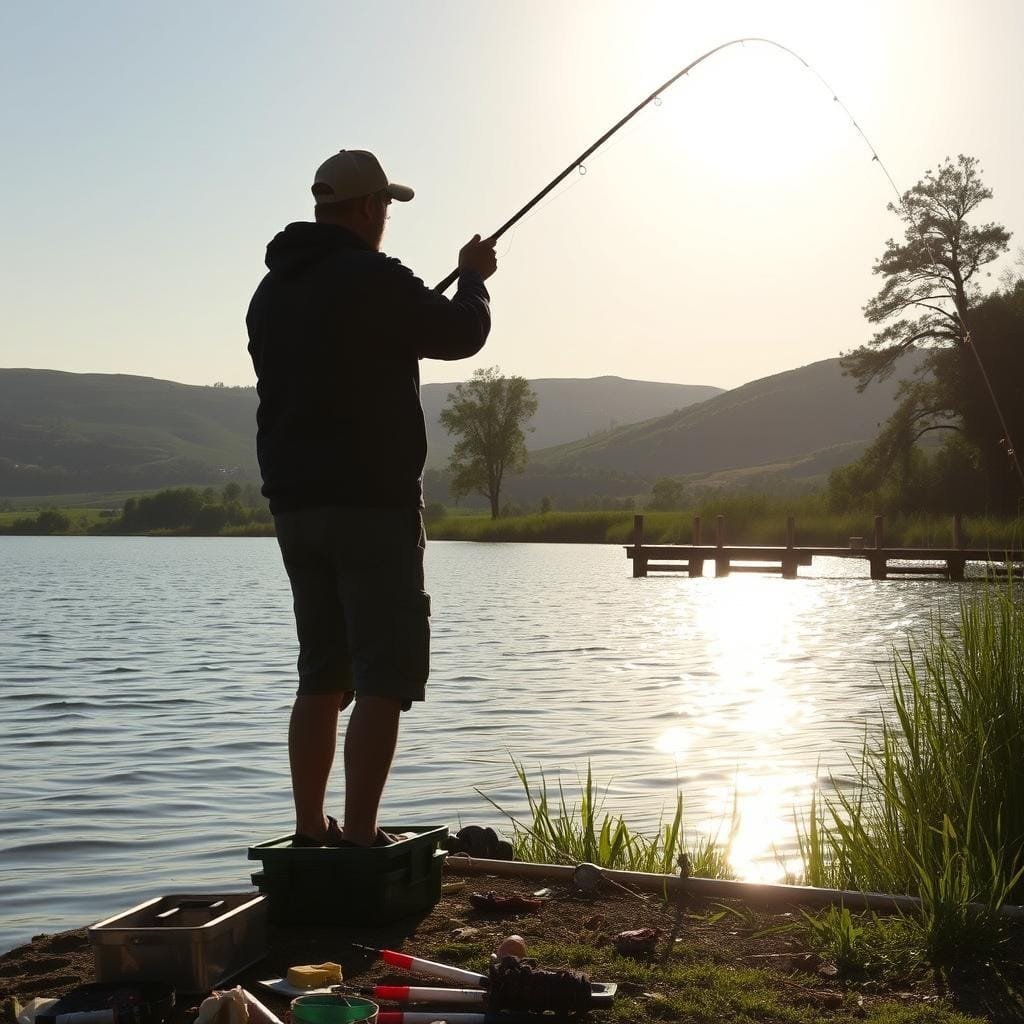
Pumpkinseed sunfish fishing is super fun. It’s all about quick hits, light gear, and bright colors in clear water. This guide will help you catch pumpkinseed in the United States, focusing on the Northeast and Midwest. You’ll learn simple, proven tactics for fishing from shore or a small boat.
First, set up your pumpkinseed gear. Use an ultralight rod, 6–12 lb test mono or fluoro, and a small hook in sizes 6–12. A bobber-and-sinker rig is easy and keeps things untangled. Use small baits to match their tight mouths.
For fast action, use pumpkinseed bait like nightcrawlers, wax worms, or mealworms. They also love tiny pumpkinseed lures—think 1/32–1/8 oz jigs, micro spinners, and small poppers on calm days. In spring and summer, fish weedy shorelines, lily pads, and shallow flats. In fall, fish a bit deeper off points or along drop-offs.
Knowing where to find pumpkinseed is key. Look for ponds, quiet creeks, and natural lakes. Fish around rocks, gravel, docks, pilings, overhanging trees, coves, and sunken objects. During the June spawn, find clean, round beds in sand or fine gravel near shore for rapid-fire bites.
We’ll dive into details on fishing methods, seasonal tweaks, and local rules. For more on pumpkinseed behavior and when they bite, check out this quick guide on pumpkinseed sunfish fishing. Next, we’ll explore how to identify them, their behavior, and when they’re most active. This will help you catch more fish today.
Understanding pumpkinseed sunfish: identification and behavior
Spotting the right fish starts with clear pumpkinseed identification and a quick read on pumpkinseed behavior. These sunfish thrive in calm, weedy margins and around brush. Sharp eyes can pick out their colors and shape before a cast.
How to identify pumpkinseed sunfish by color, fins, and body shape
Look for a round, disk-like body and a small mouth. Typical pumpkinseed colors show dark olive backs with sides that flash yellow, green, or blue. They also have a pale belly that can glow cream to orange. Adults run 4–6 inches, though some reach larger sizes.
Check the pumpkinseed fins. Long, pointed pectorals often extend past the eye when folded forward. The first dorsal has stout spines, and the short operculum stands out near the gill cover. For a field-ready refresher, see this concise pumpkinseed identification guide.
Daytime activity patterns and quick-bite tendencies
These fish feed through the day and favor shallow cover. The typical pumpkinseed bite pattern is quick and sharp. A float or tight-line setup helps you react fast.
Expect fast hits near weeds, logs, or rocks, where insects and small prey gather. When water warms, they cruise edges and guard nests. This makes their behavior around visible structure more active.
Schooling habits and home-range behavior after catch-and-release
Pumpkinseed schooling shows in tight packs along banks. Bigger fish may hold just off the edge in slightly deeper water. You’ll also find small groups resting near rocks or submerged wood, when wind or light pushes them down.
After a quick release, many return to the same pocket. Mark the spot and circle back. Understanding pumpkinseed schooling and a consistent bite pattern helps you plan smart casts without spooking the pod.
Best seasons and times to target pumpkinseed
Fishing for pumpkinseed can be very rewarding. They are active during the day, so you can plan your fishing. The best time to fish changes with the seasons. Adjust your fishing to match each season to catch more fish.
Spring and summer peak, with spawning action in June
Late spring and early summer are the best times. In June, the pumpkinseed spawn happens. This is when you can catch a lot of fish.
Look for clear areas with light weeds and sand. Fish early in the morning when it’s quiet. Then, make short and precise casts.
Fall transition: moving offshore into deeper water
As the weather cools, fish move to deeper water in the fall. They go to breaks, mid-lake humps, and the first weeds. Fishing near the shore gets harder, but fishing 10 to 20 feet deep can be good.
Use your sonar to find fish near the bottom. The best time to fish in the fall is late in the day when it’s warmer.
Winter strategies when fishing is toughest
Fishing in winter is slow because of the cold. Look for fish in deep basins and stable ice areas. Use small lures and wait a long time between casts.
Keep moving until you find fish. Then, use even smaller lures and fish close to the fish. Small, gentle movements are more likely to get bites.
Time-of-day tips: early morning in spring, late day in summer and fall
In spring, fish early in the morning when the sun comes up. In summer and fall, fish late in the day when it’s cooler. Always fish when the weather is calm and the wind is light.
Clear days are best for small, quiet baits. Breezy afternoons can make fish hungry. Fishing with the seasons in mind will help you catch more fish.
Where to find pumpkinseed: lakes, ponds, rivers, and creeks
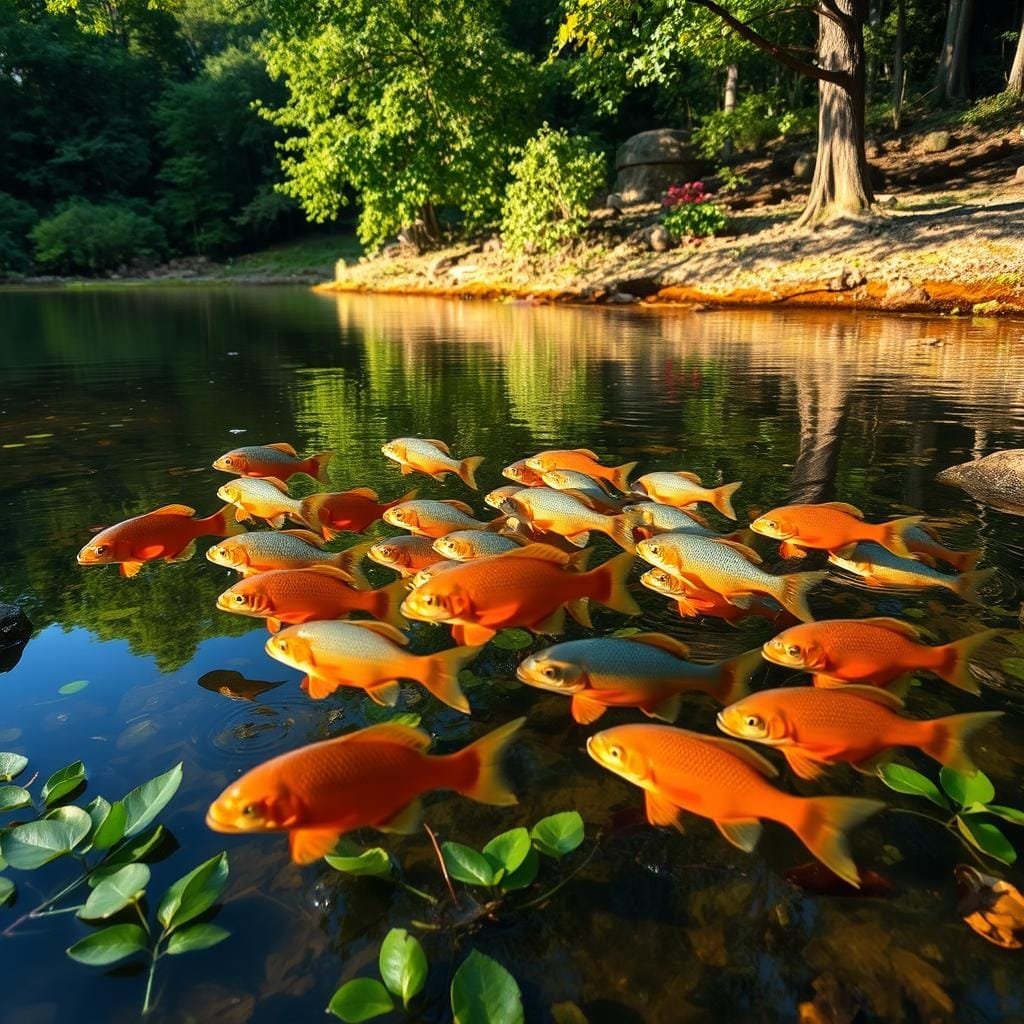
Finding fish starts with reading the water. Look for subtle edges and calm pockets. These are classic pumpkinseed habitats. If you’re unsure where to find pumpkinseed on a new lake or creek, start near the bank. Then, work out toward nearby structure.
Weedy shorelines, lily pads, and shoreline shallows
Shallow cover is prime. Weedy shorelines collect bugs and small invertebrates. The shade keeps fish comfortable. Lily pads fishing shines in late spring and summer, along inside edges and small gaps.
In quiet coves, shoreline shallows warm fast. They draw schools. Smaller fish hug reeds and brush. Bigger ones patrol the first drop just outside the weeds.
Rocks, gravel, and sunken objects as holding structure
Hard bottom tells a story. Rocks and gravel host snails and crayfish. These are perfect forage for sunfish. Add sunken objects—logs, stumps, or old debris—and you get shade, ambush cover, and current breaks.
Probe seams where hard bottom meets sand or mud. If the water is clear, keep casts long and quiet. This helps avoid spooking fish stacked on the edge.
Productive spots: docks, pilings, overhanging trees, and coves
Man-made edges create everyday hot spots. Work around docks and pilings. Then, slide to nearby walkways or bridge shadows when the sun is high. Overhanging trees knock down insects and provide steady shade.
Inside turns and tucked-away coves act like wind shelters and bait traps. Hit inlets and outlets, points, and break lines next. Check islands or sand bars when fish slide a bit offshore.
Regional range in the Northeast and Midwest
The strongest populations sit in classic glacial waters. A Northeast pumpkinseed pattern often means small ponds, marshy lakes, and slow river backwaters. In clear Adirondack or New England ponds, try the first weed edge after ice-out and again in June.
A Midwest pumpkinseed search starts in weedy bays of natural lakes and flowages. In farm-country creeks and small rivers, target bends with cover and stable flow. These cues hold across most of the species’ range and match the broader pumpkinseed habitat anglers rely on.
How to rig up: rods, line, hooks, and simple rigs
Keep your gear light and easy to adjust. A mix of sensitivity and control helps catch more fish. This is true for classic pumpkinseed rigs.
Ultra-light to light setups and 6–12 lb test line
An ultralight setup with a fast tip is great for catching fish. Use 6–12 lb test line for stealth and strength. Spinning reels from Shimano, Daiwa, or Pflueger work well for smooth casts.
Hook sizes 6–12 and bobber-and-sinker simplicity
Choose hook size 6–12 for small fish mouths. Use short-shank bait hooks or fine-wire octopus hooks. A bobber rig with a small split shot works well for quick bites.
Long pole approach for shore anglers and tight quarters
Long pole fishing is perfect for tight spaces. Use 12–18 foot poles to place baits in holes. This method is great for areas where casting is hard.
- Rod class: Ultra-light to light for strike feel and clean lifts.
- Line: 6–12 lb test mono or fluoro; braid with a fluoro leader if weeds are thick.
- Hooks: Hook size 6–12 to fit worms, wax worms, and small grubs.
- Rig: Bobber rig with a small split shot for depth control near cover.
- Shore tactic: Long pole fishing to place baits with pinpoint accuracy.
how to catch pumpkinseed
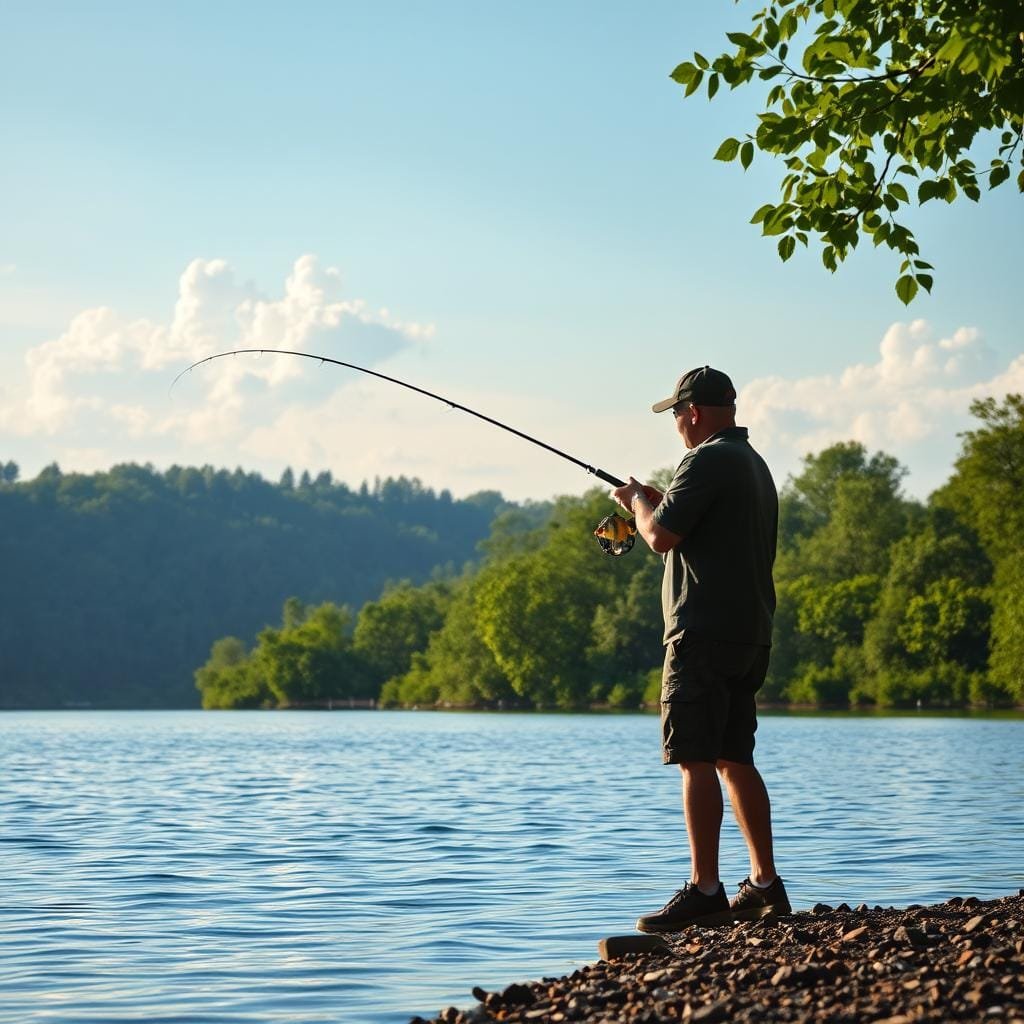
Start near shallow weeds in late spring and early summer. To catch pumpkinseed from shore, set a small piece of nightcrawler, wax worm, or mealworm under a bobber with a tiny split shot. Cast beside lily pads, docks, pilings, and overhanging trees, then pause. Most bites come fast, so keep slack out of the line.
Shift with the season. As heat builds, slide to edges of weed beds, rocks, and gravel. In ponds and lakes, probe sunken logs and inside turns. In creeks and slow rivers, work eddies, inlets, and protected banks. These methods keep the bait in front of fish that feed by sight and sound.
Use pumpkinseed float fishing when you want control and depth accuracy. A small pencil bobber shows light takes and lets you hover a bait above snags. If fish push deeper in late summer and fall, count down a 1/32–1/8 oz jig or drift a small spinner in white, yellow, or chartreuse to cover water.
When schools move off the bank, lean on pumpkinseed offshore tips. Fan-cast along drop-offs and mid-lake humps, then drift to locate bites. Mark a productive line and repeat passes until the action fades. In winter, slow everything down and work mid-depth basins with patience.
Keep gear simple. Spool 6–12 lb monofilament or fluorocarbon, and match hooks in sizes 6–12 to small baits. An 18-foot telescopic pole helps you dip quietly around tight cover and catch pumpkinseed from shore without spooking fish.
| Scenario | Presentation | Depth Control | Best Cover | Why It Works |
|---|---|---|---|---|
| Spring shallows | Nightcrawler piece under bobber | Set stop at 1–3 ft | Lily pads, docks, shoreline weeds | Targets active daytime feeders tight to cover |
| Summer edges | Wax worm on size 8–10 hook | Bobber with small split shot | Weed edges, gravel, sunken wood | Stays above snags and triggers quick bites |
| Fall offshore moves | 1/32 oz jig or small spinner | Count down to mid-depth | Drop-offs, humps, inside turns | Covers water fast to find roaming schools |
| Creeks and slow rivers | Mealworm under slim float | Adjustable float for current seams | Eddies, inlets/outlets, protected banks | Presents natural drift in softer flows |
| Stealth from shore | 18-ft pole, short line dip | Fixed depth with pole tip | Pilings, overhangs, tight pockets | Quiet entry; precise drops in small openings |
Live bait and artificial lures that get bites
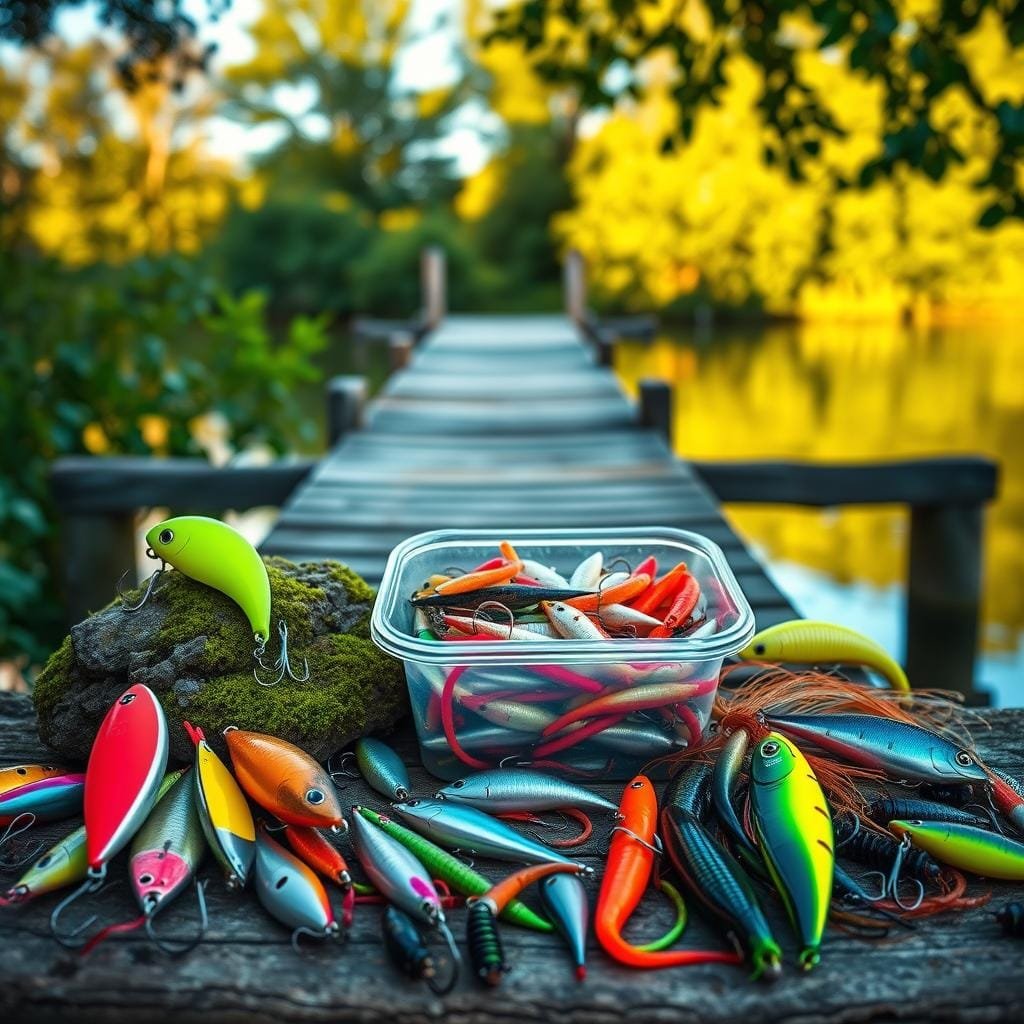
Make a simple plan to catch pumpkinseed fish. Choose foods they like, use small sizes, and move slowly. A small float and a split shot keep bait in the right spot.
Top live baits: nightcrawlers, wax worms, mealworms, and insects
For quick bites, use a tiny nightcrawler on a small hook. Switch to wax worms if fish are picky. Mealworms keep the bites coming. Ants, crickets, and mayfly larvae work well near pads and docks.
Let the bait float just above weeds. Then, add tiny twitches. Short pauses help pressured fish bite, best in clear water.
Effective artificials: small jigs, spinners, flies, and poppers
Choose light and simple baits. Small jigs with wax or worm pieces get lots of bites. Micro spinners from brands like Panther Martin and Blue Fox work well at slow speeds. Size 12–14 wet flies and foam poppers are great for calm evenings.
Use slow lifts, brief stalls, and gentle pops. A steady crawl works in cold fronts. Lift-drop along edges is effective.
Go-to colors: white, yellow, and chartreuse
Use bright colors in stained water. White and yellow shine on sunny days. Chartreuse is best when it’s cloudy. Mix these colors on small jigs or micro spinners.
If fish nip short, downsize the skirt or trim soft plastics. This keeps the hook point close.
Lure sizes that match small mouths: 1/32 to 1/8 oz
Choose 1/32–1/8 oz lures for a smooth glide. Lighter lures work best in shallow coves. 1/16–1/8 oz lures hold depth in choppy water. Use compact heads with slim plastics for a small profile.
Try different live and artificial baits until you find the right one. Once you do, your pumpkinseed bait will catch lots of fish.
Techniques that work: stil fishing, baitcasting, fly and drift fishing
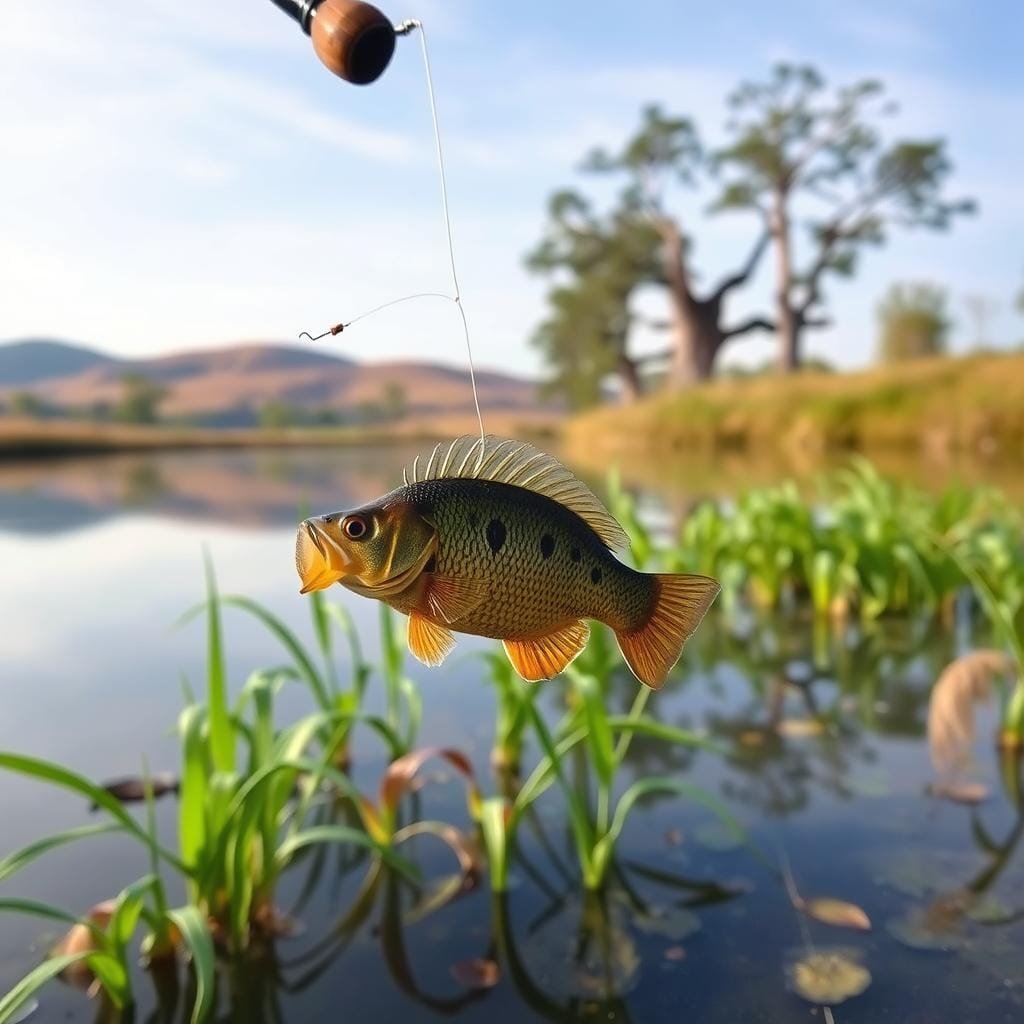
These fish like simple, steady moves. Keep your casts short and work the edges. Let the water tell you when to switch gears. For more method details and baits that match, see this guide to effective pumpkinseed tactics.
Stil fishing with a float for quick strikes near cover
Use a light bobber, a small split shot, and a short leader. Put a nightcrawler piece, wax worm, or mealworm a foot or two above the fish. Target docks, pilings, weed edges, lily pads, inside turns, and shaded coves for fast bites.
This method is great on bright days. Watch the bobber tilt, then dip; lift the rod and keep steady pressure. Stil fishing pumpkinseed often outpaces moving lures when the sun is high.
Baitcasting micro-lures around weed beds and points
Use micro-lure baitcasting with 1/32–1/8 oz jigs or tiny inline spinners. Aim for weed beds, points, and rock-to-gravel transitions, then retrieve straight and slow. Simple paths stay in the strike zone longer.
Keep the rod tip down to track the lure, then pause near holes in the grass. Subtle flashes trigger reaction swipes from fish holding tight to cover.
Fly fishing small poppers and nymphs for surface and subsurface action
When water warms, tie on a small popper and tap the surface along pads and laydowns. Short pops and long pauses draw steady slurps. If fish slide deeper, swap to a soft-hackled nymph or tiny bead-head and count it down.
Fly fishing pumpkinseed is precise and calm. Focus on short leader turns, quiet landings, and a slow hand-twist retrieve to keep the fly in their lane.
Drift fishing to cover water when fish spread out
In bigger ponds and lakes, let the breeze move the boat while you drift small baits or micro-lures. Use a light jig or split shot to tick above bottom. This approach finds scattered or offshore fish fast.
Drift fishing panfish plays well in fall and winter as schools shift deeper. Adjust speed with a drift sock or a slow-trolling pass, then mark each bite to loop back through the seam.
Season-by-season location and presentation adjustments
Match your fishing to the season’s water and light changes. Pumpkinseed fish feed during the day and strike quickly. They often return to the same spot after being caught.
In spring, fish are in shallow areas like shorelines and lily pads. Start early. Use a bobber-and-sinker with worms or swim small jigs and flies in bright colors. Keep your movements short and steady near cover.
Summer finds fish near weeds and docks, best in late afternoon. Use slow presentations when it’s sunny. Baitcasting small lures catches bigger fish near the bank.
Fall, fish move to deeper spots like points and island edges. Bites are slower, so drift fish to search. Use heavier lures to reach fish in these areas, saving energy for late day.
Winter, fish are deep in basins or near tall structures. Move slowly. Use tiny jigs or suspend live bait under a float. Docks and piers are good spots for access.
Throughout the year, keep your approach simple. Find where fish are holding, adjust your weight, and aim true.
| Season | Primary Location | Best Window | Go-to Approach | Lure/Bait Specs | Key Cue |
|---|---|---|---|---|---|
| Spring | Shallow weeds, lily pads, gravel, rocks | Early morning | Float rigs; slow retrieves tight to cover | Small jigs/flies; white, yellow, chartreuse; nightcrawler bits | Look for beds and cruising spring spawn panfish |
| Summer | Weed edges, docks, shaded banks; first break | Late day | Stil fishing mid-day; baitcasting micro-lures at dusk | 1/32 oz jigs, small spinners; wax worms or mealworms | Smaller fish bank-tight, larger fish slide slightly offshore |
| Fall | Points, break lines, island edges in deeper water | Late afternoon to evening | Drift fishing to cover water efficiently | 1/16–1/8 oz to reach depth; subtle colors in clear water | Cooling temps drive fall offshore panfish schools |
| Winter | Offshore basins, tall structure near deep flats | Midday sun | Slow vertical tightline; suspend live bait under a float | Tiny tungsten jigs; wax worms; long pauses | Map out winter deep panfish and hold in the strike zone |
Finding local waters and regulations in the United States
Start with tools that point you to real fish, not guesswork. State fish and wildlife pages have interactive fishing maps. These maps show lakes, ponds, and slow rivers where pumpkinseed fish live.
Before you pack the cooler, review pumpkinseed fishing regulations for the exact water you plan to fish. Seasons, size limits, and harvest rules change by state and even by lake. Some waters have a panfish enhancement program, which can set tighter creel limits to build better size structure. Always confirm permits or stamps if required.
Smart access planning saves time. County access guides outline public entry points, shoreline parks, and designated areas near inlets and outlets. Many maps also flag fishing piers and bridges, which offer solid structure, current breaks, and easy casting lanes for panfish.
Using interactive maps to locate pumpkinseed waters
Filter for species, waterbody type, and amenities. Cross-check water levels and recent stocking or netting notes when available. Pin a few lakes within a short drive, then compare ramp quality and shoreline reach for bank fishing.
Checking seasons, sizes, and panfish enhancement rules
Read the fine print for inland waters and special zones. Note daily limits and any slot ranges tied to a panfish enhancement program. Keep a copy of the current rule summary on your phone, and re-check updates before every trip.
Access points: county guides, piers, walkways, and bridges
Use county access guides to find parking, restrooms, and ADA-friendly spots. Scout fishing piers and bridges at dawn to see weed edges and shade lines. Mark walkways that reach wind-blown banks, specially near coves and creek mouths.
| Resource | What to Look For | Why It Helps | Quick Tip |
|---|---|---|---|
| Interactive fishing maps | Species layers, shoreline access, ramps | Targets known pumpkinseed waters fast | Save offline tiles for areas with weak signal |
| Pumpkinseed fishing regulations | Seasons, size limits, creel limits | Prevents violations and keeps you legal | Recheck rules after mid-season updates |
| Panfish enhancement program | Special zones and harvest restrictions | Improves size quality on pressured lakes | Release larger fish to support the program |
| County access guides | Parking, restrooms, ADA access | Smoother logistics for family trips | Note gate hours to avoid lock-ins |
| Fishing piers and bridges | Depth changes, shade, current seams | Consistent structure for staging panfish | Fish shadow lines and pilings first |
Ethical angling and handling tips for healthy releases
Make every release count to keep pumpkinseed fisheries strong. Use small hooks in sizes 6–12 to avoid deep takes. Choose barbless hooks or pinch the barb when allowed.
Land fish fast on light 6–12 lb test. Then, handle them right: wet your hands, keep them in water, and support them horizontally. Don’t squeeze their body or lift by the jaw.
These fish often stick to docks, weed beds, and timber. They also stay close to home after release. Ethical fishing for pumpkinseed is great for steady action all season.
A calm, quick unhooking keeps stress low. This helps schools stay put for your next trip.
In June, skip heavy pressure on active spawning colonies. Take a few casts, then move on. Leave the beds intact for catch and release sunfish.
Follow your state’s seasons, size limits, and special regulations. Use established access like piers and bridges. Small choices like barbless hooks and gentle touch make fishing sustainable.