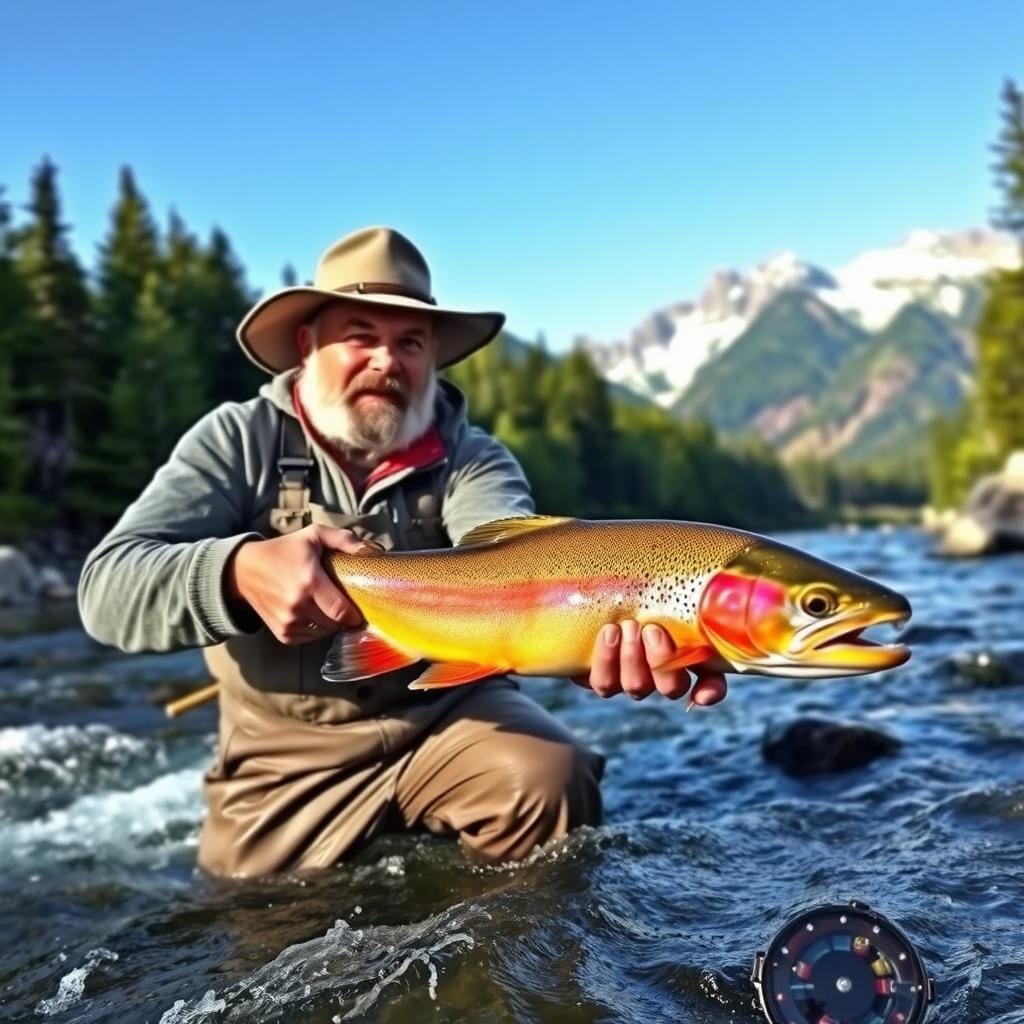
Angling for rainbow trout is thrilling. These colorful fish live in North America’s waters. They excite anglers of all levels.
Whether you’re experienced or new, this guide helps you. It’s full of tips and techniques for catching rainbow trout.
Rainbow trout are known for their lively nature and beautiful homes. They live in mountain rivers and lakes. They can grow from 1/2 to 3lbs, and even bigger in Alaska.
We’ll teach you how to catch rainbow trout easily. You’ll learn about the right gear and trout behavior.
Join us as we explore mountain streams and lakes. We’ll share secrets for catching trout. Get ready for a great fishing adventure.
Understanding Rainbow Trout: Habitat and Behavior
Rainbow trout are very adaptable and change a lot in their life cycle. They live in many kinds of freshwater places. Their behaviors are special and can help with fishing.
Identifying Prime Rainbow Trout Environments
Rainbow trout love cold, clean water like streams, rivers, and lakes. They live where the water is good and there’s lots of food. This helps them grow and keeps the water healthy.
Migratory Patterns and Spawning Seasons
Knowing how rainbow trout move is key for fishing. Some go to the ocean and back, like salmon. Others stay in freshwater. They move upstream in late winter to early spring to spawn. Learn more about their habits in this detailed guide on rainbow trout.
| Season | Behavior | Environment |
|---|---|---|
| Winter | Migrate to spawning grounds | Cold, high-gradient streams |
| Spring | Spawning season | Gravel-bed rivers and streams |
| Summer | Growth and feeding | Lakes and larger rivers |
| Fall | Preparation for migration | Transition areas between rivers and oceans |
Essential Gear for Rainbow Trout Fishing
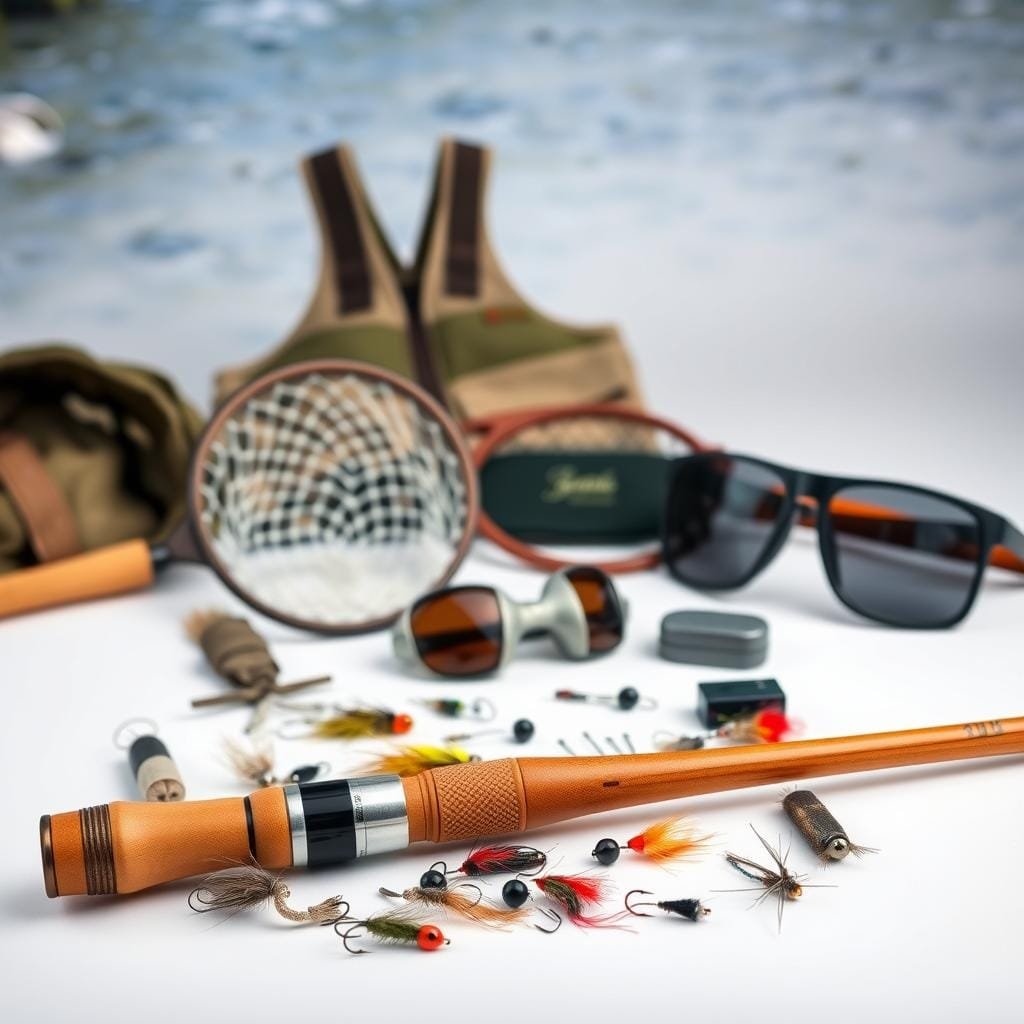
Choosing the right gear is key for catching rainbow trout. You need rods, reels, lines, and baits. Each part helps make your fishing better. Knowing what to use can help you catch more fish.
Choosing the Right Rod and Reel
Start by picking a rod and reel. A light rod and reel are best for rainbow trout. They are sensitive and need a gentle touch.
The rod’s tip should be soft. This helps handle the trout’s strong movements. A reel with a smooth drag is also important. It helps control the fish’s quick moves.
The Importance of Line Weight and Type
The line connects you to the trout. Choosing the right line is very important. Trout are shy, so use a thin, clear line, like 2-4lb test.
This line is strong enough for the trout’s movements. In cloudy water, you might need a heavier line. But keep it thin to avoid scaring the fish.
Must-Have Lures and Baits for Rainbow Trout
Having many lures and baits helps a lot. Use spinners, jigs, small spoons, and plugs. Each works best in different situations.
Think about the water and the trout’s diet when choosing. Fly fishermen have their own favorites. Pick lures that match the conditions and what the trout like to eat.
Having the right gear is essential for catching rainbow trout. By choosing the right tackle and lures, you can improve your fishing. This makes your trips more fun and successful.
The Best Rainbow Trout Baits and Lures
Fishing for rainbow trout needs the right baits and lures. Knowing the difference between live and artificial baits is key. Also, picking the best effective trout lures is important.
Artificial Flies vs. Live Bait: Pros and Cons
Artificial flies for trout look like insects and small creatures trout eat. Dry flies, nymphs, and streamers are great because they look like real insects. On the other hand, live baits like worms and salmon eggs are real and can attract trout, even in cold water.
Top Rated Lures for Attracting Rainbow Trout
Small spinners and spoons are among the top trout baits. They flash colors and move, drawing trout in. Kastmaster spoons and Panther Martin spinners are great because they work well in different depths and conditions.
- Kastmaster spoon – Known for its ability to not twist your line and its versatility in both freshwater and saltwater environments
- Panther Martin spinner – Features a unique shaft-through-blade design that ensures proper spinning action at all times and is ideal for stream fishing
Choosing between effective trout lures depends on the fishing conditions and what you like. Using both live bait and artificial flies might help you catch more trout in different situations.
How to Catch Rainbow Trout
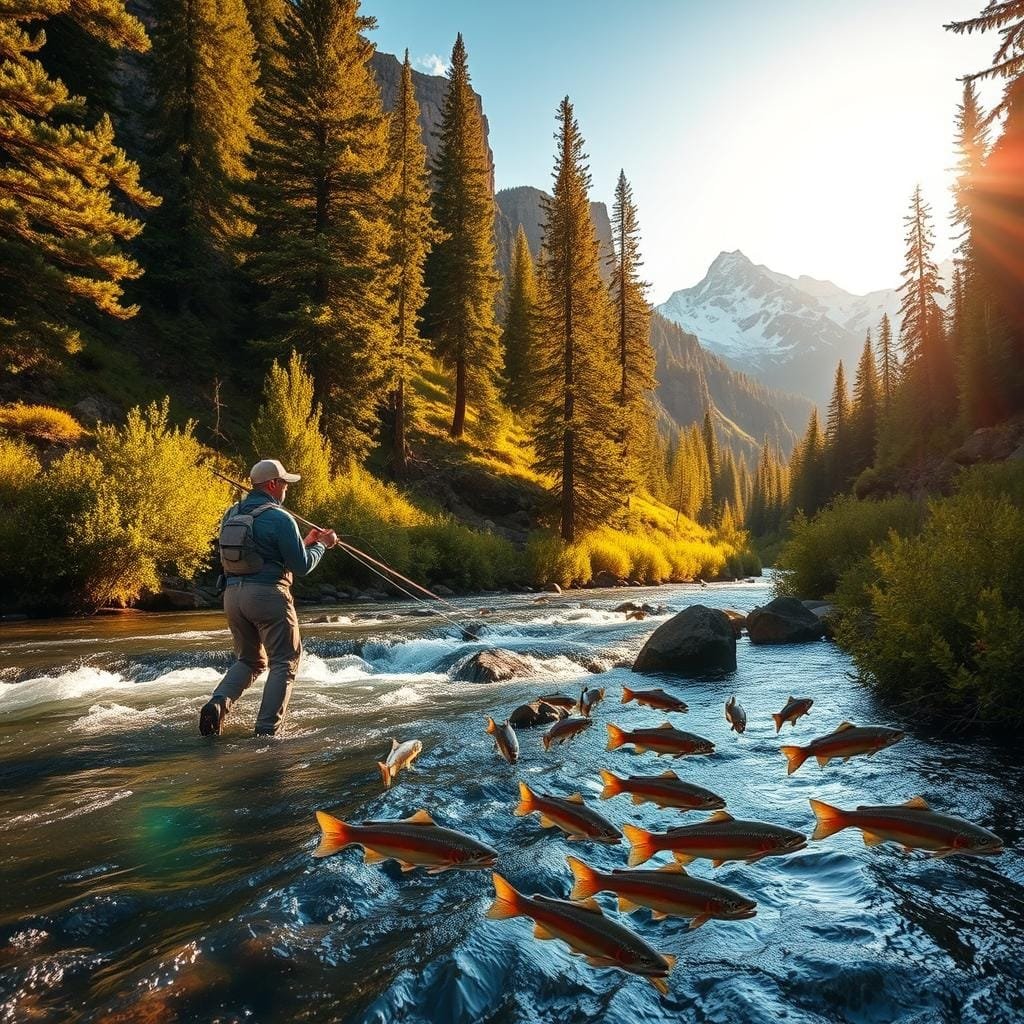
Fishing for rainbow trout can be easy or tricky. It depends on your skill level. Here, we share tips for catching rainbow trout in different places and situations.
- Jigging in Quiet Waters: Jigs work well in clear, calm waters. Choose colors that match the local food. Move them gently to look like injured prey.
- Natural Baits: Air-injected worms are very tempting to trout. Salmon eggs are also great, as trout eat them in streams and small rivers.
- Fly Fishing with Light Tackle: Fly fishing with a small bobber and light line looks like insects. It’s not only good but also fun to watch.
Knowing how rainbow trout act helps a lot. Use the right fishing methods for the best results. Being flexible and changing your plan when needed is key.
Choosing the right fishing method for the situation and the trout’s behavior helps a lot. Remember, catching trout takes time, patience, and knowing how to fish.
Advanced Techniques for Rainbow Trout Fishing
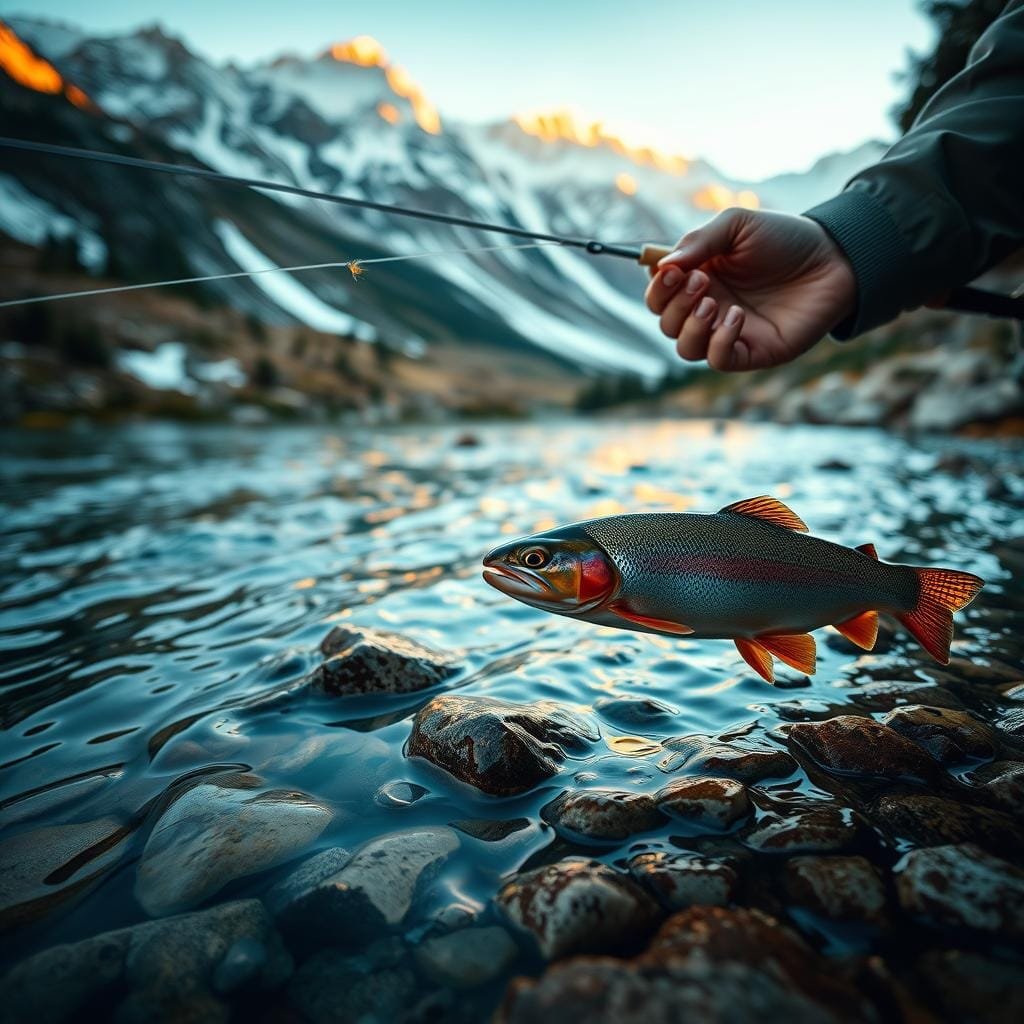
Catching rainbow trout needs special skills and knowing how they act. You can use advanced trout fly fishing, spinner fishing for trout, or spoon techniques for trout. Each way has its own challenges and rewards.
Fly fishing is a skilled way to catch trout. It uses different flies like dry flies, nymphs, and streamers. Advanced trout fly fishing is all about “matching the hatch”. This means picking a fly that looks like the natural bugs in the water.
Success in fly fishing also depends on the right gear. Light rods, between 3 to 6 weight, are best. They help you present the fly gently and precisely. For more tips, check out Drifthook Fly Fishing.
Using Spinners and Spoons in Streams and Lakes
Spinner fishing for trout and spoon techniques for trout work well in streams and lakes. These lures look like small fish moving fast. This makes trout curious.
Spinners should move steadily to look natural. Spoons work best with quick, unpredictable movements. Knowing how to cast and retrieve is key to catching trout.
As fishing gets better, so do the ways to catch trout. Whether in a calm lake or a busy stream, learning these techniques makes fishing more fun.
Where to Find Rainbow Trout: From Lakes to Streams
Trout fishing is all about knowing where to go. Whether it’s rivers or lakes, finding the right spots is key. Rainbow trout live in many places, loving cool, clear water with lots of food.
For beginners, talking to local shops or experienced anglers is a great idea. They can share tips on where to find rainbow trout.
Knowing where rainbow trout like to be can make your fishing trips better. When choosing a spot, think about the water’s temperature, how clear it is, and how fast it flows. Trout like places with lots of insects and small fish to eat.
- Riffles and pools in streams and rivers.
- Deep, cool sections of lakes during warmer months.
- Areas around submerged logs, rocks, or vegetation which provide protective cover.
Timing is everything in trout fishing. Trout move around with the seasons, so pick the right time to fish. Early morning or late evening is best when they’re most active. Check fishing reports and online forums for the latest on where to find trout.
Good trout fishing is more than just finding a spot. It’s about knowing how rainbow trout behave and what they need. By fishing the right way, you’ll catch more fish and help the environment too.
Seasonal Strategies for Rainbow Trout Fishing
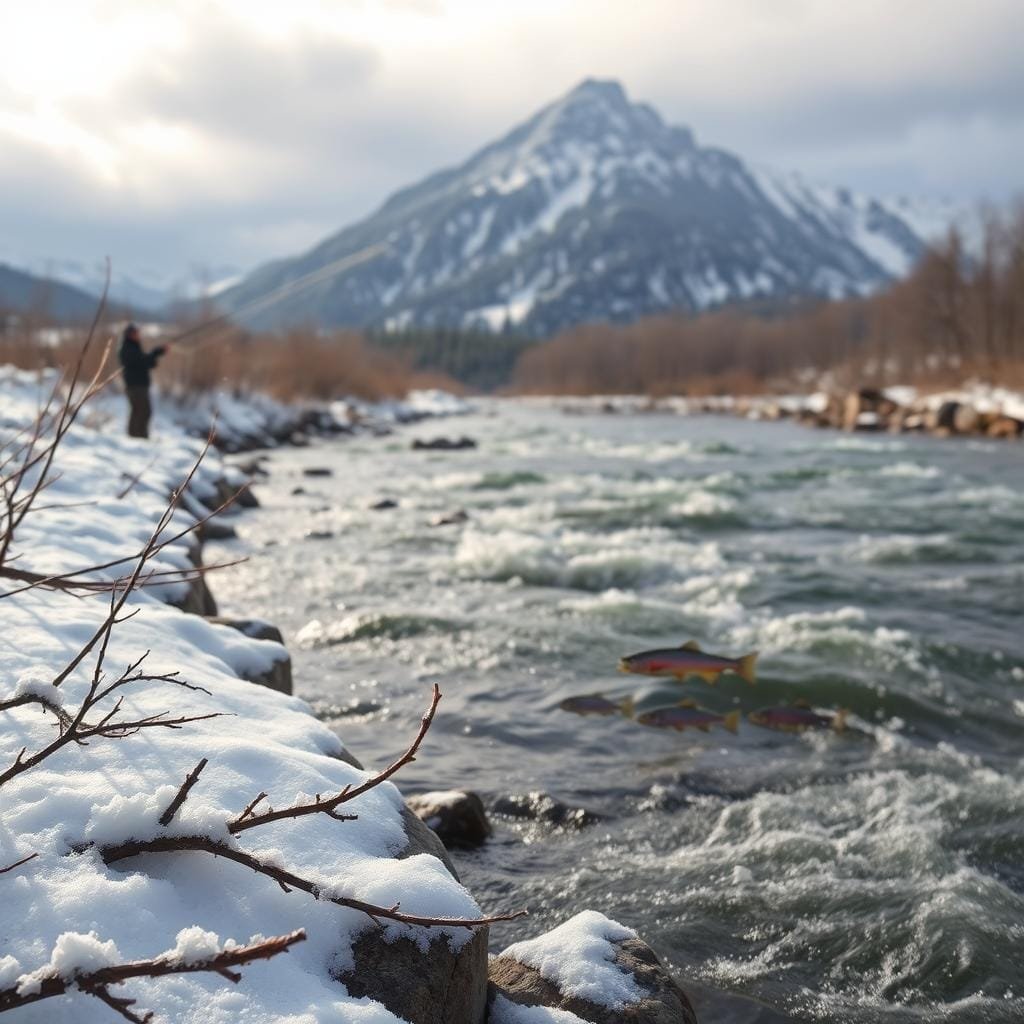
Knowing how to fish for rainbow trout in each season can really help. Each time of year has its own special ways to catch these fish.
In spring, using the right spring trout strategies can lead to big catches. Trout are very active then, getting ready to spawn. Fishing in shallower waters with bait that looks like their food works well.
When autumn comes, trout move to shallower areas again. This makes fishing feel like spring.
In winter, winter trout fishing is all about being precise and patient. Trout hide just below the ice, waiting to eat. Small jigs and lures that move little are best for catching them.
- Spring: Focus on fast-moving streams where trout spawn.
- Summer: Look for deeper waters where trout retreat for cooler conditions.
- Fall: Similar to spring, increasing surface activities as trout prepare for winter.
- Winter: Fish near the bottom in slower moving waters or just below the ice layer.
By changing your fishing ways and knowing trout’s habits, you can fish well all year. The secret to great rainbow trout seasonal fishing is being flexible and always learning.
Reading Water Conditions for Successful Rainbow Trout Fishing
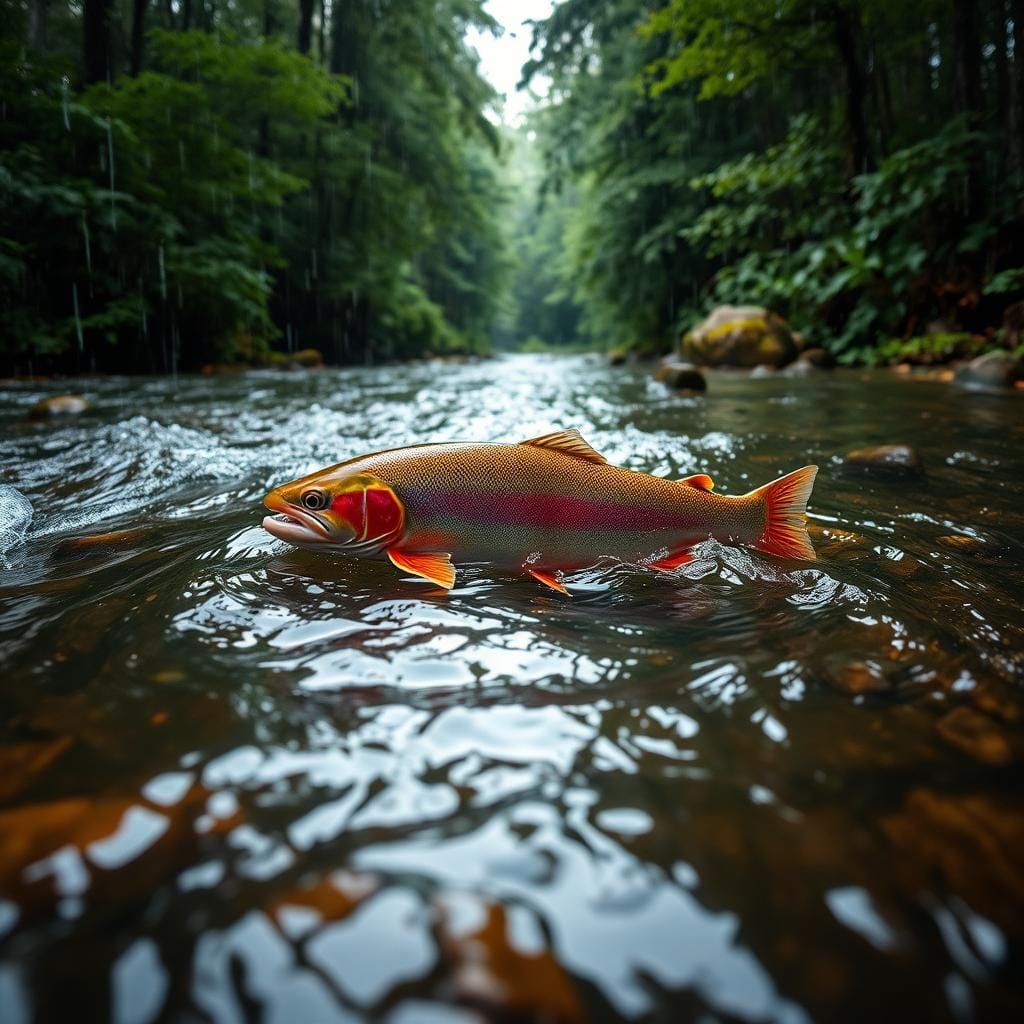
Successful rainbow trout fishing depends a lot on interpreting trout water conditions. It’s important to know how these conditions affect trout behavior. Things like stream flows, water clarity, and weather changes are key to deciding when and where to fish. Here are the main things every trout angler should watch.
Analyzing Stream Flows and Water Clarity
Understanding trout fishing water clarity and stream flow is very helpful. Trout like waters with good cover and easy food access. They prefer areas with moderate water flow, less turbulence, and clearer water.
It’s best to fish in parts of the river or stream where the water is clear. Clear water usually means better feeding conditions for trout. This makes them more likely to bite.
- Clear, steady streams allow for better sight fishing.
- Murky waters might require more scented baits to attract trout.
- Slight ripples in water can improve lure visibility and attractiveness.
The Impact of Weather on Trout Behavior
The weather effects on trout are big and can change every day. Trout are very sensitive to changes in weather and barometric pressure. This affects their feeding habits.
On overcast days, trout are more active because they feel safer. But on bright, sunny days, they might be less active. This means anglers need to be more patient and careful.
To adjust to these weather changes, consider these tips:
- Use lighter lines and smaller lures on sunny days to avoid spooking trout.
- Capitalize on overcast conditions with more aggressive tactics.
- Keep track of weather forecasts and barometric changes for planned fishing trips.
Understanding these natural elements can improve your chances of catching trout. It also makes your fishing experience more enjoyable. You’ll feel more connected to the natural world of trout fishing.
Responsible Trout Fishing: Ethics and Conservation
Keeping our freshwater ecosystems healthy is key. Trout fishing conservation is vital for this. It helps keep trout populations safe for the future.
More people now care about the environment while fishing. They want to enjoy fishing and protect the places where trout live. This way, fishing can stay fun for many years.
Good fishing practices mean putting back more than you catch. Following rules like seasons and size limits is important. Using catch-and-release methods helps trout survive and play their role in nature.
Places like Trout Unlimited lead in protecting our waters. They teach and help people help the environment. This way, we all help keep our waterways healthy and full of life.