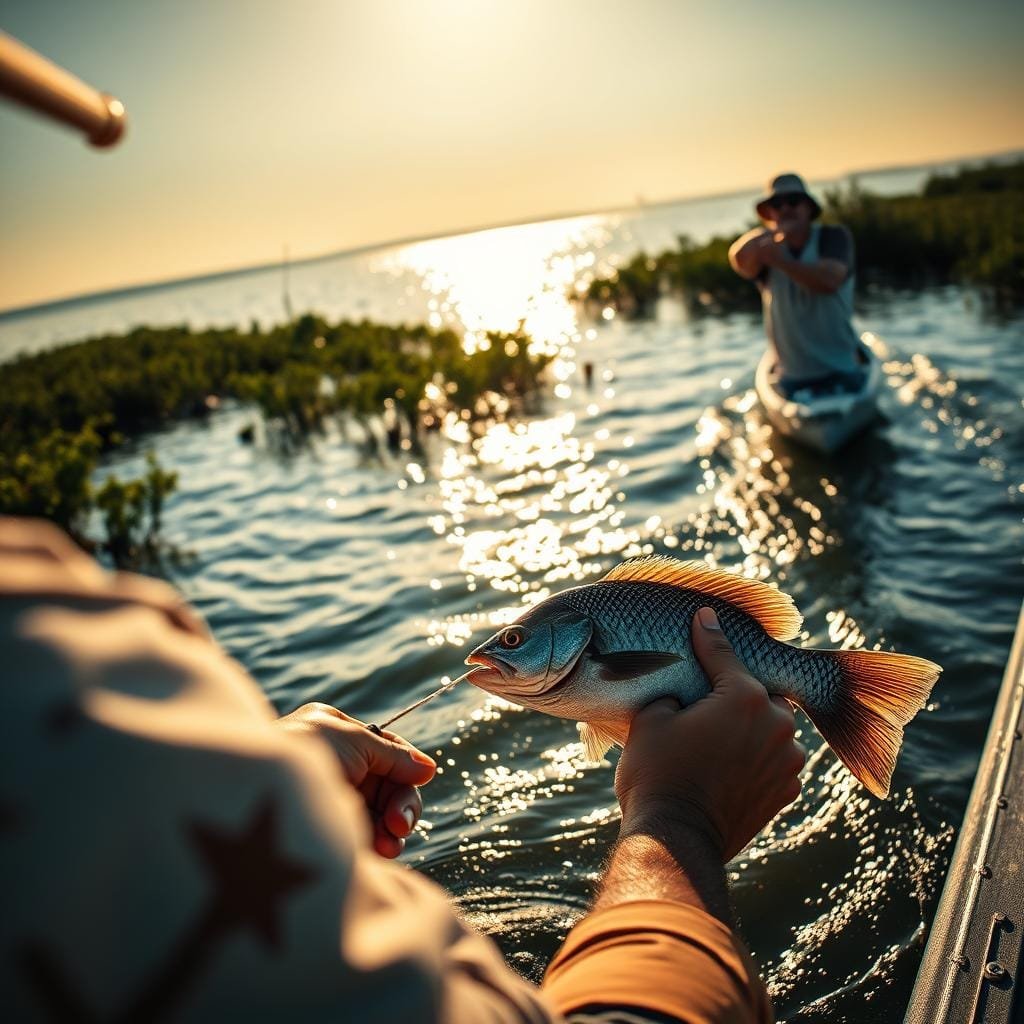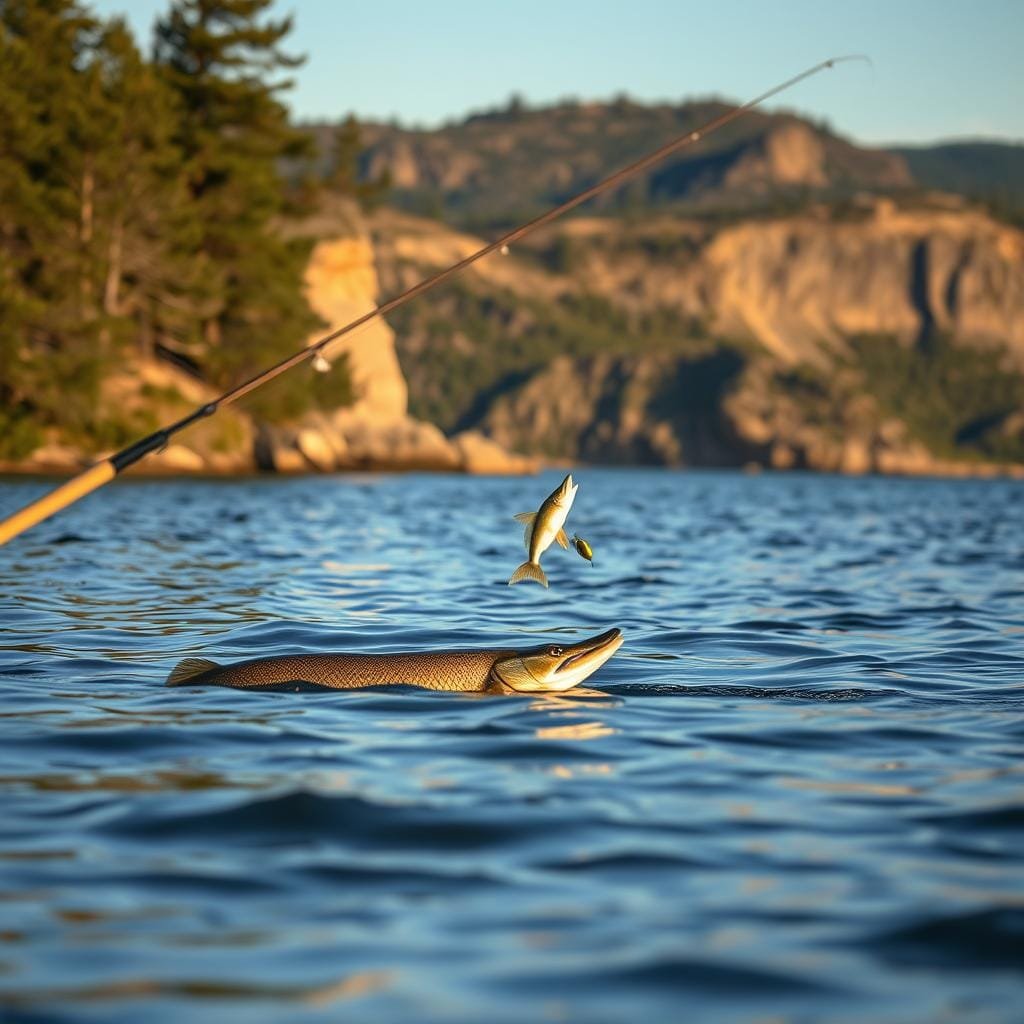
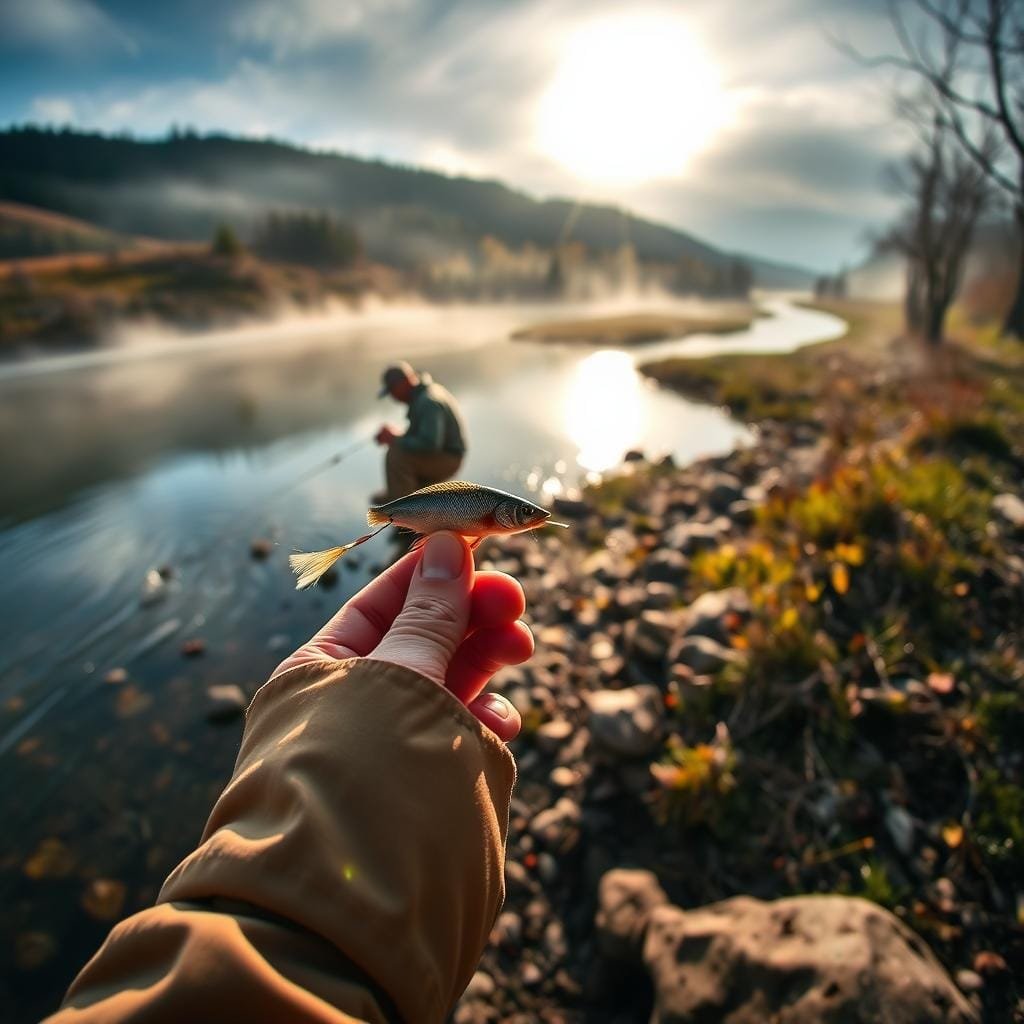
Want fast, no-nonsense action when the weather turns tough? Learning how to catch sauger gives you that edge. These hard-hitting cousins of walleye thrive in deeper, darker, and swifter water. Think main-channel ledges, river holes, and basin edges.
On Lake of the Woods, sauger often stack in 25 to 30 feet while nearby walleyes feed shallower. This pattern repeats across the Missouri River, Lake Francis Case, and the Illinois River.
Dial your game to low light. Sauger feed best at dawn, dusk, and after dark. They slide shallower on snowy, windy days. Spawning runs from March to May, often at night over firm bottoms, with no nest or parental care.
Use this timing to plan routes and waypoints. Smart sauger techniques start with clean bottom contact and a controlled pace.
For starters, keep your box stocked with sauger baits that shine in stained flow. Use glow blue, pink, and white jigs; ringworms and grubs in chartreuse, purple, or orange. Medium-wobbling cranks like the Lindy Wally Demon also work well.
Sauger jigging works when you hold tight to the bottom with 1/8- to 1/2-ounce heads. In current, scale to compact heads; in softer flow, go a bit longer. Pair with minnows, leeches, or nightcrawlers when the bite gets picky.
Build sauger rigs that stay near bottom without dragging. A 42-inch Lindy-style rig with a #4 hook and a lively minnow is money on river edges. Bottom bouncers help you tick, not plow. For broader water, try sauger trolling with leadcore, braid backers, and fluorocarbon leaders to dial exact running depth.
Medium to medium-heavy rods with 8- to 12-pound mainline and tougher leaders handle rocks and teeth.
If you’re weighing sauger vs walleye, remember this: sauger often bite when walleyes sulk under cold fronts. That’s your cue to fish deeper, embrace stain, and slow down. Follow these sauger fishing tips, match water color with bold patterns, and stay glued to structure. You’ll feel the thump, set the hook, and stack a memorable day on the river.
Sauger basics: identification, behavior, and seasonal patterns
Sauger live in big rivers and reservoirs. They like murky water. They are usually 12–15 inches long and weigh a few pounds. Knowing how to identify and understand sauger behavior helps you fish better.
How to tell sauger from walleye and saugeye
Look at the spiny dorsal fin. Sauger have dark spots on the fin webbing. Walleye have bars or a clean fin. Saugeye can have both spots and bars.
Color also matters. Sauger are bronze to olive with a pale belly. Walleye are more gold. Saugeye mix colors. Use light to see these differences, even in murky water.
Light sensitivity and low-light feeding windows
Sauger prefer dim water. They eat best at dawn, dusk, and night. They move shallower under dark skies and drop back when it gets sunny.
They keep eating in winter. A study shows they can eat at very low temperatures. This is why they stay deeper than walleye in bright days and move to structure at night.
Spawning timing and movements from March to May
Sauger spawn from March to May. They choose firm gravel or rock at night. Males gather around females, but there’s no parental care.
After spawning, they move to darker, swifter lanes. They sit a few feet deeper than walleyes. They follow current, flow, and temperature, but always prefer stable current and low light.
| Trait | Sauger | Walleye | Saugeye |
|---|---|---|---|
| Dorsal Fin Markings | Distinct dark spots across spiny dorsal | Bars or clean webbing, no round spots | Mixed bars and spots common |
| Tail Tip | No bright white lower tip | Bright white lower tail tip | May show a muted white tip |
| Typical Size | 12–15 in., 2–3 lb; smaller on average | Often larger than sauger | Intermediate between parents |
| Preferred Light | Low light, stained water, windy chop | Low light favored but tolerates more sun | Broad tolerance with crepuscular peaks |
| Typical Position | Deeper, darker, stronger current lanes | Slightly shallower on the same structure | Mid-depth between parental patterns |
| Spawn Timing | Night spawning; sauger spawn March May | Spring spawn, often earlier in clear water | Spring spawn; timing varies with system |
Prime habitats and where sauger hold in rivers and reservoirs
Sauger like dark, calm water with firm bottoms. In rivers and reservoirs, find them in deep, dark spots. These spots have less traffic and sunlight.
Look for areas where the current slows down and the bottom changes. This is where sauger like to be.
Check out this angler guide for more tips. It helps find good spots, like sand bars and ledges.
Main-channel edges, drop-offs, and deeper, darker water
Look at main-channel edges and drop-offs. In lakes, sauger are often 25–30 feet deep during the day. At night, they move shallower to hunt.
Outside bends, scour holes, and the front or tail of humps are good spots. They have lots of bait.
Mark short areas, 100–200 yards, as hot spots. The most active fish are near where a ledge meets a softer area.
Current tolerance and positioning on structure
Sauger can handle more current than walleyes. In moderate flow, they like to be on the head of a bar or ridge. They face the current.
When they eat, they move upcurrent a bit. Then they drop back to save energy.
Target areas where the current slows down. This includes island tips, dam tailraces, and rock pockets. Keep your line angle right to present your bait well.
Turbidity, substrate preferences, and depth ranges
Sauger can handle murky water well. This is why they bite often in stained systems. They prefer firm bottoms, like rock and gravel.
They like to be at least 5 feet deep. At night in summer, they come closer to shore. Look for them on wind-blown banks and gentle seams.
| Location Type | Key Trigger | Why It Holds Sauger | Typical Sauger Depth | Best Conditions |
|---|---|---|---|---|
| Main-channel edge | Current seam meeting a ledge | Concentrates bait and creates rest lanes | 15–30 ft | Moderate flow, stained water |
| Outside bend hole | Scour pocket with hard bottom | Deeper, darker water reduces light and pressure | 20–35 ft | Bright skies, clear fronts |
| Hump front/tail | Upstream face or downstream eddy | Ambush lanes as bait rides over structure | 18–28 ft | Steady current, mild wind |
| Island tip/sand bar | Edge of fast-to-slow water | Feeding station with firm sand or gravel | 10–22 ft | Low light, rising flow |
| Dam tailrace | Pulsed release creating breaks | Oxygen, bait influx, precise seams | 12–26 ft | Release changes, stained discharge |
| Riprap/ledge line | Rock-to-sand transition | Firm substrate and cover in one pass | 8–20 ft | Overcast or windy chop |
how to catch sauger
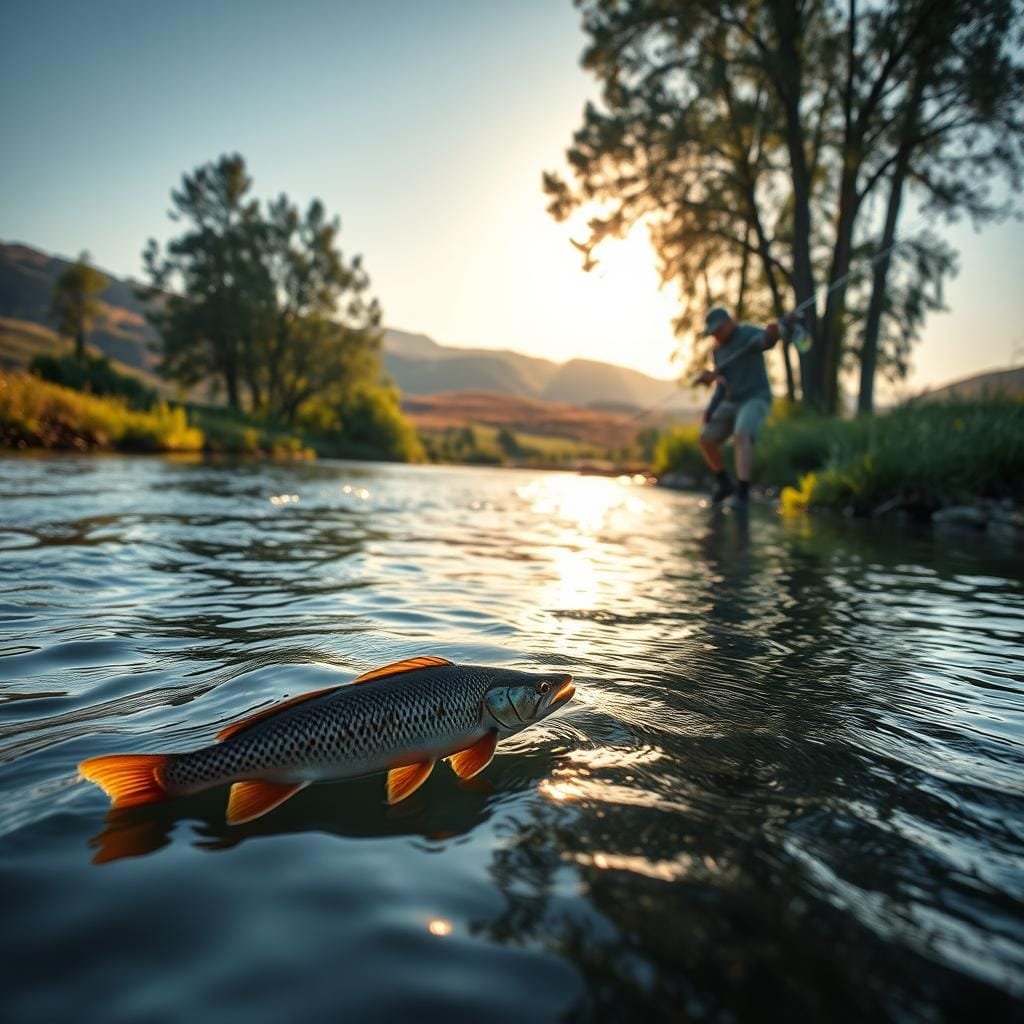
Start with a simple plan. Mix proven sauger fishing methods and keep your bait near bottom. Focus on current seams and deep bends, then rotate through sauger tactics until you get bit. Stay patient, make clean presentations, and track what works.
For vertical jigging sauger, touch bottom, lift 8–10 inches, hold steady, then lower. Run compact jigs like the Northland Fire-Ball, Lindy Jig, or Lindy Fuzz-E-Grub when flow is light. In stronger current, step up to longer profiles and add glow blue, pink, or white—colors that shine on the Missouri River system.
When bites get fussy, set a dead rod a foot off bottom and pause up to 30 seconds. Avoid dragging; moss and wood will eat your gear. Minnows such as fatheads or small shad in the 2–4 inch range, plus leeches and nightcrawlers, round out reliable sauger fishing methods.
Sauger live bait rigs turn lookers into eaters. Tow a 42-inch Lindy Rig behind a 2-oz bottom bouncer, pink #4 hook, and a minnow or a 1-inch Lindy Lil’ Guy. Troll just faster than the flow, keep the weight ticking, and hold a 45-degree line angle to stay in the strike zone.
Dial in sauger trolling with 18-lb leadcore to 18 feet of 15-lb braid and 6 feet of 14-lb fluoro. Pull medium-wobble cranks like the Lindy Wally Demon at speeds set by current—often 1.0–1.4 mph in heavy flow and up to about 2.3 mph in lighter water. Feel the plug thump through the rod to confirm clean action.
Drift or stil fish when wind or boat control gets tricky. Keep baits within 1–3 feet of bottom; lift out of that lane and strikes drop fast. Rotate through glow jigs, grubs, ringworms, and swimbaits to match mood and water color while staying true to core sauger tactics.
| Approach | Core Setup | Speed/Action | Best Use Case | Key Tip |
|---|---|---|---|---|
| Vertical jigging sauger | Northland Fire-Ball or Lindy Jig; glow blue/pink/white; minnow or grub | Tap bottom, lift 8–10 in., hold, lower | Deep edges, strong current breaks | Add a dead rod and extend holds to 30 sec when bites are light |
| Sauger live bait rigs | 2-oz bottom bouncer; 42″ Lindy Rig; pink #4 hook; minnow or Lindy Lil’ Guy | Troll slightly faster than flow | Long runs along channel sides | Maintain a 45° line angle and keep the weight ticking bottom |
| Sauger trolling | 18-lb leadcore > 15-lb braid (18 ft) > 14-lb fluoro (6 ft); Lindy Wally Demon | ~1.0–1.4 mph in heavy flow; up to ~2.3 mph light flow | Covering water to find roaming fish | Monitor plug vibration by touch to detect weeds or fouling |
| Drift/Stil presentations | Jig-and-minnow, leech, or nightcrawler; ringworms and swimbaits | Natural drift with controlled drops | Wind-aided slides over humps and edges | Keep baits within 1–3 ft of bottom to stay in the strike zone |
Blend these moves and you’ll master how to catch sauger with confidence. Rotate through sauger tactics, refine boat control, and let the fish tell you when to switch between vertical jigging sauger, sauger live bait rigs, and sauger trolling.
Best times to fish sauger: light, weather, and current factors
Timing is key when fishing for sauger. The best time depends on light, wind, and water flow. Watch the sky and water first. Then adjust your speed and depth.
Early morning, dusk, and overnight bites
Sauger prefer the dark. They move shallower at dawn, dusk, and night. Look for them on rock, gravel, or drop-offs. Use slow-moving baits close to the bottom.
In summer, the shore comes alive after sunset. Try quiet spots and riprap with a steady rhythm. Be ready early, as the best time is short.
Cold fronts and dark, windy days for trophy fish
Big fish come out when it’s windy and cold. A cold front makes them move shallower near deep water. Walleyes might hide, but sauger keep eating.
Fish slowly and close to the break. Use short leads and small lures. On bad days, one careful pass can catch more than many quick ones.
Reading water releases and adjusting to changing flow
Water flow is key near dams and at confluences. During dam releases, pay attention to lure vibrations. This tells you if you’re moving too fast or slow.
Changes in flow affect sauger behavior and location. In rising water, fish 2–4 feet off the bottom. If they seem calm, go closer, within six inches. On lakes like Lake Francis Case, adjust your speed based on the flow. Strong flow means slower speeds, while lighter flow is faster.
Jigging setups that excel for sauger
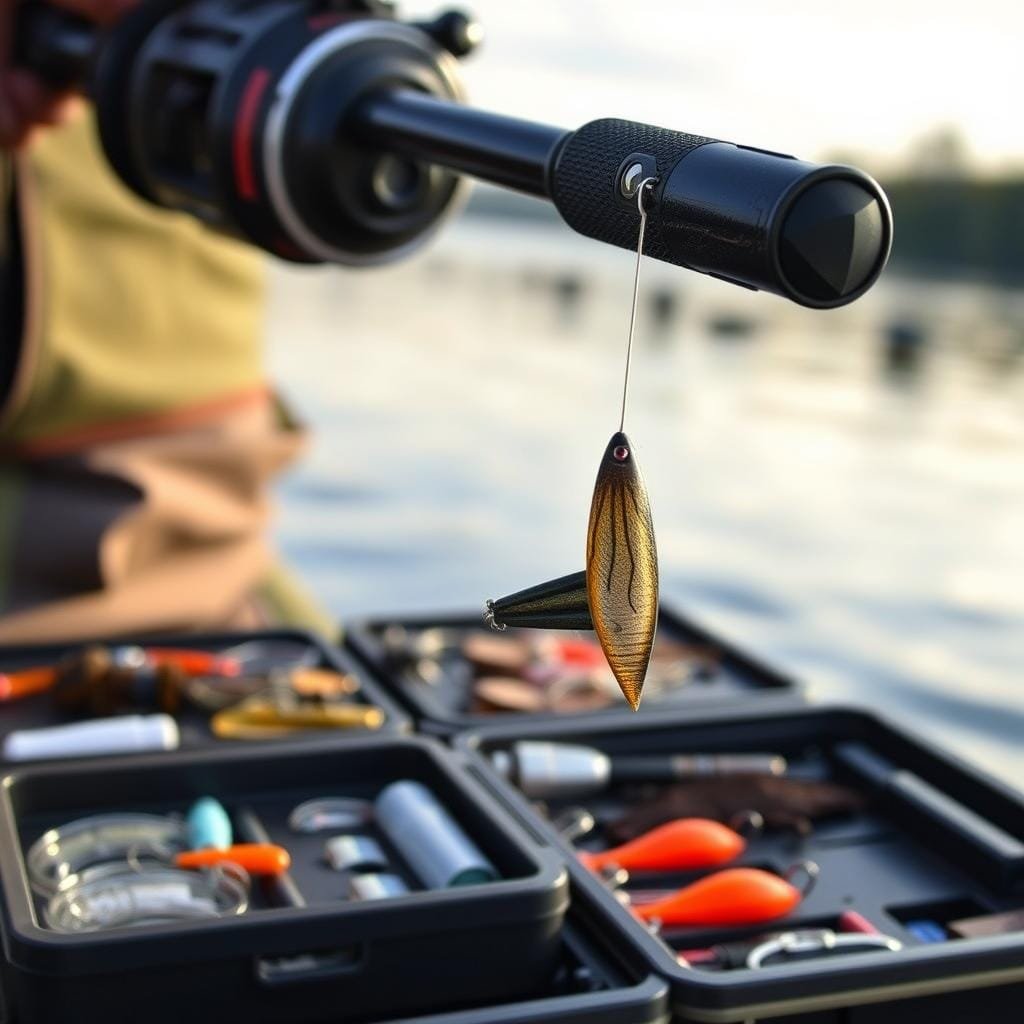
Sauger jigging is all about feeling the bottom and using the right jig shape. Use jigs that are small in calm water and longer in fast water. Change how you move your jig as the water moves.
Compact vs. longer jigs based on current strength
In calm water, small jigs work best. They drop fast and stay straight. But in fast water, use longer jigs to track better.
Choose the right jig weight for the water depth. Use 1/8 to 1/2 ounce jigs. Pick grubs or swimbaits in bright colors. This keeps your fishing easy.
Go-to colors: glow blues, pinks, whites, and bold patterns
In the Missouri River, sauger like glow colors like blue, pink, and white. Bright patterns work well in murky water. Try different colors until you find what works.
At dawn or dusk, start with white or pink glow jigs. Then switch to blue or chartreuse as it gets lighter. Add a plastic tail for extra action.
Vertical jigging cadence, dead-rod strategy, and minimizing snags
Use a quick, vertical jigging motion. Tap the bottom, lift, hold, then drop. Don’t drag the jig to avoid getting stuck.
Try a dead stick setup next to your active rod. Hold it a foot off the bottom for 30 seconds. Sometimes, a small movement can catch more fish.
- Models to try: Northland Fire-Ball, Lindy Jig, Lindy Fuzz-E-Grub
- Weights: 1/8–1/2 oz based on depth and current
- Plastics: 2–5 inch grubs, ringworms, and swimbaits
- Colors: glow blues, pinks, whites, and bold contrasts for dirty water
Live bait and rigging: bottom bouncers, Lindy rigs, and hook choices
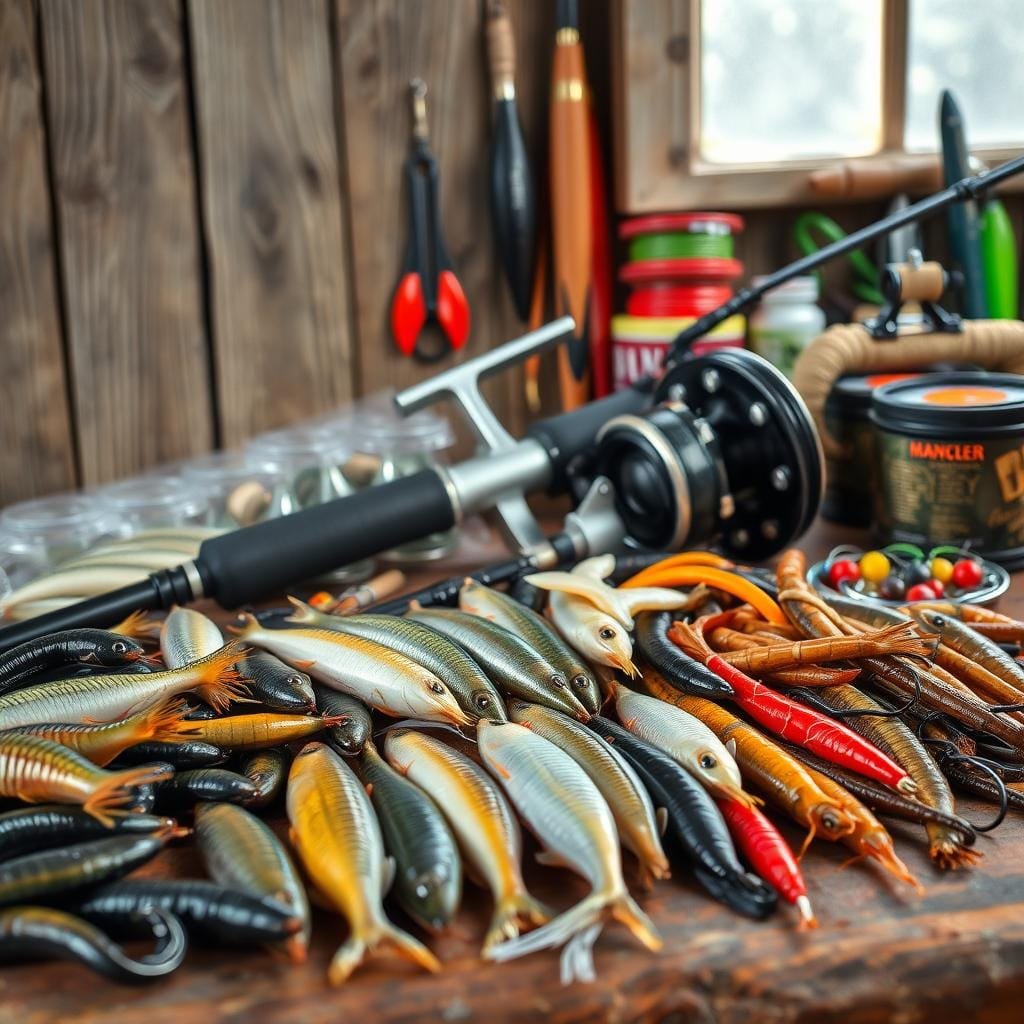
When fish shy from jigs, try live bait. Use a precise setup and steady boat control. Aim for subtle flash and clean contact with the bottom.
42-inch Lindy-style rigs with #4 hooks and minnows
Shorten a 50th Anniversary Lindy Rig to 42 inches. Attach a pink #4 hook minnow rig. Use a 2–4 inch fathead or small shad as bait.
For more thump, add 1-inch Lindy Lil’ Guys with minnows. This attracts even the most neutral fish.
Lip-hook the bait for a natural swim. If you get short strikes, move the hook back. This helps catch finicky fish.
Bottom contact: ticking, not dragging, at a 45-degree line angle
Use a 2-ounce bottom bouncer. Troll a bit faster than the current. This makes the blades wobble and keeps lines apart.
Keep the line angle at 45 degrees. Let the wire tick rocks, not drag them. This is key for a good bite.
Nightcrawlers, leeches, minnows, and when to switch
Start with minnows in cold water. As it warms up or bites slow down, switch to half nightcrawlers or leeches. Each has its own time and place.
Target 1.4–1.6 mph in moderate flow. Adjust speed to keep the rig working. Speed comes first, then depth, then bait choice.
| Rig/Bait | Best Use | Speed & Angle | Hooking Tip | Why It Works |
|---|---|---|---|---|
| 42″ Lindy Rig + minnow | Cold water, clear bites | 1.4–1.6 mph, line angle 45 degrees | Lip-hook; move to mid-back if short strikes | Natural swim and precise control for Lindy rig sauger |
| Bottom bouncer + crawler half | Warming water, light stain | Just faster than current, line angle 45 degrees | Thread 1–2 inches up shank on a #4 hook minnow rig | Steady thump, long scent trail for bottom bouncer sauger |
| Lil’ Guy + leech | Neutral fish, mixed current | Maintain tick, not drag; line angle 45 degrees | Nose-hook to keep the leech lively | Compact profile with flash and pulse for sauger live bait |
Trolling tactics with crankbaits and leadcore
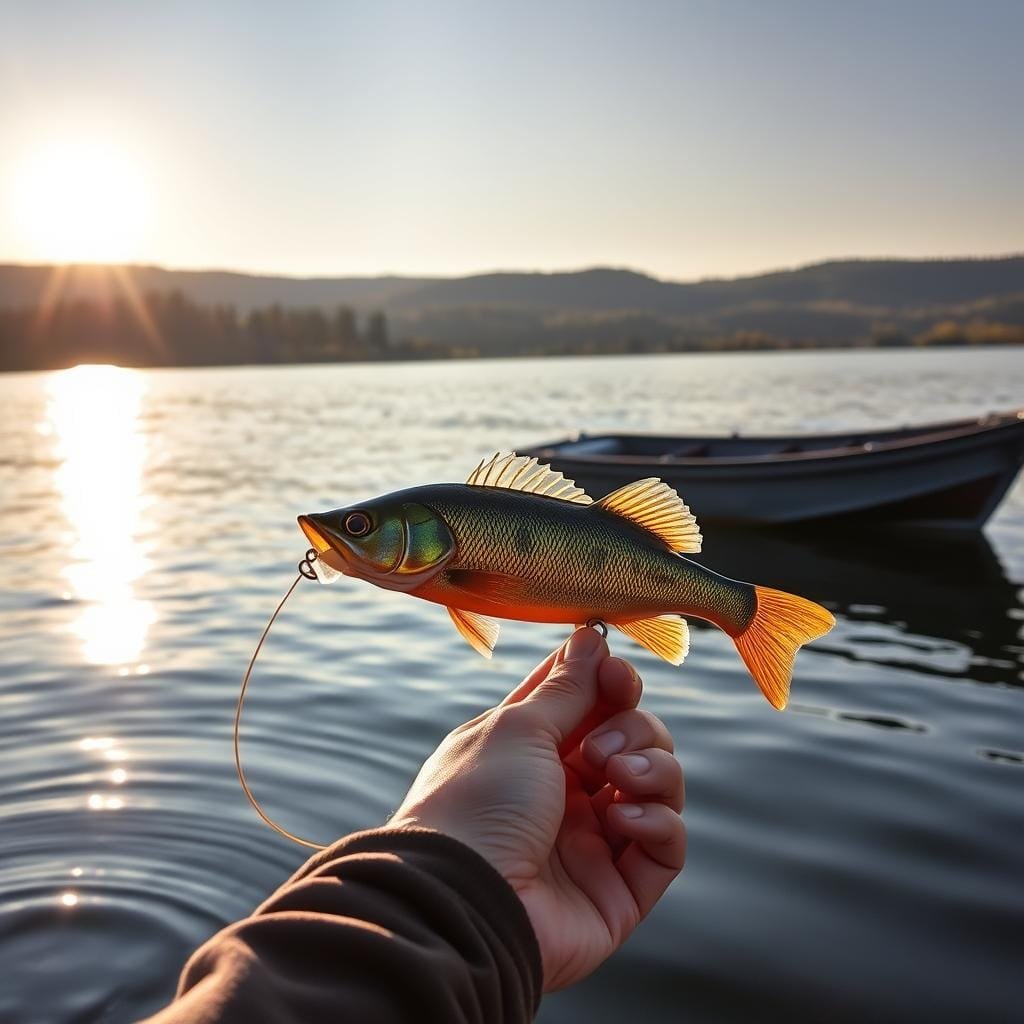
Cover water fast and keep baits honest. This is key for a crankbait sauger program. Use small tweaks to get the right zone.
Keep the vibration steady and clear the bottom. Control the trolling speed as the river changes.
Leadcore-braid-fluoro leaders and dialing running depth
Start with 18-lb leadcore on a line-counter reel. Add 18 feet of 15-lb braid and 6 feet of 14-lb fluorocarbon. This setup works great with medium-wobbling cranks like the Lindy Wally Demon.
It’s perfect for sauger trolling because it handles turns and net jobs well. It also stays stealthy.
Use color counts and leader length to set running depth. Put baits 2–4 feet off bottom when fish roam. Or ride within 6 inches when they pin tight.
For deeper dives, check out this leadcore depth guide for color-to-feet rules and planer board tips.
Speeds relative to current and feeling plug vibration
Let the lure tell you the truth. Touch the rod often to feel a clean, even thump. Below big inflows, 1–1.4 mph often shines; above confluences with lighter flow, 2–2.3 mph can be right.
Match trolling speed current to depth targets. Keep the wobble tight, not blown out.
If bottom contact turns into hang-ups, swap the rear treble for a single straight-shank hook. You’ll tick rock, but you’ll hang less and stay in the game longer with sauger trolling leadcore.
S-turns, rod pumps, and managing doubles and triples
Work controlled S-turns rod pump sequences to trigger neutral fish. S-turns speed up outside lines and stall inside ones. A few quick rod pumps change cadence without changing course. Many hits come right after that pulse or stall.
When a fish loads up, keep the boat moving. Let the rod fight the fish for 30–40 seconds before you touch the drag. Maintain the S-turns rod pump rhythm on the other sticks to set up doubles and triples with the same Wally Demon setup and crankbait sauger mix.
| Component | Recommended Spec | Purpose | On-Water Cue |
|---|---|---|---|
| Main Line | 18-lb leadcore | Depth control via color counts | Adjust colors to ride 0.5–4 ft off bottom |
| Connector | 18 ft of 15-lb braid | Handling and sensitivity | Clean feel during turns and pumps |
| Leader | 6 ft of 14-lb fluorocarbon | Stealth and abrasion resistance | Less fouling, better bites in clear seams |
| Lure | Lindy Wally Demon | Medium wobble, stable on leadcore | Even thump at 1–2.3 mph |
| Boat Speed | 1.0–1.4 mph (heavy flow), 2.0–2.3 mph (light flow) | Match trolling speed current to hold depth | Rod-tip buzz stays smooth, not erratic |
| Maneuvers | S-turns and rod pumps | Micro speed/cadence changes | Strikes on outside-speed or inside-stall |
| Hook Mod | Rear single straight-shank | Reduce snags while bottom-ticking | Fewer hang-ups on rock and timber |
Regional hotspots and river systems to target in the U.S.
From ice-out into summer, some waters are hotspots for big fish. The Midwest South has famous rivers and big lakes. Each spot has its own best times and ways to catch fish.
Missouri and Illinois Rivers, Lake Francis Case, and Lake of the Woods
In Illinois, the Illinois River sauger near Spring Valley are famous in March. People use hand-lining, pole-lining, and bright jigs to catch them. They often catch fish that weigh two pounds or more.
On the Missouri River, near Chamberlain, the sauger are big. Lake Francis Case has sauger that are 17 to 19 inches long. They are near the White River confluence. To catch them, troll leadcore and use sweep jigs on breaks. Also, crankbaits work well from prespawn to late May.
Up north, Lake of the Woods has sauger in 25 to 30 feet deep in early summer. Walleyes are shallower. Use jig-and-minnow combos and crankbaits along mud-to-sand transitions. This works well as the day gets longer.
Midwest and southern range: major basins and tributaries
The sauger range in the Midwest South goes from the Prairie Provinces to the Great Lakes. It also goes down the Mississippi, Illinois, and Ohio rivers. The rivers have lots of habitat, which keeps fish moving.
Oklahoma adds a southern twist. Fish are in the Arkansas, Poteau, Illinois, Red, and Neosho watersheds. Plus, there are many reservoirs. This area mixes northern fishing patterns with warm-water fishing and murky tributaries.
Shoreline opportunities during summer nights
When it gets warm, Lake of the Woods and Missouri River sauger move shallow at night. Illinois River sauger do the same in town stretches. Look for rocky banks, dams, and points where current meets structure.
Cast compact cranks or glow jigs into the first drop and retrieve slowly. In marinas, coves, and windy bays, look for subtle thumps. This usually means a big Lake Francis Case sauger. Keep moving until you find life, then fish that area hard.
Gear checklist: rods, line, leaders, and terminal tackle
Get the right sauger gear for the water and depth. Use medium to medium-heavy rods with spinning or baitcasting reels. Add a line-counter reel for trolling.
For casting and jigging, use 8–12 lb sauger line. Use heavier sauger leaders or thin wire for tough spots. For trolling, use an 18-lb leadcore setup.
Make a terminal tackle box for rivers and reservoirs. Use a 2-oz bottom bouncer for Lindy-style rigs. Carry swivels, hooks, and jig heads for vertical fishing.
Stock up on hard baits and plastics. Use medium-wobble cranks and deep divers for long lines. Lipless baits and jerkbaits work well in calm spots.
Carry live bait for changing conditions. Use minnows, nightcrawlers, and leeches for different situations. Change baits as conditions change.
Don’t forget useful extras. Carry a coated net, pliers, and a hook sharpener. Use sonar and GPS to mark good spots.
- Rods & Reels: Medium–medium heavy sauger rods; spinning or baitcasting; line-counter reels for precise leadcore setup passes.
- Lines & Leaders: 8–12 lb sauger line for jigs; heavy sauger leaders or wire for abrasion; 18-lb leadcore to 15-lb braid and 14-lb fluoro for trolling.
- Terminal Tackle: 2-oz bottom bouncer, 42-inch Lindy rigs, #4 hooks, swivels, 1/8–1/2 oz jigs, clip weights.
- Lures: Lindy Wally Demon; Bandit Walleye Deep (Blue Shiner, Plasma, Sun Spot); Cotton Cordell Super Spot Royal Shad; Bandit B-Shad (Popsicle, Orange Crush); Zoom Fat Albert; Mister Twister ringworms and Tri-Com Sassy Swimmer; Lindy Colorado Blade Crawler Harness #3.
- Accessories: Coated net, pliers, hook sharpener, aerated bait bucket, sonar with GPS to log productive lanes.
Top lures and colors that trigger sauger
Start with compact jigs and plastics for sauger bait. Use Northland Fire-Ball, Lindy Jig, and Lindy Fuzz-E-Grub. Pair them with 2–4 inch shiners or paddletails for most days.
Sauger jig colors like glow blue, pink, and white work well. Chartreuse, purple, blue, and orange are good when light changes. Make the jig heavy enough to touch bottom, then lift and hold.
When fish slide off, raise the bait 2–4 feet. If they sulk, work close to bottom, within 6 inches.
For roaming fish, crankbaits are key. Use medium- to deep-diving plugs like Lindy Wally Demon and Bandit Walleye Deep. Colors like Blue Shiner, Plasma, and Sun Spot work well.
Lipless crankbaits like Cotton Cordell Super Spot in Royal Shad also attract fish. In stained water, tiger perch and purple-backed patterns are best. Keep speeds tight to feel a constant pulse.
In low light or stained water, 3–5 inch jerkbaits are great. Bandit B-Shad in Popsicle or Orange Crush is a top choice. Add spinner rigs behind bottom bouncers in choppy water.
A Lindy Colorado Blade Crawler Harness with a #3 blade in Purple Smelt is good with live bait. This mix of flash and thump works well with sauger jig colors.
Don’t forget live bait like fathead or shad minnows, nightcrawlers, and leeches. Use 2–4 inch minnows for a natural look. In turbid water, use sauger colors glow blue pink white. In clearer water, try white, purple, and perch hues.
Combine these with crankbaits for sauger. You’ll have the best lures for any current, depth, or light.