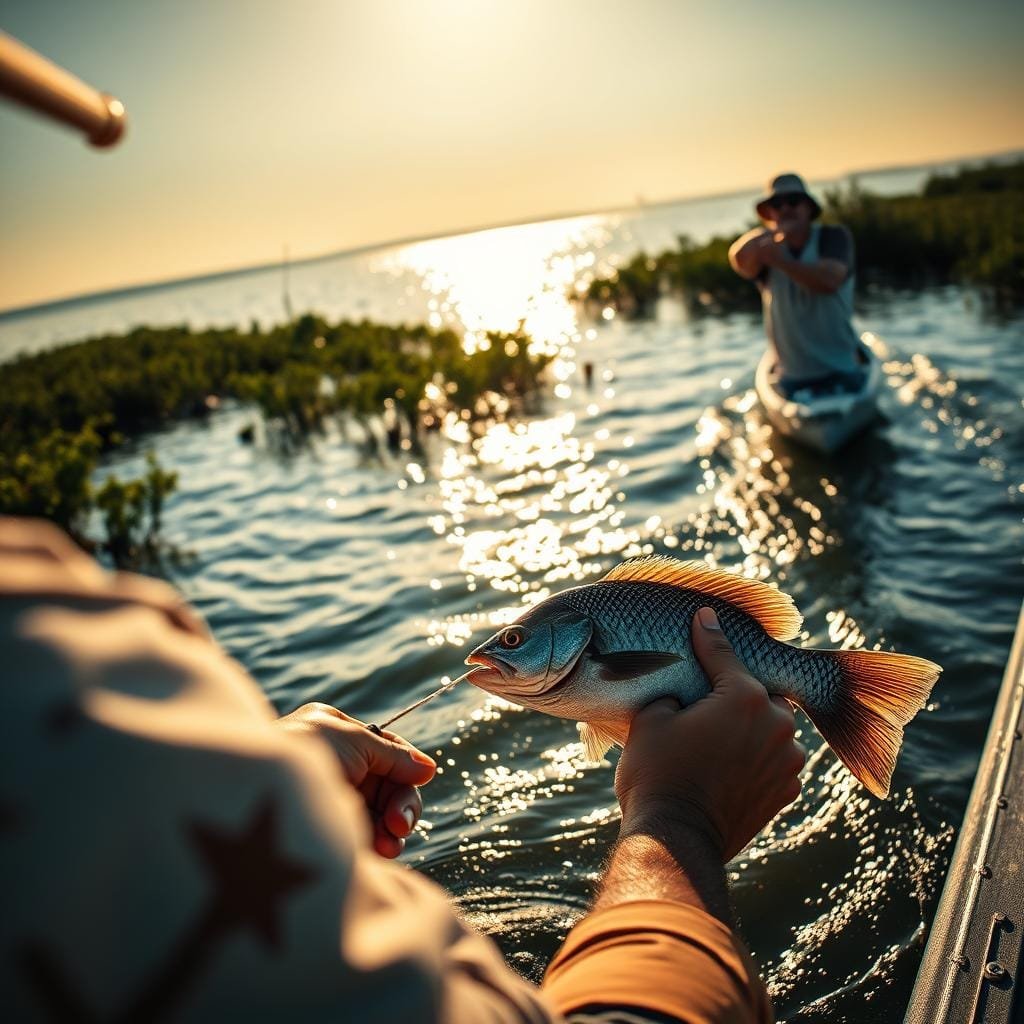
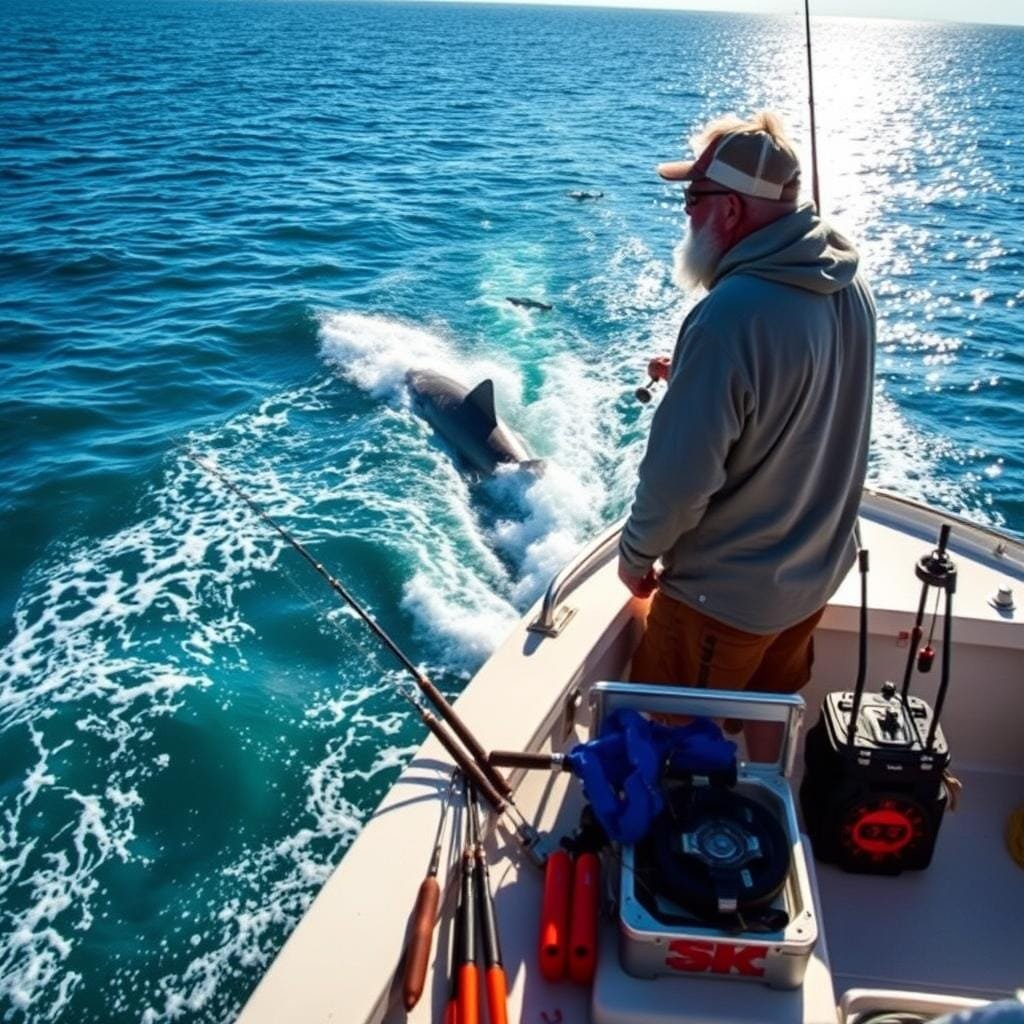
Welcome to the exciting world of shark fishing adventure. It’s a challenge that can pay off big for new anglers. Learning shark fishing tips can make catching these big fish easier. Thanks to new tech, even beginners can enjoy easy shark catching techniques.
Getting the right gear is the first step. You’ll need strong reels and braided lines that are 50 to 100 pounds. This lets new anglers tackle big sharks with confidence. Lighter rods and special belts help make the fight easier and keep the shark safe.
To learn more about the best gear for your shark angling guide, check out this detailed guide here.
Shark fishing is not just about catching fish. It’s also about taking care of the ocean. With the right knowledge and gear, every trip can be a memorable part of your fishing story. Stay tuned for more tips on how to enjoy this sport and keep the oceans full of life for others to explore.
Understanding Shark Fishing Basics
Shark fishing needs skill, patience, and knowledge. You must know where and how to fish. It’s important to pick the right spots and understand shark behavior and where they live.
Choosing the Right Location
Finding the best spot for shark fishing is like hunting. You need to know the sea well. Look for underwater features like ledges, wrecks, and holes.
Watch for signs like rip lines, surface disturbances, and slick lines from feeding. Also, observe baitfish and bird activity. These can help find good shark fishing spots.
Understanding Shark Behavior and Habitat
Sharks prefer water between 65 to 68 degrees Fahrenheit. They have a strong sense of smell. This helps them find food, which you can attract with chum.
Place the chum slick right to draw sharks to your bait. This makes them come closer to your fishing spot.
Essential Gear for Shark Fishing
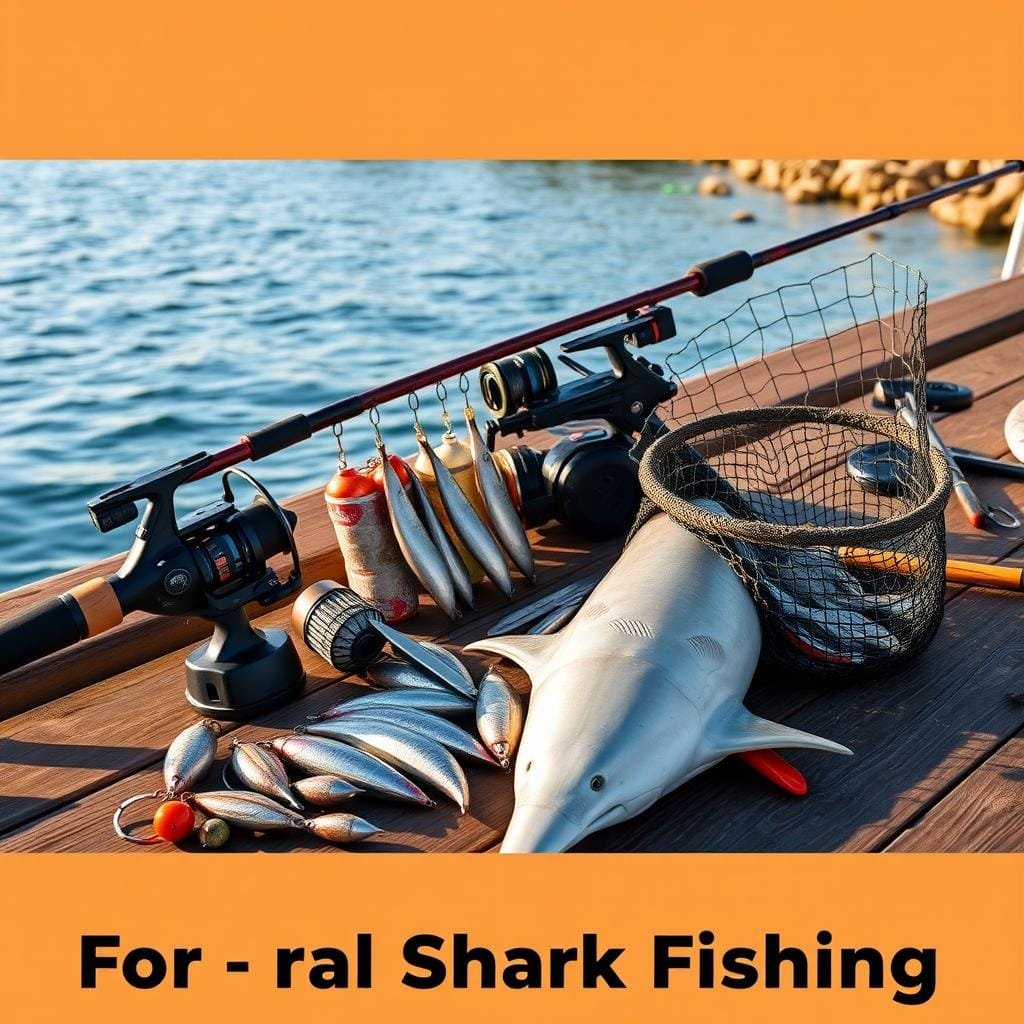
Good shark fishing needs the right tools. This includes strong reels and shark rigs. Being ready with the right gear can make a big difference.
Selecting the Right Rod and Reel
Choosing a rod and reel that can handle sharks is key. Reels like the Shimano Talica 25 are made for heavy fishing. They work best with rods like Shimano Terez, which use braided lines.
These rods help manage shark struggles while keeping you aware of bites.
The Importance of Using Braided Line
Braided lines are great for shark fishing. For example, PowerPro 80-pound-test line is strong but thin. This lets you use more line, which is good in fast currents.
Choosing the Correct Hooks and Leaders
Choosing the right hooks and leaders is important. Use heavy-duty hooks like 20/0 circle hooks. Leaders should handle a lot of pressure.
Things like stainless steel cables and strong swivels are key. They keep your gear reliable and strong against shark force.
For more gear tips, see this guide on land-based shark fishing. It helps pick the best gear for your shark fishing trip.
| Component | Description | Specification |
|---|---|---|
| Reel | Shimano Talica 25 | High-performance, suitable for braided line |
| Rod | Shimano Terez | Optimized for strength and sensitivity |
| Line | PowerPro 80-pound-test braided line | Small diameter yet strong |
| Hook | 20/0 circle hook | Designed for maximum strength |
| Leader | Stainless steel multi-strand cable | Durable and resistant to shark bites |
Using these parts in your gear will make fishing better. It also keeps fishing safe and good for the sport.
Preparation: Setting up for Success
Getting ready for shark fishing is key. You need effective chumming techniques and a strong bait strategy for sharks. These help attract sharks and make your fishing trip better.
Creating an Effective Chum Slick
Making a good chum slick is very important. Use the right chumming techniques to make a strong chum slick. Place chum buckets at the bow and stern to keep chum flowing.
This helps sharks find your boat. It makes your fishing better.
- Use fish-based chum from local markets.
- Keep chum buckets full to keep the flow going.
- Put chum buckets where the water and wind are right.
Devising a Strategic Baiting Plan
A good bait strategy for sharks goes with the chum slick. Use different baits like mackerel, bluefish, and bunker. This makes the slick smell and look better.
Each bait should be used in a way that works best. For example, use butterfly cuts on mackerel to make it move more.
- Watch the chum slick to change your bait plan.
- Swap out baits that don’t work to keep sharks interested.
- Think about the depth of your baits to catch certain sharks.
How to Catch Shark: A Step-by-Step Approach
Catching sharks is both challenging and rewarding. It takes several key steps. Using the right shark fishing techniques helps you succeed. Here’s a guide to help you from start to finish.
- Prepare Your Gear: Make sure your reels and lines are ready. Use strong braided line for catching sharks.
- Rig the Bait: Choose the right hook size for your bait. Secure bait well to catch sharks.
- Deploy Chum Slick: At the fishing spot, start releasing chum. This attracts sharks for a fun catch.
- Set Bait Lines: Place bait lines at different depths. This increases your chances of catching something.
- Wait for the Bite: Be patient. Sharks need time to bite. Count 5 to 10 seconds before pulling the line tight.
- Secure the Hook: When you feel a tug, reel in tight. Give two firm pumps to hook the shark. This is key to catching sharks.
- Stay Prepared for Action: Be ready for strong movements. If the shark comes towards the boat, use flying gaffs.
By following this guide, you’ll improve your shark fishing skills. It boosts your confidence and skill in handling sharks. With practice, catching sharks will be an exciting part of your fishing adventures.
Identifying Prime Shark Fishing Spots
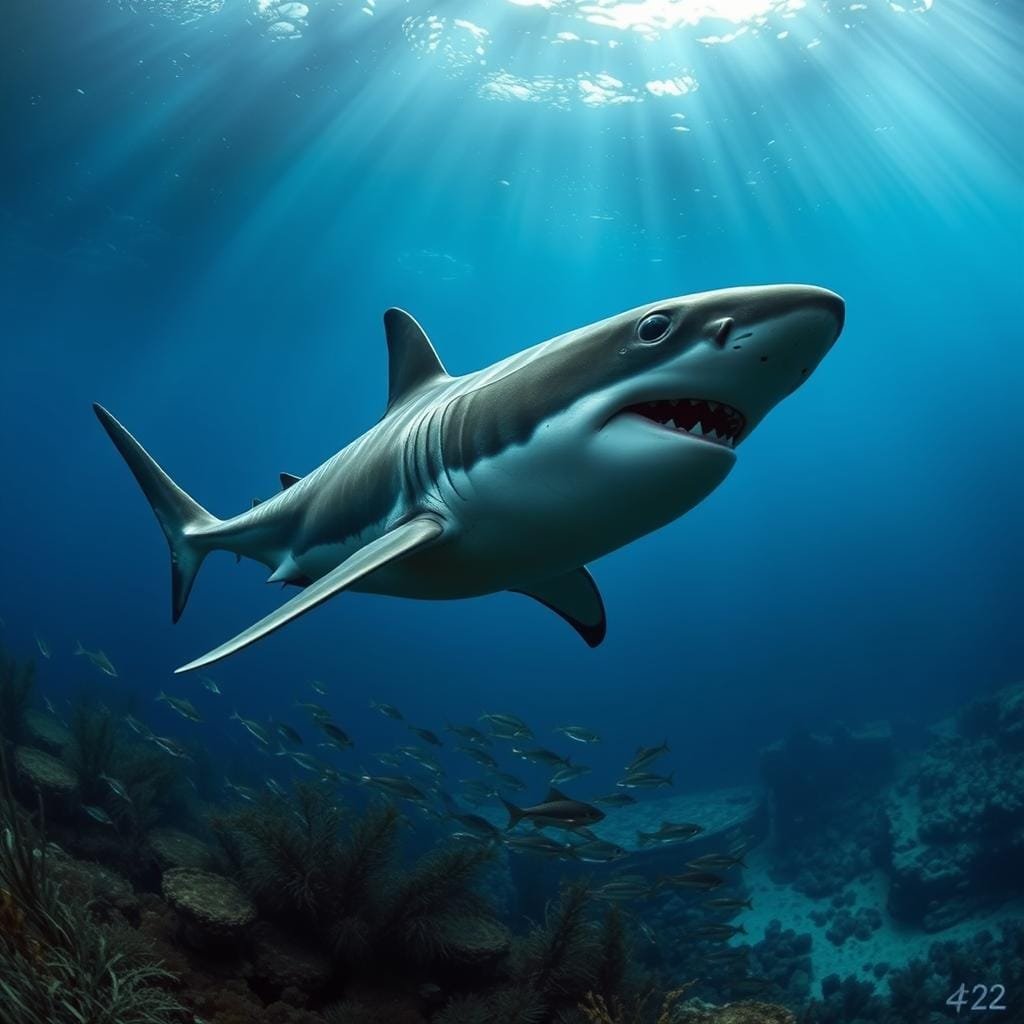
For those who love shark fishing, finding the best spots is key. This is true for both coastal and offshore fishing. The thrill of catching a shark starts with picking the right place. This greatly boosts your chances of a good catch.
Coastal Areas and Surf Fishing
Coastal areas are great for shark fishing. They offer the chance to catch blacktip and bull sharks. Plus, they are easy to get to.
These spots are perfect for those who like to see land. You don’t need a lot of special gear. Surf fishing from the shore is popular for beginners and pros alike.
Offshore and Deep-Sea Fishing Locations
Offshore shark fishing is exciting. It’s for catching big sharks like mako and tiger sharks. These sharks live far from shore, so you need to go out there.
Going offshore is an adventure. You might see some of the ocean’s biggest creatures. Florida’s waters are known for their shark fishing.
Exploring these places lets you see sharks up close. You can learn about their hunting and migration. Look for schools of baitfish to find sharks.
The table below helps you choose between coastal and offshore fishing. It compares them based on what you like and what you can do.
| Location Type | Accessibility | Typical Shark Species | Recommended Gear |
|---|---|---|---|
| Coastal/Surf | High (Accessible from shore) | Blacktip, Bull | Standard rods, simpler rigs |
| Offshore/Deep-Sea | Low (Boat required) | Mako, Tiger | Heavy tackle, specialized rigs |
Mastering the Art of Baiting and Luring Sharks

Shark fishing depends a lot on how you bait and lure them. Knowing the best baits and methods can increase your chances of catching a shark. It also makes fishing more fun and rewarding.
Choosing the right bait is key. Sharks smell a lot, so baits with strong smells work best. Fish like mackerel and bluefish are great because they smell strong. We’ll look at how to pick and prepare these baits to attract sharks.
Choosing the Best Baits for Shark Fishing
Picking the right bait means knowing what sharks like to eat and where you’re fishing. For example, using butterflied mackerel makes it smell even stronger. Rigging bunker fish in a special way keeps them looking natural and secure against shark bites.
Using big pieces of bluefish when there are lots of small fish around is smart. It keeps the small fish away and attracts bigger sharks. Adding a shiny skirt to the bait makes it look better and hides the hook from sharks.
Top Techniques for Luring Sharks
To lure sharks, you need the right bait and how you present it. Making a chum slick by mixing fish parts in the water creates a scent trail. This trail leads sharks to your boat. When a big shark shows up, be ready to use a special bait to catch it.
| Bait Type | Preparation Method | Best Used For |
|---|---|---|
| Mackerel | Butterflied to enhance scent | Deep water shark fishing |
| Bluefish | Filleted in large sections | Areas with high competition |
| Bunker | Rigged through the lips for natural appearance | Coastal and surf shark fishing |
Getting better at baiting and luring sharks makes fishing more exciting. Whether you’re new or experienced, knowing how to bait and lure sharks can help you catch more.
The Fight: How to Reel in a Shark
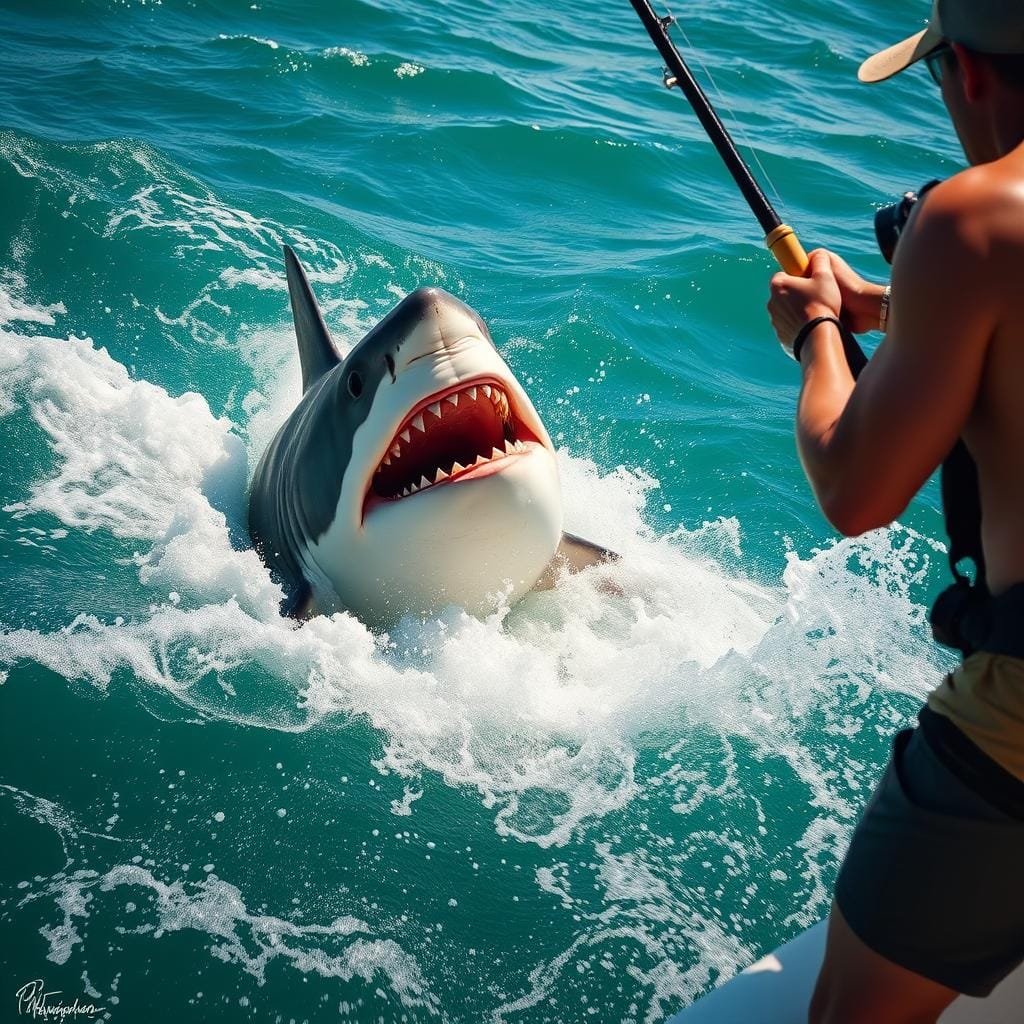
Reeling in a shark needs skill and precision. Every moment is key for success. Knowing how to handle a shark strike and fight it safely is important.
When a shark strikes, knowing how to handle it is key. Letting the shark take the bait before setting the hook is important. For more tips, visit this comprehensive beginner’s guide.
Tips for Handling the Initial Strike
- Stay calm and wait until the shark firmly grips the bait before setting the hook.
- Make sure the line is tight. Use braided lines for more control.
- Be ready for a strong pull. Counteract the shark’s powerful movements.
Fighting the Shark: Techniques and Safety Measures
Shark fighting techniques need more than just force. They require a smart approach to manage the shark’s power and unpredictability. Using the right gear and techniques can change your fishing trip.
- Keep the line tight. Reel continuously and hold the rod firmly to prevent the shark from throwing the hook.
- Use fighting belts and harnesses to reduce physical strain and make reeling easier.
- Keep talking to your team, even when the shark is near the boat. This helps avoid accidents.
Shark fishing safety is very important. It’s not just for the anglers but also for the shark. It’s key to manage the fight safely for both. For more on gear and techniques, see this detailed guide.
Reeling in a shark is not just about being strong. It’s about planning, adapting, and using the best practices during the fight. A successful catch can make your fishing trip exciting and memorable.
Catch and Release: Ensuring Shark Survival
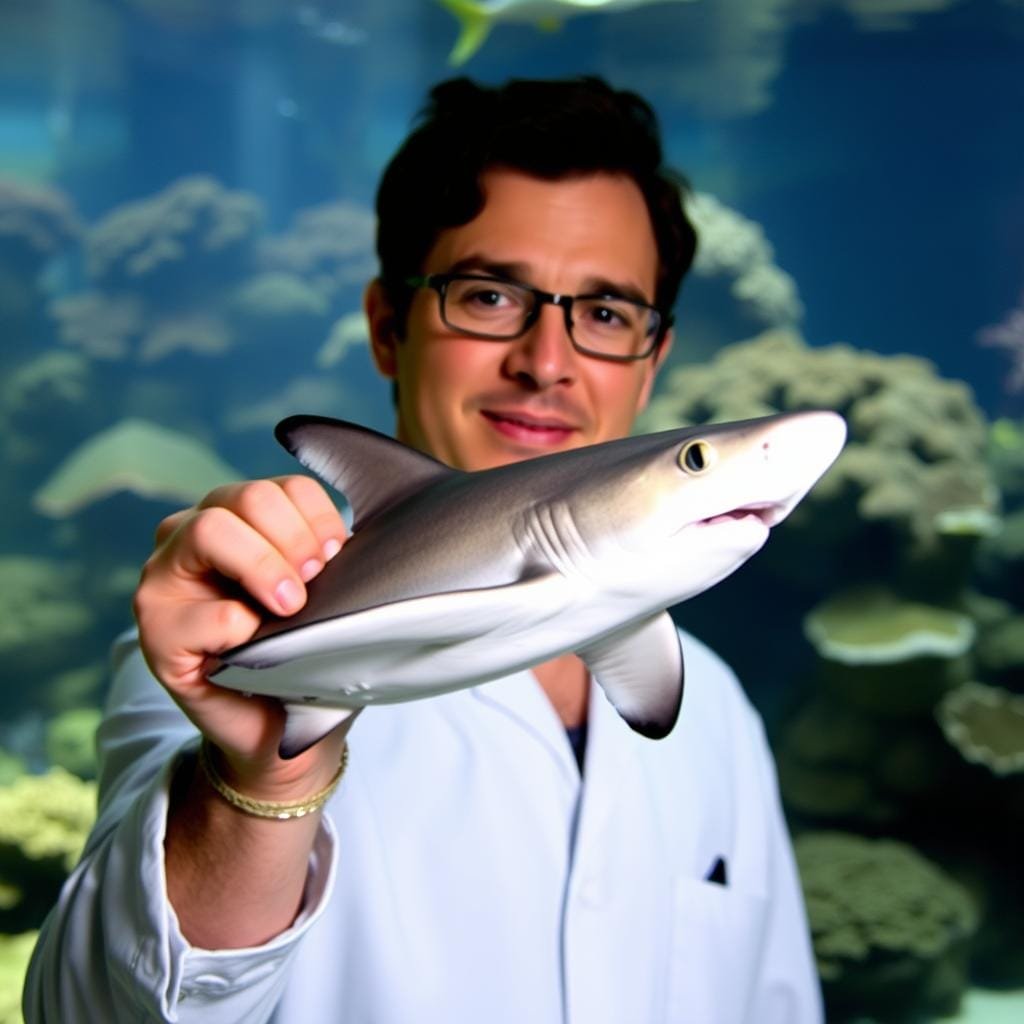
Practicing catch and release shark fishing is key for shark health and shark conservation. Anglers must use the right shark handling for release to stay safe and protect the shark.
Knowing how to release a shark right can help it live longer. This supports shark fishing sustainability. Tools like release sticks help remove hooks safely, without hurting the shark too much.
- If the hook is stuck deep, cutting the leader close to the hook is best. This hurts the shark less and helps it recover better.
- Releasing sharks quickly and gently is very important. It makes them less stressed and helps them adapt back to the wild.
Following these steps helps anglers support shark conservation. It keeps the ocean’s balance for now and for the future. Ethical fishing shows we care about the environment and lets shark fishing continue.
Beyond the Basics: Advanced Shark Fishing Tips
For those who love shark fishing, learning advanced techniques can make it more exciting. Studying baitfish behavior and how seasons change shark activity is key. This helps find the best times and places to fish, saving time.
Changing how you present bait and improving chumming can also attract sharks. This makes them more likely to bite your hook.
Being an expert in shark fishing is more than just fishing. It’s about watching the environment closely. Look for signs like nervous water or odd baitfish movements. Knowing how to react to these signs is important.
Having the right gear is also vital. Keep extra tools like release sticks ready. This way, even if something breaks, you won’t lose your catch.
Using the right gear and understanding the sea can help you catch more sharks. It also helps protect our oceans. As you learn to fish like a pro, you’ll enjoy the journey and help the sea at the same time.