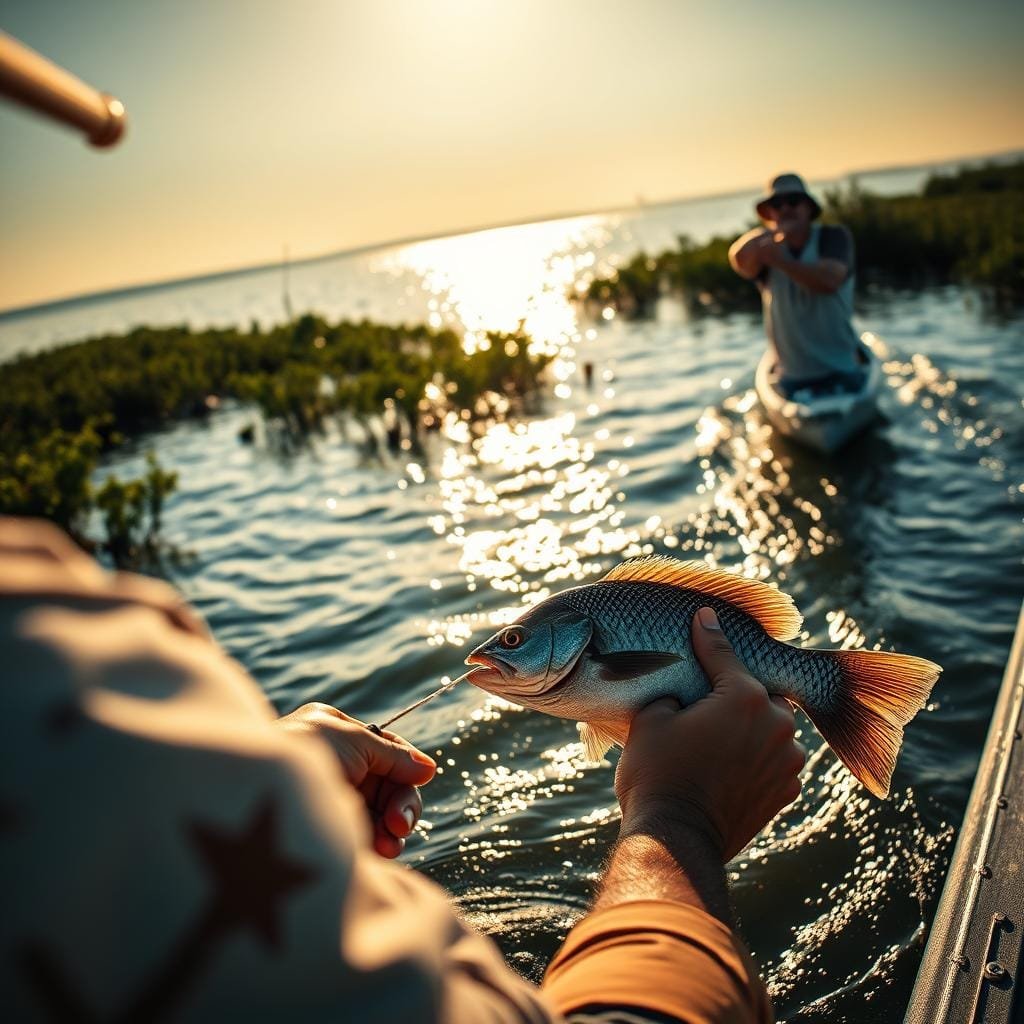
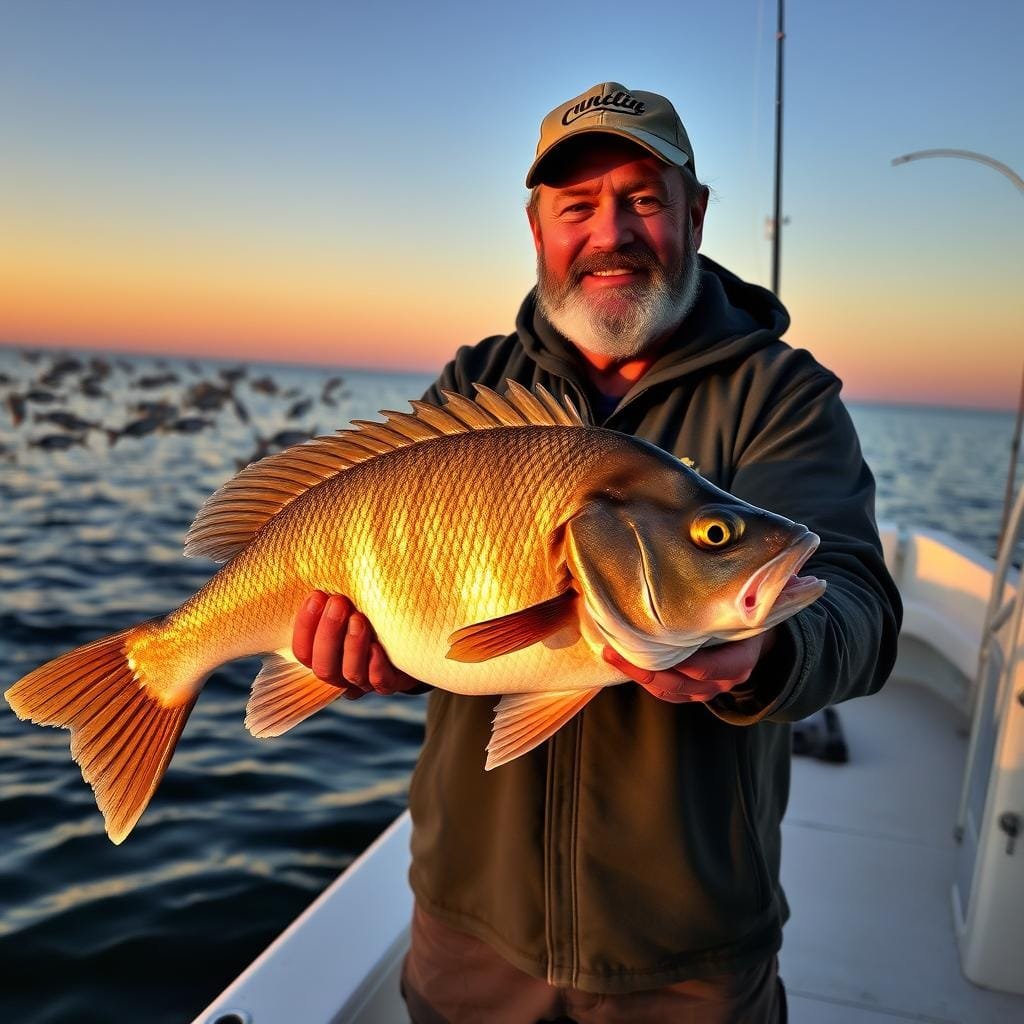
If you want to catch sheepshead, you’re in the right place. This guide will teach you how to catch these unique fish found along U.S. coasts. You’ll learn how to find them and what they like to eat.
It’s perfect for all anglers. You’ll get tips from experts who know the water well. They’ll help you pick the right gear and bait to catch sheepshead.
Our guide is for everyone, no matter your skill level. You’ll learn how to choose the best rod and reel. And what baits will attract sheepshead.
So, stop worrying and start fishing! Let’s explore the world of sheepshead fishing together.
Understanding Sheepshead Behavior and Habitat
Sheepshead behavior is really interesting. They like to live in certain places. These places have lots of food for them.
They like to be around oyster bars, mangrove roots, and bridge pilings. These spots are covered in barnacles. Their special teeth help them eat barnacles and other crustaceans.
When it’s time to spawn, sheepshead move a lot. They can go up to 30 miles offshore. They go to the Gulf of Mexico to spawn.
This move is important for their babies. It helps their population grow in coastal waters.
Anglers can catch more sheepshead if they know their habits. Fishing at the right time can make a big difference.
Sheepshead choose their homes wisely. They pick places with lots of barnacles and crustaceans. This makes them strong and active all year.
For anglers, knowing about sheepshead behavior and habitat is key. It helps find the best spots and times to fish. This makes fishing more fun and successful.
Essential Gear for Targeting Sheepshead
To catch sheepshead, you need special gear. It’s made for their unique ways of eating and where they live. Knowing the best gear can really help you catch more of these clever fish.
Choosing the Right Rod and Reel
Choosing the right sheepshead rods and reels is key. A medium to medium-light rod helps you feel their small bites. The Shimano Stradic 2500 reel is great because it’s tough and works smoothly, perfect for where sheepshead like to be.
Line and Leader Specifications
The line and leader you pick are very important. Use a 15-20lb braided main line with a 4-6 feet fluorocarbon leader. Fluorocarbon leaders are great because they’re hard to see underwater and don’t get damaged easily, which is good for where sheepshead like to hide.
Best Hooks and Weights for Sheepshead
Sheepshead have small mouths, so use small hooks, like sizes 1/0 or smaller. These fishing hooks need to be sharp and strong to get through their tough mouths. Use a split shot or a Carolina rig to keep your bait in place without scaring the fish away.
How to Catch Sheepshead
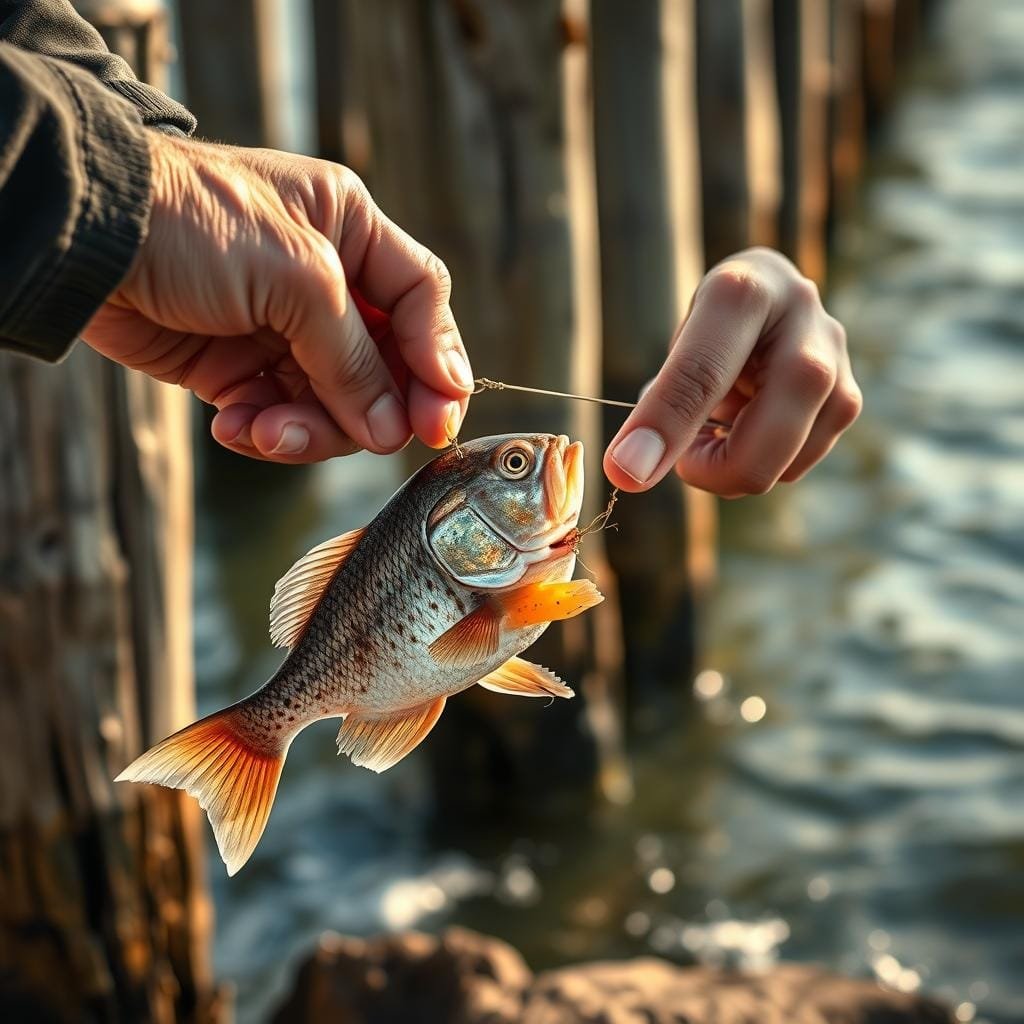
To catch sheepshead, knowing their habits is key. They are tricky and need precise setting of the hook. Use small baits and sharp hooks for their small mouths.
Live bait like fiddler crabs or shrimp works well. Hook the bait through the thick part to stay on. Look for areas with barnacles and structures where they hide.
Scrape off barnacles to make a chum slick. This attracts sheepshead. Feel for a tug or nibble and set the hook fast. Sheepshead need quick action to catch them.
For more tips, check out successful sheepshead catching techniques. They are most active at slack tide. But, a little water movement helps too.
- Use a sharp, small hook to match the sheepshead’s mouth size.
- Set the hook immediately after feeling a slight pressure or nibble.
- Frequent barnacle-rich zones for increased catch.
These tips will make your sheepshead fishing better. They also make fishing more fun by using special techniques.
A Guide to Sheepshead Baits and Lures
Choosing the right bait and lures is key for catching sheepshead. You can use live bait like fiddler crabs and shrimp. Or, you might prefer artificial lures. Knowing which works best is important.
Live Baits: Fiddler Crabs, Shrimp, and More
Sheepshead live bait like fiddler crabs and shrimp are favorites. Fiddler crabs are great because sheepshead love their hard shells. These baits work well near docks where sheepshead like to eat.
Artificial Options: Jigs and Scented Baits
Artificial lures are good when you can’t find live bait. The ChaseBaits Crab is a hit for catching sheepshead. It looks like their natural food.
| Bait Type | Advantages | Best Use Scenario |
|---|---|---|
| Fiddler Crabs | Highly attractive, natural prey | Rocky or structured shorelines |
| Shrimp Bait | Widely accepted, easy to source | Near docks and piers |
| Artificial Lures | Reusable, versatile | When live bait is scarce |
Advanced Rigging Techniques for Sheepshead
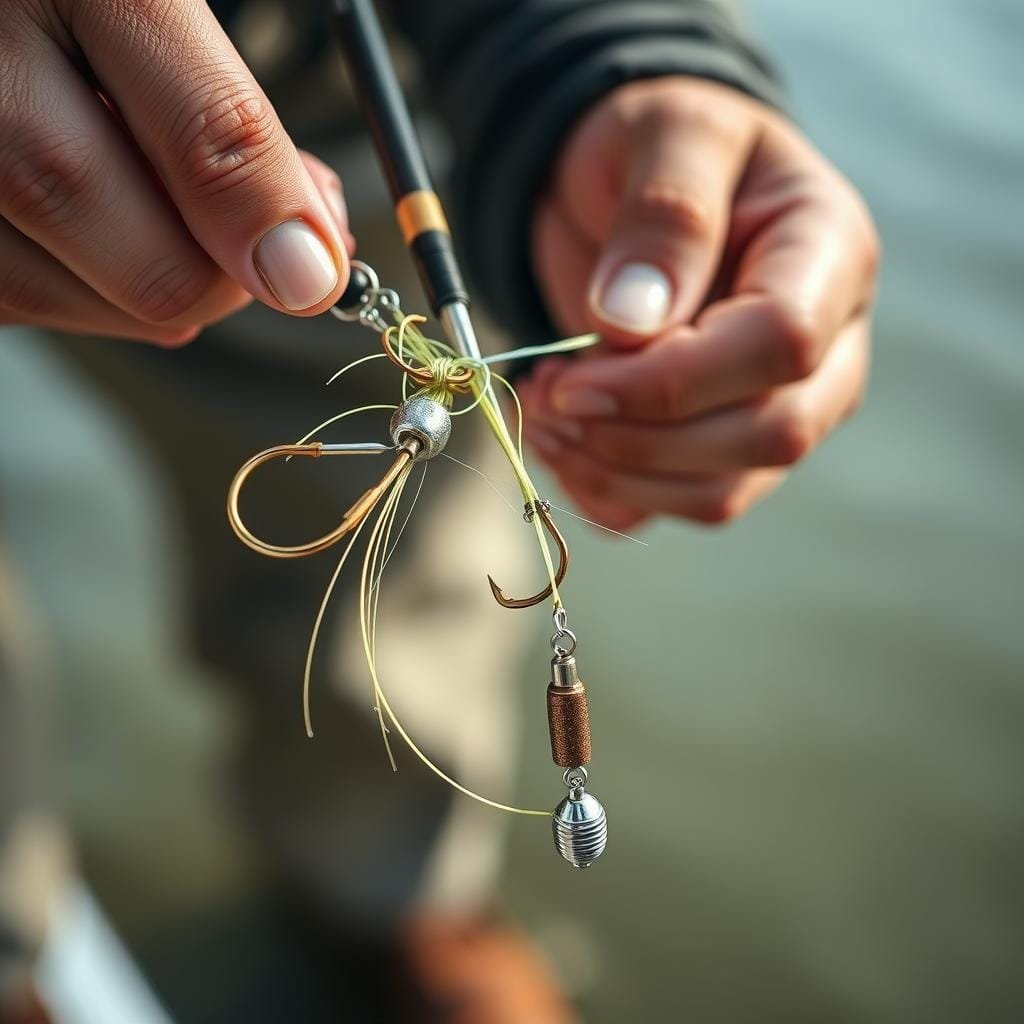
To catch sheepshead, you need to know advanced rigging tricks. These methods make your fishing better and help stop bait stealing. Sheepshead love to take bait without getting caught, so you must get better at rigging.
- Downsize your hook and bait to stop bait stealing. A smaller hook makes sheepshead bite harder, giving you a better chance to catch them.
- Use split shots or a Carolina rig to place your bait right. This lets you change your bait fast if needed. It’s great for keeping your bait in place, which is key when fishing for sheepshead.
- Be ready to react fast if you feel a pull. This pull might mean a sheepshead is playing with your bait. A quick lift of the rod tip can turn this into a catch.
There’s no single way to fish for sheepshead, but these advanced rigging techniques are a good start. Try different setups to find what works best in your area. Always remember to be quiet and precise with your bait.
Finding the Perfect Sheepshead Fishing Spot
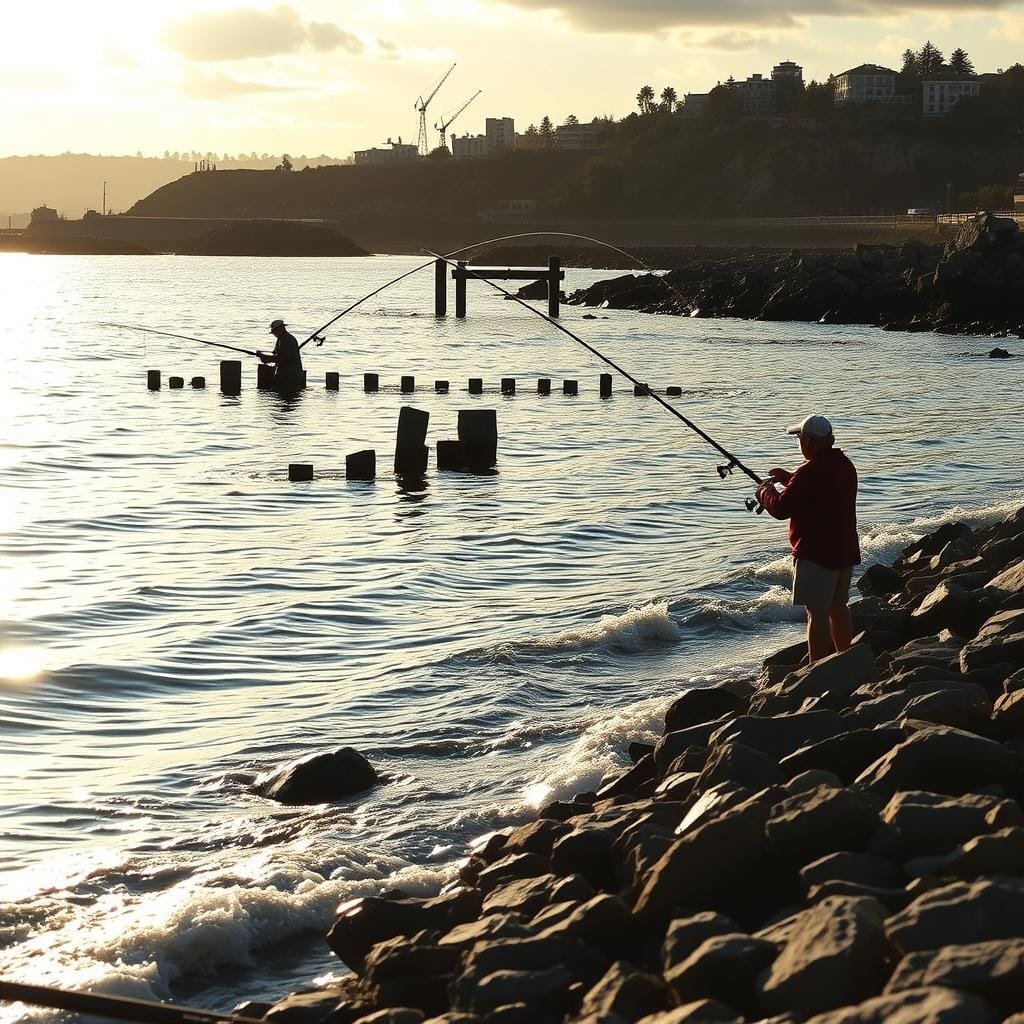
For those who love sheepshead fishing, finding the right spot is key. Sheepshead like places with lots of underwater stuff. This includes piers and docks and reefs, which give them food and shelter.
Looking for the best sheepshead fishing locations means finding places with lots of underwater stuff. Places with clear water are best. This is because you can see sheepshead as they move around.
- Piers and Docks: These are great places for sheepshead. The pilings and underwater stuff around them are perfect for sheepshead to hide. This makes them great for anglers.
- Reefs: Natural or artificial reefs draw many sea creatures. Sheepshead come to these places to find food.
- Oyster Bars: At low tide, oyster bars are perfect for fishing. Sheepshead go there to eat.
- Mud Flats: When the water is clear, finding sheepshead in mud flats is exciting. They hunt for small prey there.
Each of these places has a lively underwater world that sheepshead love. By choosing spots where you can see sheepshead, you’ll catch more. Whether it’s quiet docks or busy reefs, the best spot combines structure and clear water for a great fishing trip.
Mastering the Art of Sight Fishing for Sheepshead
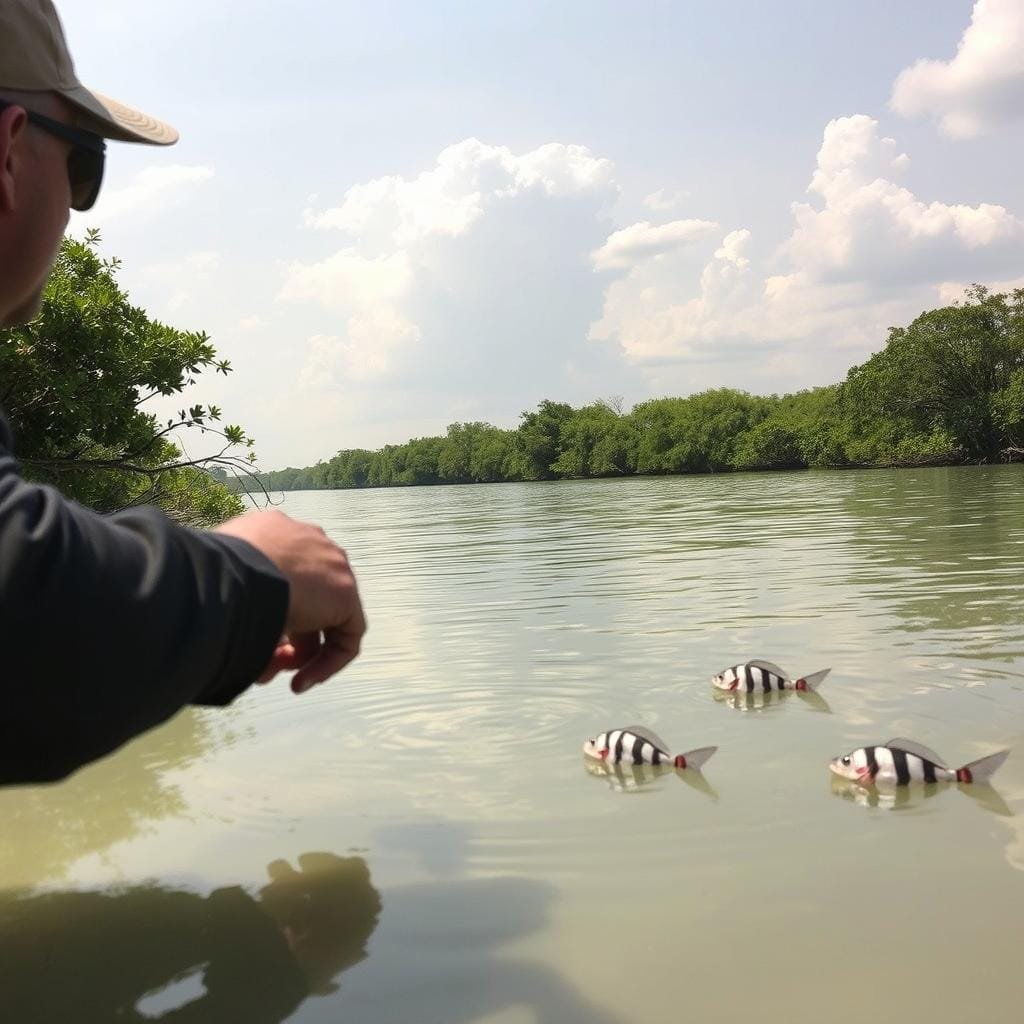
Sight fishing for sheepshead makes fishing exciting and rewarding. It’s all about spotting sheepshead as they feed. They often show unique signs like tailing behavior.
These fish like to hang out near oyster bars and jetty piles, best seen during low tide. This gives anglers a great chance to catch them.
How to Spot Feeding Sheepshead
Spotting sheepshead while they feed is all about looking for certain signs. They stand up straight to search for food on the bottom. They eat barnacles, small crabs, and mollusks, getting them from hard spots.
Knowing these behaviors helps a lot in sight fishing. Wearing polarized sunglasses helps see underwater better, thanks to less glare.
Tips for Stealth and Approach
When approaching sheepshead, being quiet and careful is key. Using a fishing kayak helps because it’s quieter than a motorboat. Paddling softly lets you get close for a good cast.
It’s important to move slowly and stay hidden. This way, you won’t scare the fish away.
To learn more about feeding sheepshead, check out different places they like. Know the best spots and when they’re most active. Look for clear water and lots of food.
Effective Strategies for Sheepshead Fishing in Inlets and Estuaries
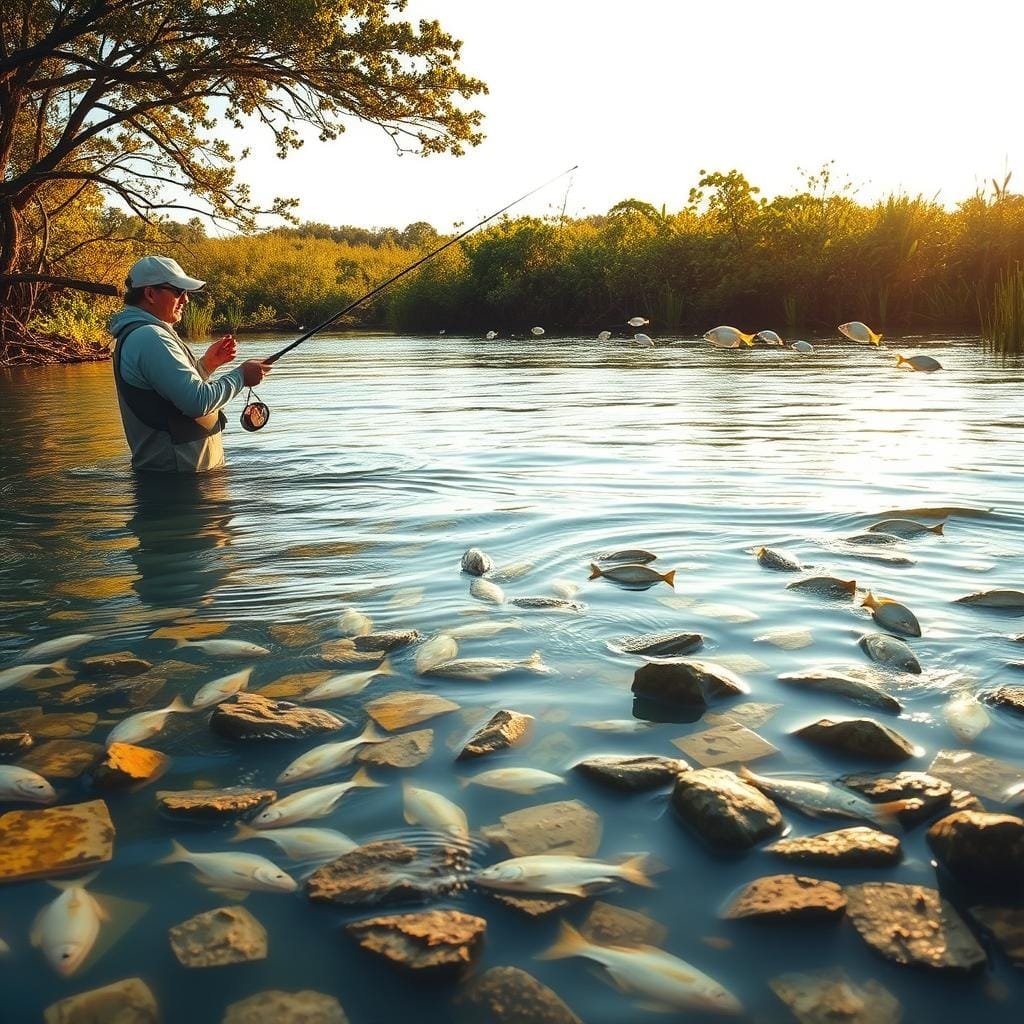
Inlet fishing and estuary fishing strategies can vary. But for sheepshead, knowing their habitat and behaviors is key. These fish love structured environments in inlets and estuaries. So, focus on areas with lots of jetties and docks.
Light tackle helps when fishing for sheepshead. It lets you feel their nibbles. Use baits like shrimp and fiddler crabs. Adding a chumming technique with shrimp can make them easier to catch.
For a full guide on these methods, check out this detailed sheepshead fishing guide.
Here are some gear and bait setups for your next sheepshead fishing trip:
| Location | Recommended Gear | Best Bait |
|---|---|---|
| Tampa Bay | Medium-light spinning rod, 2000-3000 size reel | Live fiddler crabs |
| Charleston | Light spinning rod with sensitive tip | Shrimp |
| Murrells Inlet | Medium-light rod, 2500 size reel | Barnacles |
Patience and precision are key for sheepshead fishing. They have subtle bites. So, be gentle and watch your line closely. Fishing in places like Pensacola Bay or Beaufort’s estuaries will boost your catch rates.
Essential Tips for Handling and Releasing Sheepshead
Sheepshead fishing is exciting, but knowing how to handle fish is key. It helps both the angler and the fish. Catch and release is good for sheepshead conservation and keeps fish populations healthy.
Always check local rules for size and bag limits. This keeps fishing sustainable and protects marine life. It’s important to follow these rules.
Using barbless hooks helps sheepshead survive. They are easier to remove and cause less harm. Wet your hands or use tools to protect the fish’s slime coat.
Be gentle when unhooking and return the fish quickly. This reduces stress and helps the fish recover. It’s important for successful catch and release.
If you choose to keep your catch, be ready for tough skin and bones. You’ll need sharp knives and know-how to fillet them. Being prepared shows you care about the fish and the sport.
Whether you release or keep your catch, the goal is to respect sheepshead conservation. This way, they can continue to thrive in our waters for many years.
FAQ
What are the key behaviors of sheepshead fish?
Sheepshead fish like to hang out where there are lots of barnacles. This includes places like bridge pilings and oyster bars. They eat the crustaceans there with their special teeth.
They are also known for fighting hard when they get hooked.
When is the best time to fish for sheepshead?
The best time to fish for sheepshead is during their spawning season. This is when they go offshore. They are also easier to find in winter near inshore structures.
What type of gear is recommended for catching sheepshead?
You’ll need a medium to medium-light rod that can feel small bites. A sturdy reel like the Shimano Stradic 2500 is good. Use a 15-20lb braided main line and a fluorocarbon leader.
Smaller hooks and the right weight, like a split shot or Carolina rig, are also key.
How do you successfully catch sheepshead?
Use live bait like fiddler crabs or shrimp near places with lots of barnacles. Use small hooks to match their mouth size. Set the hook fast after you feel a bite.
Chumming with scrap barnacles or using a ChaseBaits Crab lure can also attract them.
What bait is most effective for sheepshead?
Live bait like fiddler crabs, small shrimp, and mud crabs work best. In cold months, oysters can also attract sheepshead.
How can I avoid sheepshead stealing the bait?
Use smaller baits that are hard for sheepshead to steal without getting hooked. Rigs with split shots or Carolina rigs help keep bait in place and make hooksets quicker.
Where can I find sheepshead?
Look for sheepshead near structures in saltwater or brackish areas. Places like bridge pilings, docks, rocks, and channel markers are good spots. Docks and exposed oyster bars during low tide are also great places to find them.
What is sight fishing, and how does it apply to sheepshead?
Sight fishing for sheepshead means spotting them feeding on oyster bars or tailing in shallow waters. Wear polarized sunglasses and move quietly, like on a kayak, to catch them successfully.
Are artificial lures effective for catching sheepshead?
While live bait is usually better, some artificial lures like the ChaseBaits Crab can catch sheepshead. This is good for those who like using lures over live bait.
How should I release sheepshead to ensure their survival?
Use barbless hooks for easy release. Handle the fish with wet hands or tools to protect their slime coat. Follow state size and bag limits for responsible release.
Sharpen your fillet knives often if you plan to eat the fish.