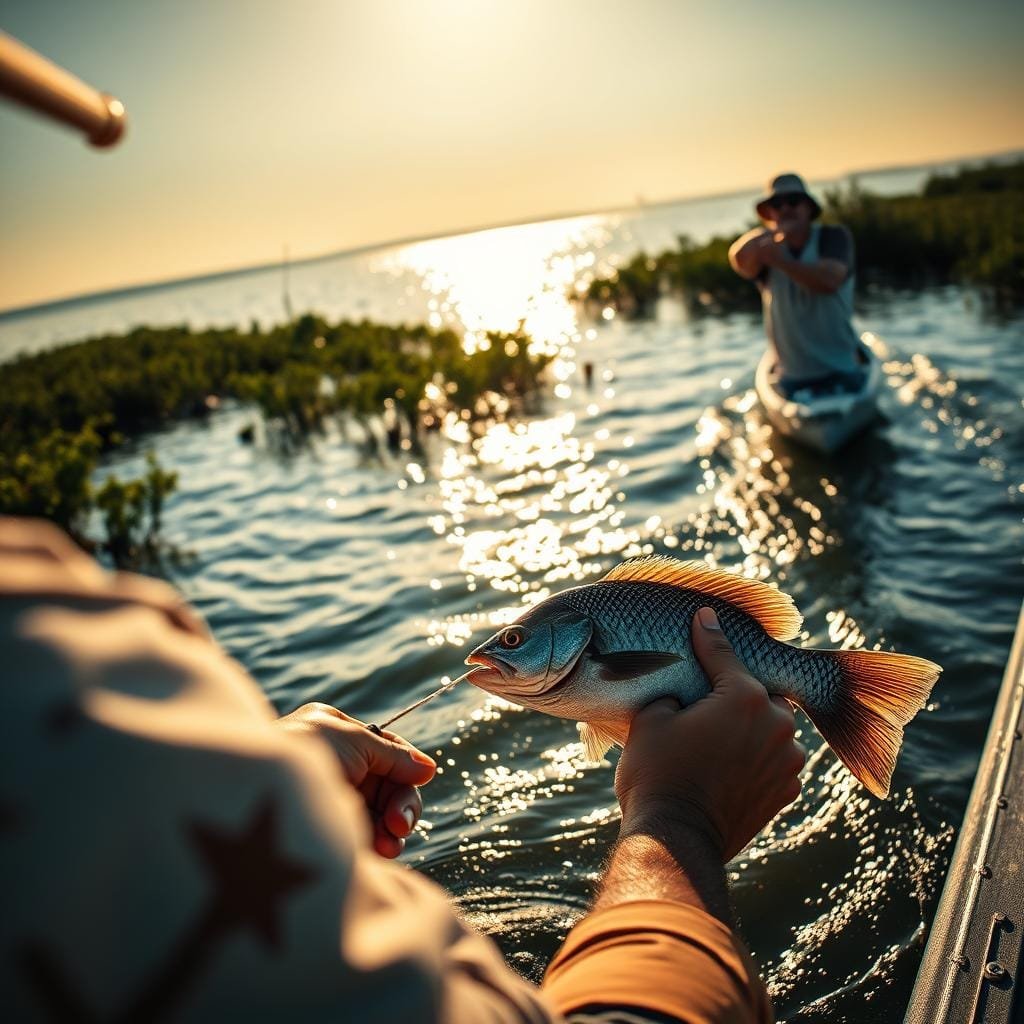
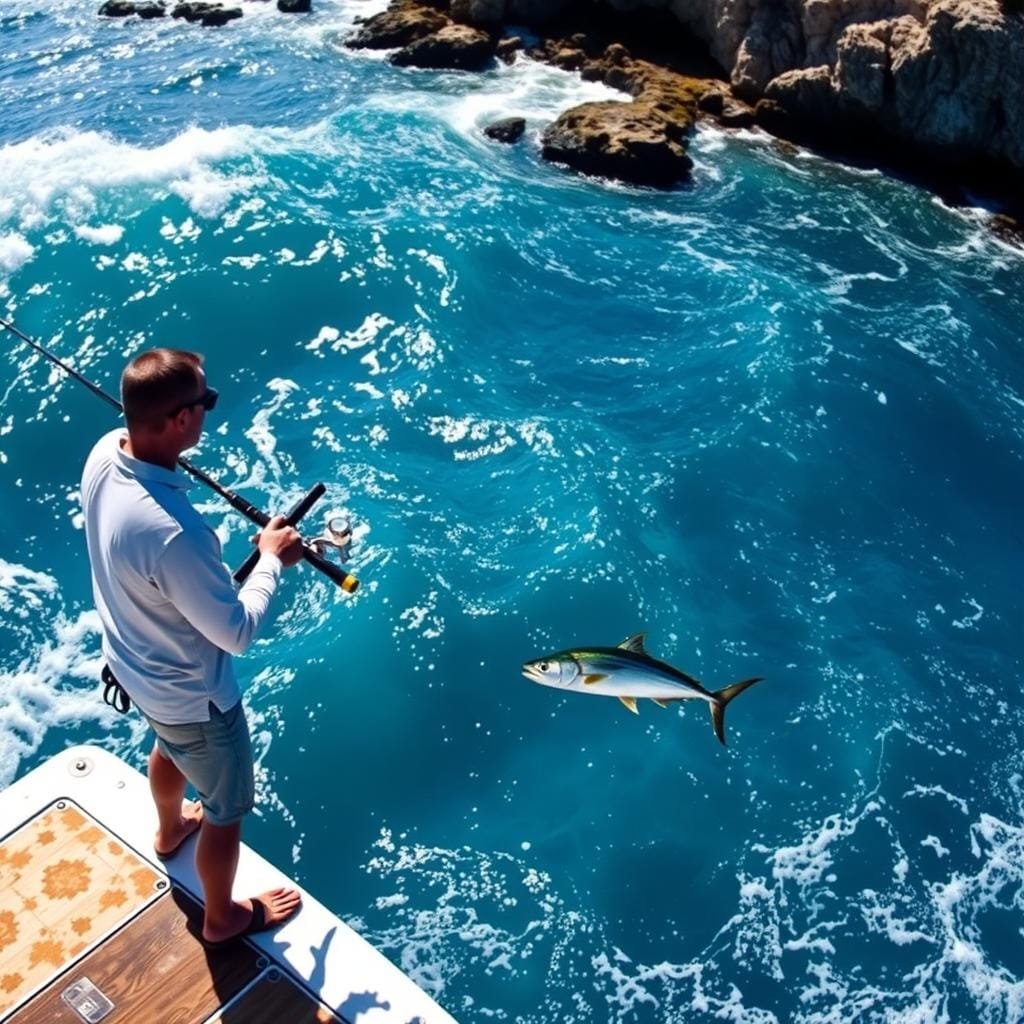
Spanish mackerel hit fast and bite hard. They reward those who stay sharp. This guide will show you how to catch them.
Start with light gear. For shore fishing, use a 7- to 8.5-foot spinning outfit. It should have 10–15 lb braid and a 3–4 ft fluorocarbon leader.
From the shore, use slim metals and epoxy jigs. They cover water fast and look like small bait. For big areas, trolling is best. It keeps spoons swimming and gets steady strikes.
Boat crews can use bigger gear. Use 10–15 kg outfits with 50 lb braid and long leaders for spoons and divers. Inline weights and 20 ft leaders help larger spoons run true.
Reading the water is key. Watch diving birds and scan your sounder for bait. Keep your retrieves tight to the activity. When schools settle, mix fast burns with pulse pauses near bottom.
For more on shore strategies and jig picks, see this On The Water guide to Spanish. We’ll talk about lures that survive teeth and workflows for both boat and beach.
Ready to gear up and go? The next sections will cover leader choices, spread layouts, and retrieve sequences. With the right techniques and plan, your next cast could find a big fish.
Seasonality, range, and where Spanish mackerel show up in the United States
Spanish mackerel come to the coast each season. They follow warm water and bait. Look for them in rips and where currents change.
Lower Chesapeake Bay, Virginia Beach oceanfront, and up to the Bay Bridge
Spanish mackerel are plentiful in the Lower Chesapeake Bay. They move north towards the Bay Bridge. The Chesapeake Bay Bridge-Tunnel is a great place to fish.
Virginia Beach is also good for Spanish mackerel. They can be found from 20 feet deep to the CB buoy line. Sometimes, they even go towards Chesapeake Light Tower.
In late summer, you might see ribbonfish, king mackerel, and false albacore. Watch for birds fishing during tide changes. If you see bait on sonar, go back to that spot. Schools usually stay together.
Mid-Atlantic surf runs from New Jersey to Cape Cod in warmer summers
When it’s warm, Spanish mackerel come to the beaches. In 2018, they were everywhere in New Jersey. They followed Atlantic bonito.
In 2019, bigger fish came back. Anglers from New Jersey to Cape Cod had lots of bites. Cape Cod is a great place to fish them in warm summers.
Reading the signs: diving birds, moving feeds, and bait on the sounder
Birds diving and moving mean Spanish mackerel are around. Birds that don’t move are over bluefish. Stay outside the push and go through the edge to catch them.
Bait on sonar looks like balls or squiggles. When predators attack, arcs appear. Look for structure like reefs and bends. Fish the same spot until it’s quiet.
Essential tackle and line setups for casting and trolling
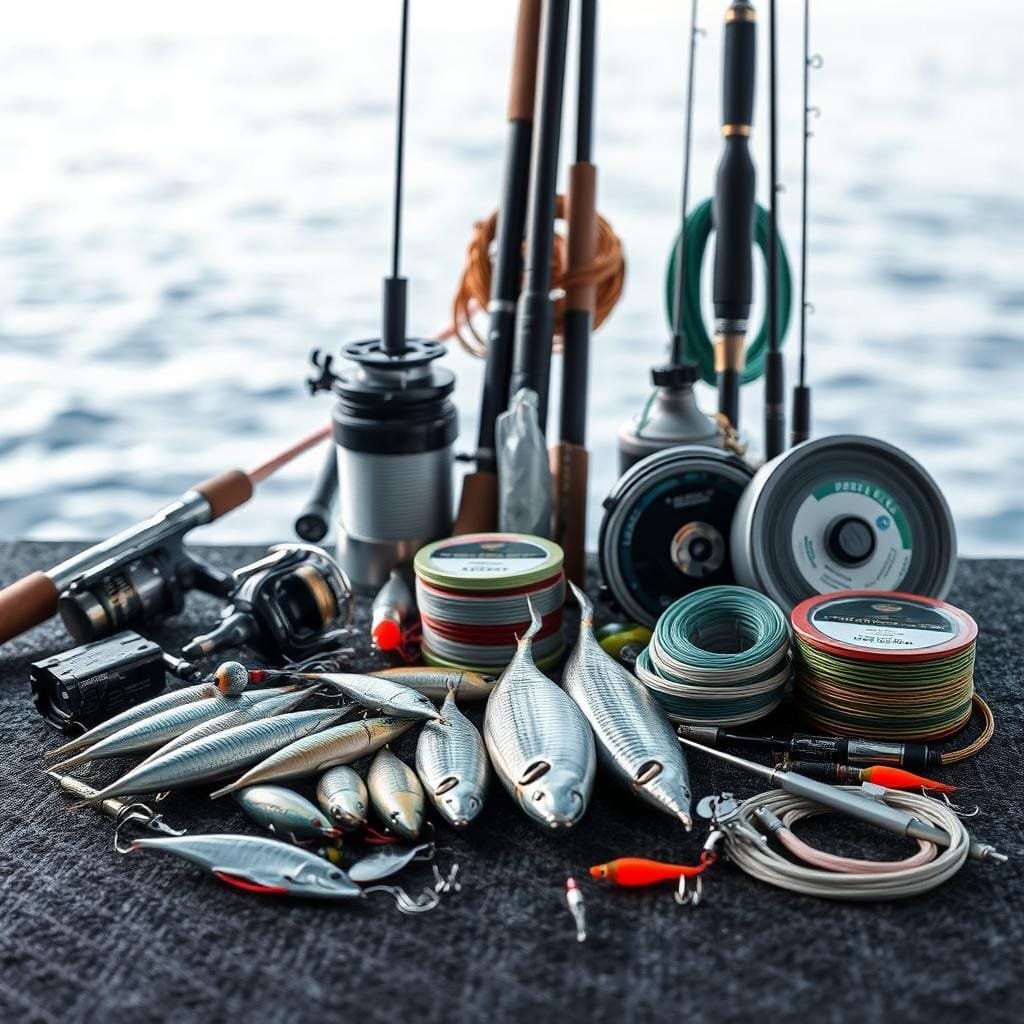
Choosing the right tackle for Spanish mackerel means using fast reels and strong rods. You also need connections that can handle their sharp teeth. Use braid that matches the job, keep leaders short, and tie knots that won’t slip.
Spinning outfits with 10–15 lb braid and 3–4 ft fluorocarbon leaders for surf and pier
A good spinning setup for Spanish mackerel has a 7′ to 8’6″ rod and a 3000–5000 reel. Many like the Penn Slammer 4500 for quick line pickup and smooth drags. Use 10–15 lb braid for better reach and feel.
Use a 3–4 ft fluorocarbon leader in 15–20 lb for protection around rocks. Tie the braid to the fluoro with an FG knot or a simple uni-to-uni. For pier fishing in the Chesapeake, try a 10 lb braid with a 3 ft 20 lb fluorocarbon leader.
Overhead trolling combos in the 10–15 kg class with 50 lb braid and long leaders
For trolling, choose a 6 ft overhead rod rated 10–15 kg and a 12–20 size lever-drag reel. Use 50 lb braid to reduce drag and keep spreads tight. Add a 100–150 lb leader for protection at speed.
Connect the braid to the leader with an FG knot, then finish with a three-wrap uni to the lure. Use 2–4 oz inline weights and 20 ft of 20 lb leader to a small swivel for a stealthy approach.
When to add short single-strand wire vs. heavy mono/fluoro to prevent bite-offs
Use a short wire leader to prevent losses when fish slash near the lure. Add 10–12 inches of single-strand to metals and spoons to stop toothy fish. For live-bait stingers, 4–6 inches is enough to keep action alive.
On clear days, use a fluorocarbon leader to boost strikes. Add wire only after repeated losses. Some teams run 150 lb mono or fluoro ahead of spoons, but wire is the best fix for sharp bites.
- Spinning setup Spanish mackerel: 10–15 lb braid, 3–4 ft fluorocarbon leader, fast reel like a Penn Slammer.
- Trolling setup Spanish mackerel: 50 lb braid, long heavy leader, FG knot connections, inline weights for spoons.
- Bite-off control: brief wire leader for mackerel in toothy packs; lean on fluoro in clear water.
how to catch spanish mackerel
There are two main ways to catch Spanish mackerel. You can either cast or troll. Choose the best method based on the situation. Use a 7-foot medium-light stick, a fast reel, and a short fluorocarbon leader.
When casting, use metals and epoxy jigs to quickly reach the fish. Let the lure drop, then move it quickly. Gotcha plugs work well with fast rod-tip snaps.
Trolling is good for covering more area. Start at 5–7 knots with minnows or Clark spoons. Adjust the speed until you feel a bite.
When fish are hard to catch, try smaller lures and longer leaders. For bigger fish, use larger lures with weights and longer leaders. See this guide on how to catch Spanish mackerel for more details.
Improve your boat handling and lure movement. Cast upwind on windy days to sink the lure clean. On the troll, use 6–8 knots for deep divers. Watch the water temperature and match the hatch size.
Casting tactics from shore, piers, and boats
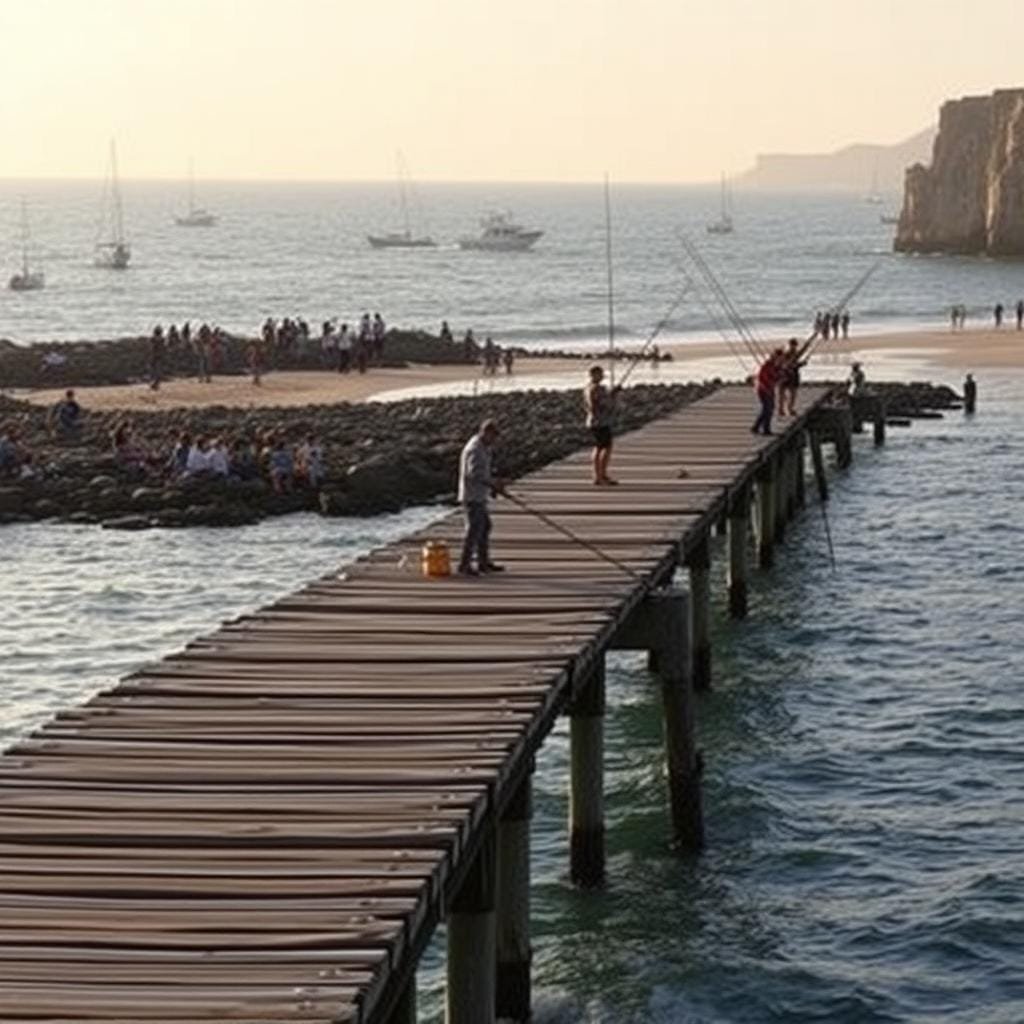
Cover water fast and keep casts long. In open beaches and around pier ends, work with the wind and current. This helps you stay close to where the fish are.
Long-distance metal and epoxy jigs that match silversides and sand eels
Slender metals and resins fly far and match small bait. For metal jigs surf casting, use 1 to 1.5 oz profiles. They cut through wind and drop quickly.
Cast up-current, count it down, then keep the rod tip high. Bounce once or twice 1–3 feet off bottom and ride the drift. Repeat the same lane if you get tapped, a classic move with epoxy jigs Spanish mackerel when fish track low.
Subsurface retrieves: let it sink, then fast or pulse retrieves near the bottom
Spanish often eat below the splash. Let the lure sink to the lower third, then rip fast for five turns and pause. Or use short pulses that kick the jig sideways and hold depth. This steady cadence out-fishes burn-and-skip more days than not.
Adjust drop time as current builds. If you tick sand every few cranks, you’re in the slot. That sweet spot pays during surf fishing Spanish mackerel when schools pin bait tight to a trough.
Gotcha plugs with sweeping rod-tip jerks and rod-down “rail bird” technique
On piers and boat corners, Gotcha plugs Spanish mackerel excel with crisp sweeps. Point the rod tip toward the water and drive short jerks, then pick up slack. The dart-and-stop flash draws cuts even when bait is tiny.
Pink, bone, and chrome are staples under bright skies. Keep retrieves honest and direct; the plug’s nose-down posture makes sharp, repeatable kicks that trigger hits along pier shadows.
Using casting bubbles/eggs to throw tiny flies or lures when bait is small
When fish key on bay anchovies, a casting bubble Spanish mackerel setup saves the day. Pair an A-Just-A-Bubble with a small Mylar fly or micro soft bait 2–3 feet behind. Sweep slow so the fly stays high and visible in the chop.
This float-and-fly path sends light offerings far from shore and keeps them in the top third. It complements metal jigs surf casting by matching tiny profiles when metals get snubbed.
- Boat edge drift: Drop a compact metal, count five, and pulse through the drift line.
- Pier lane run: Work Gotcha plugs Spanish mackerel along shade banks and piling eddies.
- Beach trough track: Use epoxy jigs Spanish mackerel with quick hops across outer bars.
- Micro-bait bloom: Switch to a casting bubble Spanish mackerel rig to keep small flies in the feed.
Trolling strategies that cover water and find fish
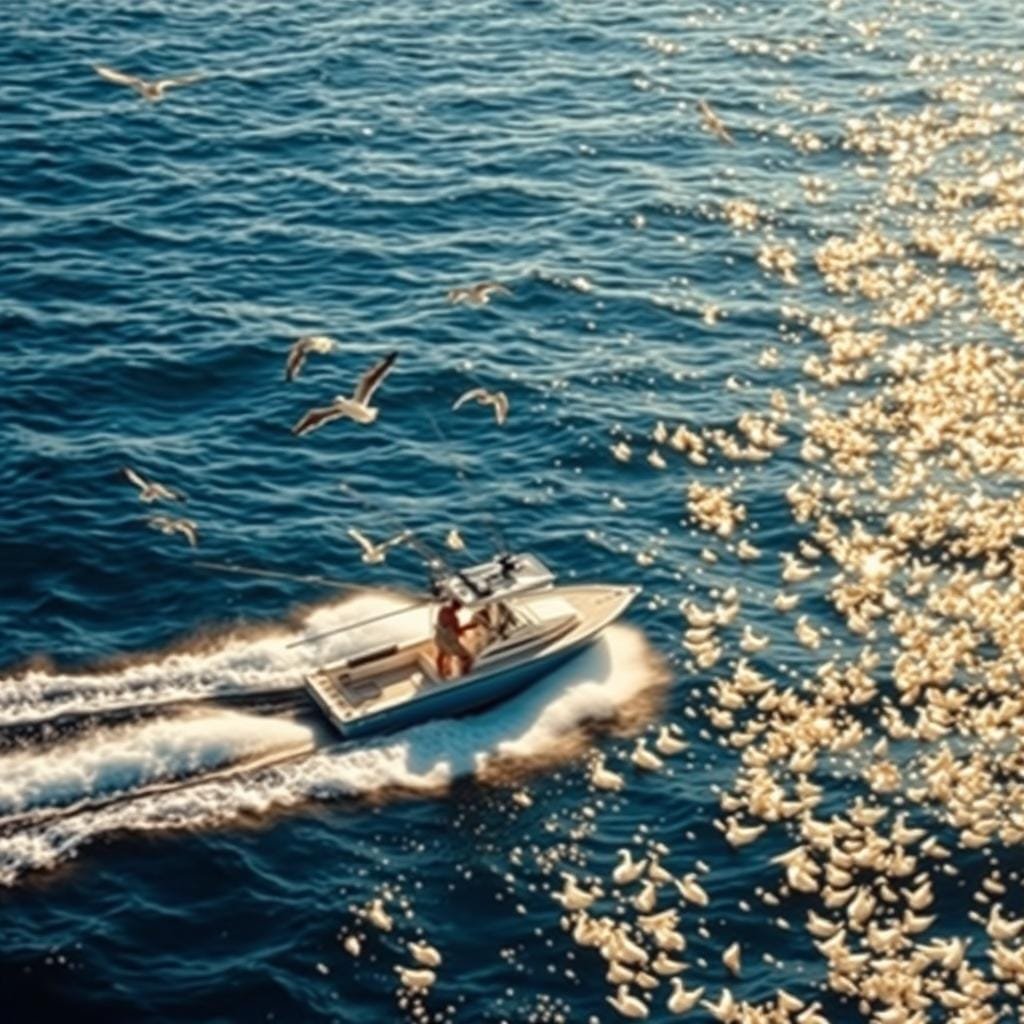
Trolling Spanish mackerel is all about speed, depth, and clear water. Keep your lures in areas where bait piles up and currents push. Make long, straight runs to map the bite, then loop back over marks and edges.
Spoon trolling with inline weights (2–4 oz) and 20 ft leaders for bigger macks
An inline weight spoon rig keeps spoons down without bulky planers. Use a 2–4 oz weight ahead of about 20 feet of 20 lb fluorocarbon. Add a tiny black ball‑bearing swivel mid‑leader to stop spin, then a quality snap to the spoon.
This setup tracks true at speed and hooks larger fish that sit below the fast bait. It’s great when you need a quiet, compact presentation in clear water.
Running Huntington Drone and Clark spoons in larger sizes for quality fish
Use bigger metal for bigger macks. A Huntington Drone spoon in No. 1 or No. 2 and a Clark spoon in comparable lengths draw strikes from better fish, around rips and tide lines.
Polished chrome shines on bright days; gold does better in green water. Keep split rings and hooks sharp and corrosion‑free between runs.
Straight-line trolling passes and directional “hot bite” observations
Run straight lines, not circles, to read the school. Note your GPS track, tide angle, and wind. Many days one direction triggers more hits than the other, even on the same line.
After the first hookup, rework that lane. If bait and current hold, make two or three clean passes before moving on.
Three-rod spreads with deep and shallow divers at 6–8 knots
A simple three-rod spread covers water fast and stays tangle‑free. Run one lure long about 40 meters back in clean water. Set two short corners 15–20 meters back to hunt the strike zone.
Mix diving plugs with spoons to find the level. Use one deep diver around 8 meters and one shallower at about 4 meters. Deep diver trolling 6–8 knots keeps many models, like the Samaki Pacemaker or Rapala X‑Rap Magnum, in their sweet spot.
- Speed: start at 6 knots, bump to 8 if the sea is flat and fish want pace.
- Depth: once one rod fires, stack more lures at that depth.
- Reset fast: keep the boat in gear after a bite to pick up doubles.
| Rig/Spread | Core Components | Target Depth | Speed Range | Best Use Case |
|---|---|---|---|---|
| Inline weight spoon rig | 2–4 oz inline, 20 ft fluoro, ball‑bearing swivel, snap | Midwater to upper third (varies with weight and speed) | 5–8 knots | Clear water, subtle profile, bigger macks on bait edges |
| Huntington Drone spoon | No. 1–2 sizes, polished chrome or gold | Tracks behind inline weight or planer | 5–8 knots | Quality fish, bright flash over rips and tide lines |
| Clark spoon | Medium–large models, sharp single or treble | Versatile with weights or light planers | 4–7 knots | Mixed schools, greener water where gold excels |
| Three-rod spread | One long shotgun, two short corners | Layered: shallow 4 m, deep 8 m | 6–8 knots | Covering ground, quick patterning of active depth |
| Deep diver trolling 6–8 knots | Magnum divers (e.g., Samaki Pacemaker, Rapala X‑Rap Magnum) | Fixed dive curves to 4–10 m | 6–8 knots | Stable tracking in chop; pairs well with spoons |
Blend these moves to stay efficient: start by trolling Spanish mackerel lanes with a three-rod spread, test depths with divers, then swap in an inline weight spoon rig once you mark midwater bait. Rotate in a Huntington Drone spoon and a Clark spoon to dial flash and size, and hold the course as long as the rods keep bending.
Lure selection that survives teeth and triggers strikes
Spanish mackerel hit fast, bright lures. To keep fishing without re-rigging often, pick tight epoxy jigs and proven spoons. The best lures are small and hard to withstand teeth.
Best metals/epoxy jigs: Coltsniper, Hogy Epoxy, Joe Baggs, and more
The Shimano Coltsniper flies well in wind, sinks fast, and goes straight. A 21 g size looks like silversides and sand eels. The Hogy Epoxy Jig in 5/8 oz casts far and has a bright shell coat.
Joe Baggs Resin and Peanut Resin in 3/4–1 oz are tough and easy to use in blitzes.
Add Fat Cow Fat Minnow Epoxy (3/4 oz), Game On Exo Jigs (3/4 oz), Daddy Mac Albie/Bonito Jigs (1/2 oz), and the Original RonZ 4″ for a slim glide. These heavy-for-size metals are top picks when bait is small and the wind is strong.
Diving minnows vs. spoons vs. stickbaits: when each shines
Choosing between diving minnows and spoons depends on depth and mood. Diving minnows like the Samaki Pacemaker stay at target depths and track well at 6–8 knots. They cover water fast and react well to quick S-turns.
For bigger fish and durable hardware, use a Clark spoon or a Drone spoon. They stay sharp through many bites and track well in rough water. Over skinny flats or stained water, floating stickbaits and surface spoons draw bites without snagging bottom.
Treble vs. single hooks for hookup rate, strength, and easier releases
Trebles grab more during blitzes and hold through wild runs, which lifts hookup rate on short strikes. Singles shine for strength, torque control, and quick, safer releases boatside. Many anglers rig a plug with one treble up front and a single tail hook to cut hang-ups while keeping fish pinned.
For metals like the Shimano Coltsniper, Hogy Epoxy Jig, and Joe Baggs Resin, swapping to a forged single with a solid ring keeps the lure tracking and limits damage. For trolling a Clark spoon or Drone spoon, a strong single stinger reduces fouls without dulling action, balancing landing percentage with clean releases.
Bait options when lures won’t convert
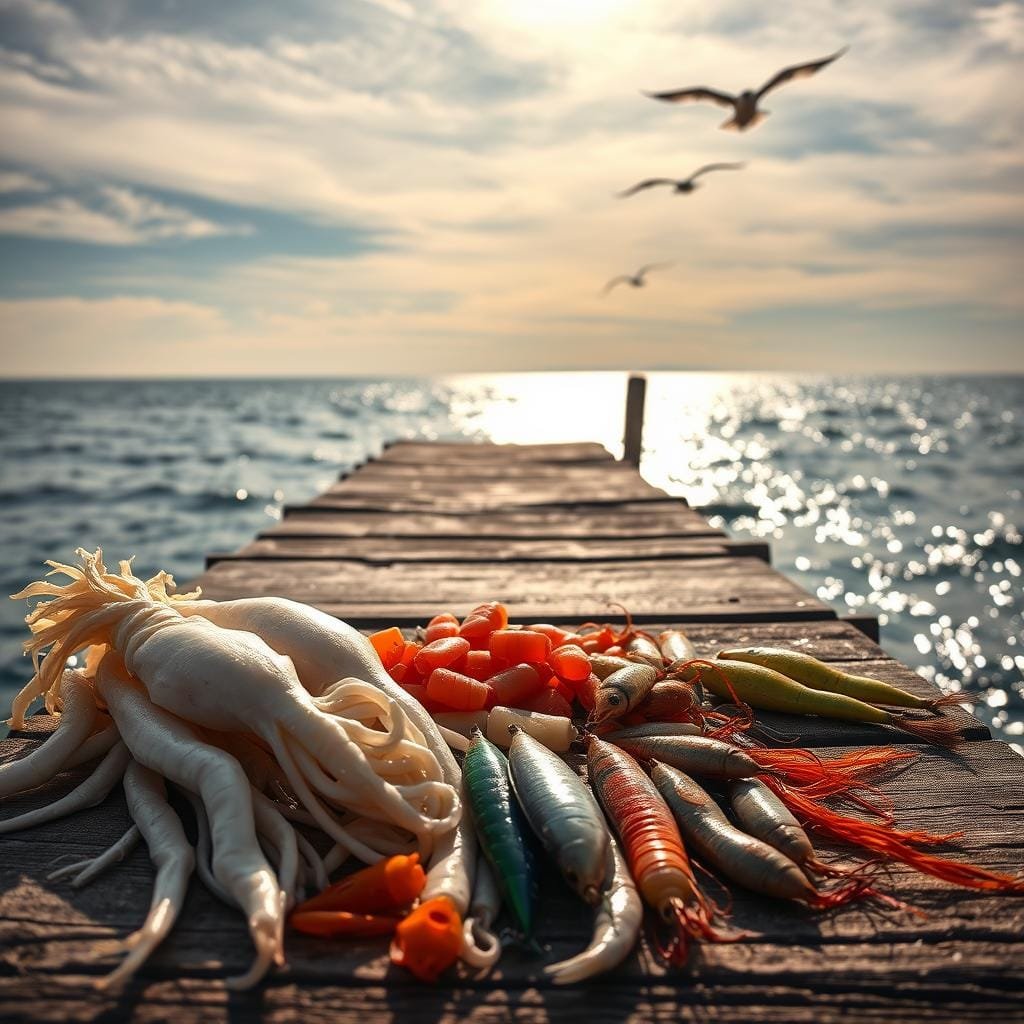
When surface metals get ignored, switch gears. Natural scent and a true swimming profile can wake up a shut-down school. These proven approaches keep you in the game when the bite turns fickle, around clear water and heavy pressure.
Skirted garfish rigs for speed-trolled natural scent and profile
For trolling garfish Spanish mackerel at pace, run a slim skirt over a properly pinned gar. A small chin weight keeps it tracking straight while the skirt protects the bait and adds flash. Crews from Florida to the Carolinas lean on this for high-mile coverage without constant rebaiting.
Set spreads at 6–8 knots behind trolling leads or planers. The scent trail is natural, yet the skirted body holds up in chop. It’s efficient when you need to comb big edges and present something real.
Slow-trolled live baits (slimies, yakkas) at 2–4 knots with stinger hooks
Live bait trolling Spanish shines once you’ve found fish but they won’t rise. Bridle a slimy mackerel or yakka to a live-bait or circle hook, then add a short wire trace to free-swinging stinger hooks mackerel can’t beat. A 1–3 oz sinker ahead helps hit the right lane without drowning the bait.
Keep boat speed at 2–4 knots so baits breathe and kick. Watch turns; outside lines may lift and draw bites. This method hooks short strikers and keeps baits swimming clean through bumps.
Rigging swimming dead baits with weights, needles, and thread for fussy fish
When you need polish, dead bait rigging Spanish mackerel tactics deliver. Use a bait needles thread rig to stitch a wolf herring or yakka so the head tracks straight and the body rolls tight. Pair a chin weight with a two-hook gang so the bait swims, not spins.
This approach takes prep but pays off in clear water. Run them at moderate speed, check for wobble, and tweak the stitch if the bait tracks wide. You keep the realism of natural flesh with the control of a lure.
- Speed window: Skirted garfish for coverage; live baits slow and precise; dead swimmers for clean, balanced action.
- Hardware: Short wire to guard teeth; compact sinkers to hold lane; sharp, compact stinger hooks mackerel can’t miss.
- Care: Refresh tired baits fast and keep rigs straight to avoid twist that kills presentation.
Finding fish: reading birds, bait, current, and structure
Start by watching birds fishing and matching them with structure and flow. Look for bait schools on sonar. Then, find reef edges, drop-offs, and pressure points. This helps you find Spanish mackerel near beaches, bridges, and ledges.
Moving birds = cutting mackerel; stationary birds often mean bluefish
Watch the birds closely. Birds diving fast usually mean mackerel are there. Birds moving slow might mean bluefish.
If birds move down-tide in bursts, set up ahead of them. Cast as they pass by.
When birds lift and reset in the same lane, troll or drift across it. Use sonar to check the depth and speed of the bait before you cast.
Target reef edges, drop-offs, tunnel tubes, bridge spans, and pressure points
Look for structure and flow where bait gathers. In the Chesapeake, check the Chesapeake Bay Bridge-Tunnel islands and tunnel tubes. Also, try bridge spans up-current.
Slide 200 yards off island edges. Then, cast oceanfront lines from 20 feet out to buoy lanes.
Marking midwater squiggles on sonar and working productive drifts again
On modern sounders, Spanish show as midwater squiggles above bait clouds. Note the GPS line, wind angle, and speed when you hook up. Then, reset and repeat that drift.
In surf and inlets, move small distances from up-current to down-current. This helps find the exact lane. Keep track of bait schools on sonar. Then, run parallel passes along reef edges and through pressure points when finding Spanish mackerel.
| Clue | What It Signals | Best Move | Why It Works |
|---|---|---|---|
| Birds sprinting and bombing | Active mackerel cutting through bait | Set up ahead of the flight path and cast fast metals | Intersects the strike zone while the school is pushing down-tide |
| Birds circling in place | Bluefish balling bait near surface | Check edges nearby; avoid sitting under the tight circle | Spanish often hunt the flanks, not the dead center |
| Midwater “squiggles” on sonar | Spanish over bait schools sonar | Drop back a spoon or run a quick drift through marks | Keeps a lure in the exact depth band of feeding fish |
| Color change and rips | Pressure points current seams on structure | Troll or cast along the seam, not across it | Predators patrol lanes where bait stacks and visibility shifts |
| Contour breaks | Reef edges drop-offs and channel lips | Track the break line with a repeatable GPS path | Spanish travel predictable routes along sharp relief |
Leader, hooks, and landing tips for toothy speedsters
Spanish see well, so start clean and subtle. Use a fluorocarbon leader for Spanish mackerel in the 3–4 ft, 15–20 lb range. This keeps strikes high when the water is clear.
If you start losing fish, add a short wire section. This won’t hurt the action. Choose the right hook for your release plan.
Fluorocarbon for visibility-sensitive fish; add 30 cm wire when necessary
Start with fluoro to fool wary fish. Then, add a short wire section when teeth show up. This balances stealth and durability.
For live baits, use a 10–15 cm trace to the stinger. This protects the last bite zone without spooking the school.
Some teams use heavy 100–150 lb mono or fluoro. This keeps you versatile, even with a few cutoffs. It feels streamlined when targeting mixed predators with Spanish.
Keeping rod tip high on the fight, smooth handlining leaders, and netting bigger fish
Keep the rod tip high and reel steady. Spanish hit fast. Your job is to stay tight and avoid slack.
Pause reeling at the weight or planer. Then, start handlining leaders with even, short pulls. This cuts tangles and keeps hooks pinned.
Net bigger fish at boatside instead of swinging them. When landing Spanish mackerel from a pier or kayak, guide the head first into the hoop. Strong single hooks help pin solidly and make quick releases cleaner than with trebles.
Managing sharks: tighten drags and land fish quickly in “sharky” areas
Speed ends the tax. In known hot zones, tighten drags a touch and press the fight. Shark management while fishing also means planning the boat turn to lift fish out of the danger lane.
Shorten wire leader length only if water is ultra clear. Keep a compact trace to survive last-second hits.
If predators move in, shift spots after a couple of losses. Quick gaff or net work, tidy handlining leaders, and smooth teamwork make the difference between a clean deck and a bitten-off story.
Regional hotspots and patterns to replicate
Start where the clues line up. The Lower Bay is full of Spanish mackerel hotspots. This happens when tide pushes bait across the Chesapeake Bay Bridge-Tunnel.
Work the inside from the first island to the Eastern Shore. Slide over the tunnel tubes. Make passes 200 yards off island edges.
On strong current, the up-current side of spans past the second island can light up. This is for classic Chesapeake Bay Bridge-Tunnel Spanish bites. Keep an eye on ribbonfish, king mackerel, and false albacore as late-summer riders along the same lanes.
The Virginia Beach oceanfront mackerel pattern tracks along 20 feet of water. It goes out to the CB buoy line, and some days to Chesapeake Light Tower for larger fish. Trolling with inline-weighted spoons or a three-rod spread of deep and shallow divers at 6–8 knots is simple.
If birds start diving, switch to fast jigs. Cover the feed before it sinks.
Warmer seasons have pushed bigger fish farther north in the Bay. Recent runs have reached the Bay Bridge and even the Choptank River to Poplar Island. The same Mid-Atlantic Spanish mackerel pattern applies here.
Track current seams, find bait on the sounder, and make clean, fast passes. If the surface is jumpy with small forage, metals or epoxy jigs in 1 to 1.5 ounces score on a quick, near-bottom pulse retrieve.
In hot summers, you can mirror this game from beach to jetty on the northern coast. The New Jersey to Cape Cod Spanish mackerel playbook leans on distance casting, subsurface sweeps, and casting bubbles when bait is tiny. Expect swings by year—some seasons favor bonito, others flood with larger fish.
Across regions, the constants hold: bait, birds, current, and hard edges. Follow those, and you’ll repeat the Virginia Beach oceanfront mackerel results and the broader Mid-Atlantic Spanish mackerel pattern with confidence.