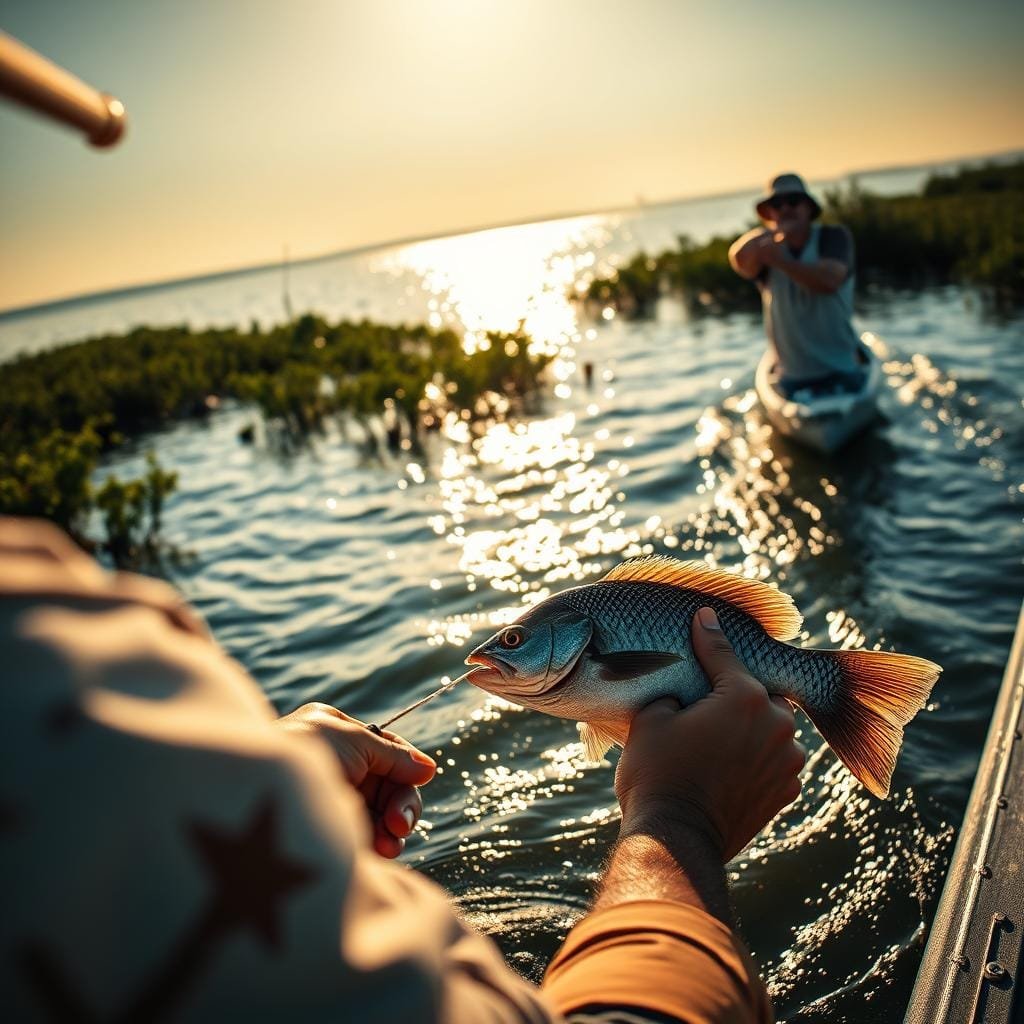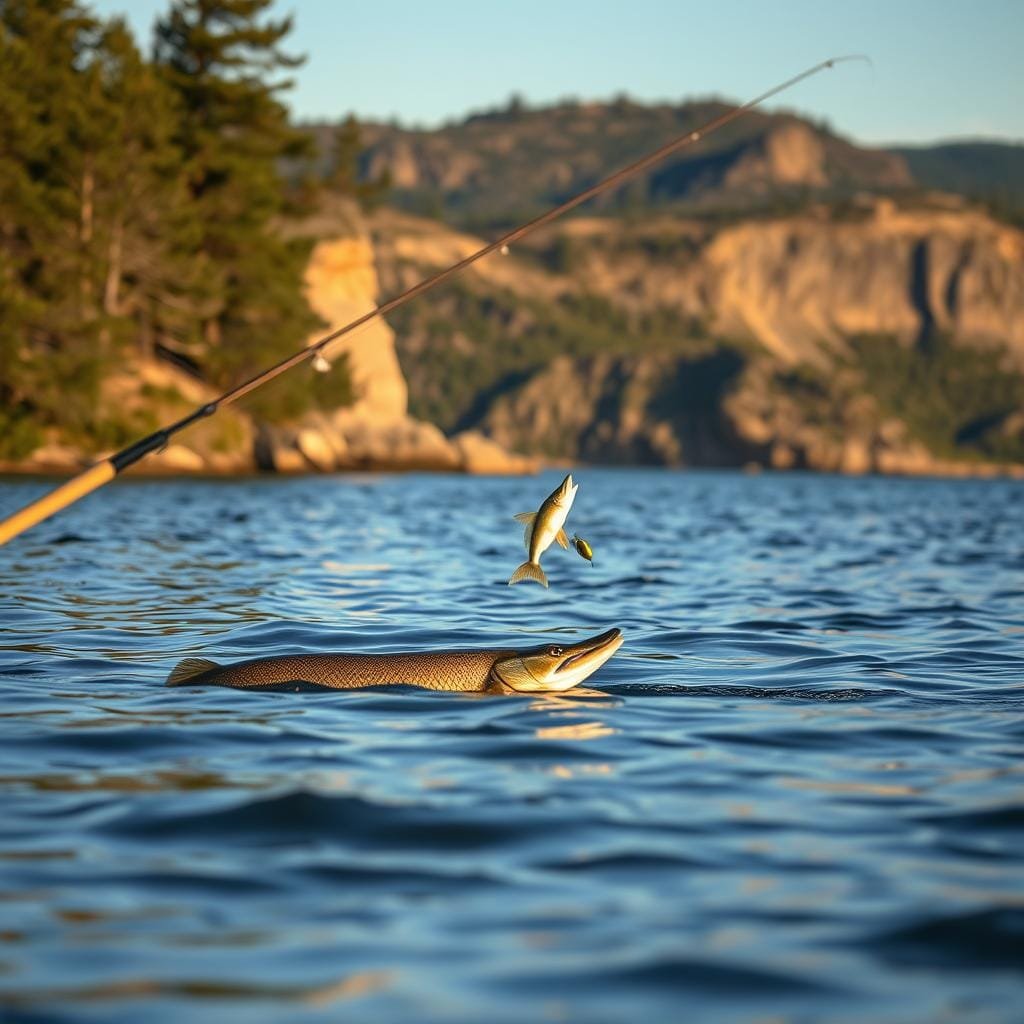
Going on a journey to catch walleye successfully is exciting for many. Walleye are loved for their fight and taste. This guide will help you catch them well, with walleye fishing tips and walleye fishing techniques.
We’ll talk about the best rod and reel and how to make a spinner worm harness. This guide is for both new and experienced anglers. You’ll learn how to catch walleye successfully every time.
Understanding Walleye Habits for Effective Fishing
Knowing how walleyes behave is key for better fishing. Their actions change with the seasons, mainly due to water temperature. This knowledge makes fishing more fun and boosts your chances of catching walleyes.
Learn the Walleye’s Seasonal Movements
It’s important to know where walleyes go in different seasons. In spring, they’re in shallow water for breeding. Summer finds them in cooler, deeper spots as it gets warmer. Autumn brings them back to shallower areas, and winter sends them to the deepest, coldest waters.
Knowing these patterns helps you find them easier, no matter the season.
Identifying Walleye Feeding Times
Dawn and dusk are the best times to fish for walleyes. They hunt better in low light. This means early morning or late evening are the best times to catch them.
Knowing when they eat helps you fish at the right time. This way, you’re more likely to catch walleyes.
Importance of Water Temperature
Water temperature affects walleyes a lot. They like it between 65 to 75 degrees Fahrenheit. When it’s hot, they dive deep to stay cool.
Using a depth finder helps find them at the right depth. This increases your chances of catching walleyes.
Fishing better means knowing when and where to fish. This is based on walleye habits, the best fishing times, and water temperature. It makes fishing more fun and successful.
How to Catch Walleye: Equipment Essentials
To catch walleye, you need the right gear. The best walleye rods and reels, along with the right fishing line, make fishing better. They also help you catch more walleye.
Choosing the Right Rod and Reel Combo
Choosing the right rods and reels is key for walleye fishing. A good combo is a 6’6″ Medium, fast action spinning rod with a 35 reel. This combo is versatile for many fishing styles.
If you like jigging and live bait, try a 6′ medium light, fast action spinning rod with a 30 reel. This combo is great for making delicate presentations. It also helps you feel light bites from walleye.
Selecting the Perfect Line for Walleye Fishing
Choosing the right fishing line is important for walleye fishing. Beginners might like an 8 lb monofilament line. It’s strong but easy to handle.
More experienced anglers might prefer a 12 lb fluorocarbon line. It’s almost invisible underwater and has little stretch. This makes it easier to feel bites.
For better casting and sensitivity, try a 10 lb braid with a 12 lb fluoro leader. This combo is perfect for those who need accuracy and feel.
Choosing the right gear for walleye fishing is important. It’s not just about using any gear. It’s about making smart choices based on your fishing style and the conditions.
Matching your rod and reel with the right line is key. It can make a big difference in your success at catching walleye.
Mastering the Art of Using Jigs for Walleye
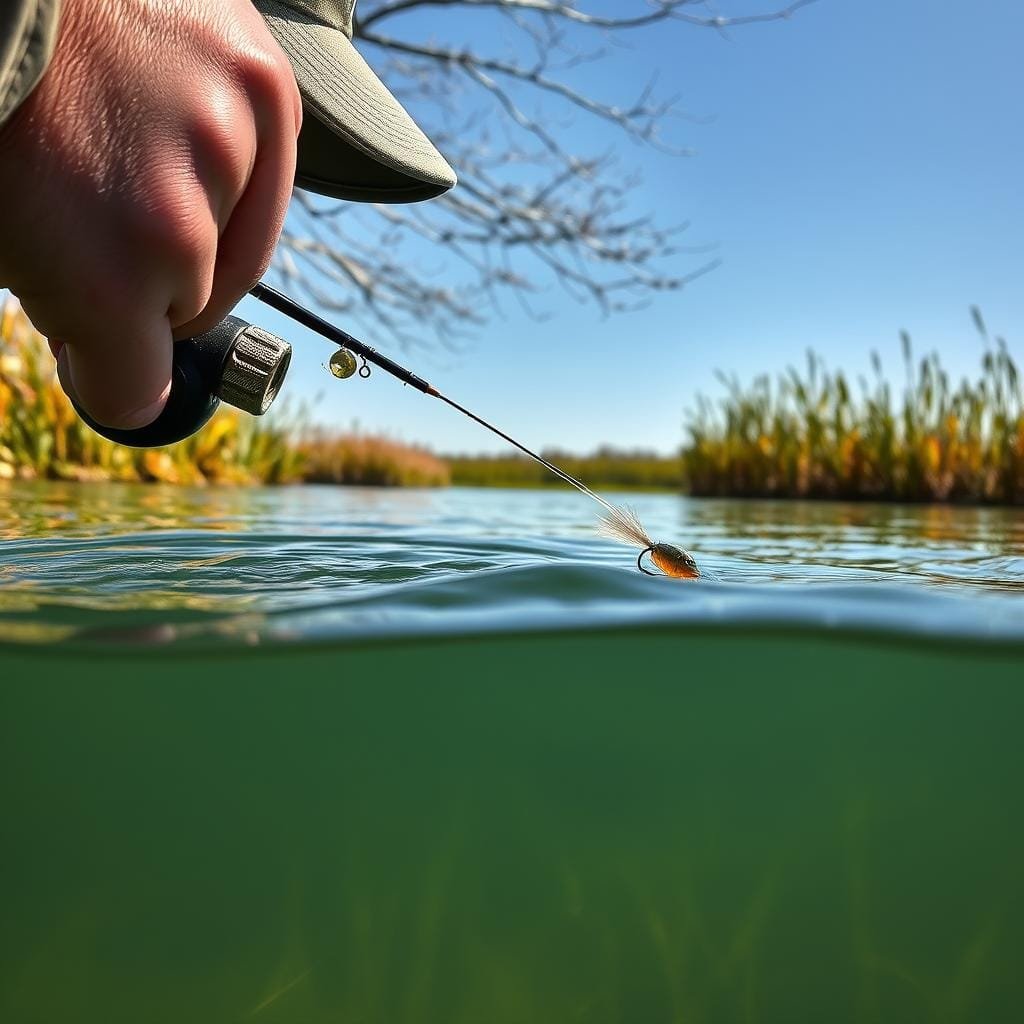
Starting with the right fishing jig types is key for jigging for walleye. Each jig has its own best use. Knowing this can really help you catch more fish.
Some jigs are better for walleye fishing than others. Fireball-style jigs are great with live bait. They have a short hook that lets bait move naturally.
Types of Jigs Suitable for Walleye Fishing
- Fireball-style Jigs: Ideal for live bait with a secure, short hook shank.
- Jigs with Long Shanks: These jigs accommodate larger soft plastics and allow for better hook sets.
- Swimbait Jigs: Known for their streamlined design, these are perfect for replicating the swimming action of small baitfish.
Techniques for Jigging in Different Water Depths
Use the right walleye jigging techniques for each water depth. Vertical jigging is great for deep water (15 to 30 feet). It works well all year round.
Being able to feel small bites and keeping a tight line is important. To get better, check out guides on jigging for walleye.
Success in walleye fishing comes from using the right jigs and techniques. It also helps to know how fish behave. With practice and the right tips, you’ll get better at jigging.
Advanced Spinner Rig Setups for Targeting Walleye
For serious anglers, learning advanced spinner rig setups is key. These setups attract walleye with vibrations and looks. By mixing worm harness setups with bottom bouncers, you can catch more fish.
Creating the Ultimate Spinner Worm Harness
To make the best spinner worm harness, you need a system that looks like real prey. Here’s a simple guide to make a worm harness setup that walleye love:
- Use a strong fishing line (10-15 lb test) for durability.
- Put on a two-hook harness to let the worm move like real ones.
- Choose a colorful spinner blade for light and vibrations. This is key in cloudy or dark waters.
- Top it off with a live crawler or a good artificial worm for better looks and smell.
How to Use Bottom Bouncers Effectively
Adding bottom bouncers helps keep your rigs at the right depth. Here’s how to use them right:
- Pick a bottom bouncer that’s 1 to 2 ounces. It keeps good contact with the bottom without getting stuck.
- Put the bottom bouncer on your main line, then a 3 to 6-foot leader to your worm harness.
- Move at 1 to 2 MPH. This speed makes your spinner rigs for walleye look like real baitfish.
With these advanced methods—spinner rigs for walleye, worm harness setups, and bottom bouncers—you can catch more walleye. This works well in tough conditions or when you’re up against other anglers.
Utilizing Crankbaits to Attract Walleye
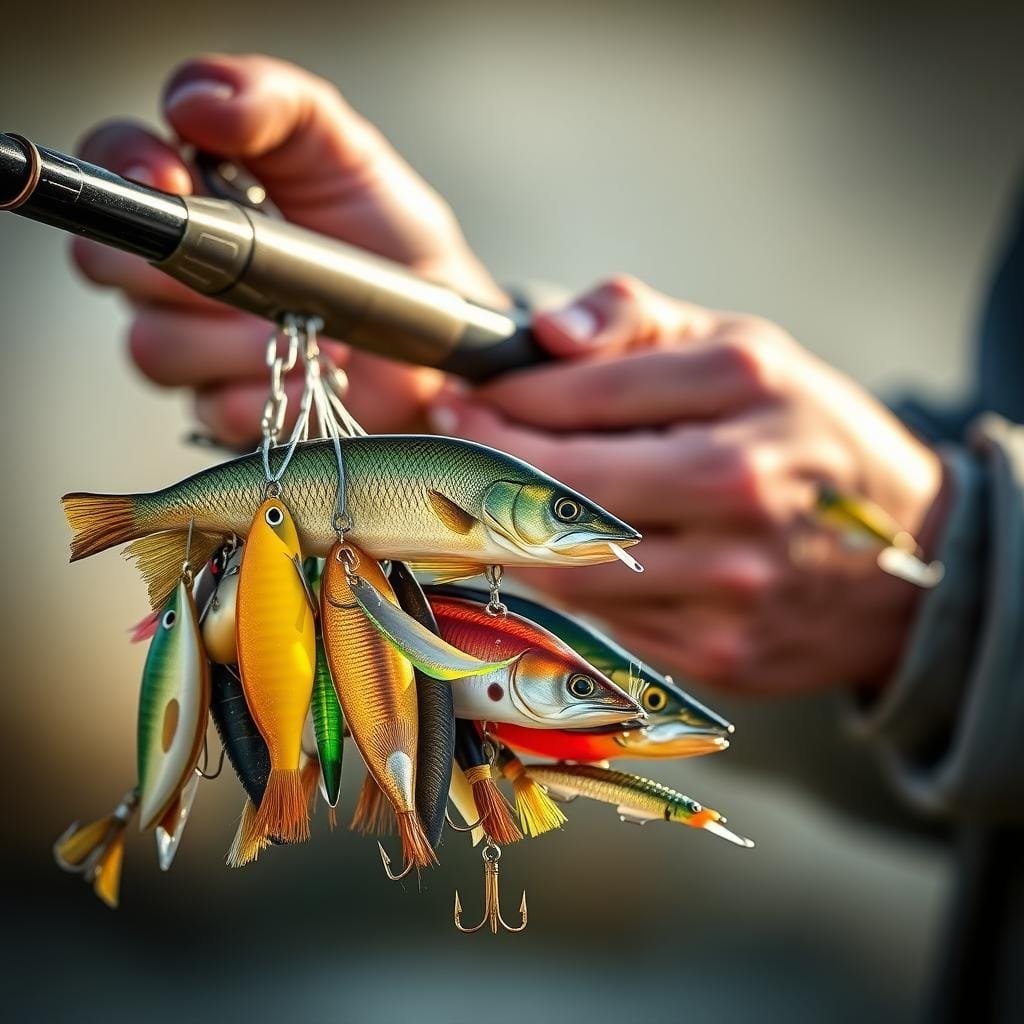
Anglers can change their game by learning to use walleye crankbaits well. These lures mimic baitfish, making them key for catching walleye. Choosing the right crankbait and using smart trolling techniques boosts your chances of catching.
Choosing the right crankbait is important. Look at the water and how active walleye are. For deep water, try the Rapala Deep Tail Dancer or LIVETARGET Deep Diving Smelt. Learn more about crankbaits here.
Choosing Crankbaits Based on Water Conditions
Knowing what fish eat helps pick the right crankbait. If it’s small fish like perch or smelt, choose a crankbait that looks like them. Crankbaits that move like injured fish can also get more bites.
Proper Techniques for Trolling Crankbaits
Trolling with crankbaits helps find walleye in big areas. Keep your speed between 2.3 to 2.6 mph. This speed is good for covering ground and attracting walleye. Use a line counting baitcasting reel to control depth.
Improving your crankbait use and trolling skills takes time. Keep trying different crankbaits and techniques. With practice and adjusting to conditions, you’ll catch more fish.
Perfect Locations: Where to Find Walleye in Lakes
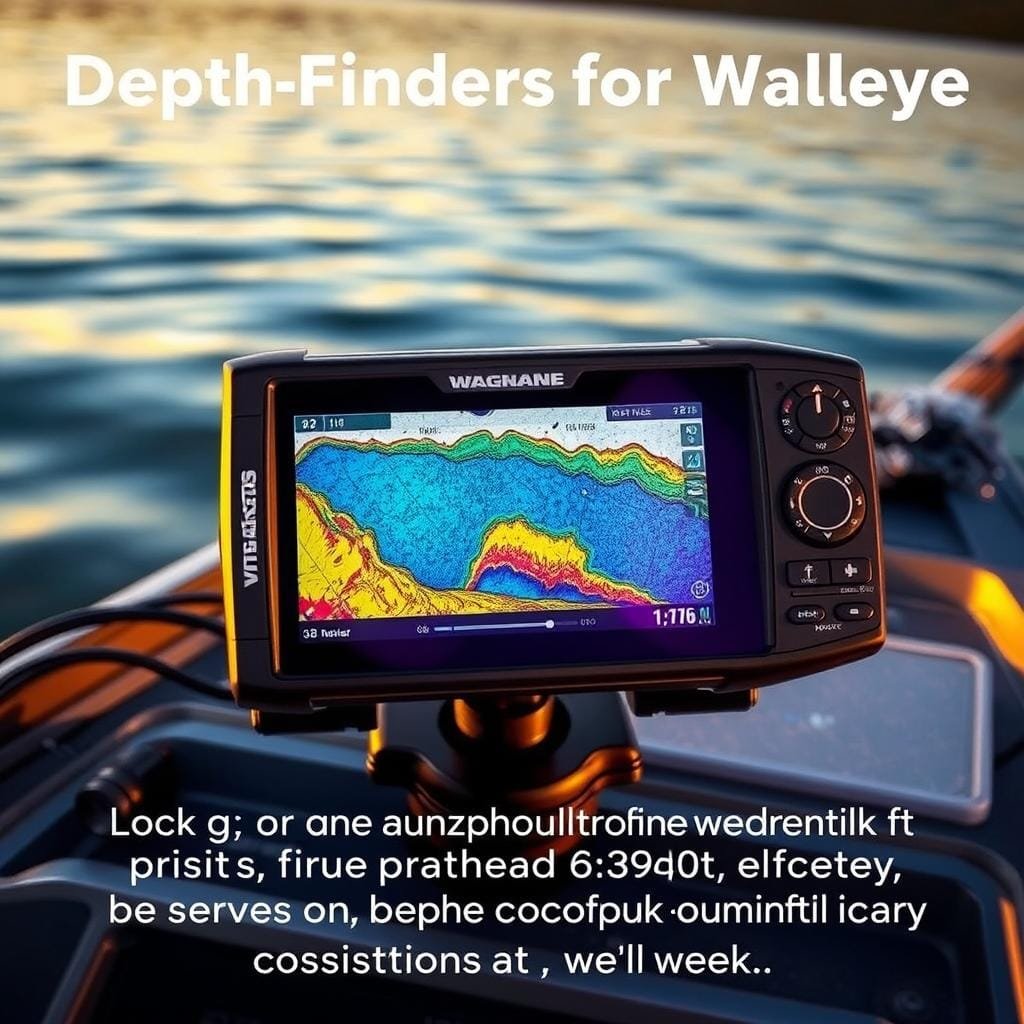
For those who love to fish, finding the best spots for walleye is key. This part talks about the best places to fish for walleye. It also covers how to use new tech to catch more fish.
Identifying Walleye Habitats in Freshwater Systems
Knowing where walleye live can make your fishing trips better. They like places with weeds, rocks, and deep spots. These spots help them hide and catch food.
Places with sudden drops in depth are great for finding walleye. These areas are called “spot-on-the-spot.”
Utilizing Technology to Locate Walleye
Using tech to fish is a game-changer. Depth-finders and GPS help find the best spots. They show where to fish without wasting time.
Here’s how depth-finders can help you catch more walleye:
| Feature | Benefit |
|---|---|
| High-Resolution Display | Shows underwater details clearly |
| GPS Integration | Marks and finds good fishing spots |
| Sonar Technology | Finds walleye in cloudy water |
| Customizable Maps | Tracks depth and landscape changes |
How to Catch Walleye: Expert Tips and Techniques
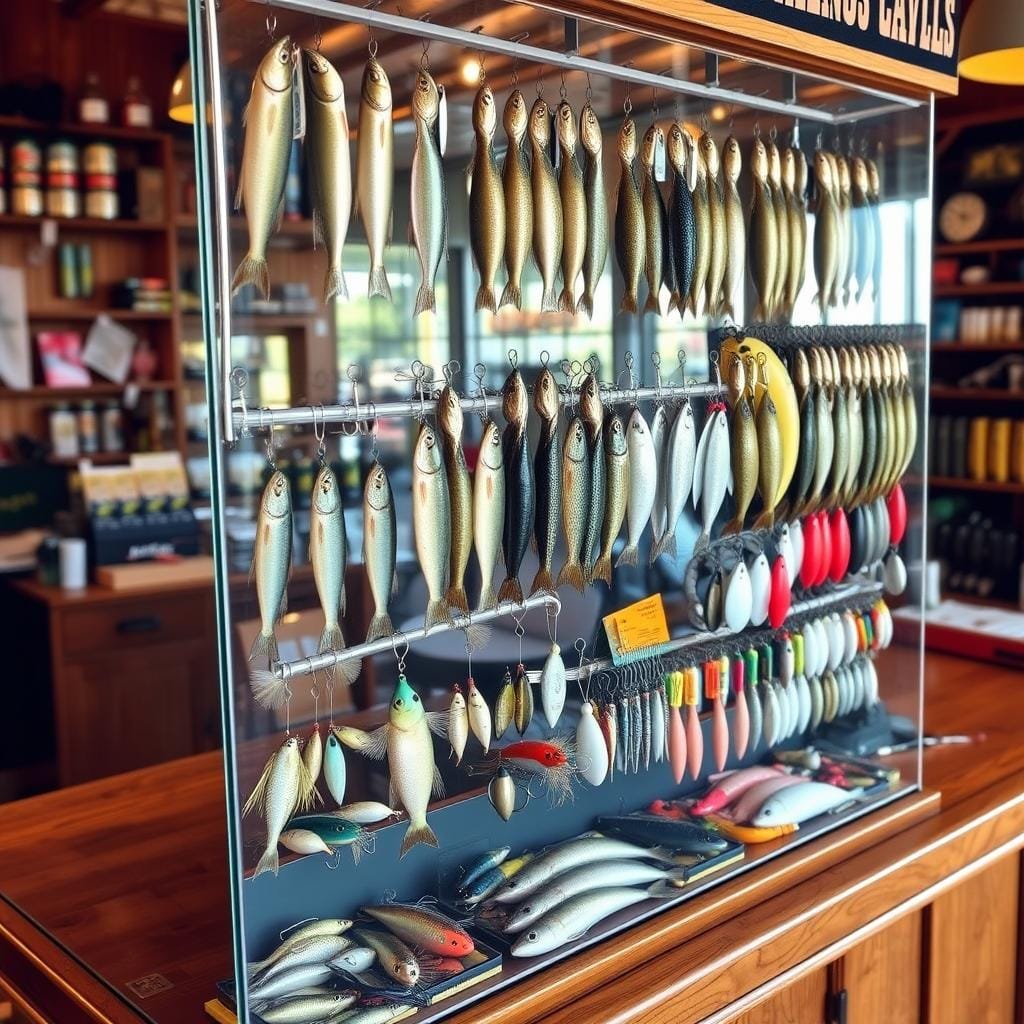
Catching walleye is all about picking the right bait and knowing what works best. This part talks about how to pick the best bait and lures for different fishing situations.
Maximizing Your Catch with Proper Bait Selection
Choosing the right bait is key for catching walleye. You can use nightcrawlers, minnows, leeches, or soft plastics. Here’s a quick guide on their effectiveness:
- Nightcrawlers: Simple and very effective, great for muddy water.
- Minnows: Versatile and work well all year in different waters.
- Leeches: Best for cooler waters, very effective in the north in early summer.
- Soft Plastics: Durable and can mimic many types of walleye prey.
The Role of Color and Lure Selection in Walleye Fishing
Not all lures and colors work the same in all conditions. Here’s a comparison:
| Lure Type | Effective Conditions | Color Patterns | Comments |
|---|---|---|---|
| Spinners | Clear waters, Sunny days | Shimmering gold, silver | Highly reflective, attract walleye effectively on bright days. |
| Jigs | Murky waters, Overcast conditions | Bright colors like orange or chartreuse | Visibility is key; vibrant colors work best in low visibility. |
| Crankbaits | Variable depths | Natural fish patterns | Mimics live bait swimming pattern, effective for deeper waters. |
| Blade Baits | Very cold water | Silver or gray | Subtle vibration patterns perform well in cold conditions. |
To catch walleye, mix bait selection with the right lure types. Live baits or synthetic lures, always think about the water and walleye habits. This will help you catch more.
Seasonal Strategies for Catching Walleye
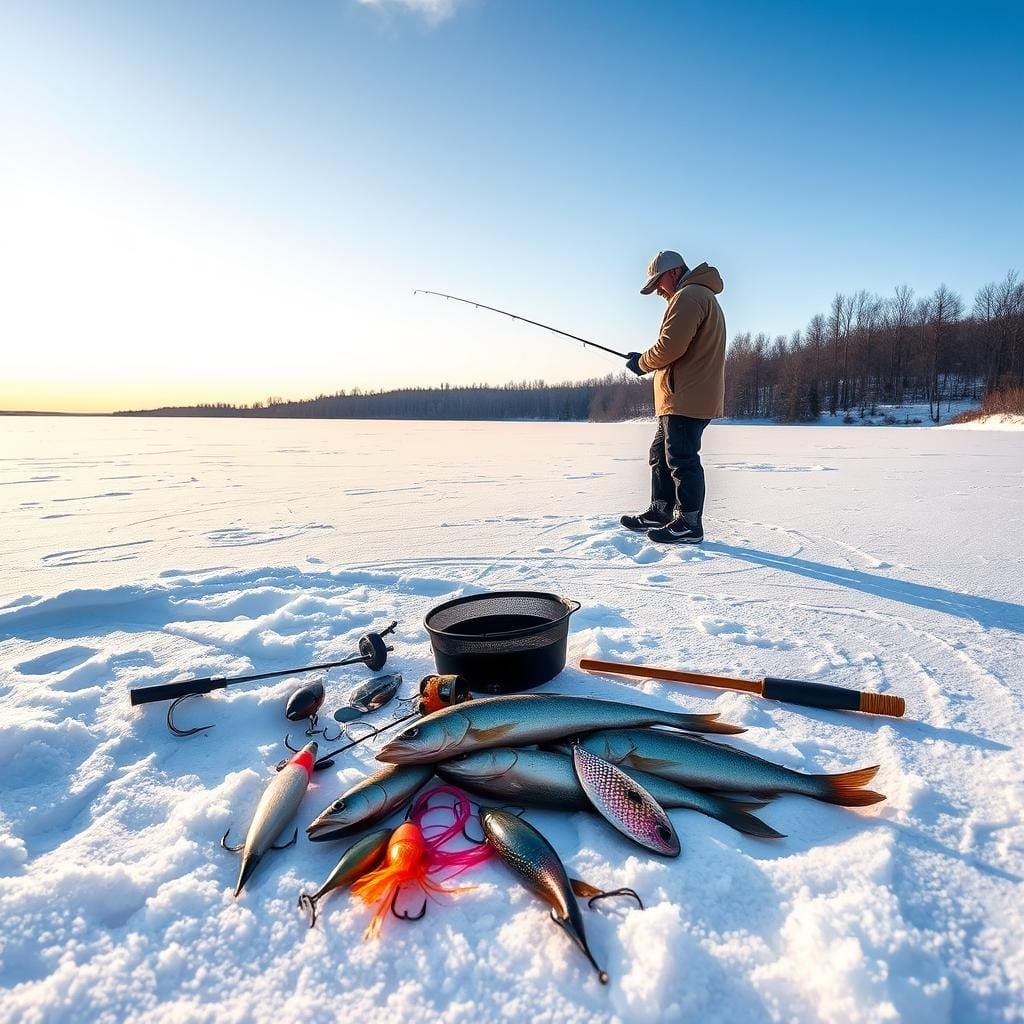
As seasons change, walleye patterns and habitats shift too. This means you need different fishing strategies for each season. Learning to adjust your fishing tactics can really help you catch more walleye.
In winter, use jigs with minnows or ice-fishing to find walleyes in deep water. Choosing the right spots and fishing slowly can lead to big catches.
When it gets warmer, walleye fishing gets more exciting. Summer walleye strategies include using bold tactics and fishing in different places. Try trolling with crankbaits or casting swimbaits in weedy areas for bigger walleye.
Knowing these seasonal changes can make you a better fisherman. Embracing the challenge of seasonal walleye fishing makes fishing more fun and rewarding all year.
Conservation and Ethical Walleye Fishing
Keeping walleye populations safe is very important. Anglers must fish responsibly to help. They need to follow rules and protect the fish.
Knowing and following local fishing laws is key. This helps keep walleye numbers healthy. It also helps the fish grow and have babies.
Being kind to the fish is also important. Catch-and-release fishing is a good way to do this. It lets the fish go back into the water to live and have babies.
During the fish’s breeding time, it’s even more important. Letting them live helps the whole fish family. This is good for the fish and the water.
Anglers should also talk about fishing with others. Sharing what they know helps everyone. It makes fishing better for everyone in the future.
Every fish that is caught and released is a gift. It shows we care about the fish and the water. This is what makes fishing special.