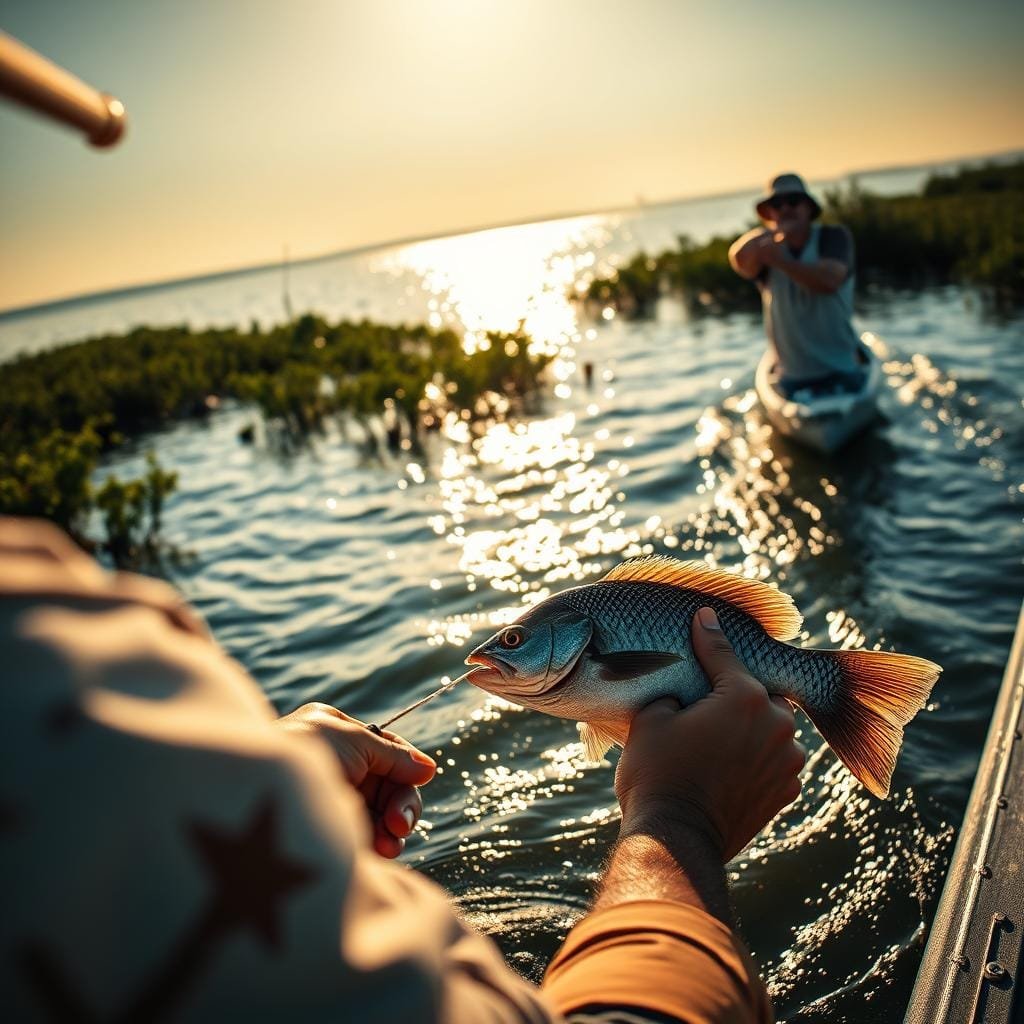
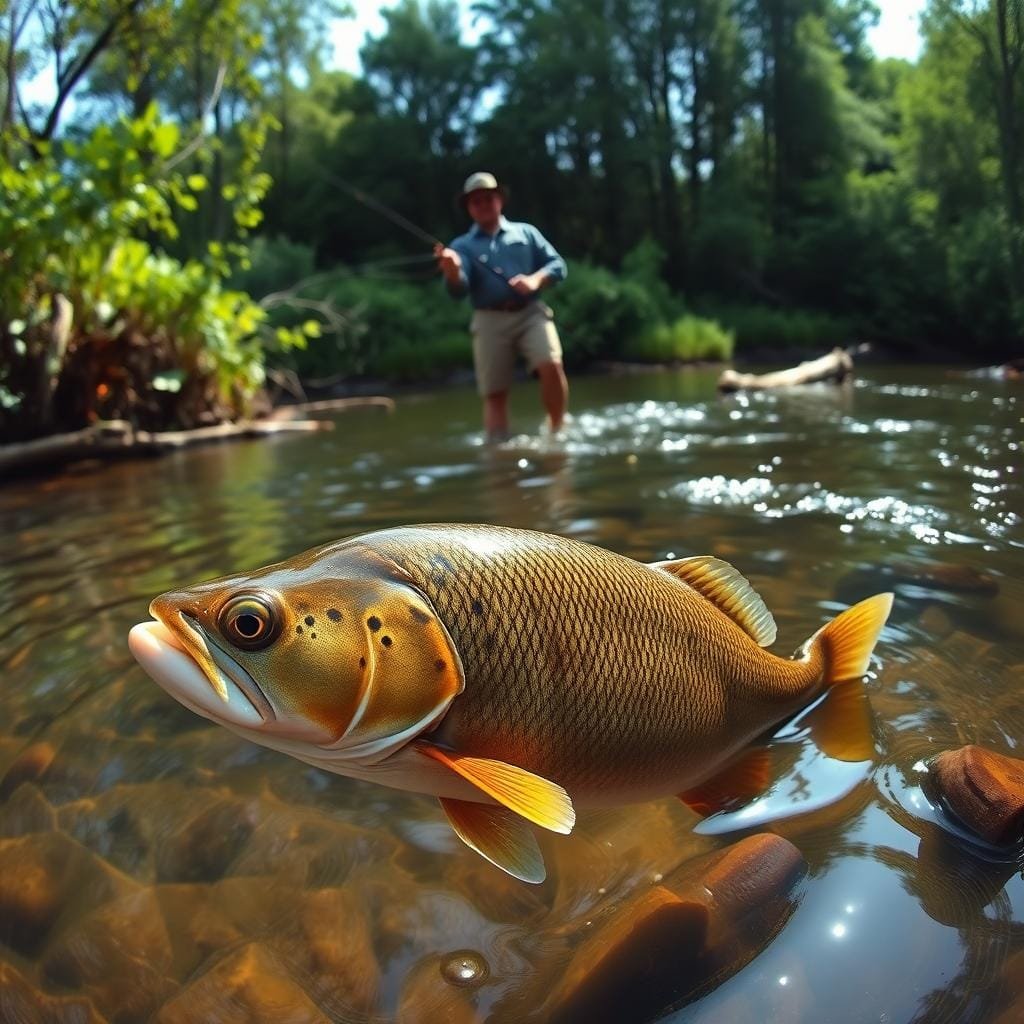
Looking for fast bites and feisty fights? This guide on how to catch warmouth is for you. It’s perfect for swamps, bayous, and more in places like Pennsylvania and Texas. These panfish, also called goggle-eyes, love live bait and artificial lures.
Most are 8 inches or less. But they feel bigger on an ultralight setup.
You’ll learn tips for catching warmouth in real spots. Places like cypress knees and shaded cuts are great. We’ll talk about simple rigs, drift fishing, and using mini-crankbaits.
For more, check out this article on finding and catching warmouth.
Get tips on warmouth baits and lures. Use worms, crickets, and more to catch them in ponds and rivers. Remember to chill your bait fast. The next thump could be your new favorite bite.
Warmouth basics: identification, behavior, and why they bite
Warmouth hit like little bruisers and don’t overthink a meal. They haunt tight cover, flare that big mouth, and crash a bait fast. Strong sensory cues and bold feeding make them classic bycatch and a fun target for panfish fight ultralight fans.
How to identify warmouth vs. rock bass and green sunfish
Start with face paint and eyes. Warmouth show red eyes and dark cheek bars that fan back like “warpaint.” In a quick check of warmouth vs rock bass and warmouth vs green sunfish, look inside the mouth: warmouth have teeth on the tongue. That single trait boosts warmouth identification in the field.
Color helps too. Expect a gray‑olive body with mottled blotches on the back, flanks, and the dorsal and anal fins. Rock bass are more bronze with rows of spots, while green sunfish carry neon edges on fins and a bluer cheek.
Stocky build, big mouth, and red eyes with “warpaint” cheeks
Think compact and thick. Warmouth anatomy features a bass‑like jaw that reaches to the eye, a deep chest, and a squared tail edge. The red eyes and those bold facial bars stand out even in stained water. They often quiver when handled, another field cue that pairs well with the visual marks.
Teeth on the tongue and three anal spines as key traits
Two fast checks lock the ID. First, the tongue teeth—present on warmouth and absent on the usual look‑alikes. Second, count the anal fin spines; warmouth carry three. When you pair tongue teeth with the three‑spine count and the cheek bars, warmouth vs rock bass and warmouth vs green sunfish becomes clear.
Typical size and fight on ultralight tackle
Most fish run under 8 inches, and warmouth size is often less than half a pound. In fertile backwaters, 10‑ounce fish show up. They aren’t bulldogs, but they punch above their weight in cover. Set the hook near wood or weeds and enjoy a crisp panfish fight ultralight before they bury the line.
| Trait | Warmouth | Rock Bass | Green Sunfish |
|---|---|---|---|
| Mouth/Tongue | Large, teeth on tongue (key for warmouth identification) | Large, no tongue teeth | Large, no tongue teeth |
| Eye/Cheeks | Red eyes; dark “warpaint” cheek bars | Red eyes; dotted scale pattern | Bluish cheek lines; bright fin edges |
| Anal Fin Spines | Three | Different count; not the same key trio | Three |
| Body Shape | Stocky, deep‑bodied; classic warmouth anatomy | More elongated, spotted scales | Slab‑sided with long pectorals |
| Color Pattern | Gray‑olive with mottling on back and fins | Bronze with rows of dark spots | Olive‑green with yellow fins, blue highlights |
| Typical Size | Under 8 in.; sub‑½ lb common | 8–10 in. in many waters | 6–8 in. typical |
| Fight on Ultralight | Quick bursts in tight cover; strong panfish fight ultralight | Sturdy pull in open pockets | Fast hits, short runs |
Prime habitats and seasonal patterns in the United States

Warmouth like quiet, warm water. They like swamps, bayous, and slow rivers. These places have stained water and lots of cover.
They stay near wood and weeds. They move a little to stay comfy.
Swamps, bayous, oxbows, and sluggish waters with timber and weeds
Find backwaters that barely move. Oxbow fishing is great here. Cut banks and laydowns are perfect.
Weed-choked canals and blackwater creeks are good too. They have stained water and wood for ambush.
Shallow, vegetated areas, cypress knees, beaver lodges, and stumps
Shoreline flats with lots of cover are great. Cypress knees fishing is good here. Your bait is in the strike zone.
Beaver lodge panfish hide in submerged branches. Fish stumps and dock corners with short drops.
Region focus: Midwest to South, from Pennsylvania/Minnesota to Texas and New Mexico
The warmouth range is from western Pennsylvania to Texas and New Mexico. They like warm backwaters and canals.
Northern edges fish well in warm spells. In the Deep South, oxbow fishing is good longer into fall.
Light and shade: why warmouth love dim holes and tight cover
Shade is key. Dim, protected holes inside tangled wood are great. Put a bait in a small opening and wait for a strike.
From spring to late summer, cover is better than open banks. Even a small shadow can hold fish.
how to catch warmouth
Start in warm, quiet backwaters with lots of shade. Look for places where cypress knees, beaver lodges, and weeds meet. This is where goggle-eye fishing shines.
Keep quiet, watch your movements, and plan your first cast before the boat moves.
Use a jigging or cane pole to drop crickets, worms, or small jigs into dark spots. A small bobber helps you see when a fish bites. It will move, then go under.
Expect a quick bite. Turn the fish hard to catch it before it hides in branches.
For covering more water, use ultralight gear on 2–4 lb test. Cast small crankbaits around stumps, docks, and weed edges. Change your speed and add quick twitches to get bites.
Bank anglers can use a pole-and-worm in shallow weeds near fallen wood. Move it slowly, then a little bit at a time. Change spots often because many fish hide in one spot.
Try different methods too. Fish in shallow waters, drift, or even fly fish. In ponds, troll small plugs to find fish. Fillet fish quickly for the best taste.
Use these tips and know your local water. Keep close to structure, react fast, and move often. This way, you’ll catch warmouth all day.
Gear setup: ultralight combos and simple rigs that work
Keep your gear light and easy to move. An ultralight setup lets you cast close to cover. It helps you feel even the smallest bites.
Ultralight spinning or spincast with 2–4 lb test for small crankbaits
Choose a 5–6 foot ultralight rod from Shimano or St. Croix. Pair it with a 1000-size reel or a Zebco 33 Micro spincast. Use 2–4 lb test line for small crankbaits.
This thin line casts far and looks real. Keep the drag light to hold hooks. Guide fish out before they get stuck.
Cane poles and jigging poles for tight cover
A 10–12 foot jigging pole is great for tight spots. B’n’M and Lew’s make long, sensitive poles. A cane pole is good for control without a reel.
Drop small jigs or crickets into tight spots. The long pole keeps your line straight and avoids brush.
Basic bobber-and-worm setups for easy strikes
A bobber worm rig works well in shallow water. Use a small float, a size 6–8 hook, and a split shot if needed. Thread a nightcrawler and let it drift.
This setup is great for beginners and pros. It helps you feel bites fast and adjust depth quickly.
Terminal tackle choices for brushy, snaggy spots
Choose tackle that slides through cover. Use ball-head jigs, short-shank hooks, and tough leaders. This keeps your line from getting caught.
Keep your gear simple: mini-cranks, small jigs, split shot, and floats. Simple gear means quick bites don’t get away.
- Line: 2–4 lb test line for small cranks and subtle presentations
- Rods: ultralight spinning, spincast, or a long jigging pole for panfish
- Rigs: bobber worm rig for easy, visual strikes
- Essentials: panfish terminal tackle that resists snags and protects knots
Best baits and lures to trigger strikes
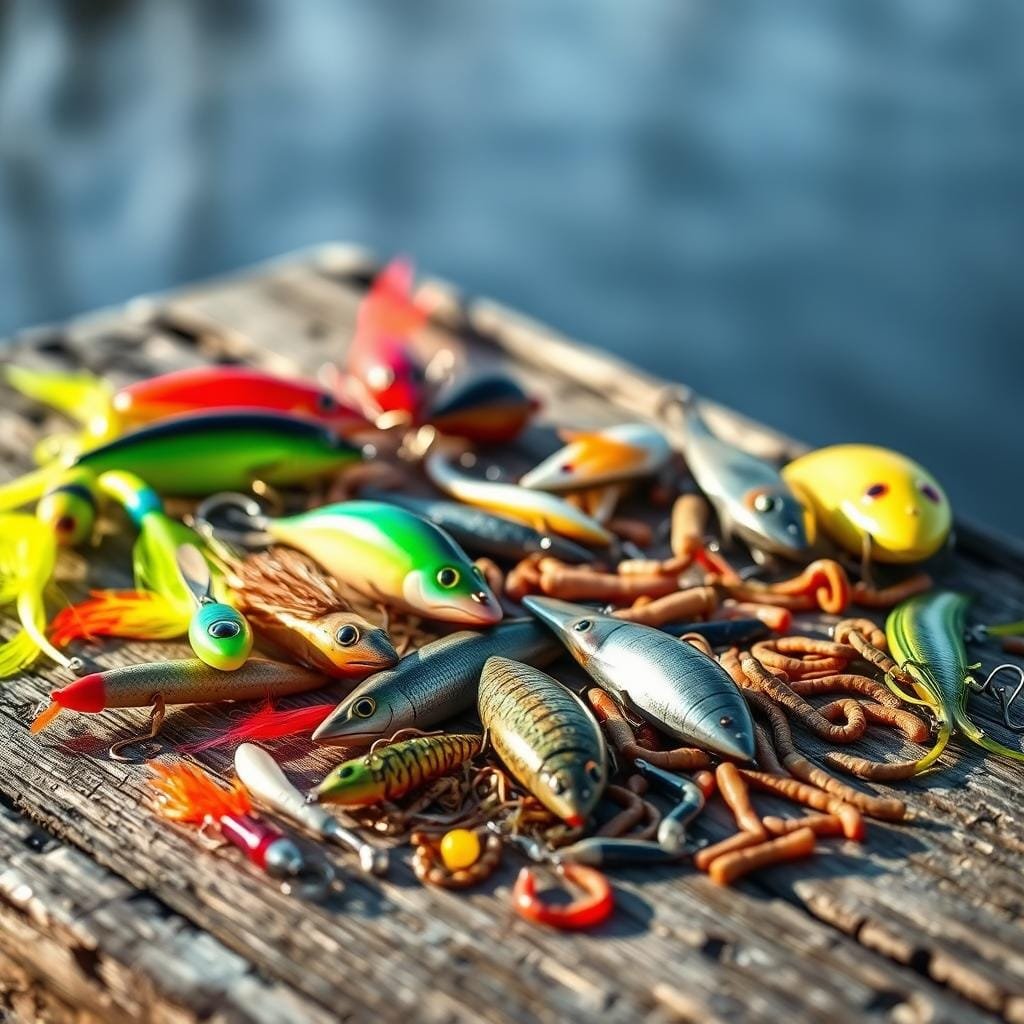
Warmouth hit hard and fast. Bring a small box with options. Mix natural offerings with compact hardware for murky bays and brushy pockets. Rotate through proven warmouth baits until the bite locks in.
Live baits: worms, crickets, minnows, and small crayfish
Nightcrawlers and red worms get quick takes under a small float. Pinch off short pieces to keep the hook point clear. Crickets for goggle-eye shine when dipped into tight shade; nose-hook one and drop it beside stumps.
Fathead minnows and young shiners tempt larger fish. Small crayfish fished on a split shot rig are clutch around wood. Add a light scent to help in tannin-stained water and let the bait pause between moves.
Artificial picks: jigs, mini-crankbaits, spinners, spoons, plugs, and flies
1/32–1/16 oz marabou or tube jigs slide through cover and draw thumps. Mini crankbaits panfish patterns from Rapala, Rebel, and Yo-Zuri in 1/12–1/8 oz run true in shallow lanes. Work them with short twitches near logs.
Spinners spoons warmouth options like a Panther Martin, Mepps Aglia #0–#1, or Acme Kastmaster flash in dark water. Tiny plugs such as the Rapala Original Floating F03 and micro poppers call fish up in calm pockets. Small streamers and foam spiders seal the deal when bugs are hatching.
When to go small vs. surprisingly big for aggressive fish
Pressure and tight cover call for finesse: downsize hooks, shorten worms, and pick compact jigs. When fish are fired up, don’t be shy—warmouth often smash lures meant for bass. A 1/8 oz crank or #1 spinner can outpace smaller picks.
Start small at first light, then scale up as the sun climbs and fish chase. Keep retrieves short and controlled to stay clear of snags and to hold the strike zone longer.
Scent and color considerations in stained water
In coffee-colored swamps, high-contrast wins. Black/chartreuse jigs, gold blades, and copper spoons stand out. In clearer patches, swap to natural minnow and crayfish tones.
Tip plastics with a dab of anise or shrimp scent to help fish hone in. Match blade size to flow so your presentation rides steady along cover where the best lures for warmouth get seen.
| Category | Specific Picks | Best Use | Color/Finish | Why It Works |
|---|---|---|---|---|
| Live bait | Red worms, crickets for goggle-eye, fathead minnows, small crayfish | Dipping shade lines, float fishing shoreline pockets | Natural reds, browns; lively bait | Lifelike motion and scent seal quick strikes in tight cover |
| Jigs | 1/32–1/16 oz marabou, tube, or grub jigs | Pitching to stumps, vertical jigging in brush | Black/chartreuse, white, pumpkin | Compact profile slips through wood and triggers reaction hits |
| Crankbaits | Mini crankbaits panfish (Rapala F03, Rebel Teeny Wee series) | Shallow cranks along weed edges and logs | Silver/black, craw, firetiger | Tight wobble mimics fry and small crayfish; casts far for size |
| Spinners/Spoons | Spinners spoons warmouth (Mepps #0–#1, Panther Martin, Kastmaster 1/16 oz) | Stained water lanes, light current seams | Gold, copper, black/yellow | Flash and thump cut through tannin; easy to control depth |
| Plugs/Topwater | Rapala Original Floating F03, micro poppers | Calm mornings, tight banks and overhangs | Natural baitfish, frog | Suspends or pops in place to tease ambush bites |
| Flies | Woolly Bugger, Clouser Minnow, foam spider | Short casts near pads and cypress knees | Olive, black, white | Soft landings and subtle motion for wary fish |
| Overall picks | Warmouth baits and the best lures for warmouth combined | Swap based on water clarity and cover density | High contrast in stain; natural in clear | Balanced arsenal keeps you effective across changing conditions |
Pinpointing fish: reading cover and “goggle-eye holes”
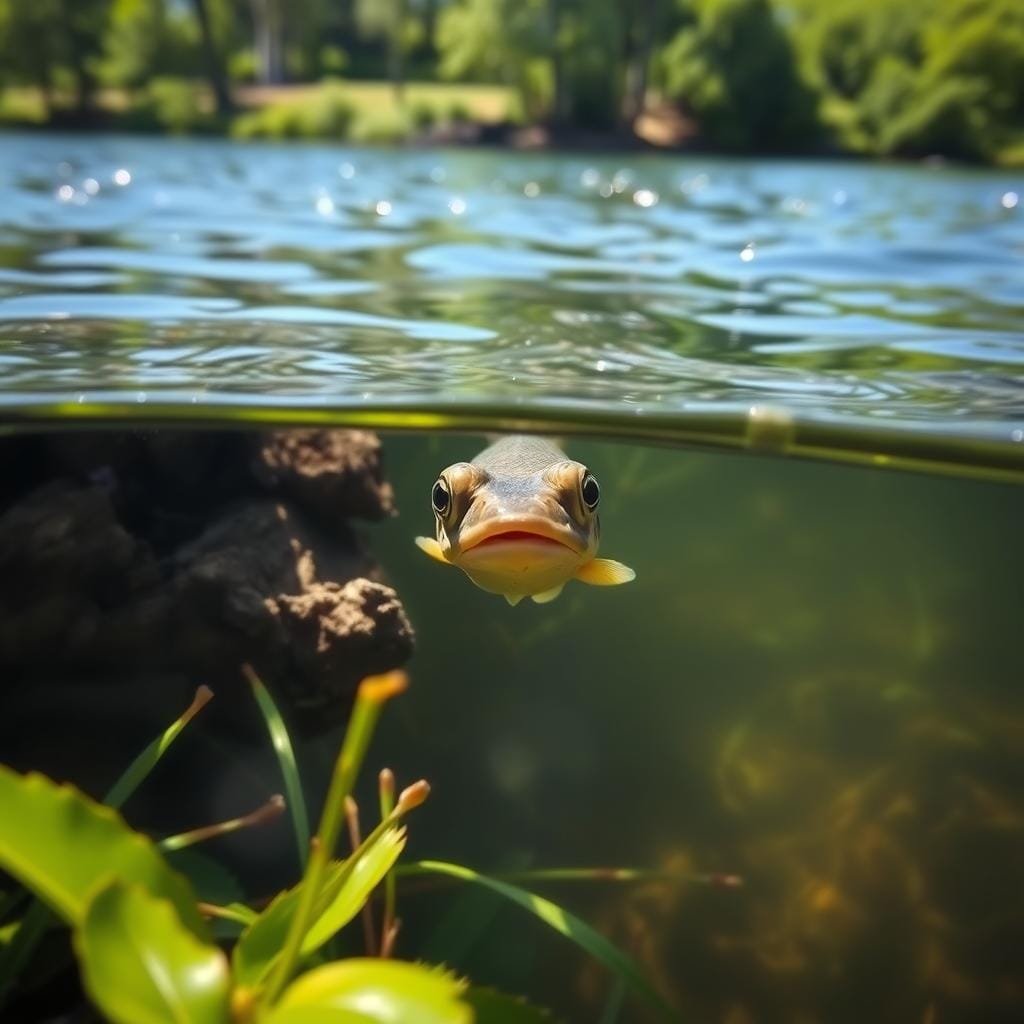
To find warmouth in cover, slow down and start reading panfish structure one pocket at a time. Look for dark cavities in hollow cypress trees. Also, check tiny shade windows under docks and small notches in stump roots. These spots are where fish hide tight and strike fast.
When fishing in cypress hollow, move quietly. Get close enough to drop your line straight down, not cast. Use a cricket, worm, or small jig with a micro-cork. Watch for the bobber to shake, then go under. Check each spot from back to front before moving on.
Beaver lodge fishing is great when submerged sticks have half-dollar openings. Try bait in every gap you can reach. In many spots, you can catch two to four warmouth before the bite stops. Move a foot left or right to find more fish.
Look at cypress knees, stumps, and dense weed clumps too. They have sharp edges and ambush points. Also, check inside turns, coves, and inlets or outlets. These areas funnel food and hold fish all day.
Docks, pilings, overhanging bushes, and sunken objects also hide fish. Move slowly, checking every opening and shadow. For more on finding fish in tight spots, see this guide on goggle-eye holes and tight-cover tactics.
Presentation tactics around heavy cover
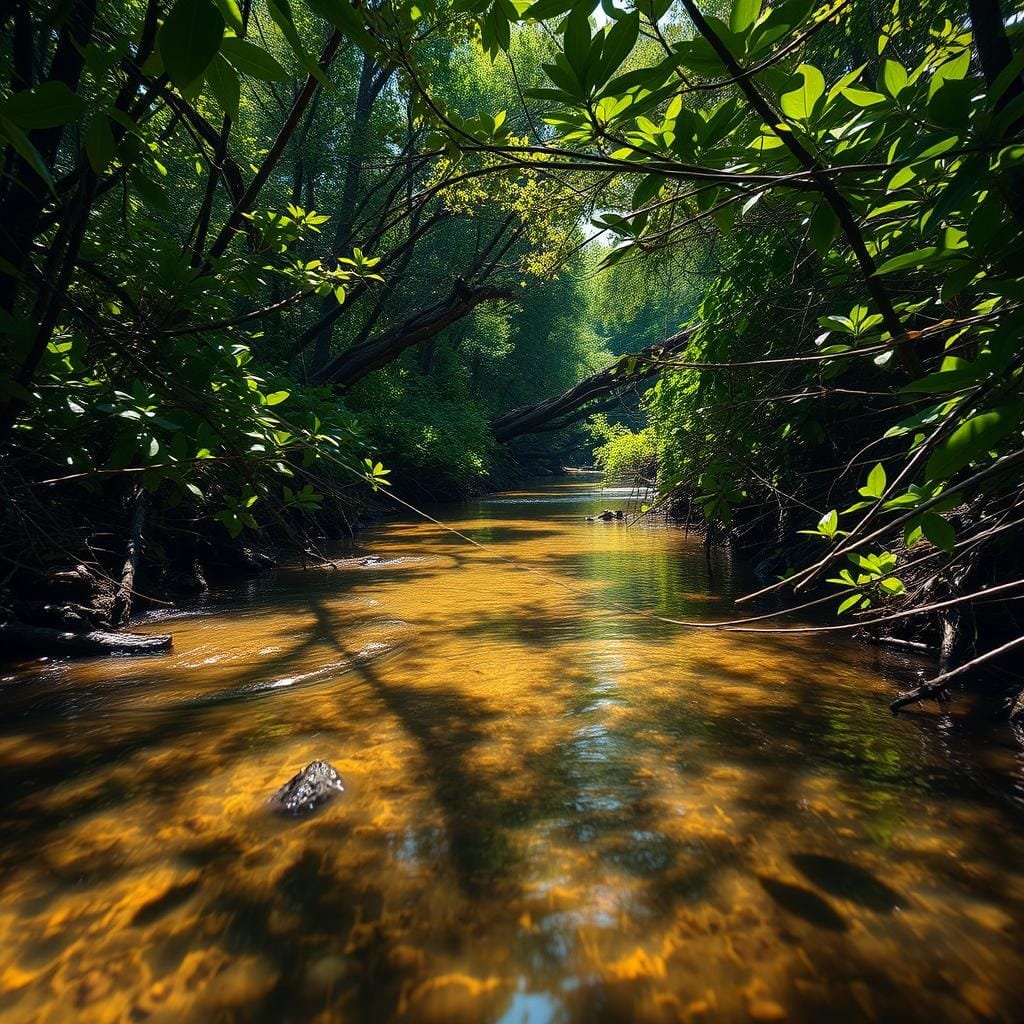
Thick cover hides the bite. So, keep your moves small and precise. Start from the outside and let the lure pause in shadows.
Use quiet boat adjustments and short pitches to stay quiet.
Vertical dipping into cypress hollows and beaver-lodge pockets
Use a long jigging or cane pole for tight spots. For vertical jigging warmouth, drop a 1/32–1/16 oz jig or live bait straight down. Hold it steady.
A tiny cork or foam strike indicator shows light takes in dark water.
Let the bait hang, quiver once, then rise a foot and drop back. Keep line tight and rod high to lift fish clear.
Working weed edges, docks, pilings, and overhanging brush
Cast small jigs or mini cranks to the first shade line and count them down. This is classic weed edge panfish water. Pause right where light fades.
Nudge the lure forward inches at a time to tease an ambush bite.
Slow-rolling spinners and twitching mini-cranks along points and rocks
Slow-roll a size 0–1 spinner from point tops to the break. Keep blades turning but close to bottom. Then switch to a mini crank twitch retrieve.
Work rock transitions and subtle seams. Change cadence after each strike window to keep fish guessing.
Managing snags and extracting fish from tight quarters
Expect to bump brush. Rig single hooks, compact profiles, and minimal clips for better snag management fishing wood. If you stick a limb, stop pulling, drop slack, and change angles.
Reposition the boat or your stance to free the lure without blowing the spot. Once hooked up, apply firm, even pressure and lift immediately to steer fish out before they bulldog back in.
Techniques that consistently produce
Warmouth like to eat in shallow, shady spots. Move slowly and precisely. Set the hook quickly. Mix slow pauses with quick movements to get them to bite near brush and grass.
Techniques that consistently produce for warmouth fishing
For fishing warmouth, use a small float. Drift a red worm or cricket by stumps and cypress knees. Let it hang just above the weeds, then stop it. Most bites will make the float pop sideways.
This works best in calm mornings. Use 2–4 lb mono on a light rod from Shimano, Daiwa, or Zebco. A size 8–10 Aberdeen hook helps it slide through brush.
Drift fishing across weed beds and inside turns
Drift fishing works best in light wind. Move the boat across weed beds and inside bends. Start with a split-shot and small jig or live bait. Count down to find where the fish are biting.
Keep your rod low and feed line as the rig hits grass tops. When it ticks or loads, lift and reel hard to pull fish out of cover.
Fly fishing small streamers and insects near lily pads
Fly fishing is great near lily pads and shaded areas. Cast a size 8 Woolly Bugger, Clouser, or foam spider with a short pause, then twitch. Strikes feel like a sharp thump.
A 3–4 weight outfit from Orvis or Redington works well for close shots. Aim for pockets, not stems, and strip quickly to keep fish from hiding in the greenery.
When trolling tiny plugs makes sense in ponds and oxbows
When fish spread out, try trolling tiny plugs. Use an ultralight spinning rig with 2–4 lb test. Work gentle S-turns along contour changes and oxbow points. Mini-cranks from Rebel, Rapala, or Strike King work well at a slow crawl.
Watch the rod tip for a steady throb. If it stalls, you’ve hit grass—pop the lure free and keep moving until you find a strike zone.
| Method | Best Areas | Key Gear | Trigger Move | Why It Works |
|---|---|---|---|---|
| Techniques that consistently produce for warmouth fishing | Shoreline shallows, brush, fallen stumps | Float, size 8–10 hook, worms or crickets | Hang bait above grass, pause, short hop | Suspends in strike zone without snagging |
| Drift fishing panfish | Weed bed fishing lanes, inside turns | Ultralight, split-shot, 1/64–1/32 oz jig | Wind-driven glide with controlled line feed | Covers water and maps depth of active fish |
| Fly fishing warmouth | Lily pads, shade from overhanging brush | 3–4 wt fly rod, small streamers and insects | Short pause, twitch, two quick strips | Imitates injured prey in tight pockets |
| Trolling tiny plugs | Ponds and oxbows, contour and cover edges | Ultralight spinning, 2–4 lb mono, mini-cranks | Slow crawl with S-turns and grass pops | Finds scattered fish and triggers reaction hits |
Where to find warmouth: spot list for lakes, ponds, and rivers
Find warmouth fishing spots where cover meets gentle current and shade. In lakes, ponds, and rivers, panfish hide in dim spots near hard edges. Work slow and check every spot. For more info on catching warmouth in creeks and swamps, check this field report on warmouth.
Lily pads, gradual shores, coves, and inlets/outlets
Begin with lily pads on gradual shores where weed lines meet. Warmouth fish move from shallow waters into coves and bends. These spots trap minnows. Fish the first break and the darkest spots under pads.
Piers, docks, walkways, bridges, and pilings
Manmade shade is perfect. Focus on bridge pilings, dock corners, and walkway shadows. Skip tiny jigs into tight spots, then let them fall by pylons and ladders.
Sunken objects, rocks, islands/sand bars, and spring holes
Check logs, riprap, and brush where current slows. Islands and sand bars create soft spots for panfish. In clear springs, fish the cool edge. Move upstream to avoid scaring them.
Cliffs and steep banks vs. shoreline shallows
Start with cliffs, then move to flat areas. Cliffs offer quick depth, while flats warm up early. Look for cypress knees, stumps, bushes, and beaver lodges for ambush points.
- Pad fields on gradual banks: pick the darkest slots.
- Docks and bridge pilings fishing: hit shade transitions first.
- Rocks and sunken wood: trace edges and pauses.
- Islands and spring holes panfish: focus on cool, clear inflows.
Keep or release: handling, icing, and table quality
Many anglers catch warmouth while fishing for crappie or bass. They often let them go. But, warmouth can be tasty too. The choice to keep or release them depends on water quality, fish size, and local rules.
In clear ponds and slow creeks, warmouth taste great. It’s okay to catch a few from big populations. Let the small ones grow.
Quick cold care is important. Treat them like any panfish. Bleed them right away and then ice them to stop breakdown.
This keeps their texture and flavor good. Soft flesh or bad taste usually comes from bad handling. Keep them cold and dry, and avoid sun.
Next, clean them well. Scale or skin, then fillet along the rib line. Rinse in cold water and pat dry. Cleaning soon after catching keeps the meat firm and sweet.
Given their small size, you’ll catch a lot. Fry, air-fry, or pan-sear them lightly. This lets their natural taste shine.
Be careful and fair. Decide to keep or release based on the spot’s health and your needs. Check local rules before keeping any fish. With quick bleeding, proper icing, and careful cleaning, these fish become delicious.