Kokanee are landlocked sockeye salmon. They eat tiny drifting life. Their main food is zooplankton like daphnia and copepods found in clear lakes.
Most days, zooplankton is their main food. But they also eat small insects, tiny plants, and freshwater shrimp. The light, depth, and thermocline decide when and where they eat.
At dawn and dusk, they swim up to eat in safer, dimmer water. Anglers can see this. They use lures that move like fish, not big ones.
Adding scents like shoepeg corn, cured shrimp, anise, and krill helps. It makes them more likely to bite. Knowing what they eat helps you fish better. You can make your lure move just right to get more bites.
Kokanee salmon basics: landlocked sockeye, life cycle, and where they live
Kokanee are a special kind of sockeye that lives in freshwater lakes. They stay in these lakes their whole life. This makes their life cycle unique, needing cool, clear water and lots of plankton.
They can be found in the Pacific Northwest and in many lakes across the Rockies and beyond.
Landlocked sockeye vs. ocean-going sockeye
Kokanee are like sockeye but live in freshwater lakes. They don’t go to the ocean like some sockeye do. They grow, mature, and spawn in these lakes.
They like to spawn on lake shores or in streams. Places like Lake Coeur d’Alene and Lake Osoyoos are good examples.
Living in freshwater makes them smaller and more social. But they are very good at finding food and tracking water changes.
Typical size and age at spawning (3–5 years)
Kokanee usually grow up in three to five years. They are usually 9–12 inches long. But some lakes have bigger kokanee that can grow up to 20 inches.
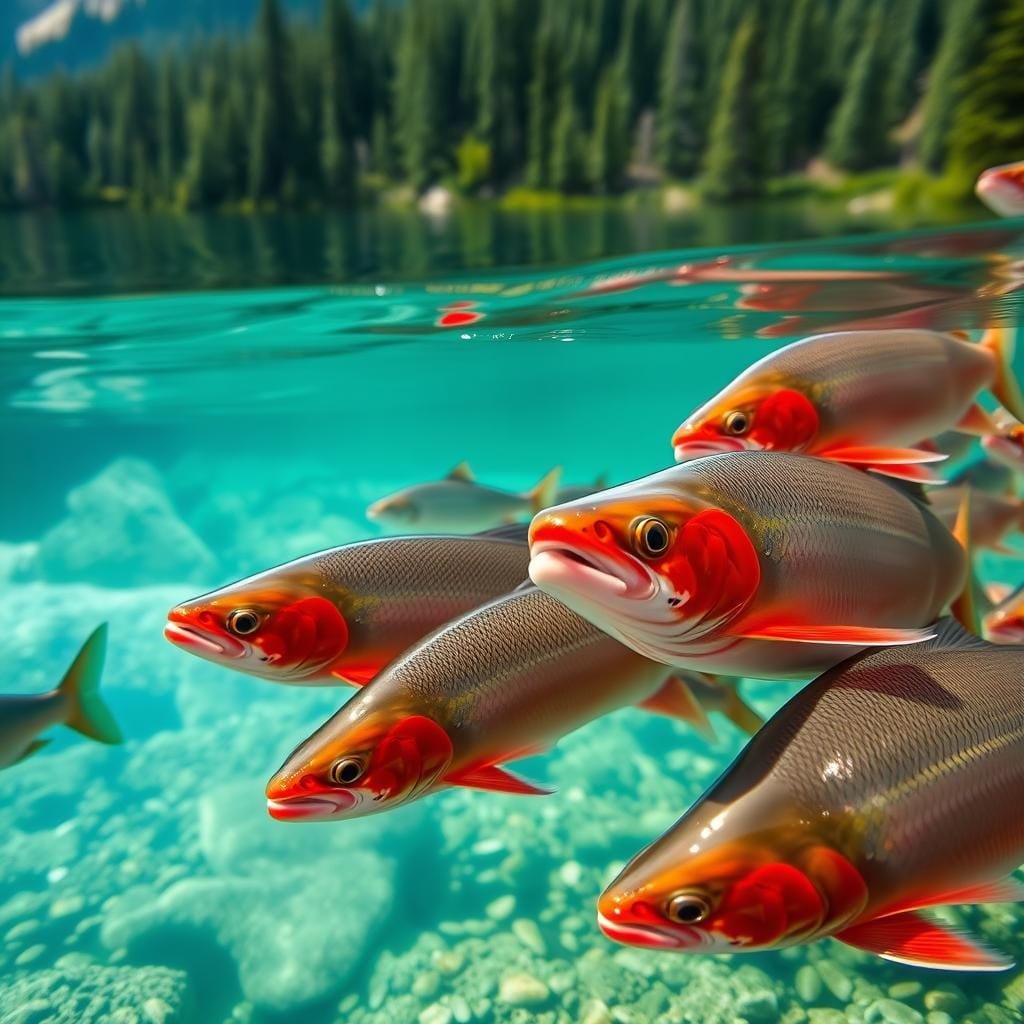
As they get ready to spawn, their bodies turn bright red and their heads turn green. This is a sign that they are ready to die after spawning.
How big they get depends on how much food they have and how crowded they are. Where there’s lots of plankton and not many fish, they can grow bigger.
Key U.S. waters: Pacific Northwest, Rockies, and introduced lakes
The Pacific Northwest is where most kokanee live. Places like Wallowa Lake and Lake Chelan in Washington, Lake Roosevelt on the Columbia, and Idaho’s Lake Coeur d’Alene are great for them.
They also do well in the Rockies and in lakes that have been introduced to them. Flaming Gorge on the Wyoming–Utah line is a great example. Lakes in Colorado, Montana, Utah, and New York also have strong kokanee populations.
| Aspect | Landlocked Sockeye (Kokanee) | Ocean-Going Sockeye |
|---|---|---|
| Habitat | Entirely freshwater; lakes and tributaries | Juveniles in freshwater; adults mature in the ocean |
| Typical Size | 9–12 in common; larger in select lakes | Often 20–30 in with ocean feeding |
| Spawning Age | 3–5 years; classic kokanee spawning age | 4–5 years typical, varies by stock |
| Color at Spawn | Bright red body, green head | Bright red body, green head |
| Key U.S. Waters | Pacific Northwest kokanee in Lake Chelan, Lake Roosevelt; Rockies at Flaming Gorge; introduced kokanee lakes in Colorado, Utah, Montana, New York | Pacific coast rivers such as the Columbia and Fraser systems |
| Lifecycle Notes | Kokanee life cycle tied to lake thermoclines and plankton pulses | Lifecycle driven by ocean productivity and river migration timing |
Primary diet: kokanee feed almost exclusively on zooplankton
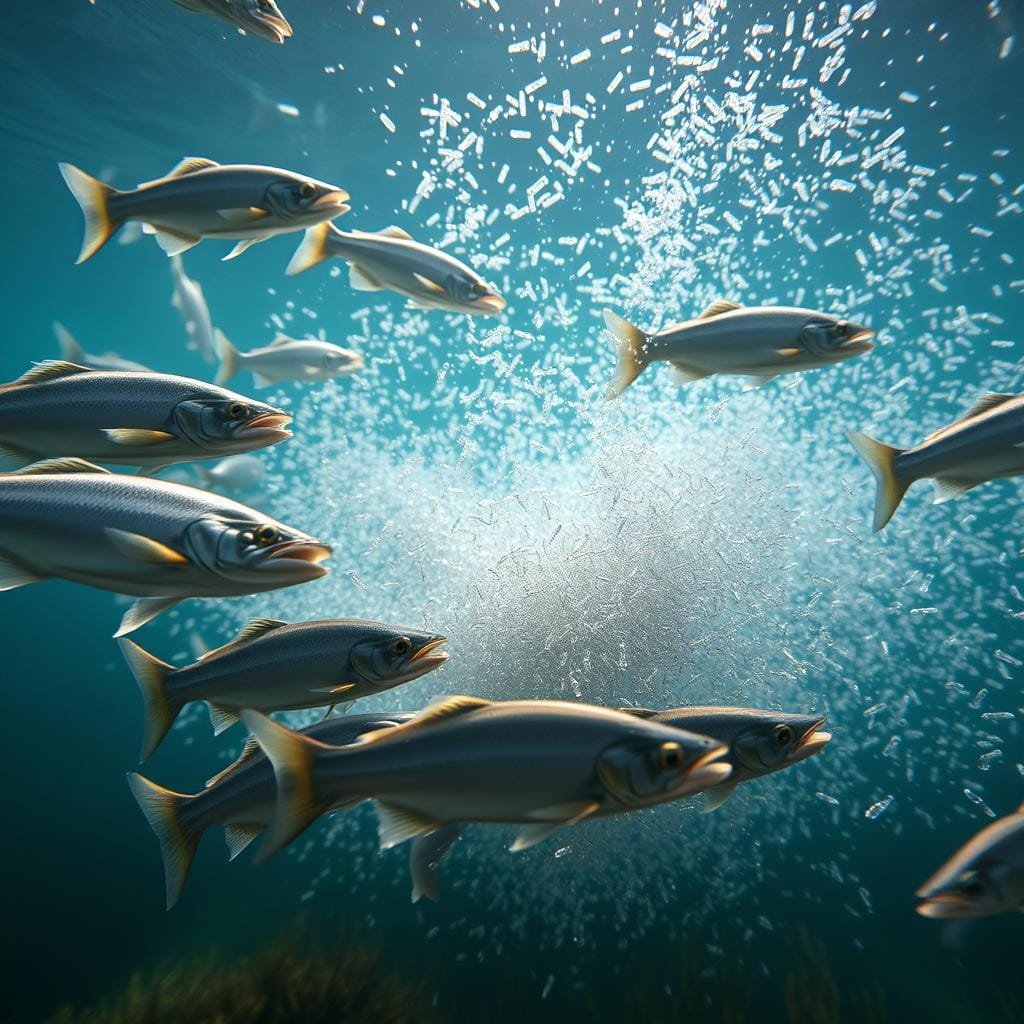
Kokanee eat tiny animals that float in clear lakes. They move a lot to find these tiny foods. People watch them to learn about their eating habits.
Zooplankton as the staple food source
Kokanee mainly eat tiny animals like rotifers and copepods. Lakes with lots of these tiny animals help kokanee grow well. This is why kokanee always look for these tiny foods.
Gill rakers: how kokanee strain tiny prey from the water
Kokanee have special gill rakers that look like combs. These help them catch tiny animals while letting water go. This way, they can eat a lot of tiny food quickly.
Dawn and dusk feeding movements toward the surface
Kokanee eat best when it’s dark. They go up to the surface at dawn and dusk. This is when they find the most tiny animals to eat.
Secondary foods: insects, tiny plants, and freshwater shrimp
Kokanee don’t just eat one thing. They switch to insects, tiny plants, and shrimp when they can. This helps them keep eating well, even when food is scarce.
Learn more about kokanee fishing at kokanee fishing basics. See how they adapt on real lakes.
When and why kokanee shift to alternative prey
Plankton levels change with light, temperature, and wind. When plankton is less, insects and tiny plants become easy food. This helps kokanee eat well, even when food is hard to find.
Freshwater shrimp and krill-like prey as high-value bites
Freshwater shrimp are packed with calories. They give kokanee a lot of energy in a small package. Even inland fish follow the scent of shrimp, just like sockeye do.
How availability varies by lake and season
Kokanee find food differently in each lake. At Lake Chelan and Flaming Gorge, shrimp and insects gather in deep water. In spring and fall, food spreads out. But in summer, it’s easier to find.
What does kokanee eat
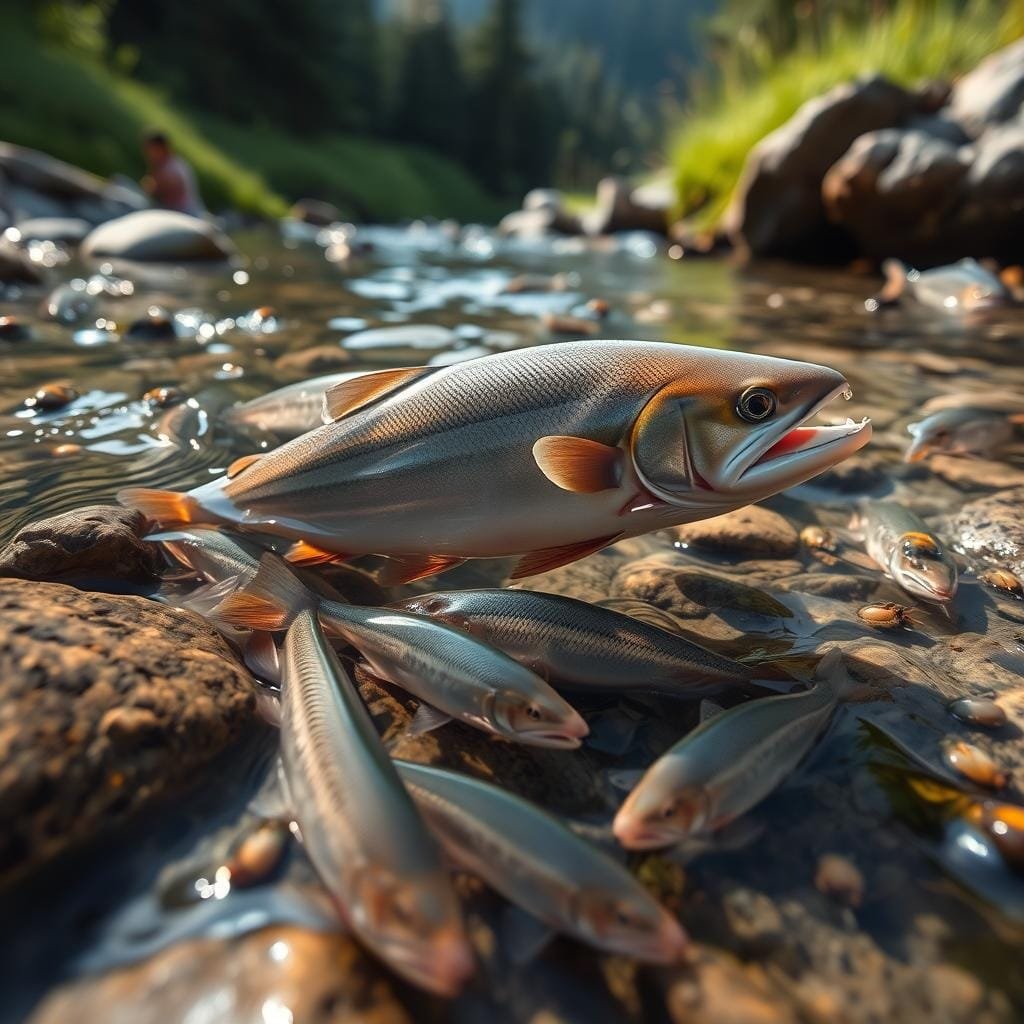
Kokanee fish swim together in tight groups. They look for tiny floating life to eat. Their diet includes zooplankton, small algae, tiny insects, and freshwater shrimp.
They move up towards the light at dawn and dusk. Then, they go deeper as the sun gets higher. This helps them find cool water and more food.
Even though they eat tiny things, shiny lures and scents can make them bite. Guides use corn, shrimp, and krill to attract them. For more on what to use, check out this kokanee food list and tactics.
| Kokanee Forage Item | When They Feed | Why It Works | Angler Tie-In |
|---|---|---|---|
| Zooplankton (daphnia, copepods) | Dawn, dusk, low light | Suspended clouds align with schooling behavior; easy to filter with gill rakers | Small dodgers, light hoochies; subtle action to mimic drifting kokanee prey |
| Micro algae and tiny plants | All day in stable water | Supplemental energy when plankton density is high | Natural greens on lures; slower trolls to stay in kokanee forage lanes |
| Aquatic insects (larvae, pupae) | Hatches and evening rises | Seasonal surges push protein-rich snacks near the surface | Fine wires, small spinners; pause to mimic ascents |
| Freshwater shrimp and krill-like prey | Mid-depth zones over structure | High-calorie bites that boost growth and stamina | Cured shrimp tips, krill scent; pink and orange tones stand out |
| Trigger baits (corn, scent blends) | Reaction windows anytime | Smell and sweetness flip curiosity and aggression switches | Shoepeg corn, anise, and shrimp cures to round out a kokanee diet summary |
Seasonal patterns: how thermocline and turnover change kokanee feeding
Kokanee follow temperature, oxygen, and food changes with the seasons. Their behavior changes with each season, affecting how they feed. Watching the kokanee thermocline shows why schools can appear or disappear quickly.
Preferred cool-water band and thermocline targeting
Kokanee like cool water around 50°F. They stay between 15 and 90 feet deep. This makes them bite well when everything is just right.
Finding the kokanee thermocline is key. Zooplankton and fish gather there, making tight schools that feed well.
Spring and fall turnover: dispersed forage and roaming schools
During lake turnover, kokanee spread out. Wind and temperature mix the water. This makes forage and schools move around.
Expect kokanee to be in different depths and bite less often. They feed when they can until the water settles.
Summer stratification: consistent depths and steadier feeding
In summer, the thermocline gets stable. This makes prey easier to find. Kokanee feed better as they stay in the same depths.
Summer brings clear sonar marks and predictable feeding. Kokanee follow the thermocline across points and humps.
| Season Phase | Water Structure | Typical Kokanee Position | Feeding Pattern | Key Cue |
|---|---|---|---|---|
| Spring Turnover | Mixed column, weak or no thermocline | Roaming, variable 10–60 ft | Scattered, short bursts | Lake turnover kokanee behavior and drifting forage |
| Early Summer Build | Forming thermocline | Converging 20–60 ft | Improving consistency | Kokanee thermocline sharpening and zooplankton bands |
| Mid–Late Summer | Stable, layered stratification | Holding 30–90 ft | Steady, time-of-day rhythm | Kokanee cool water near 50°F and kokanee depth preferences |
| Fall Turnover | Re-mixed column, fading thermocline | Roaming 15–70 ft | Hit-or-miss, mobile schools | Lake turnover kokanee with dispersed prey |
Light sensitivity and depth: where kokanee hunt for food
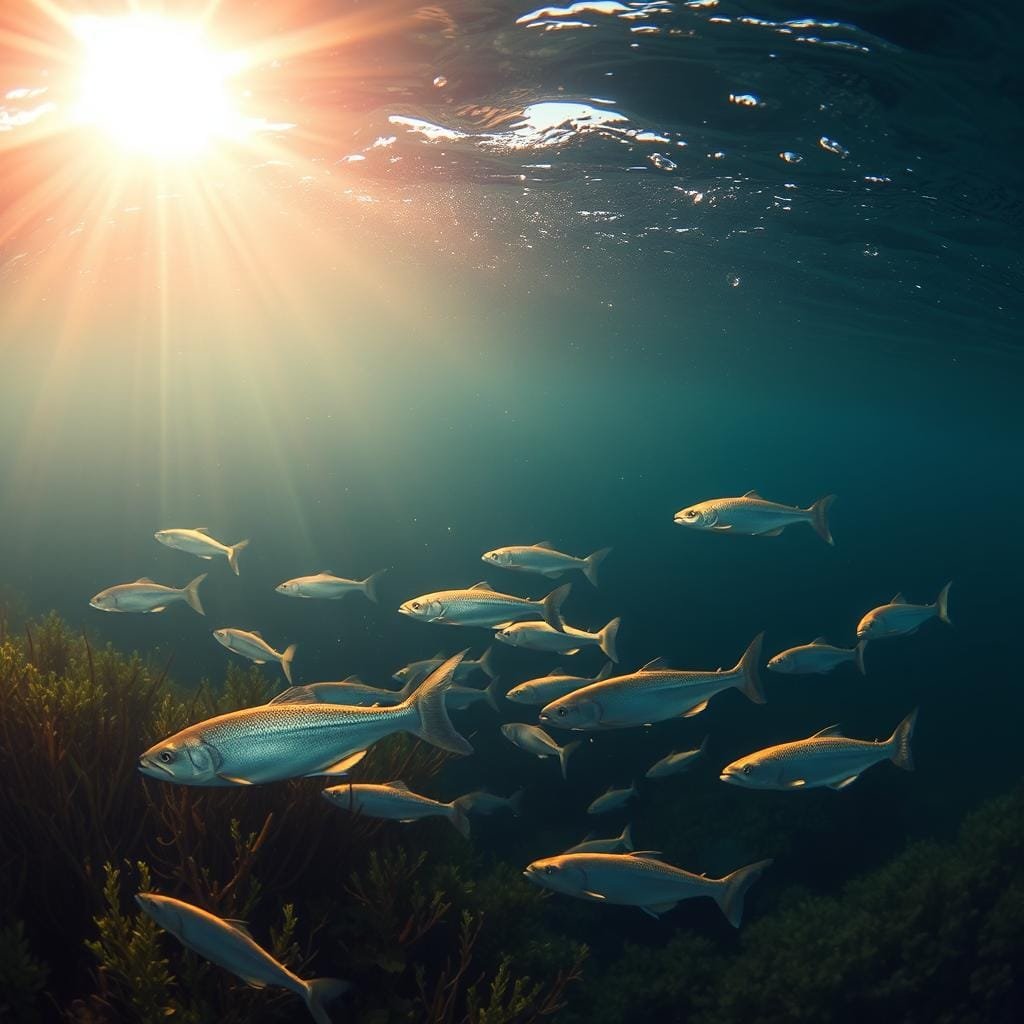
Kokanee are smart about light and danger. Their eyes work best in dim light. This helps them know when to hunt.
Feeding deeper mid-day to avoid predators and bright light
When it’s bright, kokanee go deep. This helps them avoid eagles and other dangers. They stay calm and find cool water.
Moving shallower at low light for zooplankton and insect swarms
At dawn and dusk, kokanee hunt closer to the surface. They catch zooplankton and insects that rise then. This is a good time to fish.
Water clarity effects on feeding depth and visibility
Clear water makes it easier for kokanee to see deep. But in cloudy or murky water, they hunt closer to the top. This is because it’s harder to see deep.
Anglers who pay attention to the sun, wind, and water clarity can predict where kokanee will be. This helps them catch more fish.
Food, genetics, and growth: why kokanee sizes differ by lake
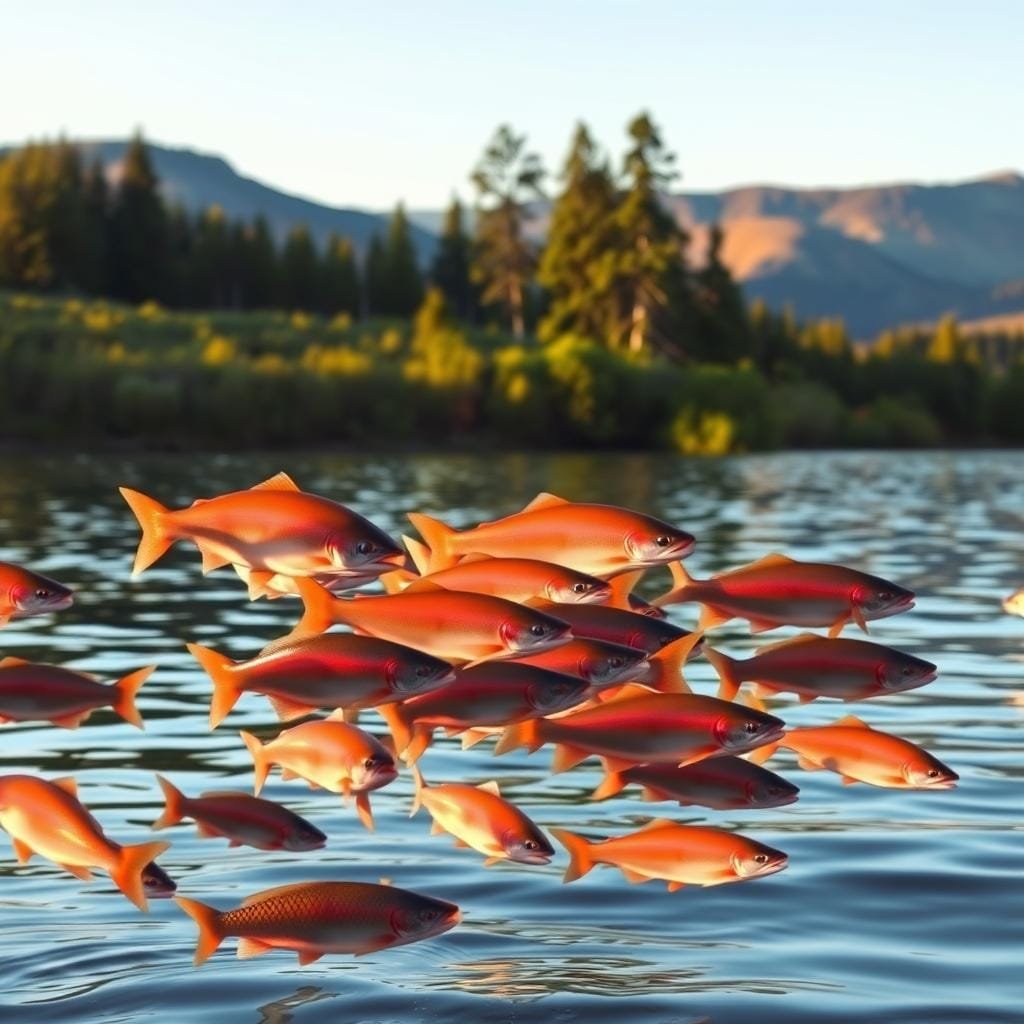
Anglers across the West wonder why some kokanee fish are big and others are small. It’s all about what they eat, their genes, and big predators. Lakes with lots of food, smart fish stocking, and the right number of predators grow kokanee faster and bigger.
Food density and competition shaping growth rates
When there’s lots of zooplankton, fish eat more and grow longer. But too many fish means less food for each one. This can slow down how fast kokanee grow and make them smaller.
Cold, stable lakes can have enough plankton. But if not enough fish survive, the ones left can grow faster and bigger.
Local strains and hatchery influence on size
Kokanee from different places or hatcheries have size limits. Choosing bigger parents can make their kids bigger too. Places like Wallowa Lake and Lake Roosevelt show how important this is.
When lakes mix fish from different places, it can change how big they get. Watching how genetics and food levels work together helps predict kokanee size.
Predators like Chinook and Mackinaw impacting foraging behavior
Big predators like Chinook and Mackinaw change how kokanee fish behave. They might eat less and stay together for safety. In deep lakes like Lake Chelan, they swim higher in summer to find food.
Having too many predators can make fish grow slower. Finding the right balance between plants, fish, and predators helps them grow bigger.
Angler insights: baits, scents, and why “sweet” works
Kokanee fish love scent, oil, and color. The right mix of baits and scents can make them bite. “Sweet” smells match what they eat and their cool-water mood.
For more on early-season kokanee, see this guide to kokanee patterns.
Shoepeg corn, cured shrimp, and anise-based scents
White shoepeg corn is great for kokanee rigs. It smells sweet and holds dye well. Add anise scent to the hooks or leader for a strong smell.
Cured shrimp with corn makes a good combo. It feels soft and looks natural. Use small hoochies or spinners with corn and shrimp.
Change colors but keep the scent the same. This works well when the water is near 50 degrees.
Krill and Bloody Tuna Anise: leveraging salmonid attraction cues
Krill scent works for inland fish too. It smells like zooplankton and mysis. Pro-Cure formulas like Bloody Tuna Anise are made for this.
Put a bit of Bloody Tuna Anise in your corn jar the night before. It mixes sweet corn oil with a marine signal that kokanee follow fast.
Nightcrawlers and “blood” scent for triggering strikes
For fish that trail but won’t bite, add a nightcrawler tip. This earthy smell plus a bit of Pro-Cure Nightcrawler or “blood” scent can make them bite. Use short leaders to keep the worm in the blade’s vortex.
Pair the crawler tip with anise scent or krill for balance. Small changes in scent can make a big difference, even under bright skies or heavy pressure.
Lures and presentation: matching behavior, not tiny prey
Kokanee eat zooplankton, so “match-the-hatch” isn’t always key. You want to get a reaction, not look real. That’s why bright lures like hot pink and yellow work well.
Dodgers and spinners make a lot of noise. They move in ways that make kokanee snap their jaws, even when they’re full.
Kokanee trolling is great because it keeps your gear in the right spot. Use sonar to find schools, then go back and run through them. Keep your speed slow, about 1.0 to 1.7 mph, to protect the fish.
Small dodgers and thin spoons can also get bites. Even a simple red hook behind a flasher can work.
Special lures from Mack’s Lure and Shasta Tackle make it easy to find what works. Try the Double Whammy with a Smile Blade, Sling Blade, and Double D dodgers. The Flash-Lite pop gear and Koke-a-Nut are also good choices.
Use short, stiff leaders to carry the dodger’s movement to your hook. A long, flexible rod helps keep pressure steady on the fish. A long-handled net is great for catching fish without hurting them.
Focus on the behavior of the fish: bright colors, rhythmic movements, and consistent paths. Match your dodger’s rhythm to the lure’s spin. Adjust the depth with your finder and stay within the right speed range. This way, your lures will start to look like a well-thought-out plan.
FAQ
What do kokanee eat most of the time?
Kokanee mainly eat zooplankton. They use their gill rakers to filter tiny prey like Daphnia and copepods. They also eat microscopic plants, aquatic insects, and freshwater shrimp when they can.
How are kokanee different from ocean-going sockeye?
Kokanee and sockeye are the same species. But kokanee live in freshwater their whole lives. They never go to sea like sockeye do.
Kokanee can spawn in lakes or streams. They even spawn on shore in places like Lake Coeur d’Alene and Lake Osoyoos.
When do kokanee mature and how big do they get?
Kokanee usually spawn at 3–5 years old. They turn bright red with green heads and die after they spawn. Most are 9–12 inches long.
But some lakes have fish over 20 inches. This is because of the strain and rich forage in those lakes.
Where in the U.S. are kokanee found?
Kokanee are native to the Pacific Northwest. They have been introduced across the Rockies and beyond. You can find them in places like Wallowa Lake, Lake Roosevelt, and Flaming Gorge.
They are also in Lake Chelan, Lake Coeur d’Alene, and lakes in Colorado, Utah, Wyoming, Montana, and New York.
What are gill rakers and why do they matter?
Gill rakers are like combs inside kokanee gills. They help the fish strain zooplankton efficiently. This lets them catch tiny prey that most lures can’t imitate.
Why do kokanee move shallower at dawn and dusk?
At dawn and dusk, zooplankton and insects move up. Kokanee go up to feed. Then they go back down as it gets brighter and predators become more active.
Do kokanee eat anything beside zooplankton?
Yes. They also eat phytoplankton, aquatic insects, and freshwater shrimp. They do this when zooplankton is scarce or when the lake changes.
Why are shrimp and krill scents so effective on kokanee?
Shrimp and krill scents are effective because they offer a lot of calories. Even though kokanee are landlocked, they react to these scents. This is because they evolved to recognize them.
How does forage change by lake and season?
Each lake is different. In spring and fall, food spreads out and schools roam. In summer, zooplankton gets stacked in bands near the thermocline.
This makes feeding zones more predictable. Lakes like Flaming Gorge and Lake Chelan show how local prey shapes behavior.
What water temperatures do kokanee prefer?
Kokanee like cool water around 50°F. They usually hold between 15 and 90 feet. They follow the thermocline where it’s cool and there’s plenty of plankton.
How does spring and fall turnover affect feeding?
Turnover mixes the water column. This scatters plankton and kokanee. Schools roam more and patterns get tougher.
Feeding can be brief and less consistent until the lake stabilizes again.
What happens during summer stratification?
A stable thermocline forms. This traps zooplankton in layers. Kokanee settle into consistent depth bands.
This leads to steadier feeding windows and easier trolling passes through schools.
Why do kokanee hold deeper at midday?
Bright light and predators like eagles and Chinook push them down. Their high light sensitivity keeps them deeper under clear skies.
This is more true in clear lakes with strong visibility.
How do water clarity and weather change feeding depth?
Clear water sends kokanee deeper during the day. Turbidity, clouds, or wind chop can raise the feeding zone.
Predator pressure from Mackinaw in deep, clear lakes also shifts their depth choices.
What drives different kokanee sizes in different lakes?
Growth is a mix of food density, competition, survival, and genetics. Rich plankton and low crowding boost size. Heavy competition trims calories and slows growth even with enough forage.
Do genetics and hatcheries affect size?
Yes. Broodstock selection can fix size traits over time. Some lakes have strains known for big kokanee, like Wallowa Lake and Lake Roosevelt.
Flaming Gorge is another example where forage and genetics align.
How do predators influence kokanee feeding?
Chinook and Mackinaw change where kokanee feel safe. In places like Lake Chelan, abundant lake trout can push kokanee higher in the column during summer.
This alters feeding paths and timing.
Why do “sweet” baits like shoepeg corn work?
Kokanee cue on scent and taste. Oils from white shoepeg corn, cured shrimp, anise, and krill-derived attractants trigger curiosity or aggression.
Even though kokanee mostly eat tiny plankton, these scents work well.
Which scents and brands are proven for kokanee?
Krill and anise blends are popular. Bloody Tuna Anise is also well-liked. Pro-Cure in Salem, Oregon, makes formulas like Wizard Killer Kokanee Korn Magic and Kokanee Special.
They also have Nightcrawler scents used by guides.
Do nightcrawlers and “blood” scent help?
They can. Adding a small piece of nightcrawler with corn or a blood-like attractant sometimes flips neutral fish into striking.
This is more likely when paired with flash and vibration.
Should I match the hatch with micro lures?
Not usually. Kokanee often strike from irritation or curiosity. Flashy blades and bright colors outperform tiny imitations.
They provoke reaction bites more than precise feeding responses.
What lures and colors consistently produce?
Dodgers with spinners or spoons are staples. Simple red hooks also work well. Hot pink, magenta, chartreuse, and bright yellow are common winners.
Add scent to boost commitment.
What trolling speed works best for kokanee?
Typical speeds are about 1.0–1.7 mph. This speed keeps dodgers working and protects soft mouths. It matches kokanee’s comfort zone.
Use a fish finder to stay on schooling fish.
Which tackle brands have kokanee-specific gear?
Mack’s Lure and Shasta Tackle are go-tos. Proven options include the Double Whammy and Sling Blade dodgers. Flash-Lite pop gear with Mylar wings and the Koke-a-Nut are also good.
How should I set up leaders and rods for better hookups?
Use short, stiff leaders to transfer dodger action to the lure. Pair them with long, limber kokanee rods. This keeps steady pressure on soft mouths.
Land fish with a long-handled net.