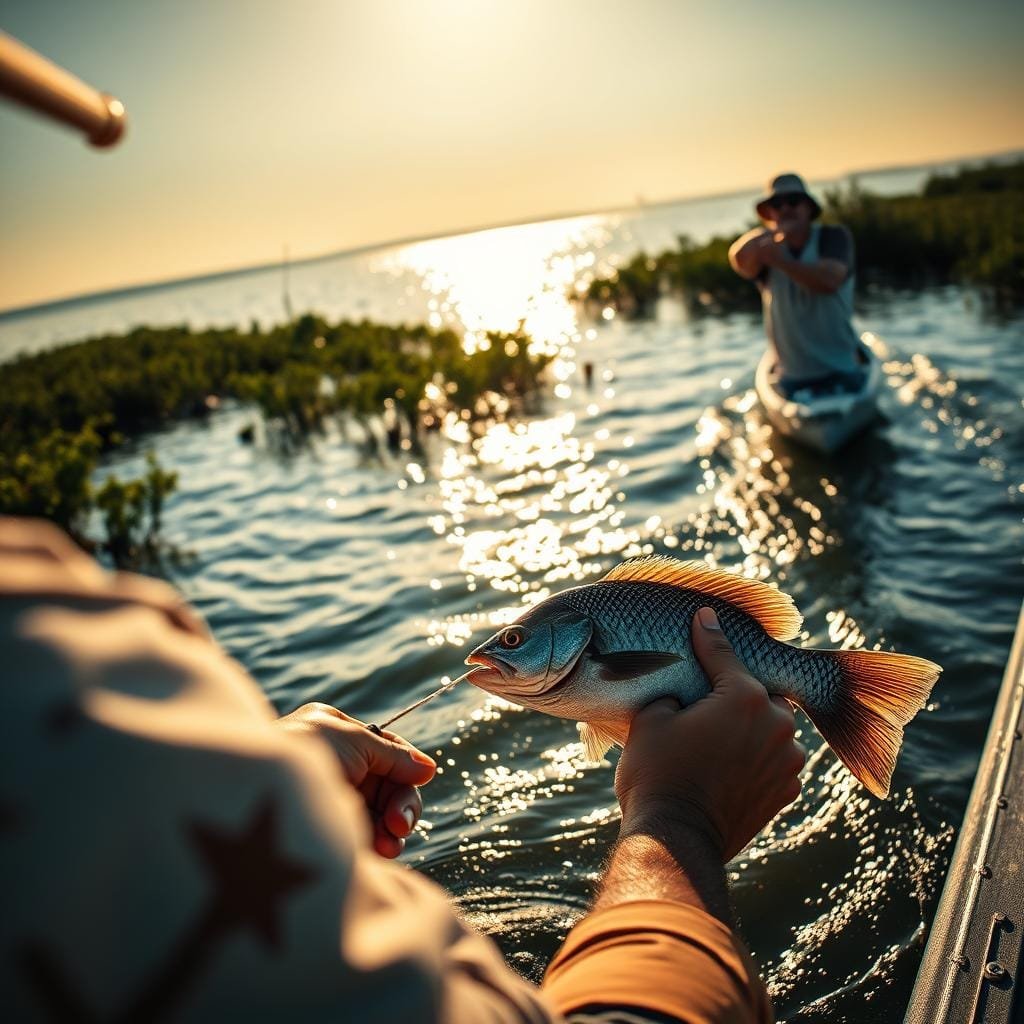
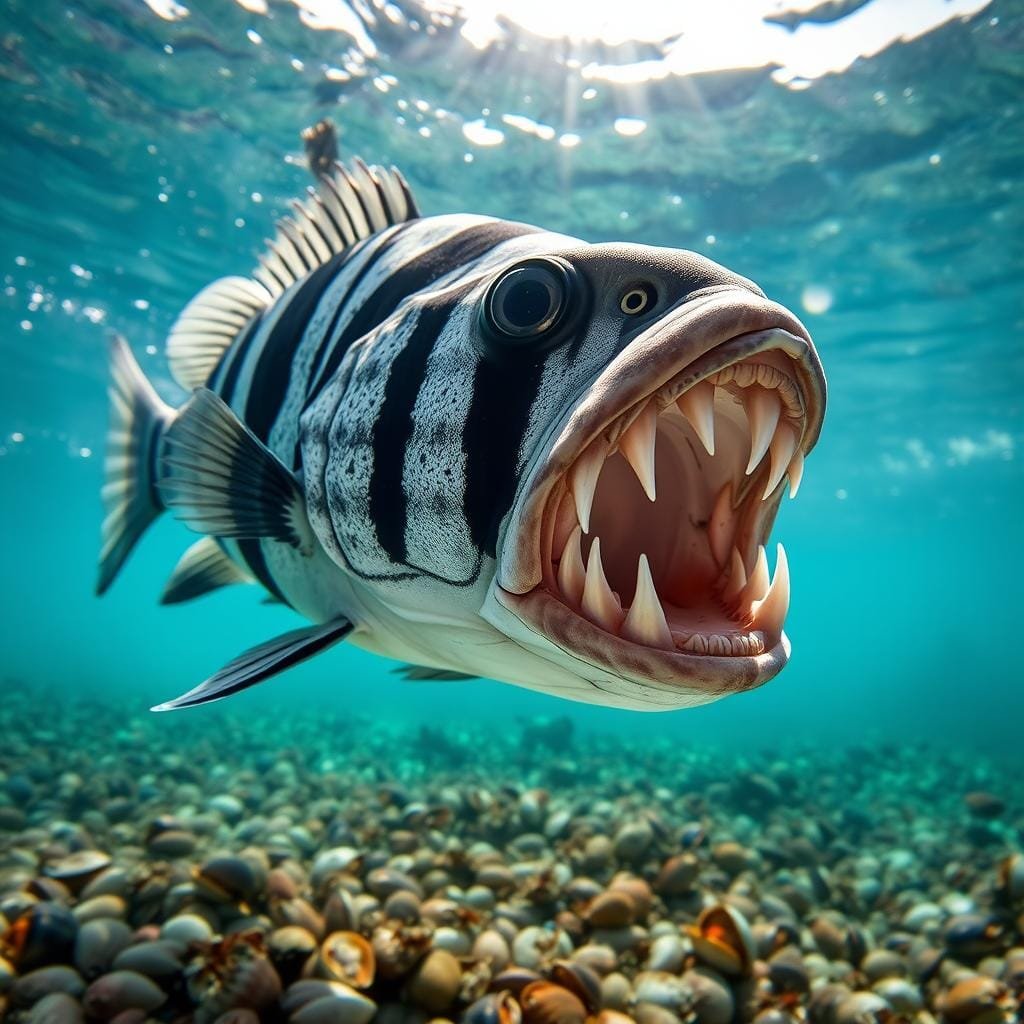
Ever wondered what sheepshead eat? They are called Archosargus probatocephalus, or convict fish. These fish live along U.S. coasts. They eat barnacles, shellfish, and small food bits.
Sheepshead mainly eat crabs, oysters, and shrimp. They also eat barnacles on jetties. Their teeth help them scrape and crush food.
They also eat small fish and algae. This is why sheepshead are found in the U.S. from Florida to the Carolinas.
Where they live affects what they eat. Around mangrove roots and docks, they find food. Young sheepshead start with plankton and worms. As they grow, they eat harder food like shells.
Sheepshead diet at a glance: crustaceans, mollusks, and more
Sheepshead are smart fish that eat hard shells. They like to eat crabs, shrimp, oysters, mussels, clams, and barnacles. They also eat small fish and algae when they can.
Omnivorous tendencies: invertebrates, small fish, and some plants
Sheepshead love to eat invertebrates. They also eat young fish and algae when the tide is low. Young sheepshead eat tiny animals until their teeth grow strong.
How habitat around jetties, pilings, and mangroves shapes feeding
Rock jetties and mangrove roots are full of food for sheepshead. They eat barnacles and bivalves with their special teeth. In tidal creeks, they find crabs and shrimp in the mud.
Seasonal availability of prey along U.S. coasts and estuaries
Sheepshead eat differently with the seasons. In late winter, they go offshore to spawn. Then, they come back to eat in the spring.
Along the U.S. coast, what they eat changes with the weather. In southwest Florida, they can find food almost all year. But in colder areas, they have a shorter time to eat.
What does sheepshead eat
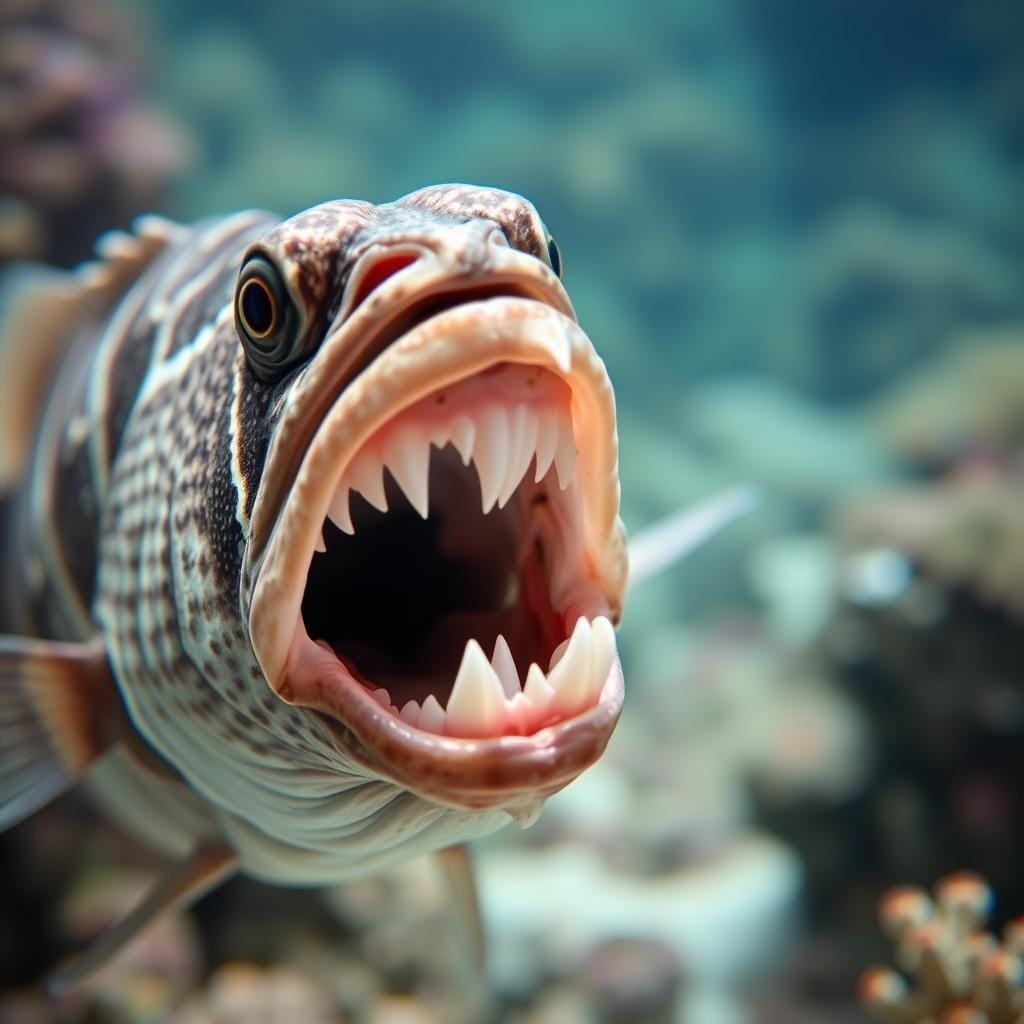
Sheepshead eat hard shells like oysters and clams. They also eat small fish and plankton. This changes based on their size and where they live.
Crabs, oysters, clams, shrimp, mussels, and barnacles
Sheepshead love to eat crabs, oysters, and clams. They also eat shrimp and mussels when they can. They even eat barnacles from docks.
They often eat blue crabs and mud crabs near bridges. On reefs, they eat oyster spat and small clams.
Small vertebrates including young croakers
Adult sheepshead sometimes eat small fish. In bays, they eat young Atlantic croakers. They grab them quickly near piers.
Juvenile diet: zooplankton, polychaetes, chironomid larvae
Young sheepshead eat tiny things like zooplankton. They also eat worms and larvae in calm water. As they grow, they start eating shells and harder food.
Occasional plant material and algae
Sheepshead also eat algae and plants. They eat them on sunny flats. This helps them eat when there’s no shellfish around.
| Food Category | Key Items | Typical Habitat Cue | Why It’s Eaten |
|---|---|---|---|
| Crustaceans | Blue crabs, mud crabs, shrimp | Bridge pilings, rock jetties, dock shadows | High energy; shells crushed by strong molars |
| Mollusks | Oysters, clams, mussels | Oyster reefs, riprap, seawalls | Abundant on structure; easy to pin and crush |
| Encrusting fauna | Barnacles | Concrete piers, mangrove roots, channel markers | Constantly renewed growth supports a steady sheepshead barnacles diet |
| Small fish | Young Atlantic croakers | Eddies near pilings, tide rips along channels | Soft-bodied Atlantic croaker prey adds protein during peaks |
| Plankton and worms (juveniles) | Copepods, polychaetes, chironomid larvae | Seagrass beds, muddy coves, calm backwaters | Small size fits gape limits; core juvenile sheepshead food |
| Plants and algae | Green and red algae, detritus | Rocky fringes, grass blades, bulkheads | Supplemental fiber and nutrients when shellfish are scarce |
Teeth built for the job: incisors, molars, and grinders
Sheepshead teeth are made for eating tough food. Their wide, flat front teeth help pick up food. The heavy plates in the back smash it into small pieces.
Incisors for scraping barnacles off rocks and pilings
The front teeth are like chisels. They have sharp edges and are close together. These teeth scrape barnacles off places like jetties and seawalls.
They can also pull oysters and small crabs off hard surfaces quickly.
Multi-row molars for crushing hard-shelled prey
The back teeth are strong and layered. They are made for crushing hard things like crabs and oysters. Anglers say these teeth can break shells into pieces easily.
Why powerful dentition expands prey options
Sheepshead teeth are special. They have sharp incisors and strong grinders. There are three rows of teeth on top and two on the bottom.
This setup lets sheepshead fish eat many things. They can pick barnacles or eat small fish. They even eat plants sometimes. This is helpful around docks and bridges where food changes often.
Where sheepshead feed: inshore structure, brackish creeks, and seagrass flats
Sheepshead like to eat near shore where food sticks to hard places. They go for jetties, pilings, mangroves, dock legs, and more. These spots are full of barnacles, mussels, and small crabs.
In cooler weather, they move to warmer spots. Places like spring vents and river discharges keep them cozy. They even go into freshwater and come back as the weather changes.
They also like to eat in areas with moving water. This helps them catch food without getting tired. In estuary creeks, they find food in oyster bars and root tangles.
When it’s late winter, big fish go offshore to spawn. They come back to the same spots inshore. This makes them follow the same paths again.
Young sheepshead eat in seagrass flats. They find food in the blades and potholes. As they grow, they move to docks and bridges for more food.
In bays, harbors, and channels, they like rough spots and moving water. They eat best in places like pier shadows at dawn or creek bends on a rising tide.
Juveniles vs. adults: how the sheepshead menu changes with age
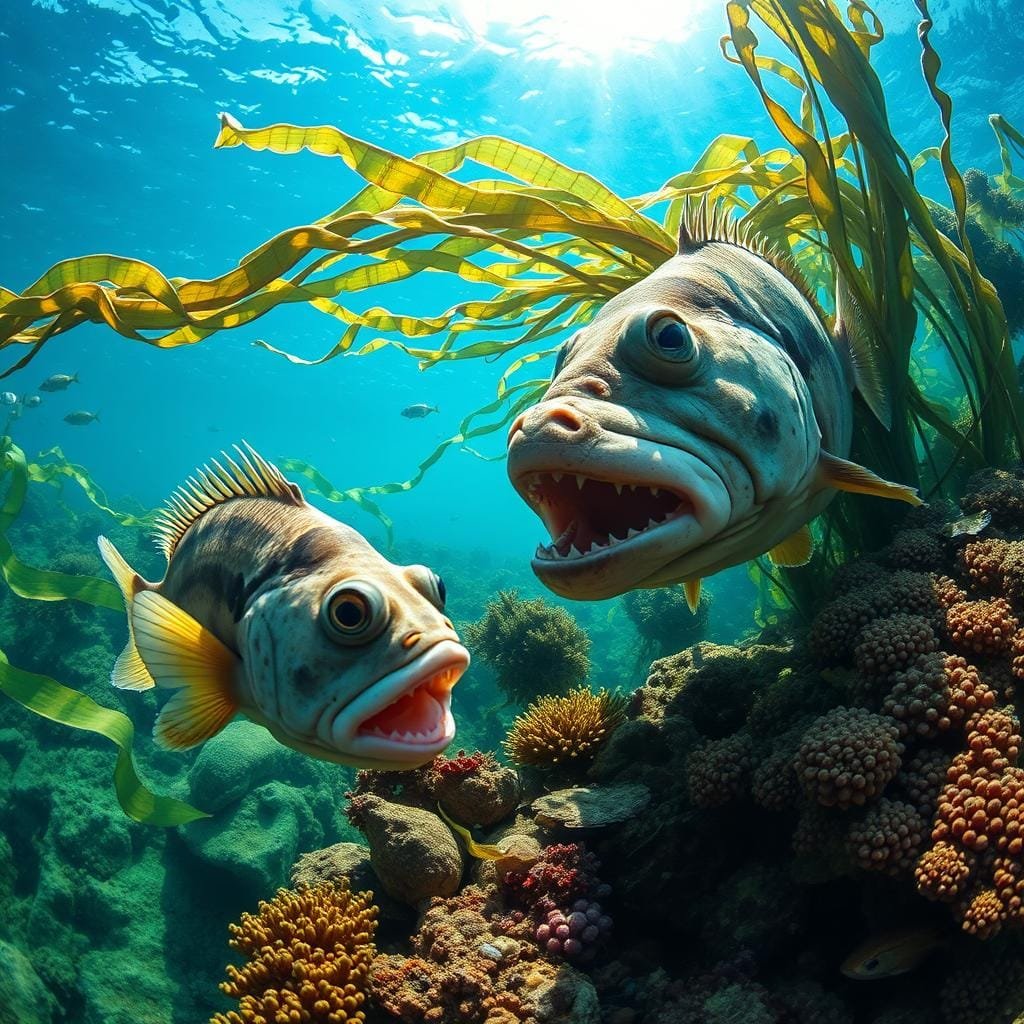
Sheepshead fish change their diet as they grow. They start in shallow grass beds and move to busy pier pilings. This change is because of their growing size and stronger teeth.
Nursery habitats and plankton-heavy meals for young fish
Young sheepshead live in seagrass and mud bottoms. They eat zooplankton, polychaetes, and chironomid larvae when they are small. As they grow, they stay hidden in the grass.
Transition to crustaceans and mollusks as size and teeth develop
When their teeth get stronger, they start eating small crabs and shrimp. They also eat young bivalves. By 50 mm, they can eat tougher shells.
Movement from seagrass flats to pilings, piers, and jetties
When they get bigger, they move to piers and jetties. These places have food and cover. They eat crabs, oysters, and clams, and sometimes small fish and algae.
| Life Stage | Typical Size | Primary Habitat | Main Foods | Feeding Traits |
|---|---|---|---|---|
| Early Juvenile | 25–30 mm | Seagrass nursery habitat; mud bottoms | Copepods, polychaetes, chironomid larvae | Small mouth; soft teeth; plankton picking |
| Late Juvenile | 30–50 mm | Edges of grass flats; near structure | Tiny crabs, shrimp, young bivalves; residual zooplankton | Incisors and molars strengthening; growth and feeding transition underway |
| Subadult to Adult | 50 mm and up | Pilings, piers, jetties, rock walls | Crabs, oysters, clams, mussels, barnacles; occasional small fish, algae | Powerful bite; shell-crushing focus; ontogenetic diet shift sheepshead complete |
Feeding behavior and timing around spawning migrations
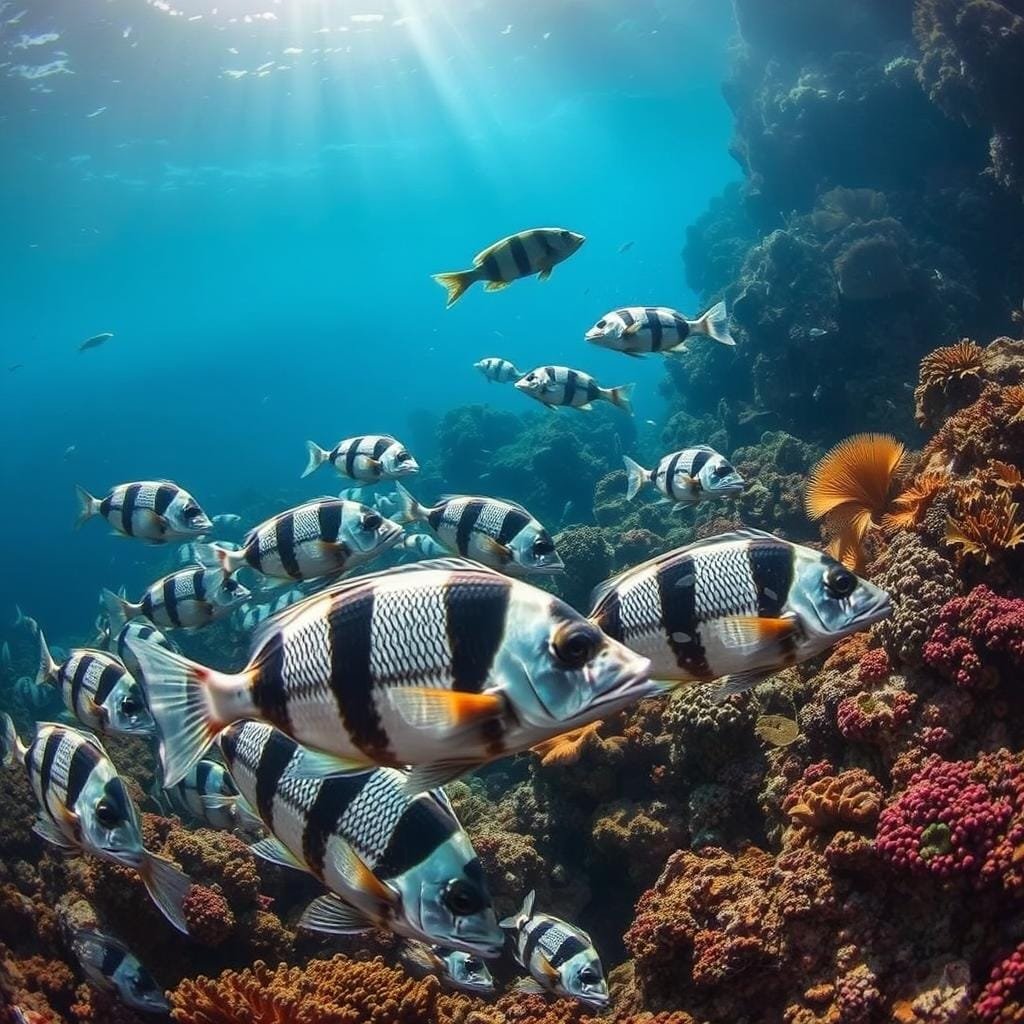
As water cools and days get shorter, adults move to jetties and reef edges. Then, they go out to sea to spawn. This is when the sheepshead spawning season starts.
They form tight schools near artificial reefs and markers. Fish bite quickly, following the tides. This is for courtship and to find food fast.
The Gulf of Mexico sees spawning from late winter to spring. Larvae are found from January to May. During this time, fish feed on small crabs, shrimp, and bivalves near structures.
Strong currents make fish ambush their prey. Then, they rest to save energy. This pattern helps them survive.
After 28 hours at 23°C, eggs hatch. Larvae drift, using up their yolk sac. They grow as they move towards shore.
Once they reach shore, they settle on seagrass and soft-bottom flats. They eat plankton and tiny invertebrates. This helps them grow even as conditions change.
After spawning, adults return to bridges, docks, and oyster banks. They feed in the estuary. Bites get longer, and they eat more barnacles, clams, and mussels.
In many harbors, fishing picks up around pilings and riprap. This is when fish are active again.
Spawning happens in pulses, with some days busier than others. Nearshore fish may spawn less, but offshore fish produce more eggs. This keeps schools moving and focused on easy prey.
Bait tips for anglers: match the natural forage
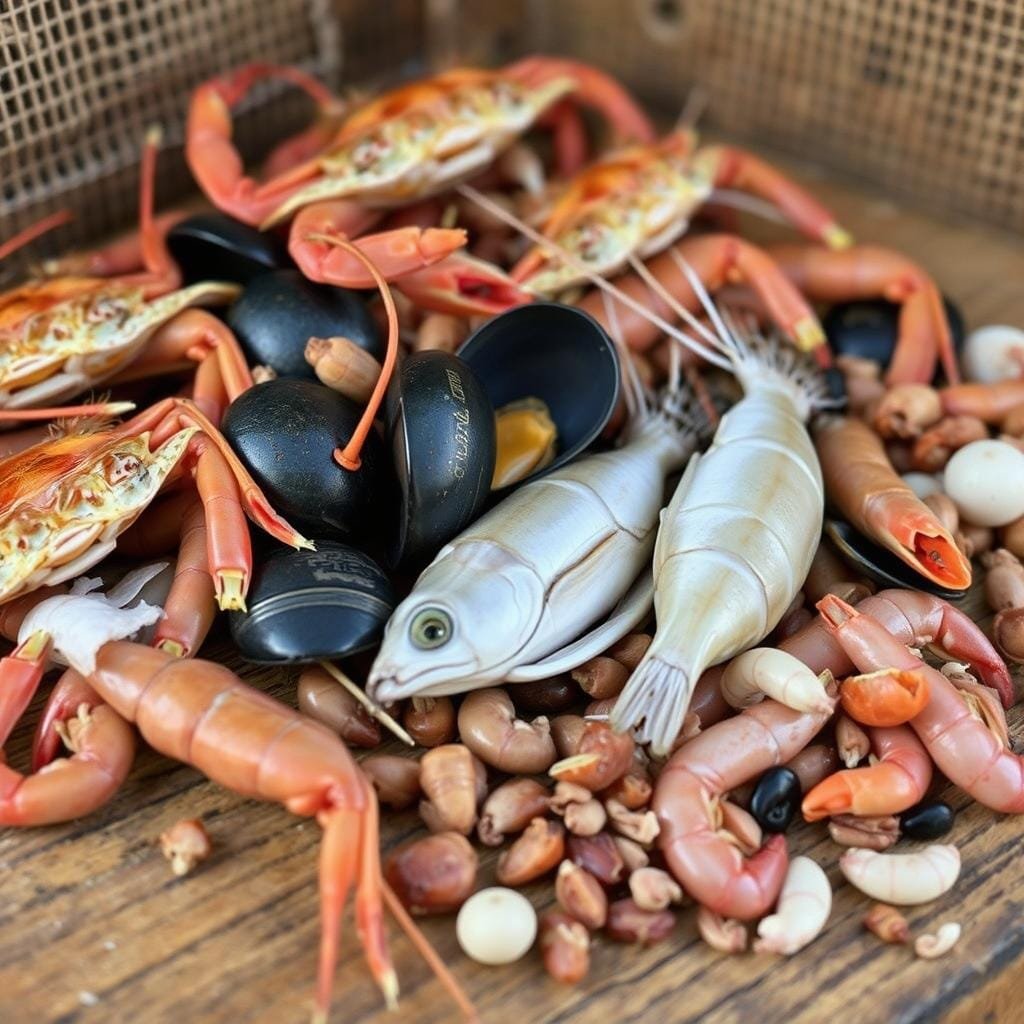
Make a simple plan. Match what these fish eat on pilings and rocks. The best bait is what’s glued to the structure. Clean presentation is key.
Keep rigs small, feel the tap, and strike fast.
Best natural baits: fiddler crabs, shrimp, oysters, and mussels
Fiddler crab bait is great because it’s what they eat every day. Put a whole crab on a 1/0 hook, clip the legs, and keep it close to the bend. For shrimp, use small live or fresh pieces with the shell on.
Oysters and mussels work well too. Pin a small chunk through the meat and a bit of shell. This way, it stays on during the bite. This method is good for catching sheepshead on structure when they’re eating barnacle beds.
Presentation around structure: pilings, docks, and rock jetties
Fish close to cover. For dock piling fishing, use short leaders—12 to 18 inches—on a light rig or jighead. Make your sinker just heavy enough to hold near the target and lift the bait a little at a time.
At bridges, sea walls, or mangrove edges, slide baits down current seams and pause at each crossbeam or rock notch. The bite often feels like weight. Lift, then set. This method is how to catch sheepshead on structure without scaring them away.
Reading tides and current for active feeding windows
Target moving water. Sheepshead tides that bring a steady push along encrusted pilings switch the bite on. Fish the first of the flood and the last of the ebb to catch cruisers that eat barnacles and mussels.
In cooler months, fish inside bays and rivers where fish stage before offshore runs. On cold mornings, check warmer discharges or sunlit walls. Time your drifts so the bait swings naturally—key for dock piling fishing with fiddler crab bait or shrimp.
- Use abrasion-resistant fluorocarbon (20–30 lb) to combat teeth and concrete.
- Sharpen hooks often; heavy scales and structure dull points fast.
- Handle with care—watch the dorsal and anal spines and tough gill plates.
| Bait | Best Use Case | Hook Size/Style | Rig/Preset | Why It Works |
|---|---|---|---|---|
| Fiddler crab | Pilings with barnacles; light to moderate current | 1/0 short-shank J or octopus | Short leader knocker or jighead (1/8–3/8 oz) | Natural profile; hard shell resists pecks and reaches crushers |
| Shrimp (pieces) | Rock jetties and docks with mixed shell | #1–1/0 bait holder | Carolina rig, 12–18 in leader | Scent trail draws fish; shell-on piece stays pinned near structure |
| Oyster chunk | Sea walls and bridge fenders with heavy growth | #1 strong-wire | Dropper loop with minimal weight | Matches daily forage; crunchy bite triggers commits |
| Mussel meat + shell | Mangrove roots at mid-tide | #2–#1 octopus | Light jighead for controlled fall | Compact bait slides into pockets; holds in current |
| Barnacle scrap | Vertical picks on calm days | #2 short-shank | Free-line or micro-split shot | Exact match around pilings; stealthy for pressured fish |
Blend these tactics with local sheepshead tides, and rotate baits to see which gets the cleanest thump. Stay close to cover, keep contact with the sinker, and you’ll learn the subtle take that separates missed taps from landed fish using the best bait for sheepshead.
From diet to flavor: why sheepshead taste sweet and shellfish-like
Think “you are what you eat.” Sheepshead eat a lot of shellfish. This makes their meat firm, white, and sweet. It tastes a bit like dorade or flounder but with more flavor.
Learn how their feeding habits guide cooking. They pick up flavors from oyster reefs and rocky places.
Shellfish-based diet and its impact on firm, white flesh
Sheepshead eat crabs, clams, and shrimp. This diet makes their meat sweet and fresh. Their meat stays moist and tastes great with just a little salt and heat.
Cleaning considerations: heavy scales and sharp spines
Sheepshead have tough scales and spines. Cleaning them needs care. Use gloves and a special knife to avoid injuries.
Simple cooking ideas that highlight natural flavor
Keep cooking simple. Try pan-searing, baking, or broiling. Even the microwave works well for quick meals. This way, you can enjoy their flavor all year.
| Diet Driver | Flavor Result | Best Methods | Pro Tip |
|---|---|---|---|
| Crabs, oysters, mussels, clams | Mild sweetness, shellfish-forward aroma | Pan-sear, bake, broil | Pat fillets dry for a golden crust |
| Barnacle and shrimp intake | Firm flakes, clean finish | Cast-iron sear, air-fry | Finish with lemon and parsley |
| Skin with tough scales | Savory when crisped | Skin-on sear | Score skin after descaling to prevent curl |
| Structure foraging (pilings, reefs) | Mineral, briny nuance | Simple salt-and-oil roast | Avoid heavy sauces that mask shellfish diet taste |
Regional context in the United States: range, habitats, and availability
The sheepshead fish can be found in the western Atlantic, from Nova Scotia to the Gulf of Mexico. They are most common in southwest Florida. They also live in Central and South America, up to Brazil. But, they don’t live in the Bahamas, the West Indies, Grenada, or Bermuda.
Anglers find them near human-made structures like jetties and piers. They like places with barnacles and mangroves. Young sheepsheads live in seagrass flats and soft mud. Adults go offshore to spawn and then come back to estuaries when it gets cooler.
In the U.S., Florida, Texas, and Louisiana are big suppliers of sheepshead. They are caught in shrimp trawls and by longlines. North Carolina and Florida see more catches in the cooler months. This makes them easier to find for both buyers and anglers.
Rules have been put in place to protect sheepshead. Size limits and gear restrictions help prevent overfishing. Florida’s efforts have helped the fish population grow. The IUCN says they are not endangered, and their numbers look good if we follow the rules.
FAQ
What does a sheepshead (Archosargus probatocephalus) eat?
Sheepshead eat hard-shelled things like crabs and shrimp. They also eat oysters, clams, mussels, and barnacles. Sometimes, they eat small fish and algae too.
How does habitat around jetties, pilings, and mangroves shape sheepshead feeding?
Jetties and pilings are like a buffet for sheepshead. They have lots of barnacles and bivalves. Sheepshead use their teeth to scrape and crush these foods.
When and where are sheepshead most likely to find prey along U.S. coasts?
In cooler months, sheepshead go to inshore waters. They look for fiddler crabs and oysters. In late winter, they go offshore to spawn and then come back inshore as it warms up.
Which specific foods make up most of the adult sheepshead diet?
Adults mainly eat crabs, shrimp, and oysters. They also eat clams, mussels, and barnacles. Their teeth are made for crushing shells.
Do sheepshead eat small fish?
Yes. Adults eat small fish like young Atlantic croakers. They find these fish around structure where baitfish gather.
What do juvenile sheepshead eat?
Young sheepshead start with tiny animals like copepods. They also eat worms and chironomid larvae on seagrass flats. As they grow, they eat more crustaceans and mollusks.
Do sheepshead ever eat plants or algae?
Sometimes. Adults may eat algae or plant bits while looking for food. This is not a big part of their diet.
How are sheepshead teeth adapted for feeding?
Sheepshead have teeth like humans up front for scraping. They also have molars to crush shells. This helps them eat hard foods.
What do incisors do for a sheepshead?
Incisors help sheepshead scrape off barnacles and other animals. Then, they use their molars to crush the shells and eat the soft parts.
Why are multi-row molars important to sheepshead?
Molars help sheepshead crush shells. They eat crabs, oysters, and clams. This way, they can eat foods that other fish can’t.
How does powerful dentition expand sheepshead prey options?
Strong jaws and molars let sheepshead eat armored prey. They can also grab small fish and eat plants sometimes.
Where do sheepshead feed most often?
Sheepshead like to eat near jetties, pilings, and mangrove roots. They also eat in tidal creeks and estuaries. Young ones eat on seagrass flats and muddy bottoms.
How does the sheepshead menu change from juvenile to adult?
Young sheepshead eat tiny animals and worms. As they grow, they start eating crustaceans and mollusks. They move from grass flats to structure.
What nursery habitats do young sheepshead use?
Young sheepshead live in seagrass flats and mud bottoms. These places have lots of tiny animals they can eat.
When do sheepshead move from seagrass to structure?
Around 50 mm, young sheepshead start eating crustaceans and mollusks. They move to places with barnacles and bivalves.
How does spawning migration affect feeding behavior?
Adults migrate offshore to spawn in late winter. Before and after, they eat a lot inshore. Moving water makes them more active.
What are the best natural baits for sheepshead?
Use fiddler crabs, live shrimp, and oysters as bait. Small crabs and barnacle pieces also work well. Fresh bait is best.
How should I present bait around structure for sheepshead?
Fish your bait close to structure like pilings and rocks. Use short leaders and sensitive tackle. Keep bait near where barnacles and bivalves grow.
What tides and conditions lead to better sheepshead bites?
Sheepshead bite best in moving water. Look for bites during incoming or outgoing tides. In cooler months, find them near warm spots.
Why does sheepshead taste sweet and shellfish-like?
Sheepshead taste sweet because they eat a lot of shellfish. Their diet makes their meat firm and white with a shellfish taste.
Any cleaning or handling tips for sheepshead?
Be careful with sheepshead. They have sharp spines and hard gill plates. Many people let markets clean them. If you clean them yourself, use a sharp knife and hold the fish tight.
What are simple cooking ideas for sheepshead?
Pan-sear, bake, or grill sheepshead with olive oil and herbs. Broiling works well too. Quick microwave steaming keeps the fish moist. The skin is tasty if scaled well.
Where are sheepshead found in the United States?
Sheepshead are found along the western Atlantic. They are common in U.S. inshore waters. They move offshore to spawn seasonally.
Are sheepshead common in the Bahamas or Bermuda?
No. Sheepshead are not found in the Bahamas, the West Indies, or Bermuda. But they are in parts of Central and South America.
What’s the fishery context and availability in the U.S.?
Sheepshead are caught in shrimp trawls and by longlines. Florida, Texas, and Louisiana have big catches. They are more available in October.
How are sheepshead managed, and are they endangered?
Sheepshead have size and bag limits in places like Florida. This helps them. The International Union for Conservation of Nature says they are not endangered.
How big do sheepshead get, and when do they mature?
Adults are 14–18 inches long and 1–8 pounds. They can grow up to 29.5 inches and 22 pounds. They mature at age two and live at least 20 years.
What water conditions do sheepshead prefer for feeding?
Sheepshead like inshore waters with structure. They avoid low-oxygen areas. In cool weather, they go to warm spots like spring outlets.