Anglers often wonder: what do weakfish eat? The answer changes based on their location and age. This guide will cover the basics of weakfish diets across U.S. coasts. It combines science with practical tips for choosing the right bait.
The term “weakfish” usually refers to Atlantic weakfish on the East Coast. But it can also mean white seabass in the Pacific. Both are known for their sharp vision and hunting skills. They prefer easy-to-catch prey like small schooling fish, crustaceans, and squid.
Let’s get to the point. Atlantic weakfish mainly eat anchovies and menhaden, along with crabs, shrimp, mollusks, and zooplankton. White weakfish, or white seabass, focus on squid. They also eat sardines, anchovies, and mackerel. These diets change with the seasons and their environment.
Knowing what weakfish eat helps you find them. Match their food to the local tides, water, and bait. This strategy works in bays, surf, wrecks, or kelp edges.
Next, we’ll explore weakfish prey by region and age. We’ll also suggest real baits and lures you can use today.
Weakfish diet at a glance: key prey in U.S. coastal waters
The weakfish eat a variety of fish in coastal waters. In spring and summer, they go into bays. There, they mainly eat anchovies and menhaden.
They also hunt crabs and shrimp in sandy and muddy flats. When tides go out, they look for mollusks in estuaries.
As seasons change, so does their diet. Near eelgrass, they eat annelids and bivalves. Outside the inlet, they chase bait balls and squid.
On the Pacific side, white weakfish eat squid under kelp. They also eat sardines, anchovies, and mackerel when bait piles up.
Studies show predators follow menhaden. Learn more about anchovies and menhaden to see why weakfish follow these schools.
| Region | Primary Targets | Backup Forage | Typical Habitat |
|---|---|---|---|
| Atlantic bays and estuaries | Anchovies and menhaden | Crabs and shrimp; mollusks | Marsh creeks, eelgrass, sandy channels |
| Nearshore Atlantic surf | Coastal forage fish schools | Squid diet during runs | Bar troughs, jetties, inlet mouths |
| Pacific kelp and reefs (white seabass) | Squid diet | Sardines, anchovies, mackerel | Kelp edges, reef drop-offs, offshore pins |
The weakfish diet changes with the tide and season. When fish flood the bays, predators come. When squid are offshore, they eat crustaceans and mollusks.
Life stage matters: from larval copepods to adult predators
Body size and speed change what weakfish can catch at each stage. As they grow, their vision gets better and their mouths get bigger. This lets them eat faster, meatier prey. Places like estuaries and eelgrass beds help with these changes, mostly in summer.
Larval and juvenile staples: copepods and mysid shrimp
Young weakfish follow copepods into bays. These tiny drifters are easy to eat when they need lots of energy.
As they get bigger, they start eating mysid shrimp too. They find these shrimp in channels and on sand flats. This helps them build muscle for the next stage.
Transition prey: anchovies and other small schooling fish
When they grow more, they start eating anchovies. These fish are found in schools near pilings and marshes. It’s a quick meal during the evening.
This stage also includes silversides and bay anchovies. These fish give more calories than shrimp or copepods. This helps them grow faster and get ready to move.
Adult menu: annelids, mollusks, crustaceans, and fish
Grown weakfish hunt in eelgrass edges for annelids. They also look for mollusks on flats and eat crustaceans like crabs. This shows they have a wide diet, based on where they are and the tide.
Fish are a big part of their diet too. They eat anchovies, menhaden, and other baitfish when the current is right. Being able to eat many things helps them do well in bays and then move offshore as the seasons change.
Small schooling fish weakfish hunt
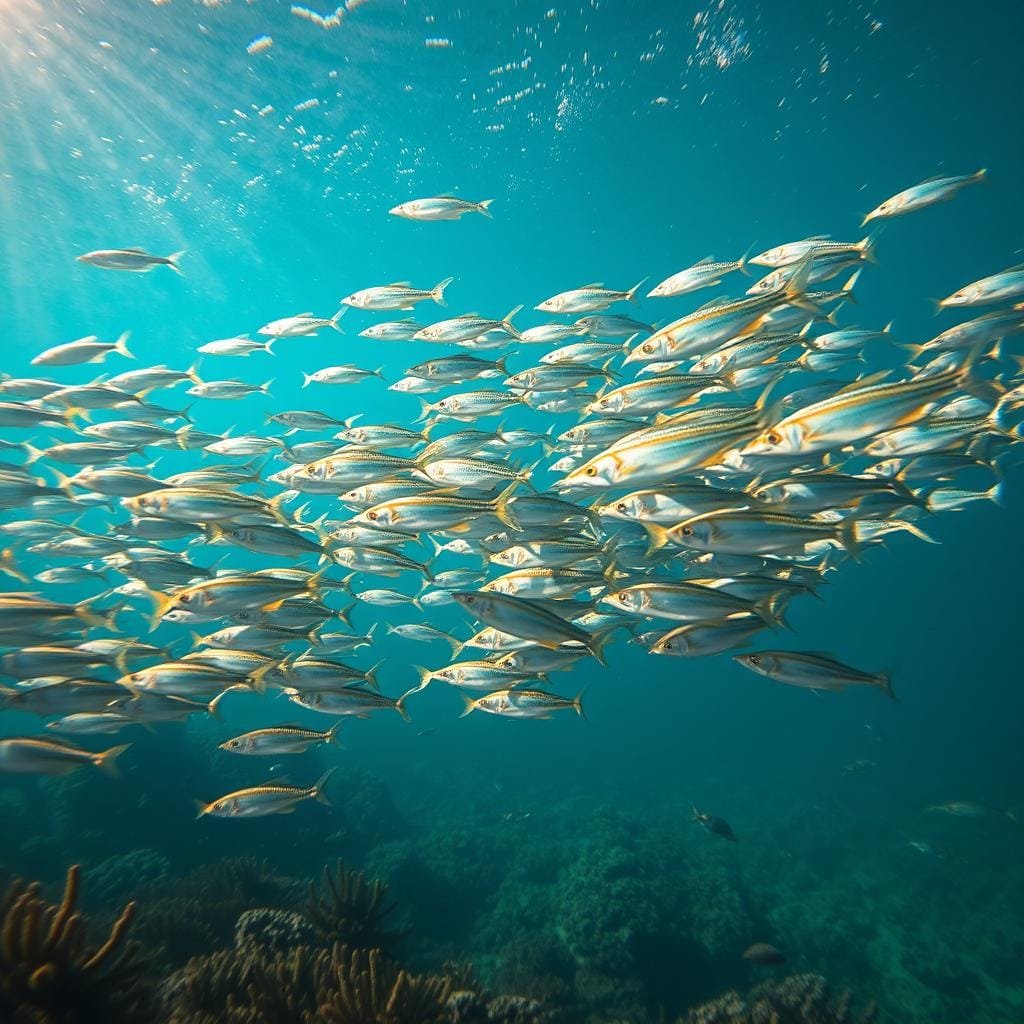
Weakfish look for places where baitfish gather. They find them where currents are strong and light changes. They use their eyes to follow the movement of baitfish in sandy areas and near plants.
Anchovies and menhaden in bays and nearshore waters
In Chesapeake Bay and the Middle Atlantic Bight, weakfish follow anchovy schools. They also move through menhaden. Spring and summer are the best times to catch them near inlets and marshes.
They like to be near the edges. They sneak up on baitfish hiding in current seams. This way, they can eat without using too much energy.
Sardines and mackerel for larger, white weakfish (white seabass)
Big white weakfish, or white seabass, hunt sardines and mackerel. They find these fish on kelp lines and reefs. They hunt best at dawn and dusk when fish are close to cover.
Anchovies are also important, but sardines and mackerel are more common when there’s a lot of bait. This happens after the water moves a lot.
Visual ambush tactics on bait schools
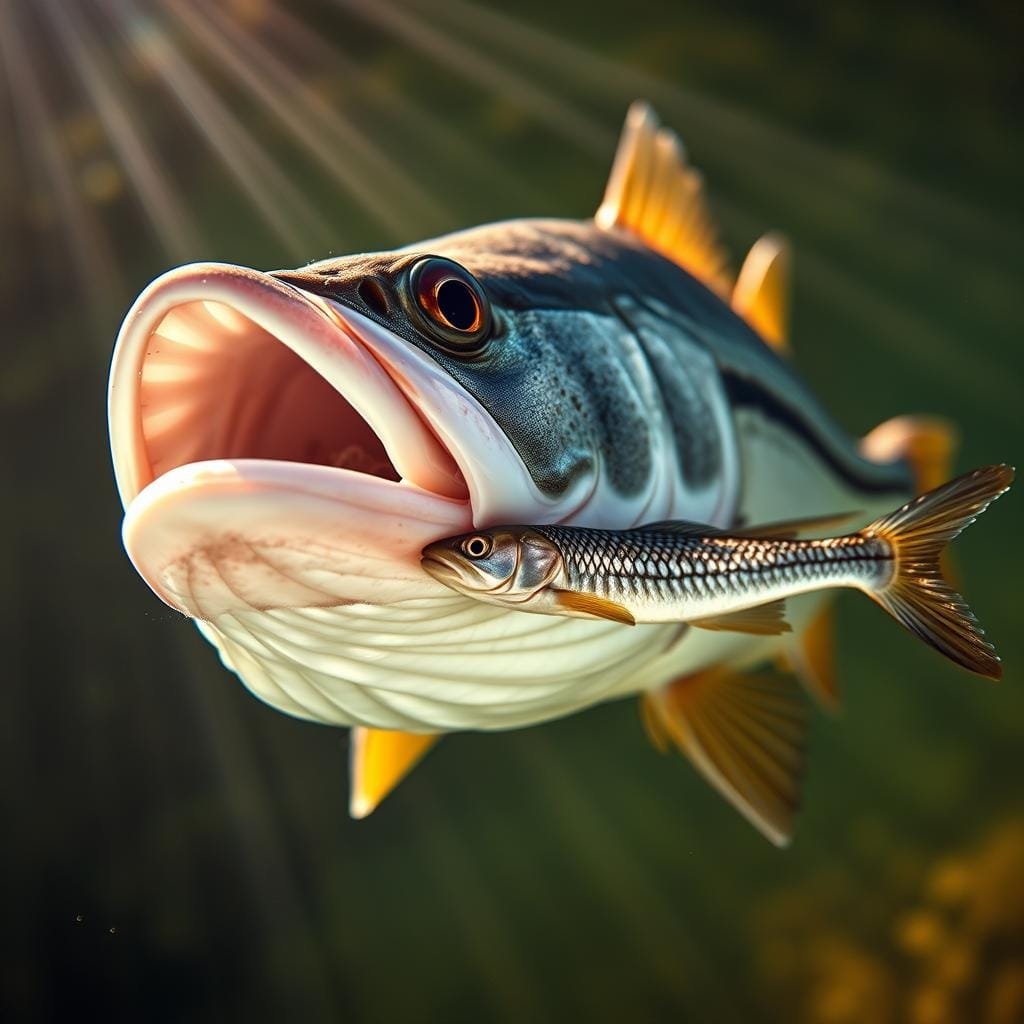
Both types of weakfish sneak up slowly and then jump to catch their prey. They use their strong tail to burst forward. Their jaws open wide to catch the baitfish.
This way of hunting works best where baitfish gather near structures. Weakfish use their eyes and timing to catch baitfish. They wait for the right moment to strike.
Crustaceans and mollusks weakfish love
Weakfish live in Atlantic bays and sounds. They eat crustaceans and mollusks for protein. These foods are full of energy and taste good.
Crabs and shrimp on sandy and muddy bottoms
Crabs and shrimp live in shallow flats and channel edges. Weakfish eat them at first light. They use their jaws to eat hard shells.
Small blue crabs and grass shrimp are common in Delaware Bay to Narragansett Bay.
Squid as a favorite mollusk, special for white weakfish
When squid appear, everything changes. White weakfish in California eat squid near kelp beds. They also eat squid in open water.
They hit squid strips fast because of the smell and movement.
Clams and other bivalves in estuaries and eelgrass beds
In bays with eelgrass, fish eat clams and bivalves. They have strong teeth to crack shells. This food helps them before they move along the coast.
Habitat-driven feeding: where weakfish find food
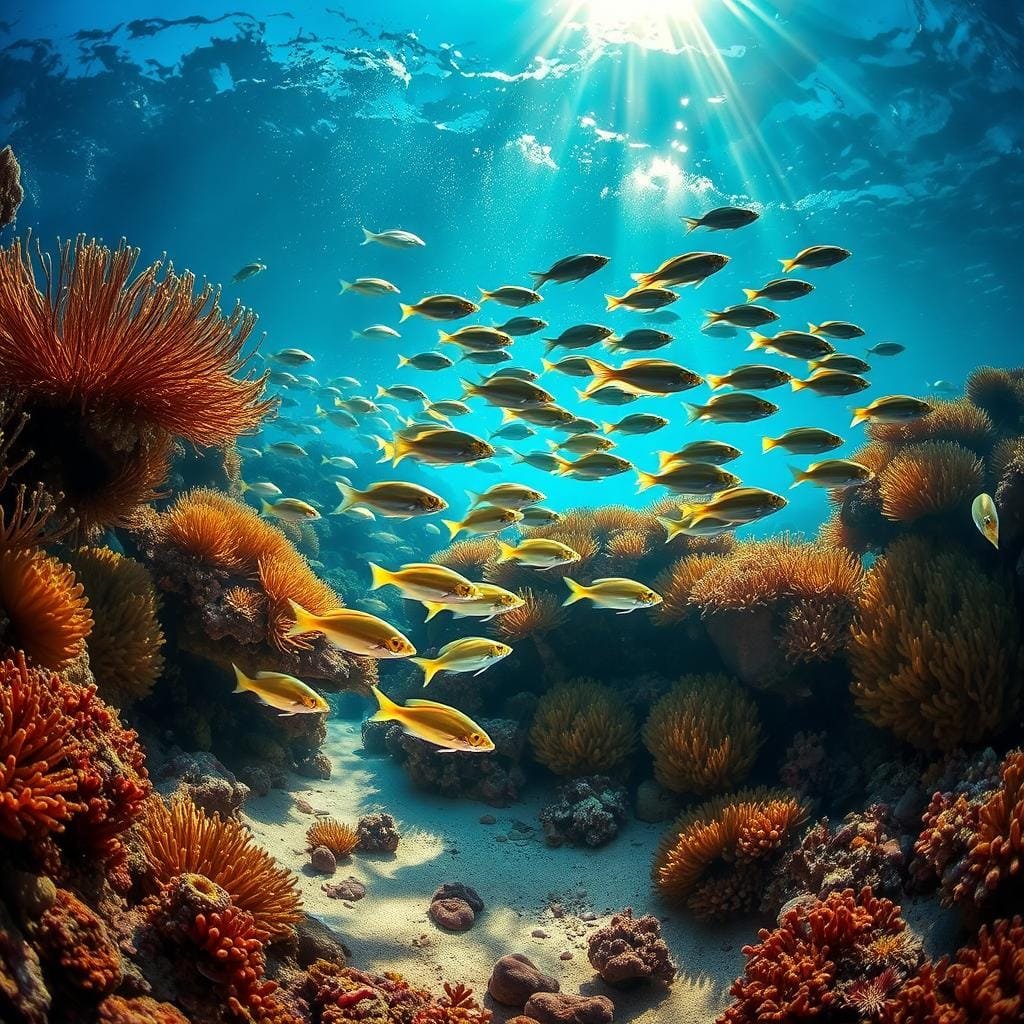
The place where weakfish live affects their food. Along the Atlantic coast, adults swim in sandy bottoms. They also go into estuaries and bays in the southern Chesapeake Bay during summer.
Here, they find anchovies, menhaden, shrimp, crabs, and mollusks. They also catch big zooplankton that move with the tides.
From Cape Cod to Florida, the most are found from North Carolina to New York. In fall, they move to offshore feeding grounds. They hunt near contour breaks where squid and small fish gather.
They use their slow approach and quick strike to catch bait balls.
On the Pacific side, white weakfish, or white seabass, live from Alaska to Baja California. They like kelp forests, rocky reefs, and open areas near Catalina and the Channel Islands.
They also go to San Francisco Bay, Baja California, and even Juneau. They hunt squid at dusk.
These fish change depth to find food, from the surface to about 400 feet. In thick kelp and broken rock, they catch sardines and mackerel. Over sand or reef edges, they hunt squid.
Across coasts, they pick the right place and current to find food.
Seasonal migrations and how diet shifts
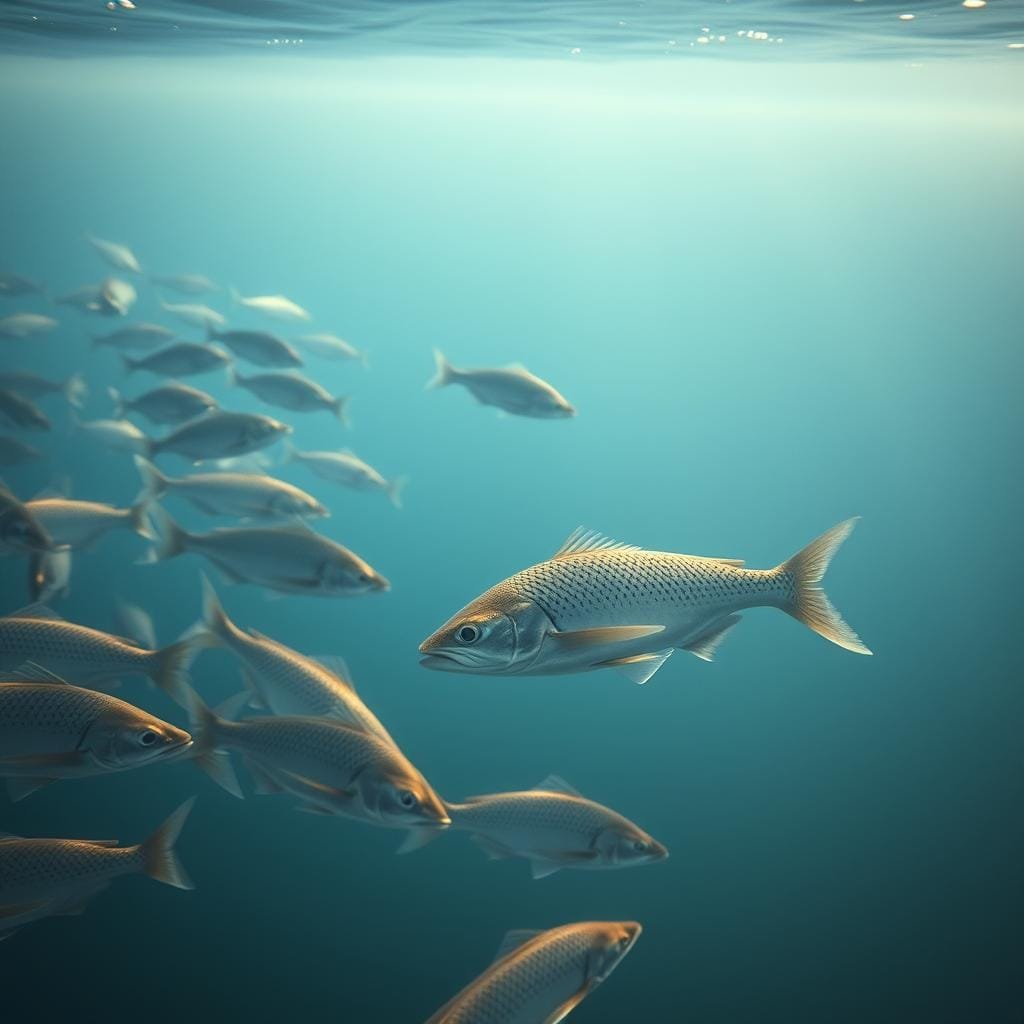
Weakfish eat what’s available. As it gets warmer, they move closer to shore. Then, when it gets cooler, they go back out to sea. This pattern is seen on both coasts, from the Middle Atlantic Bight to Pacific islands.
Spring–summer in bays: estuary forage peaks
In late spring, weakfish move into bays and sounds. They find food in brackish creeks like anchovies and shrimp. The Middle Atlantic Bight is full of plankton and bait, making it a great place to fish.
Shallow flats and channel edges are good spots. They catch prey during the tide changes. This matches the weakfish’s migration and diet shift.
Fall offshore moves: following bait and squid
When it cools down, fish move offshore and south. They follow bait pods and squid runs. This is when they eat squid at night under the moon.
This pattern is seen where the Middle Atlantic Bight meets the shelf edge. They switch from eating in the estuary to hunting in the open sea.
Regional hotspots: Chesapeake Bay to New York; Pacific kelp and reef zones for white weakfish
Atlantic action peaks from North Carolina to New Jersey and New York. Chesapeake Bay weakfish are found on channel humps and bridge spans. They move out as fall currents take the bait offshore.
On the Pacific side, white weakfish are in kelp forests and rocky reefs. They migrate from Baja California to San Francisco Bay. They follow squid runs and anchovy schools.
| Season | Primary Zones | Key Forage | Behavior Cues | Notable Notes |
|---|---|---|---|---|
| Spring–Summer | Chesapeake Bay, Delaware Bay, Long Island estuaries (Middle Atlantic Bight) | Anchovies, menhaden, shrimp, crabs, mollusks, large zooplankton | Daylight ambush on flats; tide turns in channels | Spawning overlaps rich estuary forage and supports a pronounced seasonal diet shift |
| Late Summer | Inlets, nearshore rips, shoals along New Jersey to New York | Dense bait schools; mixed crustaceans | Current seams and shadow lines; dusk surges | Peak aggregation before offshore moves within the Middle Atlantic Bight |
| Fall | Offshore shelf and slope waters, southbound corridors | Squid, mackerel, adult anchovies | Night feeding; moonlit slicks over structure | Offshore pivot follows cooling trends and squid runs aligned with weakfish migration |
| Pacific Summer | Baja California, Catalina, Channel Islands, San Clemente Island, San Francisco Bay | Market squid, sardines, anchovies | Kelp-edge patrols; reef ambush | White seabass migration centers on island structure and predictable squid runs |
How weakfish hunt: senses, sounds, and strike behavior
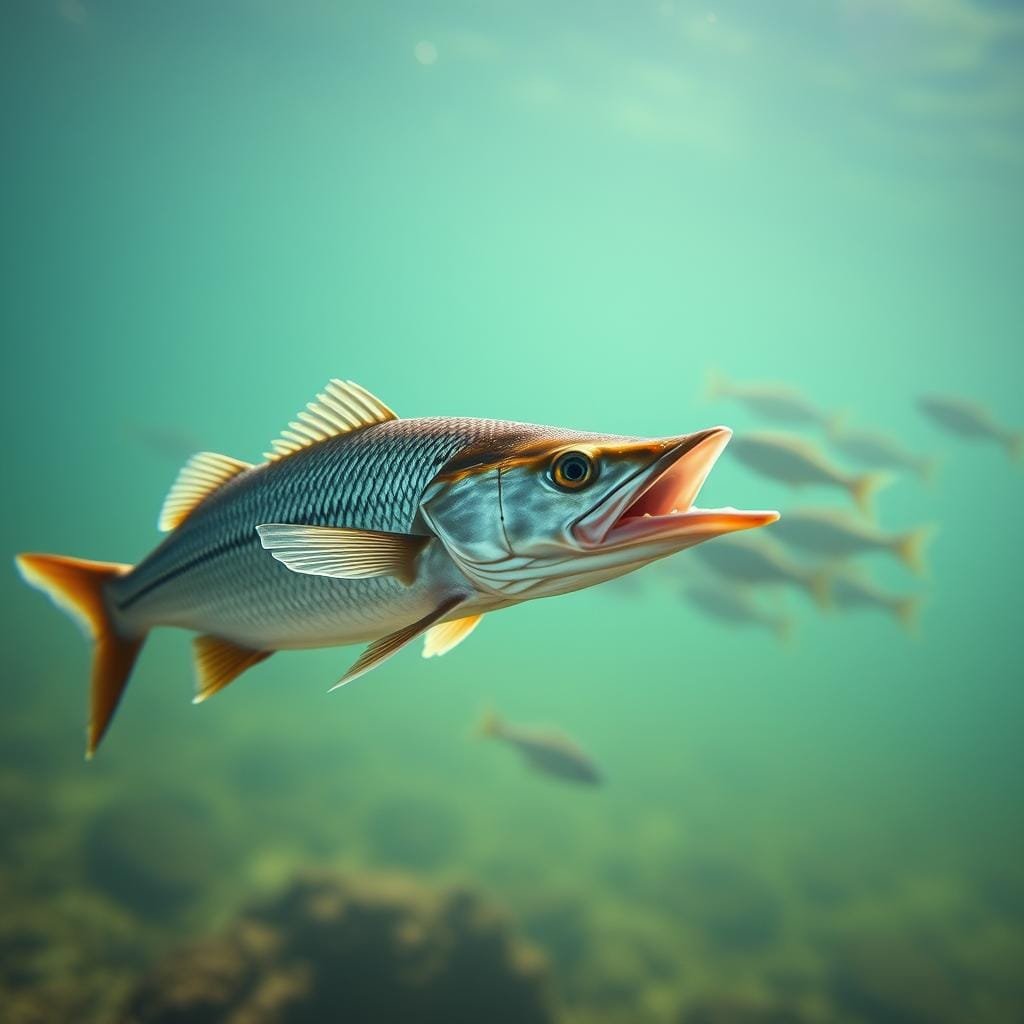
In clear water or dim bay light, weakfish use their eyes and ears to hunt. They can see small movements and hear sounds. This helps them find food in places like inlet rips and near eelgrass.
Visual predators with slow approach and rapid lunge
Weakfish move slowly towards their prey. Then, they quickly jump forward up to 50 cm. This fast move is key to catching their food.
They use their tail to beat the water and open their mouth wide. This helps them catch their prey before it can get away.
Drumming and prey-mimic calls to attract targets
Male weakfish make loud sounds during spawning. These sounds are like drumming and help them find mates. They also use these sounds to attract prey.
These sounds can even trick other fish into coming closer. White weakfish make different sounds too. This shows how important sound is for them to find food.
Schooling behavior under stress and during feeding
When weakfish feel threatened, they stick together even more. They move closer to each other. This helps them stay safe and work together when hunting.
They move in a way that lets them take turns hunting. This way, they can catch more food without losing their group.
- Slow-close, fast-lunge tactics maximize success in short range.
- Croaker sounds and drumming calls layer cues on top of vision.
- Tight schools manage risk while enabling synchronized feeds.
Bait and lure choices that match the weakfish diet
Choose baits that weakfish already eat. Use scents and shapes like squid and small fish in bays and reefs. Make sure your offerings move and stay suspended, not dragging.
Best live baits: squid, anchovies, sardines, and mackerel
For white weakfish, fresh squid is the best bait. Rig a whole squid on a single hook through the mantle. Slow-drift it near squid nests or kelp edges.
If squid are hard to find, try anchovy bait, live sardines, or small mackerel. These can keep you in the bite window.
Effective artificials: tube baits and bone jigs that imitate squid/fry
When live bait is scarce, tube baits and bone jigs are good. Use pale glow or olive for squid, and chrome or sardine for fry. Cast up-tide, let them sink, then sweep with short lifts.
Soft-plastic squid baits work well at dawn and dusk. Use 3/4–1 ounce heads to hold depth. Keep your retrieves smooth to avoid spooking schools.
Presentation tips: suspend between bottom and surface
Weakfish roam off the bottom. Count down and suspend your lures mid-column. If you touch bottom, reel up and recast across the drift line.
For fly fishing, use a 9-weight rod and 20–30 lb mono. Hooks range from #2 to 2/0. Add a 3/4–1 ounce egg weight to reach depths, then strip in short bursts. Chum lightly to draw fish upcurrent.
- Target squid zones at night with a steady sink-and-sweep.
- Shadow anchovy schools by matching size and speed.
- Recast often to stay in the feeding lane and avoid bottom snags.
What does weakfish eat
Weakfish eat different foods in different places. They change what they eat as they grow. This is why they eat everything from tiny zooplankton to big baitfish.
Atlantic weakfish: anchovies, menhaden, crabs, shrimp, mollusks, zooplankton
In the Atlantic, they love to eat anchovies and menhaden. They also eat crabs and shrimp on sandy flats. And they find mollusks in eelgrass.
They also eat worms, clams, and other forage when it’s warm. This is because there’s more food in the estuaries.
White weakfish (white seabass): squid-focused, plus sardines and mackerel
In the Pacific, they mainly eat squid. But when squid are gone, they eat sardines, anchovies, and mackerel. They also eat crayfish sometimes.
Here’s a quick list of what they eat: crayfish, anchovies, sardines, mackerel, and squid. You can find more info on white weakfish feeding at Guidesly.
Juvenile versus adult priorities
Young weakfish eat small things like copepods and mysid shrimp. They live in safe places like creeks and marshes.
As they grow, they start to eat bigger things. They eat clams, crabs, shrimp, and even fish like menhaden. This is because they need more food to grow.
Size, range, and diet diversity by species
Atlantic weakfish are big and live in many places. They are 12–18 inches long, but can grow up to 3 feet. They weigh 6–18 pounds and live up to 17 years.
They live from Cape Cod to Florida, mostly in the Middle Atlantic Bight. In spring and summer, they go into bays and shallow waters. Then, they move offshore and south in fall.
What they eat changes as they grow. Young ones eat small shrimp and tiny fish. As they get bigger, they eat bigger fish, crabs, and shrimp.
This is shown in a study on weakfish diet patterns in Chesapeake Bay and coastal areas.
On the Pacific side, white weakfish, or white seabass, are even bigger. They can be 28 inches long and weigh 7.5 pounds. But, some can grow up to 5.4 feet and 88 pounds.
They live from Alaska to Baja California. They like to be in 58–65°F water. They eat squid, sardines, anchovies, and mackerel, mostly near the Channel Islands and San Francisco Bay.
Size and where they live affect what they eat. They use their senses to find food in murky waters and along the coast. This helps them survive in different places.