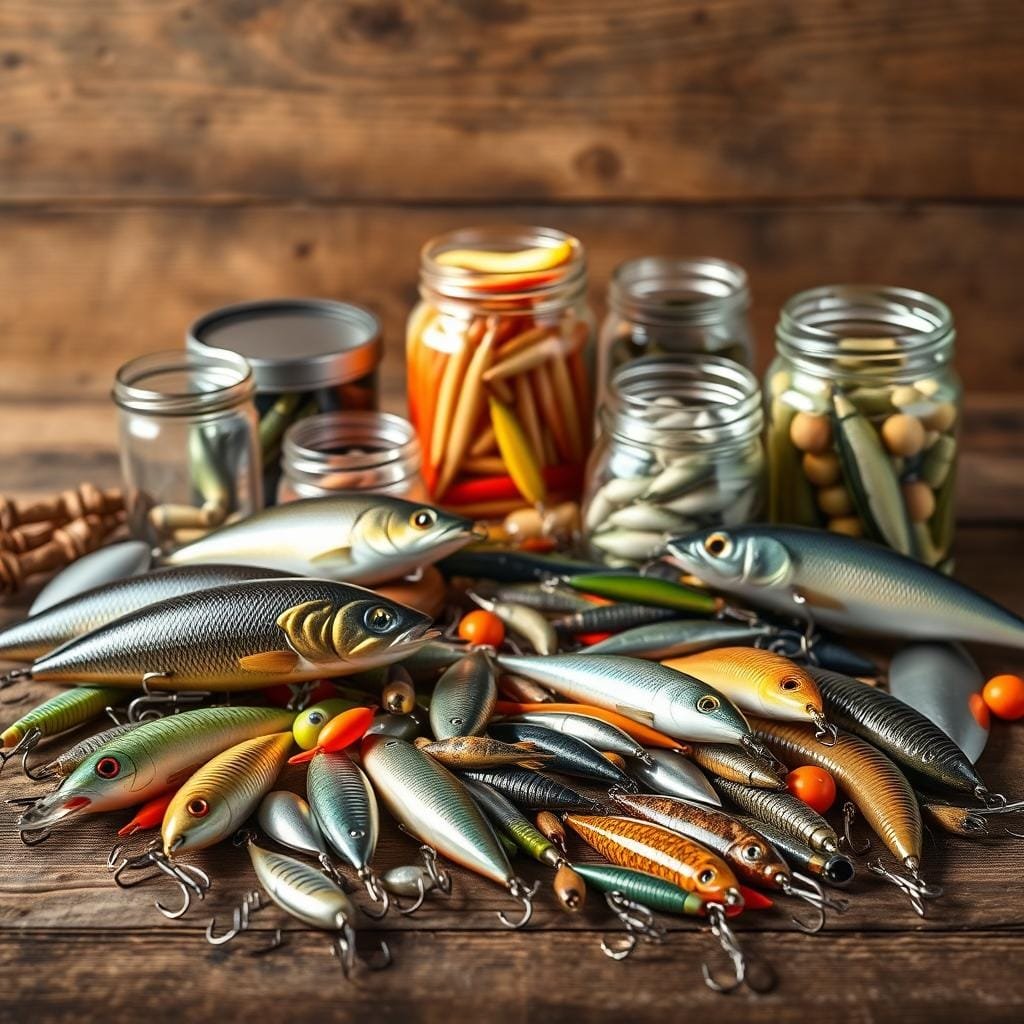
Are you going to the lake and not sure what bait to use? This guide shows the best baits for walleye fishing. It covers the Great Lakes to prairie reservoirs. It’s based on real fishing experiences.
We have a short list of walleye tackle. It includes jigs, live bait, and more. Each bait is explained, along with how to use it and when to switch.
Some top picks are VMC Neon Moon Eye and Northland Fire-Ball. Also, Berkley Flicker Shad and Bandit Walleye Deep. These are proven to work well.
This guide covers different fishing times and places. You’ll learn about jigging, trolling, and using swimbaits. It helps you adjust your fishing to get more bites.
Whether you fish from the bank or use a boat, this guide helps. It makes your fishing trip more successful. Just remember to fish honestly and let the fish guide you.
Why Walleye Bite: Understanding Presentations, Seasons, and Structure
Walleyes like certain actions and shapes more than loud noises. Match your fishing to the season and the mood of the fish. This way, you’ll catch more walleyes, no matter the weather.
Reading seasonal patterns from spring through late fall
In spring, use jig-and-minnow combos and small soft minnows. Try Rapala Shad Rap for cold-water walleye. As it gets warmer, look for fish in breaks and schools.
Summer is for trolling with diving cranks. Use Bandit Walleye Deep and Rapala Down Deep Husky Jerk. Add crawler harnesses to sweep the bottom fast.
In fall, use big redtail or creek chubs on sliding sinker rigs. Try Rapala Jigging Rap and Acme V-Rod for better bites.
Matching lure action to fish mood and water temps
In cold water, choose lures that move little. Use Husky Jerks and soft jerk shads. The “50-degree rule” helps pick between crawlers and minnows.
Check out this primer on the 50-degree rule and proven for tips.
In warm or stained water, use lures that make noise. Try Rippin’ Rap and small trolling spoons. Match lure speed with the current and wind.
Targeting flats, reefs, weed edges, current seams, and humps
Walleyes like clear paths. Fish wind-blown points and reefs. Then, move to current seams.
On big lakes, troll along flats with leadcore. In rivers, snap-jig blades over breaks. Adjust your line to graze the top of cover.
| Season | Primary Approach | Key Lures/Baits | Why It Works |
|---|---|---|---|
| Spring | Slow jigs and tight-action cranks | Jig-and-minnow, 2.5–4 in. jerk shads, Rapala Shad Rap | Cold-water walleye favor subtle wiggles and small profiles near spawning routes |
| Summer | Speed and coverage at depth | Bandit Walleye Deep, Berkley Flicker Shad/Minnow, crawler harnesses | Suspending fish demand summer walleye trolling to reach 20–30+ ft efficiently |
| Fall | Big meals and vertical power moves | Large chubs, Rapala Jigging Rap, Acme V-Rod, Hopkins Smoothie | Fall walleye tactics target heavy feeders on humps, saddles, and deep rock |
| Anytime | Structure-first mindset | Swimbaits, spoons, blades matched to clarity and wind | Walleye structure fishing focuses effort where bait and current intersect |
- Use forward-facing sonar to decide between vertical drops and snap-jig sweeps.
- Shift to willow-blade spinners and small spoons above 1.8 mph when fish chase.
- Follow walleye seasonal patterns by checking temp, wind, and bait location every stop.
Jigs Are Essential: Heads, Weights, and When to Tip Them
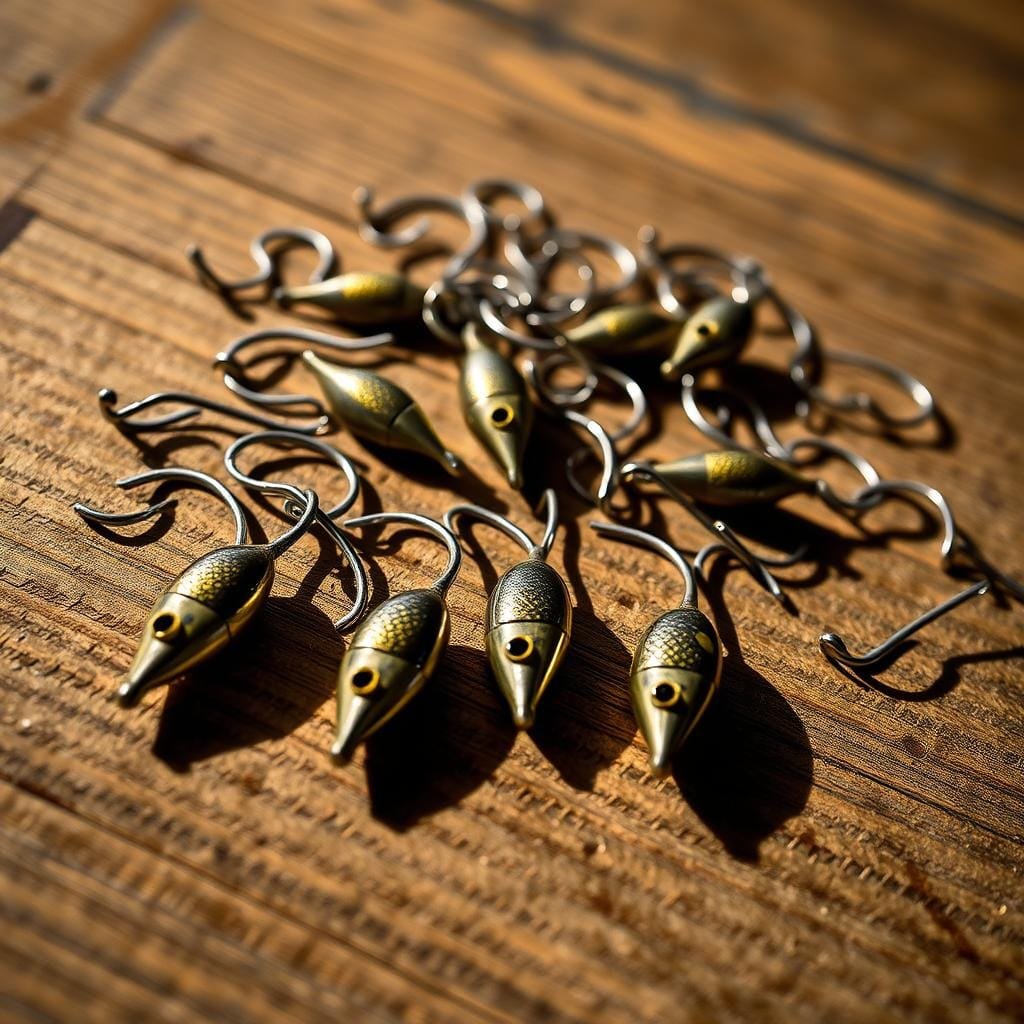
Choosing the right walleye jigs starts with simple heads. They grow into special tools. Match the jig to the day’s bite by adjusting profile, fall rate, and hook quality. Then, add scent, color, and cadence to fine-tune.
Ball heads vs. specialty designs for glide, flash, and vibration
Ball head jigs are easy on the wallet. They swim straight and pair well with live bait or plastics. This makes them simple to use.
For more action, try glide jigs for snap-jigging. Keel and dart shapes slide sideways, attracting fish. In stained water, spin jigs with small blades add flash and vibration.
Recommended sizes for rivers, slip floats, and big swimbaits
For pitching, dragging, and short hops, use 1/8 to 3/8 ounce jigs. Lighter jigs work well under slip floats for natural bait presentation.
For vertical work in fast rivers or big swimbaits, use 1/2 ounce or heavier jigs. Heavier jigs keep you in the strike zone, even in tough conditions.
Pro picks: VMC Neon Moon Eye, Northland Fire-Ball, Thumper, and more
The VMC Neon Moon Eye is great for glide and control. It stays stable and shows bold eyes. The Northland Tackle Deep-Vee Jighead tracks true and has a secure bait keeper.
For live bait, the Northland Fire-Ball is a top choice. The Northland Thumper adds blade flash. Other good picks include the VMC Hammer Head, VMC Hover Jig, Z-Man Finesse EyeZ, Freedom Zodiac, and Northland Weed-Weasel.
When to add live bait or soft plastics to seal the deal
Adding live bait or soft plastics can seal the deal. Shiners in spring, leeches in late spring to early fall, and crawler pieces in summer are good choices.
Soft plastics offer durability and shape control. Use Berkley PowerBait Minnow, Berkley MaxScent Flatnose Minnow, Zoom Fluke or Super Fluke, or Z-Man Scented Jerk ShadZ and StreakZ with your jigs. Mixing a plastic body with a live trailer boosts profile and scent.
Live Baits That Consistently Produce
Smart anglers always have a few live baits ready. They change what they use based on the water, mood, and depth. This keeps fish interested and curious.
Minnows on jigs, spinners, and fall rigging with chubs
Minnows are great for catching walleye in spring. Use a jig with a minnow for a simple but effective method. In summer, try slow-trolling spinner rigs with shiners or fatheads near weeds.
As leaves change, big creek chubs become a top choice. Drag them on the bottom with Lindy rigs for big catches. For more tips, check out this guide on the best live bait for.
Leeches for warm-water finesse under slip floats
Leeches work well from late spring to early fall. Use a thin-wire hook and a ribbon leech under a slip float. This setup is great for reefs and edges.
In cold weather, leeches don’t work as well. Switch to minnows or crawlers. Black leeches are best in stained water.
Night crawlers for harnesses, bottom bouncers, and slow-death hooks
In warm months, worms are key. Use a crawler harness with Colorado blades for bottom-dwelling fish. Or, try inline weights for schools in the water column.
The slow death rig is perfect for a slow roll. It uses a half crawler on 8 lb mono. A whole or half crawler on a jig or Lindy rig also works well. Berkley Gulp! Nightcrawler adds scent and holds up against panfish.
Tip: Combine soft plastics with a live-bait trailer
Mixing motion and smell can be very effective. Add a leech or small crawler piece to a soft plastic minnow on a jig. On spinners, a slim plastic tail ahead of a minnow or leech boosts tracking and speed.
Adjust your setup until you feel a strong thump and see steady rod ticks. Keep minnows, leeches, and crawlers ready to switch and stay on the bite.
Soft Minnows and Jerk Shads That Mimic the Real Thing
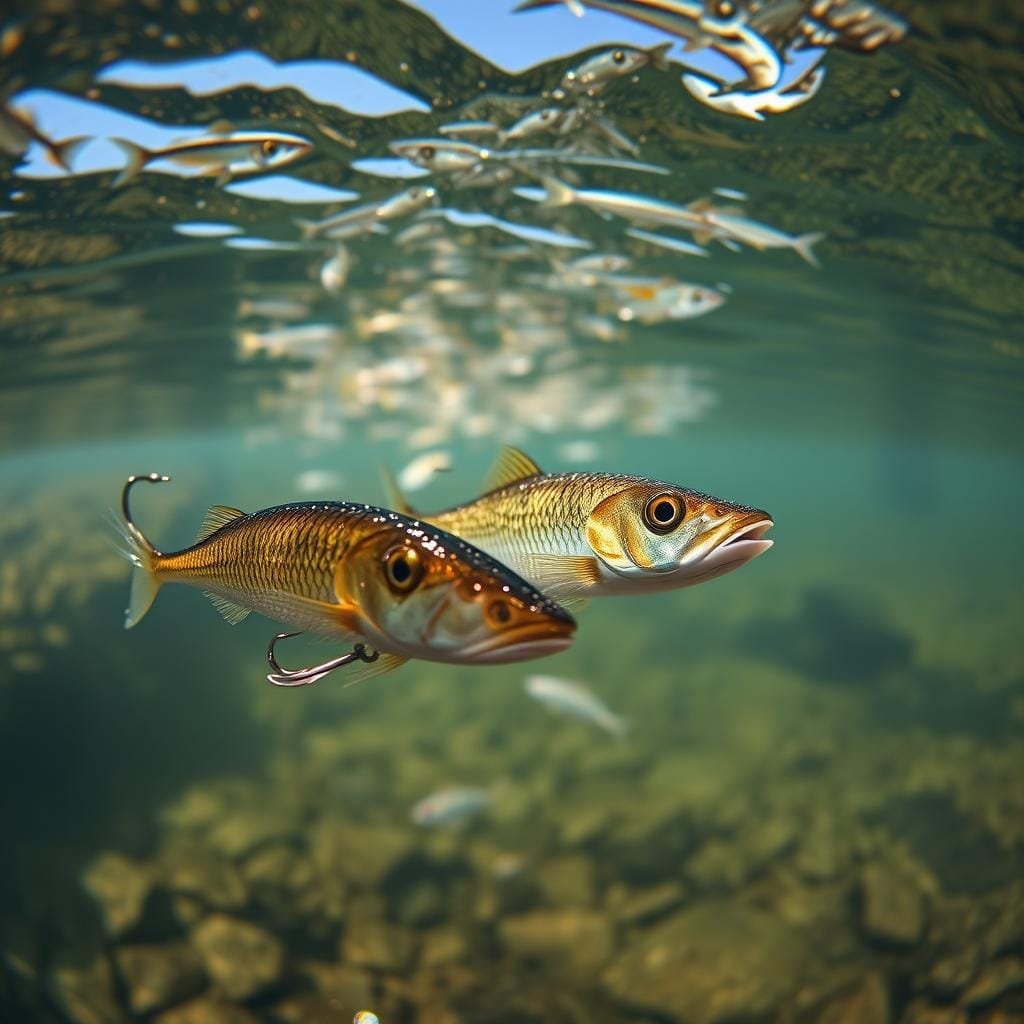
Walleye love to eat baitfish. So, minnow plastics and jerk shads are great. Make sure they look real and move right.
Rigging straight on jigs to prevent corkscrew action
Put the bait straight on the jig hook. This keeps it flat and moving right. A crooked bait won’t work.
For drop-shot walleye, hook the bait’s nose. This lets it move freely and look natural.
Use small tungsten heads for tight control. They help the bait stay in place.
Spring sizing versus autumn upsizing
In spring, use small minnows. They match the young fish and work well in clear water. Move the bait slowly and pause a lot.
In late summer and fall, use bigger jerk shads. They attract bigger fish and work well in windy or stained water.
Standouts: Berkley MaxScent Flatnose, Zoom Super Fluke, Z-Man Jerk ShadZ
Berkley MaxScent Flatnose Minnow and Berkley PowerBait Minnow/Pro Twitchtail Minnow are good for scent. Zoom Fluke and Zoom Super Fluke have a classic dart. Lunker City Fin-S Fish has a thin tail.
Z-Man Scented Jerk ShadZ and StreakZ are durable and move well. They snap and glide nicely.
| Brand & Model | Best Use | Recommended Size | Rigging Tip | Seasonal Edge |
|---|---|---|---|---|
| Berkley PowerBait MaxScent Flatnose Minnow | Finesse bites, clear water | 3–4 in | Nose-hook for drop-shot walleye | Spring match-the-hatch |
| Berkley PowerBait Minnow / Pro Twitchtail Minnow | Slow glides on light jigs | 2.5–4 in | Thread straight to avoid roll | Spring and early summer |
| Zoom Fluke / Super Fluke | Snap-jig over flats and reefs | 4–5.25 in | Textbook jerk shad rigging on a round jig | May–June transition |
| Lunker City Fin-S Fish | Neutral fish, subtle tail kick | 3.75–5 in | Light wire hook for easy starts | Stable summer patterns |
| Z-Man Scented Jerk ShadZ / StreakZ | Durability, crisp darting | 3.5–6 in | Compact tungsten head (VMC Redline) for control | Summer finesse and fall upsizing |
Use soft jerkbaits and jerk shad rigging wisely. Change minnow sizes with the season. This makes your bait look real.
Swimbaits with Paddle Tails for Versatile Casting and Counting Down
Paddle-tail swimbaits are great for thumping, flashing, and covering ground. Choose jigheads that move straight, like VMC Neon Moon Eye or Northland. Pick the right weight for the depth or current.
Use 1/8 ounce for shallow water and up to 1/2 ounce for deeper spots or rivers.
Slow-rolling 3.5 to 4.5 inch options along structure
Cast slow rolling swimbaits over flats, reefs, points, and weed edges. Stop when you hit rock or brush. Keep your rod low and wind steady.
Let the boot tail pulse. This size catches fish on the bottom and those roaming by.
Finesse 2.5 to 3 inch swimbaits for clear-water fish
For clear water walleye or pressured fish, use 2.5–3 inch swimbaits. Use light jigheads for a soft roll. Cast far and keep the retrieve smooth.
Avoid big rod sweeps that scare fish in sunlight or light wind.
Top choices: Keitech Fat Swing Impact, Rage Swimmer, Power Swimmer, Slim SwimZ
Choose Keitech Fat Swing Impact, Strike King Rage Swimmer, Berkley PowerBait Power Swimmer, and Z-Man Slim SwimZ. Also, get Jackall Rhythm Wave, Zoom Swimmin’ Super Fluke Jr., and Z-Man Swimmin’ TroutTrick. These change shape and density for better fall speed.
To catch suspended fish, use count down swimbaits. Let it sink to the target, then retrieve through it. Adjust the count for wind or current changes. This keeps your lure in front of active fish without wasting water.
Worm Profiles: Ring Worms, Finesse Worms, and Scented Crawlers
Worm-shaped plastics catch fish because they move with every lift and drop. Their design pushes water and stays in the strike zone. This lineup works well for cold flows, tough bites, and trolling.
Cold-water ring worm tactics on rivers
For river walleye in cold water, use a 3–4 inch ring worm on a 1/8–1/4 oz jig. Work it vertical along main-channel edges and current breaks. Short lifts and drops keep the bait moving.
Choose models like the Wyandotte Worm or Berkley PowerBait Rib Worm. This method works well in spring, late fall, and midwinter. Use braid with a fluoro leader to feel bites.
Drop-shot finesse worms for tough bites
For tough bites, try a finesse worm drop-shot. Use a 3.5–4.5 inch straight-tail worm inches off bottom. Shake, pause, and drag it.
Roboworm Fat Straight Tail and Angler’s Choice Spear Tail work well. Use light-wire hooks and a 1/4 oz weight in moderate flow. This setup helps when plastics or live bait don’t work.
Gulp! Nightcrawler on spinners and slow-death hooks
For long pulls, use a Berkley Gulp! Nightcrawler. Pair it with a spinner and bottom bouncer, or on a slow-death hook. Run 8 lb mono to let the bait twist and kick.
This setup is great for panfish. Add inline weights to track depth. Then, adjust speed until the blade hums and the crawler rotates smoothly.
Old-School Grubs That Still Catch
Simple works. Walleye grubs in the 3–4 inch class are great. They work well near current seams, riprap, and gravel points. A chartreuse grub on a 1/8- to 1/4-ounce jighead goes down fast.
It pulses slowly and hops over rocks without getting stuck.
For a curly tail grub walleye bite, cast upcurrent and count down. Then, reel just fast enough to keep the tail thumping. Pause on bottom, lift twice, and glide.
This slow-to-moderate pace turns follows into strikes.
Proven plastics include the Mister Twister Meeny and Twister Tail. They are durable and action-packed. The Berkley Gulp! Minnow Grub works well when scent is key.
When weeds are a problem, add a Jig Spinner wire form. It adds flash and weed resistance.
Use 6–8 lb mono or fluoro for easy fishing all day. Keep a steady rod angle and a smooth retrieve. On stained rivers, a chartreuse grub approach beats live bait.
For more on softbait tweaks and speeds, see this softbait guide for walleyes.
| Grub Model | Best Size | Jighead Weight | Primary Use | Color Tips | Notes |
|---|---|---|---|---|---|
| Mister Twister Meeny | 3–4 in | 1/8–1/4 oz | River seams, riprap | Chartreuse, white, smoke | Curly tail grub walleye staple with reliable thump |
| Mister Twister Twister Tail | 3–5 in | 1/8–1/4 oz | Gravel points, reefs | Chartreuse/pepper, motor oil | Pairs well as a jig and grub for steady swimming |
| Berkley Gulp! Minnow Grub | 3–4 in | 3/16–1/4 oz | Stained water, slow bites | Chartreuse, watermelon pearl | Scented option when fish track by smell or taste |
| Jig Spinner + Grub Combo | 3–4 in grub | 1/8–1/4 oz jig | Weed edges, sparse cover | Chartreuse blade or gold blade | Flash adds visibility; great for shallow roaming fish |
| Red Hook Add-On | N/A | Matched to jig | Low-light boosts | Red or glow accents | Can increase catch rates on pressured fish |
Fine-tune by water color and wind. In clear water, go natural and lighten up. In chop or stain, a chartreuse grub stands out.
Stick with slow to moderate retrieves. Let the jig and grub do the work.
Ned Rigs and Bottom Snacks Walleye Can’t Refuse
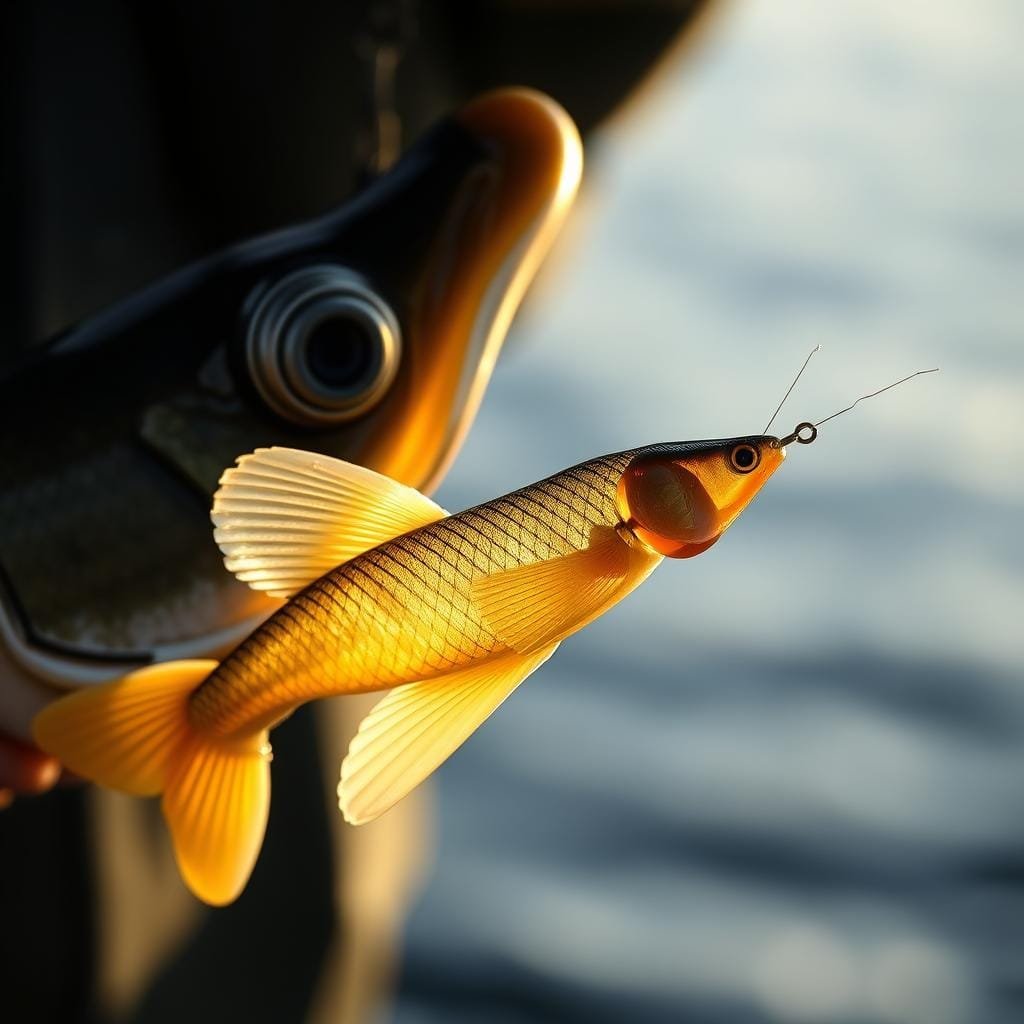
A walleye ned rig is great when fish eat crayfish, mayfly nymphs, and other snacks from the bottom. Green pumpkin and earth tones are good colors because they match what fish eat. The buoyant bodies make the rig stand out to walleyes.
Dragging, shaking, and hovering to mimic nymphs and crayfish
Cast the rig past your target, let it hit bottom, then drag it a bit. Stop and shake it to mimic a nymph. This pause makes the tail look like it’s hovering.
On rocky or sandy areas, move slowly. This keeps the rig in contact with the bottom. Use mushroom heads that are just heavy enough to feel the bottom.
Buoyant ElaZtech picks: Z-Man TRD and Hula StickZ
Z-Man’s ElaZtech TRD stands up well on the bottom. This makes the bite feel more real when fish are not very active. The Hula StickZ has a skirt that moves like a crayfish when it’s scared.
This design makes every tap important. You can also use it with small minnow bodies or a trimmed finesse worm. This makes the rig look more compact.
When to switch from blades and spoons to a Ned
If your usual lures don’t get any bites, try a walleye ned rig. It works well when fish are not very active. Use a light leader to make the rig fall naturally.
Remember, tips from pro jig strategies can help with Ned rigs too.
- Best colors: green pumpkin, Canada craw, goby-style browns for realistic forage match.
- Heads: 1/10 to 1/5 oz in calm water; bump up one size for deeper rock or steady current.
- Extras: a touch of scent and a slow reel take on tight-lipped fish with finesse walleye plastics.
Tied Jigs and Bucktails for Power and Finesse
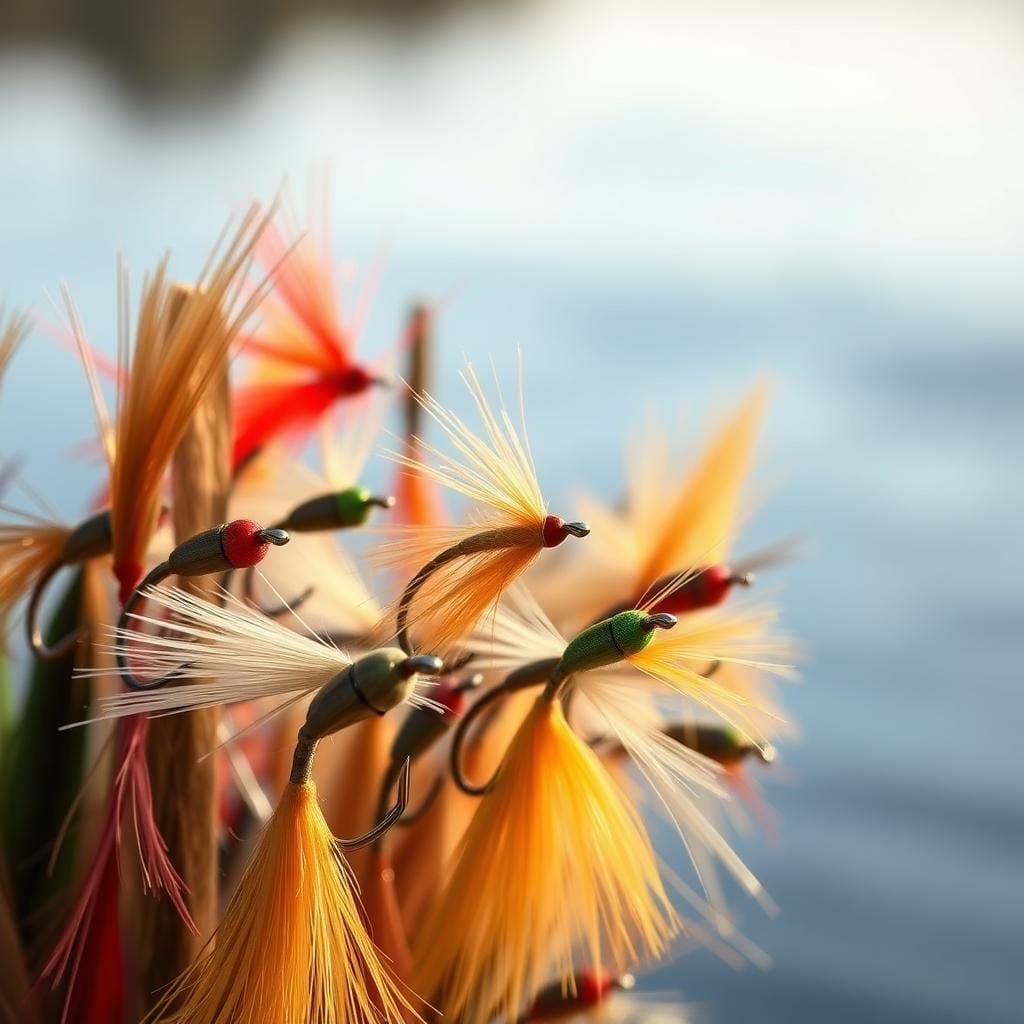
Hair jigs are great when fishing gets tough. A bucktail jig walleye method makes a big splash. It keeps catching fish even after many tries. Use the right weight and let the hair move freely.
Rip-jigging bucktails in cabbage and coontail
Start with 1/4 to 3/8 ounce bucktails in thick vegetation. Snap the jig hard to get a reaction. Then, let it fall slowly.
Choose strong hooks and durable threads. The VMC Bucktail and B-Fish-N Wayne’s Bucktail are tough. They work well in windy conditions and cold water.
Olive, brown, and black patterns for crayfish and leech imitations
Drag or hop an olive, brown, or black marabou jig over rocky areas. This look imitates leeches and crayfish. Pause often to let the hair settle.
When fishing is hard, add a small piece of Berkley Gulp! Minnow or a live fathead. The scent trail attracts fish. The jig looks alive at slow speeds.
Winning models: VMC Bucktail, B-Fish-N Wayne’s Bucktail, Hot Skirt Glow
Carry three key jigs: VMC Bucktail, B-Fish-N Wayne’s Bucktail, and VMC Hot Skirt Glow. Use different sizes to control how fast it falls. Switch to a crayfish pattern bucktail in clear water.
Keep a marabou jig walleye rig ready. After ripping vegetation, use the lighter jig to the same spot. This combo makes fish bite without moving.
Metal Players: Jigging Spoons, Gliding Jigs, and Blade Baits
When fish go deep or slide in currents, metal works best. It’s all about quick control and sharp movements. This is perfect for catching walleye fast.
Jigging spoons for vertical bites on deep rock
Use 3/8 to 1/2 ounce walleye jigging spoons. They fall clean and stay in the strike zone. Work them on humps and edges with short pops and pauses.
Keep your line tight to feel those light taps. Top picks include the Hopkins Smoothie and Luhr-Jensen Cast Champ. Also, Northland Buck-Shot Rattle Spoon and ReelBait Original Fergie are great. You can also cast them over marks found with sonar.
Gliding jigs like Rapala Jigging Rap for snap-jig power fishing
For roaming fish, try a darting glider. Rapala Jigging Rap walleye setups sink fast and slash wide. This erratic move gets reaction strikes from fish.
Add Rapala Jigging Shadow Rap, Northland Puppet Minnow, and Acme Hyper-Rattle to your box. Cast long, let it hit bottom, then snap. It’s good for ice or vertical fishing.
Blade baits for spring/fall vibration and summer deep jigging
For thump, use a blade bait walleye program. Sizes from 1/4 to 3/4 ounce work well. Hop it short for subtle flash or rip it for max vibration.
Try Acme V-Rod and Freedom Blade Bait. Also, Heddon Sonar, Johnson Thinfisher, and Reef Runner Cicada are good. Swap snaps for clips, keep hooks sharp, and be ready for bites on the fall.
- Depth tactics: Spoon for pinpoint vertical, glider for speed and roam, blade for heavy pulse.
- Line choice: Braid mainline with fluoro leader improves feel and keeps spoons tracking true.
- Cadence cues: Start with two short snaps, pause to bottom, then adjust to fish response.
Cranks, Lipless, and Jerkbaits That Cover Water Fast
Choosing the right walleye crankbaits is key. They should run true and hit the right depth. Use shad and minnow shapes to match local fish.
Change colors to natural smelt or bright firetiger when the water gets stained.
For deep trolling, use a spread that reaches 20–30+ feet in late summer and fall. Try Bandit Walleye Deep, Berkley Flicker Shad, and Rapala Down Deep Husky Jerk. These crankbaits track hard and stay on line.
Berkley Flicker Shad runs true from 1.5 to 2.5 mph. It has rattles for extra draw.
Diving cranks for trolling 20–30+ feet in summer and fall
Run long leads on mono or add leadcore. This pins baits to rock edges and flats. Stagger depths to catch fish in one pass.
Quick turns can trigger bites. Keep one bait ticking the tops of humps.
Lipless for yo-yoing grass lines and rock transitions
Lipless crankbaits are great for fishing in grass and near rocks. Rapala Rippin’ Rap and Yo-Zuri Rattl’n Vibe cast far and flutter on the drop. Yo-yo the lure along weed walls and rock transitions.
Suspending jerkbaits for windy, overcast bite windows
Suspending jerkbaits work well on dark skies and chop. Rapala Husky Jerk and Bomber Long A and Deep Long A hover between twitches. This draws curious fish tight to the bait.
Guide favorites: Berkley Flicker Shad/Minnow, Bandit Walleye Deep, Rapala Husky Jerk, Rippin’ Rap
Trusted picks include Cotton Cordell Wally Diver and Storm Jr. ThunderStick. These run well on different lines. Great Lakes trolling spoons like Michigan Stinger work well behind divers.
Keep a finesse ace ready. A Keitech Easy Shiner on a light head adds subtle roll in clear water. Blend these tools to cover structure efficiently.
best bait for walleye: Color, Speed, and Seasonal Tuning
Start with color. Choose colors that match what fish eat. Use metallic gold and silver for bright days. Use green, purple, orange, and white at night.
For earth tones, try olive, brown, and black. These work well with bucktails and Ned rigs. Custom painted lures can also attract fish when they get bored.
Next, think about speed. In summer, use fast-moving lures to cover water. Small spoons work well at 1.8 mph or more.
Use lipless cranks and blade baits with a special rhythm. If fish seem calm, try suspending jerkbaits. Adjust your speed based on water clarity.
Seasonal changes matter too. Spring is for tight-action lures and small minnows. Summer is for deep diving lures and swimbaits.
Fall is for big chubs and metal lures. Always match your lure to the water’s temperature and fish behavior. This way, you’ll catch more fish.
FAQ
What are the top walleye baits to bring on my next fishing trip?
Pack jigs, live bait, soft plastics, metals, and hard baits. Must-haves include VMC Neon Moon Eye, Northland Fire-Ball and Thumper jigs. Also, minnows, leeches, and night crawlers are key.
Soft jerk shads like Zoom Super Fluke and Z-Man Jerk ShadZ are great. Keitech Fat Swing Impact, Rage Swimmer, Power Swimmer, and Z-Man Slim SwimZ swimbaits are also good. Metal lures like Rapala Jigging Rap and Northland Puppet Minnow are essential.
Cranks like Berkley Flicker Shad/Minnow and Bandit Walleye Deep are must-haves. Rapala Husky Jerk and Rapala Rippin’ Rap are also top choices.
How do I read seasonal walleye patterns from spring through late fall?
Spring is for jig-and-minnow, small soft minnows, and tight-action cranks. Summer fish are deeper or suspended. Troll Bandit Walleye Deep and Berkley Flicker Shad/Minnow.
Run crawler harnesses behind bottom bouncers. Fall is big-bite time. Use large chubs on Lindy rigs, upsized jerk shads, and metal on rock humps.
How do I match lure action to fish mood and water temps?
In cold or pressured water, pick tight, subtle actions. Use Husky Jerk, subtle jerk shads, and slim swimbaits. In warm or stained water, choose wider vibration, rattles, and flash.
Adjust speed and cadence until fish react. This helps match the lure action to the fish mood and water temps.
Where should I target walleyes on most lakes and rivers?
Focus on flats, reefs, points, weed edges, current seams, and humps. Slow-roll swimbaits along edges. Cast gliding jigs across rock.
Troll deep divers over contours. Forward-facing sonar helps decide when to go vertical or snap-jig.
Ball head jigs vs. specialty heads—when does each shine?
Ball heads are versatile for casting, dragging, and vertical work. Specialty designs add a tactical edge. Keel-stable heads like VMC Neon Moon Eye and Northland Deep-Vee track straight.
Gliding styles excel for snap-jigging. Northland Thumper and other spin jigs add flash and vibration in stain or low light.
What jig weights cover most walleye situations?
Carry 1/8 to 3/8 oz for general use. Go lighter for slip-float live bait. Move to 1/2 oz and heavier for fast rivers, deep rock, or to drive big swimbaits down.
Adjust by depth and current to maintain bottom contact or a controlled fall.
What are proven jig models and why?
VMC Neon Moon Eye offers keel stability and lifelike eyes. Northland Fire-Ball is live-bait friendly, while Northland Thumper adds blade flash. Other standouts include VMC Hammer Head, VMC Hover Jig, Z-Man Finesse EyeZ, and Northland Weed-Weasel.
B-Fish-N H2O Precision, Freedom Zodiac, and Northland Deep-Vee are also great for straight, fast falls.
When should I tip jigs with live bait or soft plastics?
In spring, tip with minnows—shiners are money. Late spring through early fall, leeches on jigs, rigs, or spinners excel. In summer, add crawler pieces or slow-death rigs.
Blend plastics with a live trailer—like a PowerBait Minnow plus a leech—for action and scent.
How do I fish minnows across seasons?
Jig-and-minnow dominates spring. Spinner rigs with minnows produce in spring and summer. In fall, big redtail or creek chubs on Lindy or sliding egg sinker rigs tempt trophies near bottom on rock and saddles.
When do leeches out-fish other live baits?
From late spring through early fall when water’s warm and leeches swim actively. Slip-float a leech to keep it in a walleye’s face on edges, current seams, or isolated boulders. Skip leeches in cold water—they ball up and lose appeal.
What’s the smart way to run night crawlers?
Troll crawler harnesses behind bottom bouncers for bottom-oriented fish or behind inline weights for suspenders. Slow-death hooks on 8 lb mono create a tight corkscrew roll. Half or whole crawlers also catch on jigs and Lindy rigs.
Should I pair plastics with live bait?
Yes. A soft plastic minnow or jerk shad plus a leech or crawler segment blends durability, profile, and scent. It keeps your bait fishing after panfish nip live offerings. Berkley Gulp! Nightcrawler is durable and disperses scent on harnesses and jigs.
How do I rig soft minnows and jerk shads the right way?
Rig perfectly straight on the jig hook. A crooked rig twists, rolls, and kills the glide. Use compact tungsten or keel-stable heads like VMC Redline swimbait jigs or Neon Moon Eye for a true track and crisp dart on the snap.
What sizes of jerk shads work best in spring versus fall?
Go 2.5 to 4 inches in spring to match small forage. You can sneak in 5.25-inch options by early summer. In fall, upsize to 5 inches and bigger to trigger larger fish and capitalize on reaction strikes around rock and current.
Which jerk shads and minnows are proven?
Berkley PowerBait MaxScent Flatnose Minnow, Berkley PowerBait Minnow and Pro Twitchtail, Zoom Super Fluke, Lunker City Fin-S Fish, and Z-Man Scented Jerk ShadZ and StreakZ are top picks. For finesse in clear water, a 3.5–4 inch Jerk ShadZ on a compact head is deadly.
How should I fish paddle-tail swimbaits around structure?
Slow-roll 3.5 to 4.5 inch swimbaits along flats, reefs, points, and weed edges. Let the tail thump and tick cover. Count down to suspending fish and retrieve at their level. Use straight-tracking heads and scale from 1/8 to 1/2 oz by depth and current.
When do I downsize to finesse swimbaits?
In ultra-clear or pressured water, drop to 2.5–3 inch paddles on lighter heads for subtle roll and tight thump. It keeps the profile natural, specially on sunny, calm days or over clean sand and gravel.
What are the best paddle-tail models for walleyes?
Keitech Fat Swing Impact, Strike King Rage Swimmer, Berkley PowerBait Power Swimmer, Z-Man Slim SwimZ, Jackall Rhythm Wave, Zoom Swimmin’ Super Fluke Jr., and Z-Man Swimmin’ TroutTrick are reliable. Pair with VMC Neon Moon Eye or Northland jigheads.
How do I fish ring worms and finesse worms for walleyes?
Ring worms shine in cold-water rivers—vertical jig main-channel edges and current breaks. For tough bites, drop-shot thin finesse worms and shake them to hover inches off bottom. Keep the profile small and the presentation steady.
Which worm models should I try?
Wyandotte Worm, Berkley PowerBait Rib Worm, Roboworm Fat Straight Tail Worm, and Angler’s Choice Spear Tail Worm are good. For scented durability on spinners and slow-death hooks, Berkley Gulp! Nightcrawler is a reliable choice.
Do old-school grubs and Ned rigs catch walleyes?
Absolutely. A 3–4 inch curly-tail on a jig is timeless for rivers and shore fishing. Hop it or slow swim for a steady pulse along current seams, riprap, and gravel. Mister Twister Meeny and Twister Tail, plus Berkley Gulp! Minnow Grub, are staples.
How should I fish a Ned rig for walleyes?
Drag, shake, and pause to mimic crayfish and nymphs. Let the buoyant tail hover and glide. Use light mushroom heads sized to maintain bottom contact. Earth tones like green pumpkin, brown, and black are confidence colors.
What Ned plastics work best?
Z-Man TRD and Hula StickZ are top picks thanks to buoyancy and durability. Other small minnows or finesse worms can be trimmed Ned-style and hopped along rock, sand, and transition lines.
When should I switch from blades and spoons to a Ned rig?
If you’re marking fish on humps or edges—say 30–35 feet—and fast, flashy baits aren’t drawing strikes, a Ned often converts neutral fish. It’s a go-to with forward-facing sonar when fish follow but don’t commit.
Why throw bucktail and tied jigs for walleyes?
Hair pushes water differently than plastic. It excels in cold fronts and around vegetation. Rip-jig through cabbage and coontail for reaction bites, or finesse-hop olive, brown, and black patterns along rock to mimic crayfish and leeches.
Which bucktail models stand out?
VMC Bucktail Jig, B-Fish-N Wayne’s Bucktail, and VMC Hot Skirt Glow are reliable. Tip with a scented trailer or a small piece of live bait when fish are stubborn.
How do I fish jigging spoons on deep rock?
Use 3/8–1/2 oz spoons with a controlled fall. Drop to marked fish, lift and fall to flash and flutter. Hopkins Smoothie, Luhr-Jensen Cast Champ, Northland Buck-Shot Rattle Spoon, and ReelBait Original Fergie are proven vertical players.
What’s the advantage of gliding jigs like the Rapala Jigging Rap?
They cast far, sink fast, and dart with big-trigger snaps—perfect for power fishing rock humps, saddles, and current seams. Rapala Jigging Rap and Shadow Rap, Northland Puppet Minnow, and Acme Hyper-Rattle are staples year-round and on ice.
When do blade baits shine for walleyes?
Spring and fall for vibration in cold water, plus summer for deep jigging. Sizes from 1/4 to 3/4 oz let you hop subtly or rip aggressively. Try Acme V-Rod, Freedom Blade Bait, Heddon Sonar, Johnson Thinfisher, and Reef Runner Cicada.
How do I troll diving crankbaits to 20–30+ feet?
Run deep divers like Bandit Walleye Deep, Berkley Flicker Shad/Minnow, Rapala Down Deep Husky Jerk, Rapala Tail Dancer, and Reef Runner Deep Diver. Use long leads, leadcore, divers, or wire to hit depth. Tune baits and check they run true at speed.
What’s the role of lipless cranks and jerkbaits?
Lipless baits like Rapala Rippin’ Rap and Yo-Zuri Rattl’n Vibe yo-yo well on grass lines and rock transitions. Suspending jerkbaits—Rapala Husky Jerk, Bomber Long A, Rebel Jointed Minnow—pause in the strike zone and shine on windy, overcast days.
Which crankbaits are guide favorites for covering water?
Berkley Flicker Shad and Flicker Minnow for precision tracks and broad colors, Bandit Walleye Deep for big summer/fall depths, Rapala Husky Jerk for suspending bites, and Rapala Rippin’ Rap for loud, tight vibration.
How should I choose colors for walleye baits?
Carry natural forage—perch, emerald shiner, smelt, alewife—plus metallic gold and silver. Add high-vis greens, purples, oranges, chartreuse, white/pearl for stain or low light. Glow helps deep or at night. Earth tones rule for bucktails and Neds.
What trolling speeds work with harnesses, spoons, and cranks?
Harnesses often hum from 1.0 to 1.8 mph, while willow-blade spinners and small trolling spoons like Silver Streak Jr Spoon run best 1.8+ mph. Crankbaits vary—test 1.6 to 2.5+ mph and watch rod tips and fish response.
How do I count down swimbaits to suspended walleyes?
After the cast, let the bait fall on a semi-tight line, counting seconds to estimate depth based on head weight and fall rate. Start above the marks and sweep through their level. Adjust count and head weight to stay in the zone.
When should I pick vibration over subtle action?
Choose vibration in warm, windy, or stained conditions—think Rippin’ Rap, Colorado blades, blade baits. Go subtle in clear, cold, or pressured water—suspending jerkbaits, tight-action cranks, slim paddles, and straight-rigged jerk shads.
What delivery systems help reach depth in summer?
Leadcore, diving planers, and wire lines push spoons and cranks to suspended fish. Bottom bouncers and inline weights carry harnesses and minnows to bottom-oriented fish. Match system to lure style and target depth.
Are crawler harness blades worth switching up?
Yes. Colorado blades add thump in stain and low light. Willow blades like the Silver Streak Double Willow Rig run fast and flash for covering water in summer. Fine-tune color and size to forage and clarity.
What structures pair best with metal baits in fall?
Deep rock humps, saddles, reefs, and current seams. Use gliding jigs like Rapala Jigging Rap or Northland Puppet Minnow, blade baits like Acme V-Rod and Johnson Thinfisher, and spoons like Hopkins Smoothie for vertical snap-jigging.
How can forward-facing sonar improve my walleye program?
It tells you when to fish vertical, when to snap-jig, and how fish react. You’ll see follows on swimbaits, refusals on blades, and when to switch to a suspending jerkbait or a Ned to seal the deal. It also refines count-down timing.
Any additional crank and spoon options I should know?
Add Cotton Cordell Wally Diver, Storm Jr. ThunderStick, Rapala Tail Dancer, Reef Runner Deep Diver, Shimano World Crank, and Great Lakes style spoons like Michigan Stinger, Wolverine Junior Silver Streak, Mooselook Wobbler, and Williams Dartee when fish key on smelt or alewife.