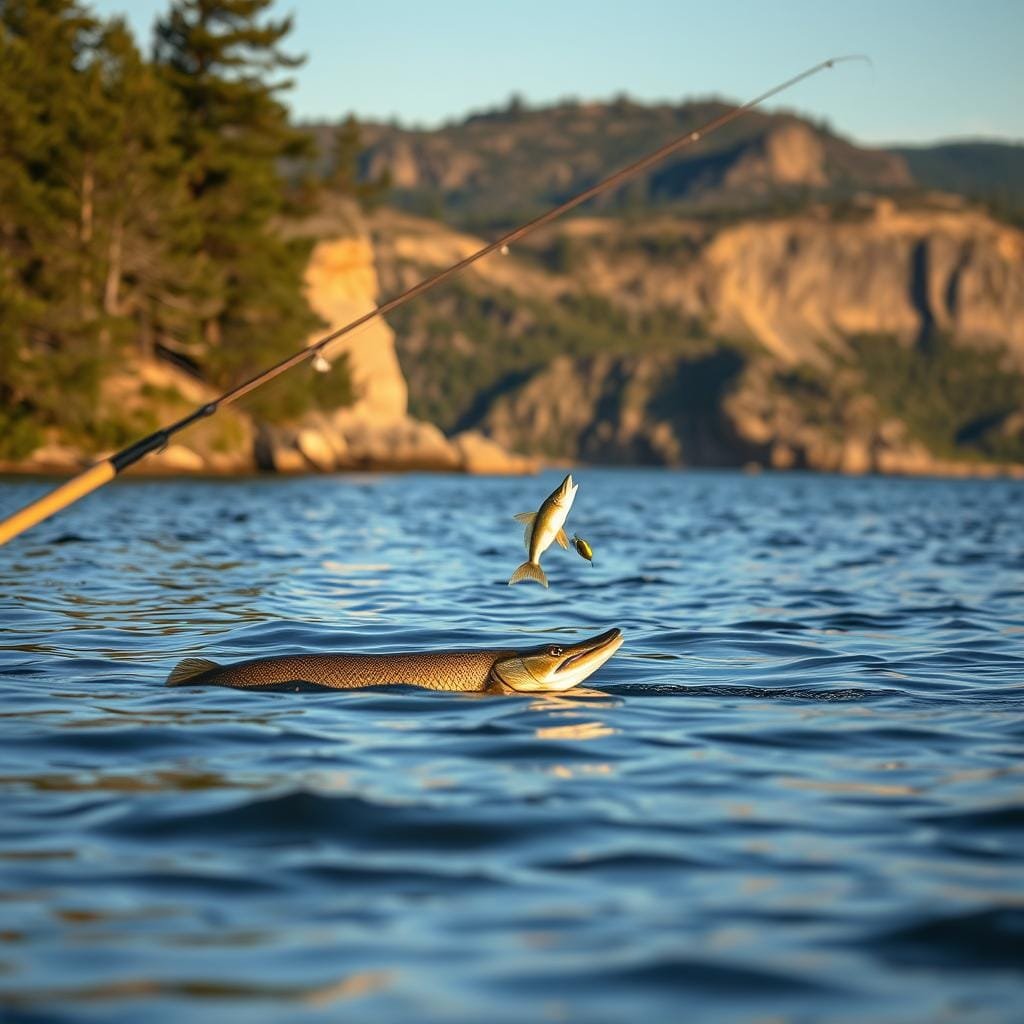
Fishing license fees and a tax on tackle have sent more than $20 billion to state fish and wildlife agencies since 1952, and that money stocks over 1 billion fish a year. Your first day is easier because of it. Start with a license for your state, a basic spinning combo with monofilament line, a few hooks, split-shot sinkers and a bobber. Fish a local pond with worms, learn one knot, and handle every fish gently.
This is a one-spot, one-rig plan for fishing basics for beginners. We’ll show you what to buy, what to skip and what to do once you’re standing at the water.
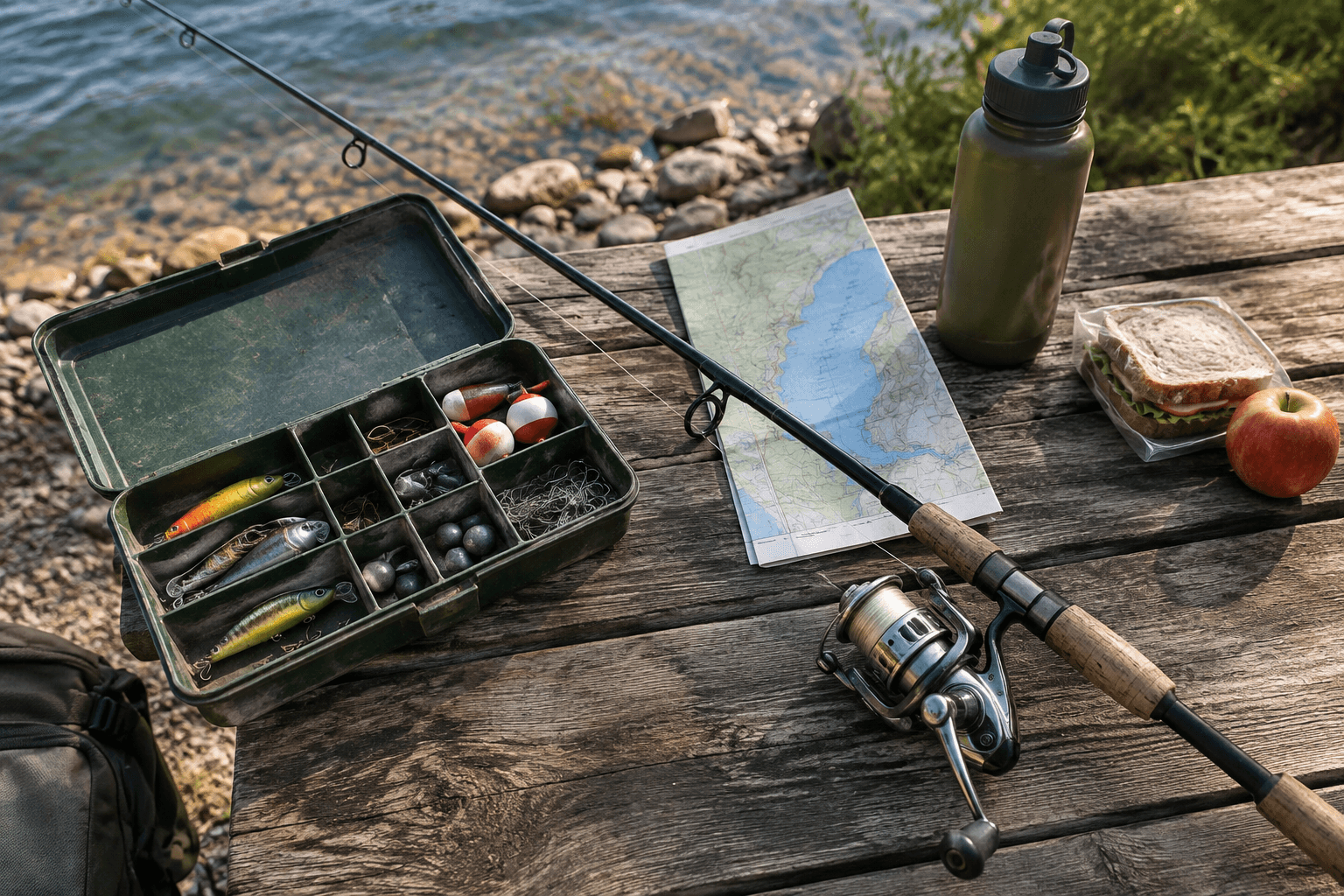
What to Buy: A Short Gear Checklist
You need less than you think. A complete beginner kit costs roughly $60 to $100 (typical retail, and it varies by store). Spend your money on a reliable combo and a small box of terminal tackle, which is the small gear at the end of your line: hooks, weights and floats.
Rod and Reel: Get a Spinning Combo
Buy a spinning rod and reel combo that is already put together and spooled with line. Look for a rod about 6 to 7 feet long with medium-light power. That means it bends easily and still has enough backbone for a bass or catfish. A spinning reel hangs under the rod and has an open face, so there is no spool to backlash into a bird’s nest of tangles.
Many combos are sold in a kit with a small tackle box. These are fine for a first day. Skip the $200 setup. You don’t yet know what you like, and an expensive reel will not catch more bluegill than a cheap one.
Line: Monofilament Beats Braid at First
Line comes in two main types. Monofilament (“mono”) is a single clear strand. It stretches a little, ties easily and forgives mistakes. Braid is woven from many thin fibers. It is strong and has almost no stretch, but it is slippery, and knots can slip if you tie them badly.
Pick mono in 6- to 8-pound test. Test is how much weight the line can hold before it breaks. Heavier line is stiffer, harder to cast and easier for fish to see, so don’t go up “just in case.”
The Small Stuff That Fits in One Box
Here is the full shopping list for a pond day:
Size 6 or 8 baitholder hooks (they have tiny barbs on the shank that grip a worm)
A small pack of split-shot sinkers, assorted sizes
Two or three round plastic bobbers (floats)
Nail clippers or line snips to cut line
Needle-nose pliers or a hook remover
A tub of live worms (nightcrawlers or red wigglers)
A small bucket or cooler, sunscreen and water
A swivel is a small spinning link used with lures and heavier rigs. You can skip it today. You also don’t need a net, a fishing vest or a tackle bag.
Do You Need a Fishing License?
Yes, in nearly every case. Almost every state requires a license for anglers at or above a set age, usually 16. Rules differ by state and often change yearly, so check your state wildlife agency’s website before you go.
You can usually buy a license online, by phone or at a retail store that sells fishing gear. A one-day or short-term license is often the cheapest way to try the sport. Annual resident licenses typically run from about $15 to $50, depending on the state. Many states also offer free fishing days once or twice a year, when no license is needed.
Check the Local Rules Too
The license is only half of it. Each water body can have its own limits on size, number of fish and bait type. Arkansas, for example, moved all of its fishing rule changes to take effect each July 1 starting in 2026, and it dropped possession limits while keeping daily limits. Your state may work differently.
Look up three things for your exact spot: which fish are legal to keep, how many you can keep, and whether live bait is allowed. Some trout waters, for instance, restrict bait or hook type. Also check whether your pond is private or a state-managed lake. Some state-managed lands need an extra permit on top of your license.
Pick One Spot: Where and When to Fish
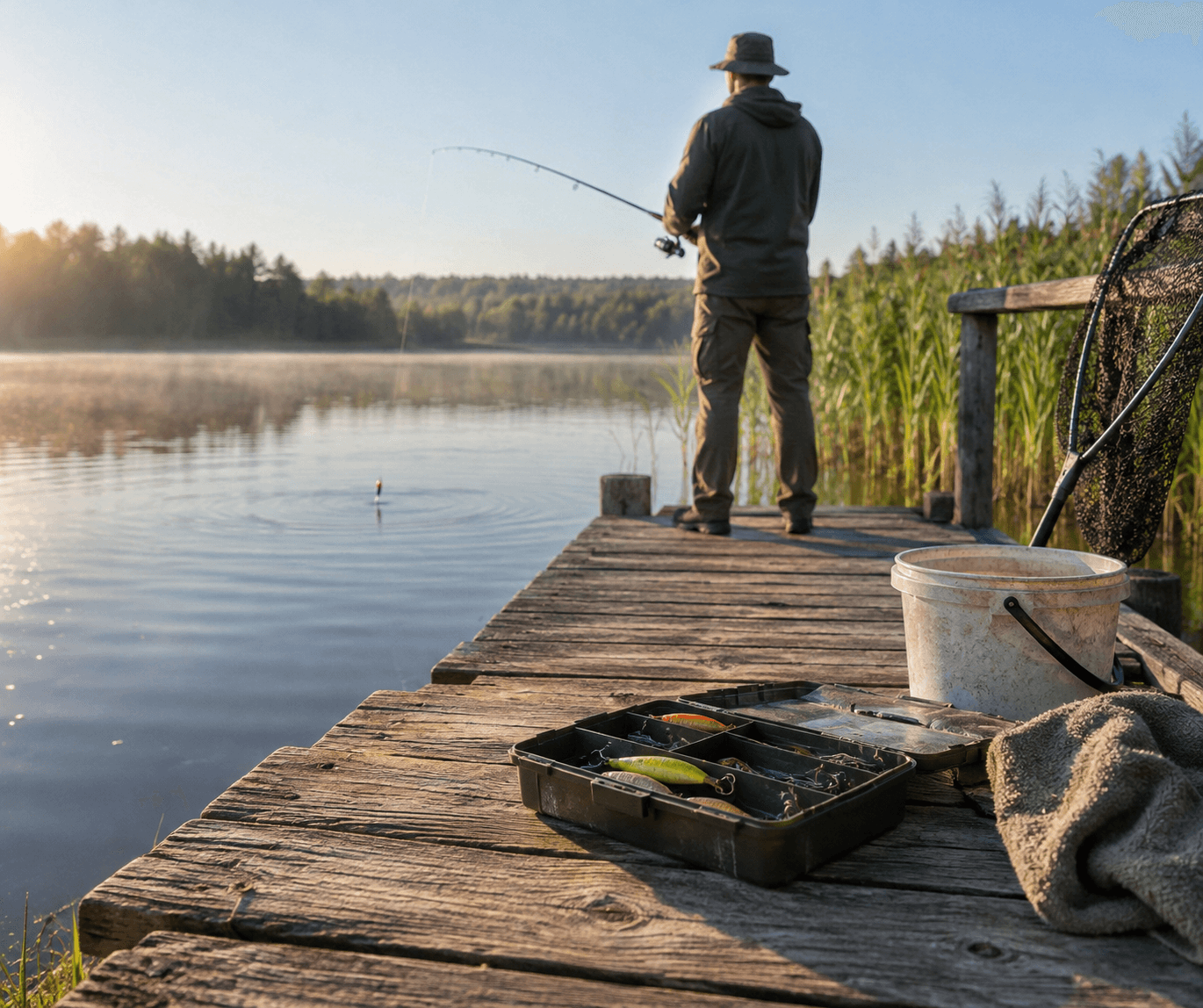
Choose a small public pond or lake close to home. Stocked community ponds and city park lakes are ideal. They hold fish that are used to people, and they have bank access with no boat needed. Your state wildlife agency website often lists stocked waters near you.
Look for Structure and Shade
Fish don’t spread out evenly. They gather near cover that gives them food or safety. Scout the bank before you cast and look for:
Fallen trees, brush piles or weed edges
Docks, bridge pilings or rocks
Shaded banks, especially on a sunny day
A spot where the bottom drops from shallow to deep
An open, flat stretch of sand with nothing around it is often empty. If you see no sign of fish after 20 minutes, move 50 yards. Don’t wait on a dead spot.
Best Time of Day
Fish feed best in low light. Go at sunrise or in the last two hours before sunset. Midday sun pushes many fish into deeper or shaded water, though panfish like bluegill often keep biting on a worm under a bobber. In summer, early morning is also cooler for you. In spring and fall, mid-morning to afternoon can be productive because the water warms a little.
The First-Day Walkthrough, Start to Finish
Follow these steps in order. They cover everything from the parking lot to the first fish. Don’t try to learn all of it at once; just run the routine.
Buy your license and read the rules for your pond before you leave home. Save a digital copy on your phone or print it.
Pack your gear and arrive early, with a bucket for your bait and a place to sit.
Tie on your hook with an improved clinch knot (see below).
Add a split-shot sinker about 12 inches above the hook, and clip a bobber on the line above that.
Hook a piece of worm and cast gently toward the structure you picked.
Watch the bobber. When it dips or slides away, reel down slack and lift the rod tip.
Reel in steadily, keep the rod tip up, and bring the fish to hand.
Wet your hands, unhook the fish and either release it or keep it if legal.
Learn One Knot: The Improved Clinch
The improved clinch knot is the one you need. It holds well on mono and ties in about 20 seconds once you’ve practiced. Here is how:
First, thread the line through the hook eye and pull about 6 inches through. Next, wrap the loose end around the main line five to seven times. Then pass the tail through the small loop next to the eye, and back through the big loop that forms. Wet the knot with a little saliva, pull the tail and main line slowly until it tightens, and trim the tail to a quarter inch.
Practice at home on a pencil or a hook. A poor knot is the top reason beginners lose a good fish. Tug it hard before you cast. If it slips, tie it again.
Bait or Lures? Start With Live Bait
For day one, use live worms. They smell right, they wiggle, and many freshwater fish eat them without much persuasion. A lure is a fake bait made of plastic, metal or feathers. Lures can catch plenty of fish, but they need correct casting and retrieve speed, and that adds a learning curve you don’t need yet.
Check that live bait is legal where you fish. A few waters ban it or limit it. Otherwise, a tub of nightcrawlers costs about $4 to $6 at a bait shop or big-box outdoor store, and it is enough for several trips.
How to Put a Worm on the Hook
Thread the hook through the worm’s body about two or three times, leaving a short tail dangling. Don’t bury the whole hook. A bit of point showing helps you hook the fish. If your worm is huge, tear it in half. A small piece of worm catches panfish better than a long one, because small mouths can swallow it.
Set Up a Bobber Rig
A bobber rig is the classic pond setup. Here is how it hangs on your line, from top to bottom: the bobber, the split-shot, the hook. The distance from bobber to hook sets your depth. Start at about 2 to 3 feet. If you get no bites after 15 minutes, change it. Slide the bobber up to fish deeper, or down to fish shallower.
Use one or two small split-shots, just enough that the bobber still floats upright but sits low. A heavy bobber with no weight under it can spook fish. Crimp the shot gently with pliers, because squeezing too hard can nick the line and weaken it.
Casting, Setting the Hook and Landing Your Fish
Casting is easier than it looks. The goal on day one is to put the bait within a few feet of cover, not to launch it across the pond. Fish near the bank are common in ponds, so even a short lob works.
A Simple Overhead Cast
Hold the rod with your dominant hand and put your index finger on the line. Open the bail, which is the metal wire arm on the reel that guides the line. Bring the rod back to about your ear, then swing it forward and release the line with your finger when the rod points a little above your target. Close the bail by turning the handle once the bait lands.
Do a few practice casts without the hook, using only a sinker, in a clear grassy area. You’ll learn the timing in about ten tries.
Setting the Hook Without Yanking
When the bobber sinks, slides or jumps, don’t haul back. Reel in the slack, then lift the rod tip firmly but smoothly, like pulling up a window shade. A hard, fast yank can rip the hook out of a small fish’s mouth or snap light line. If the bobber only twitches, wait. Small fish often nibble first, and the real bite comes a second later.
Once hooked, keep the rod up at about 45 degrees and reel steadily. If the fish runs, let it. Your reel’s drag, a built-in clutch that lets line slip out under heavy pull, protects the line. Set it loose enough that a strong tug pulls line out. Don’t crank the reel while the fish is pulling hard.
Landing and Releasing the Fish
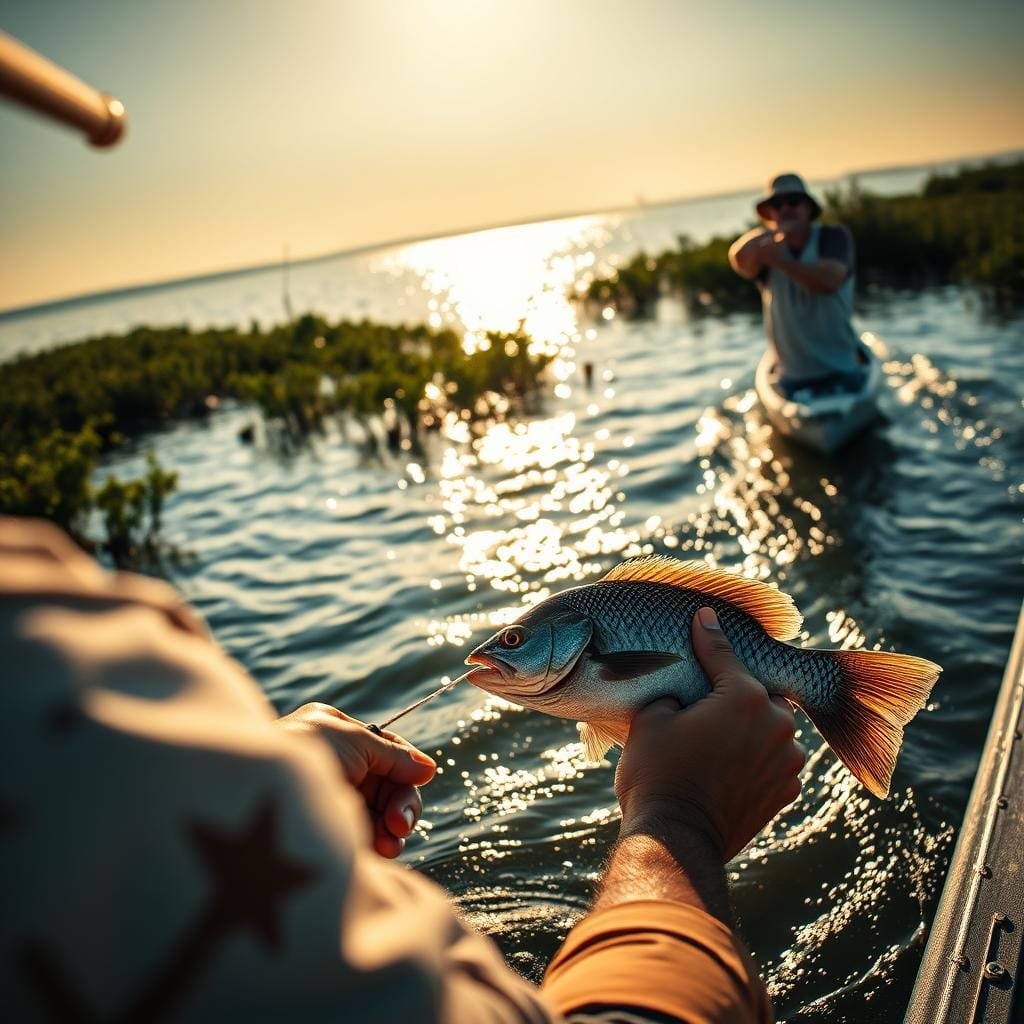
Lead the fish to the bank and, if it’s small, lift it with the rod or grab it with wet hands. Wet hands protect the fish’s slime coat, which guards it against infection. Hold it firmly but don’t squeeze, and keep it low over the ground or water so a slip doesn’t hurt it. Remove the hook with pliers. If the fish swallowed the hook, cut the line close to the mouth rather than ripping it out.
For release, set the fish in the water facing into any current or just hold it gently for a few seconds until it kicks away. Take a photo quickly, since fish do better the less time they spend out of water.
What Will You Catch? Easy Fish for Beginners
Pick species that bite often and are forgiving. Here are the top choices in US ponds and lakes.
Fish
Where to Find It
Best Bait
Why It’s Good for Beginners
Bluegill
Shallow weed edges, docks
Small piece of worm
Bites all day, small mouth, easy to handle
Crappie
Brush piles, submerged trees
Small minnow or worm
Schools up, so one bite often means more
Channel catfish
Deeper holes, stocked ponds
Nightcrawler, chicken liver
Strong fight, fun to land
Largemouth bass
Weed beds, shaded banks
Worm, shiner
Popular target, but pickier than panfish
Panfish is the general term for small, plate-size fish like bluegill and crappie. For a first trip, bluegill is the easiest fish to catch. Most ponds have them, and they hit a worm under a bobber with almost no skill needed. Fish for them first, and save bass for your second or third outing.
You can also look up local rules before keeping any. Many panfish have no size limit, but some do, and daily limits vary. If you plan to eat your catch, keep it on ice right away. If not, release it.
When NOT to Go Fishing
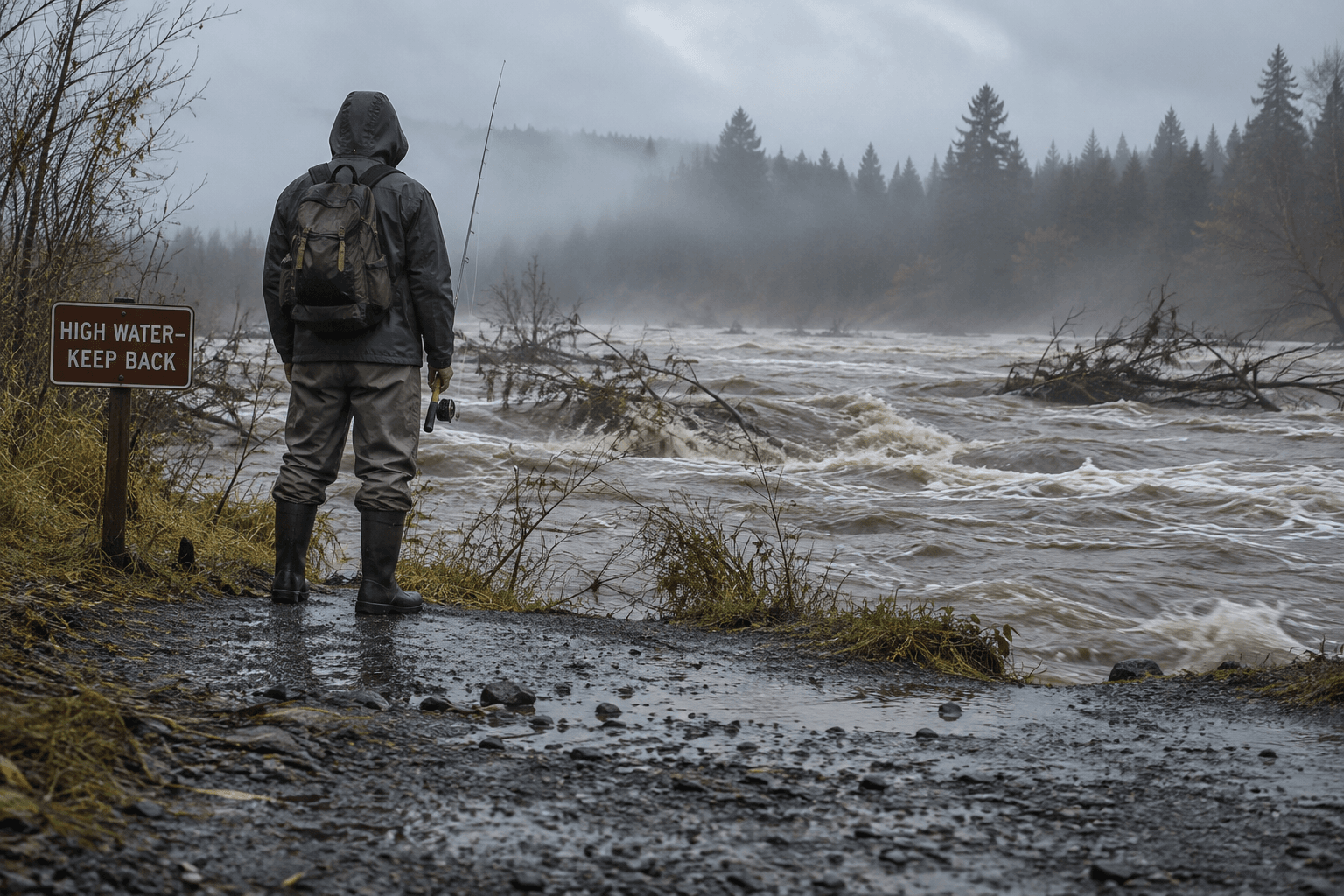
A bad day on the water is no fun, and it can be dangerous. Skip the trip, or cut it short, in these cases.
Weather That Should Keep You Home
Leave the water at the first rumble of thunder. A graphite rod is a good conductor, and open banks have few safe places to stand. Wait at least 30 minutes after the last thunder before you go back. Strong wind makes casting hard and tangles line, and heavy rain can make banks slick and muddy.
Extreme heat is another reason to stay home. If it’s above 95°F, go at dawn or skip it, and bring plenty of water. In cold weather, dress in layers and keep your hands dry.
Closed Seasons and Unfamiliar Water
Some waters close to fishing for part of the year, often to protect spawning fish or after a fish die-off. Check the posted signs and your state’s regulations. Fishing a closed water, even without a hook in the fish, can bring a fine.
Also avoid water you can’t read. Steep, muddy or fast-moving banks are risky for a first outing, and tidal shores can flood quickly. Stay at a pond with a gentle slope and a clear path. Take a friend if you can, and tell someone where you’ll be.
Common Beginner Mistakes and Etiquette
Most first-day problems come from a short list of habits. Fix these and you’ll feel like you’ve been fishing for months.
Mistakes That Cost You Fish
Buying too much gear. A $250 reel won’t help you learn knots or find fish.
Skipping the rules. Licenses and local regulations vary by state, and they change.
Using heavy line. Line over 10-pound test is stiff and hard to cast on a light rod.
Tying weak knots. Always wet the knot and tug it before casting.
Setting the hook too hard. A gentle lift is enough.
Staying at a dead spot. Move if you see no bites in 20 to 30 minutes.
Be a Good Neighbor on the Bank
Give other anglers space, at least 15 to 20 feet if the bank is crowded. Don’t cast over another person’s line. Pack out every scrap of line, wrapper and bait tub, because discarded line can trap birds and turtles. Keep your voice low near the water, and talk with others before you pick a spot beside them. Most anglers are glad to share tips with a beginner who asks politely.
If you want to compare reels, bait options and species-specific tips as you grow, we’ve got guides and gear reviews at Rod Rush to help you pick your next step.
Frequently Asked Questions
What is the best way to start fishing as a beginner?
Buy a license, a spinning combo and a small box of hooks, sinkers and bobbers. Fish a local pond with worms. Learn one knot, keep the day short, and aim to learn the routine, not to catch a trophy.
What is the #1 fishing rule?
Know and follow the local regulations, starting with your license. Beyond that, the most common unwritten rule is to handle fish gently and release what you don’t plan to keep. Both protect the fish and your right to fish the water.
What is the 80/20 rule in fishing?
It’s a saying that 80% of the fish are in 20% of the water. The point is to look for structure, shade and depth changes where fish gather, rather than casting at empty open water.
What is the best time of day to fish?
Early morning and the last two hours before sunset are usually best, since fish feed in low light. Midday can still work for bluegill on a bobber rig, especially near shade.