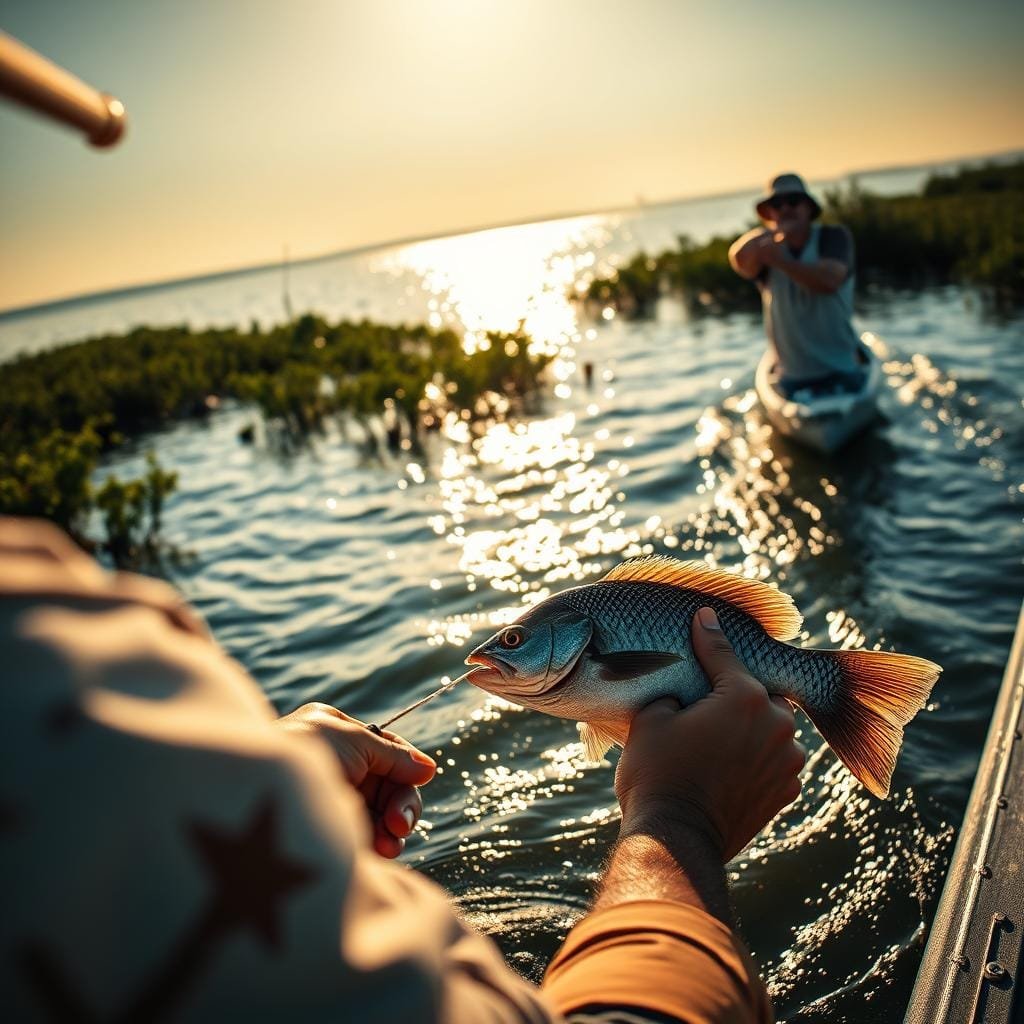
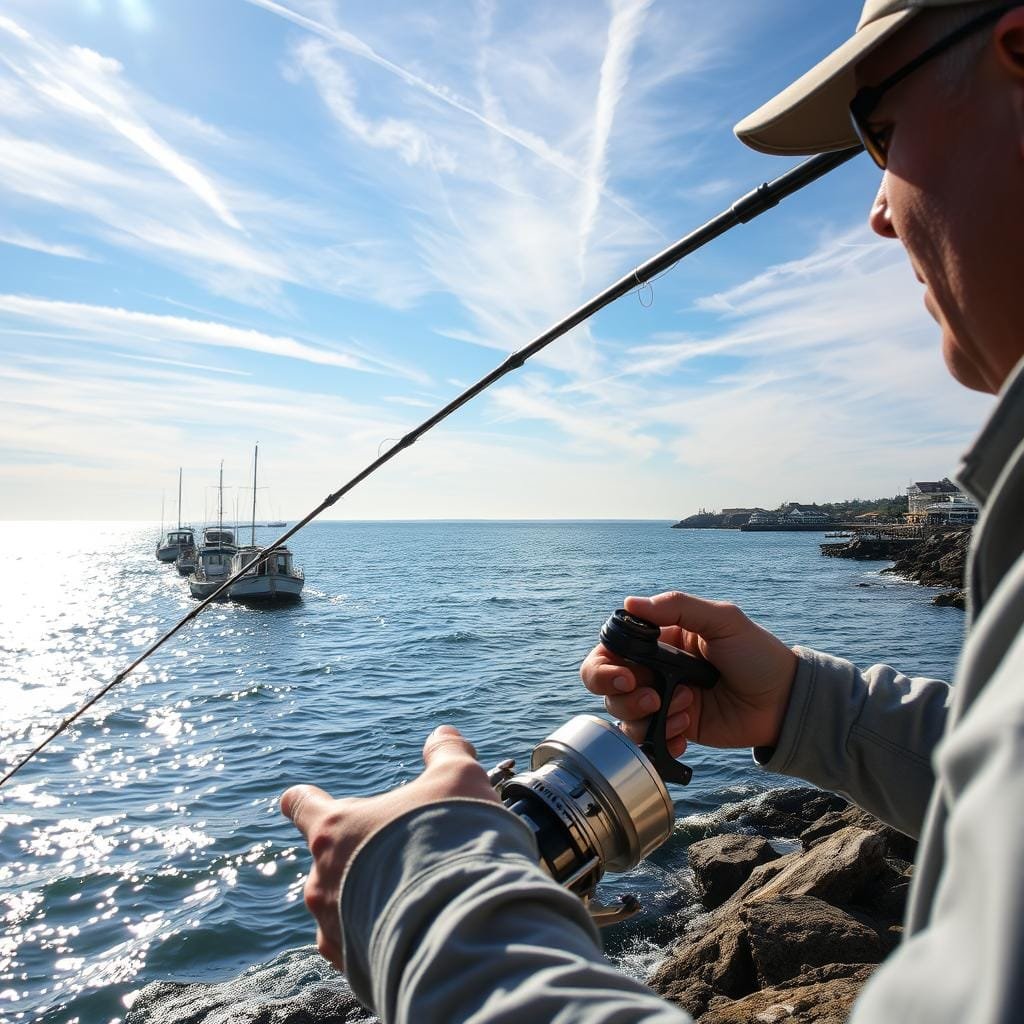
Going on a sea bass fishing adventure is exciting. It gives you the thrill of catching fish and tasting delicious sea bass. This guide will teach you the best sea bass fishing strategies.
It’s great for both new and experienced fishermen. You’ll learn how to catch the black sea bass. This fish is famous in the Mid-Atlantic for its fight and taste.
Learning about sea bass behavior and where they live is key. You’ll get the basics for fishing trips. Whether you fish from the shore or go out to sea, you’ll have fun catching sea bass.
Remember, we must fish responsibly. This helps sea bass populations stay healthy for future anglers.
Introduction to Sea Bass Fishing
Starting your journey in sea bass angling is thrilling. This beginner’s guide to sea bass fishing will teach you the basics. Sea bass are plentiful and eager to bite, perfect for beginners.
Sea bass fishing is both challenging and rewarding. It’s a great way to enjoy nature and catch a delicious meal. You can learn these techniques from a boat or the shore. Here’s why sea bass fishing is great for beginners:
- Sea bass are easy to find, making it simple for beginners to catch them.
- They bite bait quickly, giving beginners a good chance of catching one.
- There are many ways to catch sea bass, like jigging or bait fishing, which are fun to learn.
For beginners in sea bass angling, knowing these saltwater fishing basics is key. This sport improves your fishing skills and lets you enjoy the ocean’s beauty.
Understanding Sea Bass Species
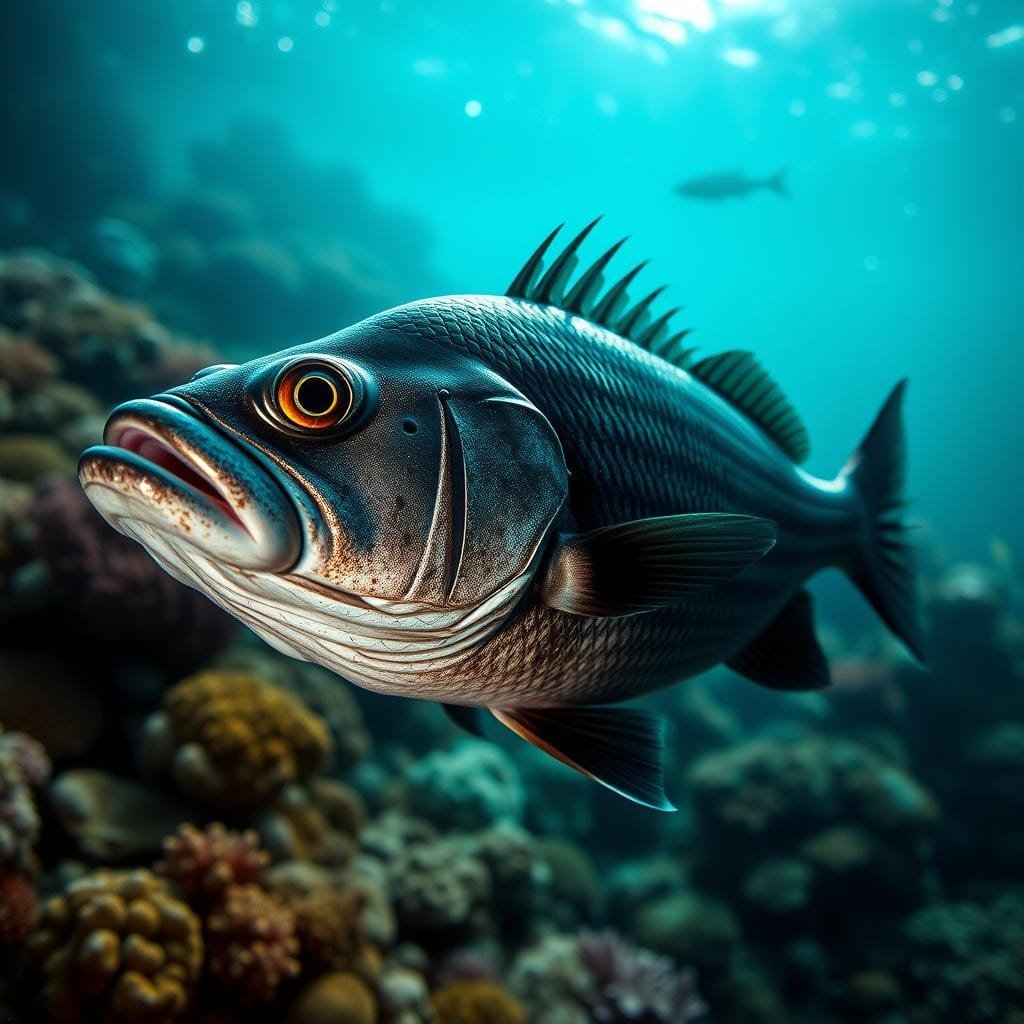
The world of sea bass is full of wonder. The Centropristis striata shows us how diverse and adaptable marine life can be. We’ll look at the black sea bass, a special species that lives in coastal areas. We’ll learn about their biology and how to tell them apart.
What are Black Sea Bass?
The black sea bass lives in the Atlantic Ocean. It goes on big migrations every year. In the fall, it moves offshore and south. Then, it comes back north in the spring.
They have babies from January to July. They eat a lot of different things like squid and shrimp. Their migrations show how they adapt to their changing homes.
Identifying Sea Bass: Features and Characteristics
Black sea bass are easy to spot because of their special looks. They have a long body and a single dorsal fin. Their fins are round and strong. They are usually blue-black with light spots.
This helps us know more about black sea bass. It also helps us learn about their homes. You can find more info in this guide.
Learning about sea bass helps us appreciate them more. They show us how marine life works together. Studying them helps us understand the ocean better and protect it.
Best Time and Seasons for Sea Bass Fishing
Finding the best seasons for sea bass is key for any fisher. Sea bass follow certain seasonal behavior patterns. Knowing these can really help your fishing.
This info tells you when to fish best. It also helps you match your fishing plans with sea bass migrations. This way, you might catch more fish.
Seasonal Migrations and Feeding Habits
Fishing during sea bass migrations depends on their eating habits. In cold months, they go deep, making them tough to catch. But in late spring and early summer, they come closer to shore. This is a great time for fishers.
- Spring: Sea bass move to shallower waters because of baitfish.
- Summer: They’re very active and hungry during the peak spawning season.
- Fall: They eat more in areas they can easily get to before it gets cold.
- Winter: They’re less active but can be caught in deeper waters.
Optimal Weather Conditions for Sea Bass
Weather is very important for sea bass fishing. The ideal conditions for sea bass fishing include cloudy skies or early mornings. These times are best because sea bass feel safer and are more likely to feed.
Here are some key weather conditions for fishing sea bass:
- Light Rain: It makes the water a bit choppy, which attracts sea bass.
- Overcast Days: Sea bass come closer to the surface when it’s not too bright.
- Dawn and Dusk: These are the best times for sea bass to feed.
Planning your fishing trips with these tips can make your experience better. It can also help you catch more fish. Whether it’s a calm morning or a busy migration season, knowing sea bass habits is key to success.
Choosing the Right Equipment for Sea Bass Fishing
For those who love to fish for sea bass, picking the right rod and reel is key. The right gear can make your fishing trip better and help you catch more sea bass. We’ll talk about what gear and bait work best for sea bass.
Selecting the Perfect Rod and Reel Combo
A medium weight rod, about seven feet long, is best for sea bass. It’s strong and flexible, perfect for fighting sea bass. Choose a reel that can handle 20 to 30 pound-test line. This combo is great for catching sea bass.
- Shimano Torium Star Drag Reel
- Penn Battle III Spinning Reel
- Daiwa BG Spinning Reel
Essential Tackle and Bait Types
Natural baits like squid, mussels, clams, and crabs work well for sea bass. Top-and-bottom rigs are versatile and good for different sea floors. Metal or diamond jigs also catch sea bass, even in deep water. Here are some key tackle items:
| Bait Type | Suggested Tackle |
|---|---|
| Squid | Top-and-Bottom Rig |
| Mussels | Size 4 Hook on a Drop Shot Rig |
| Crabs | Metal Jig |
Using the right rod, reel, and tackle can make your sea bass fishing better. It’s important to choose gear that fits the fish and the fishing conditions. This way, you’ll have a great time and catch more sea bass.
How to Catch Sea Bass
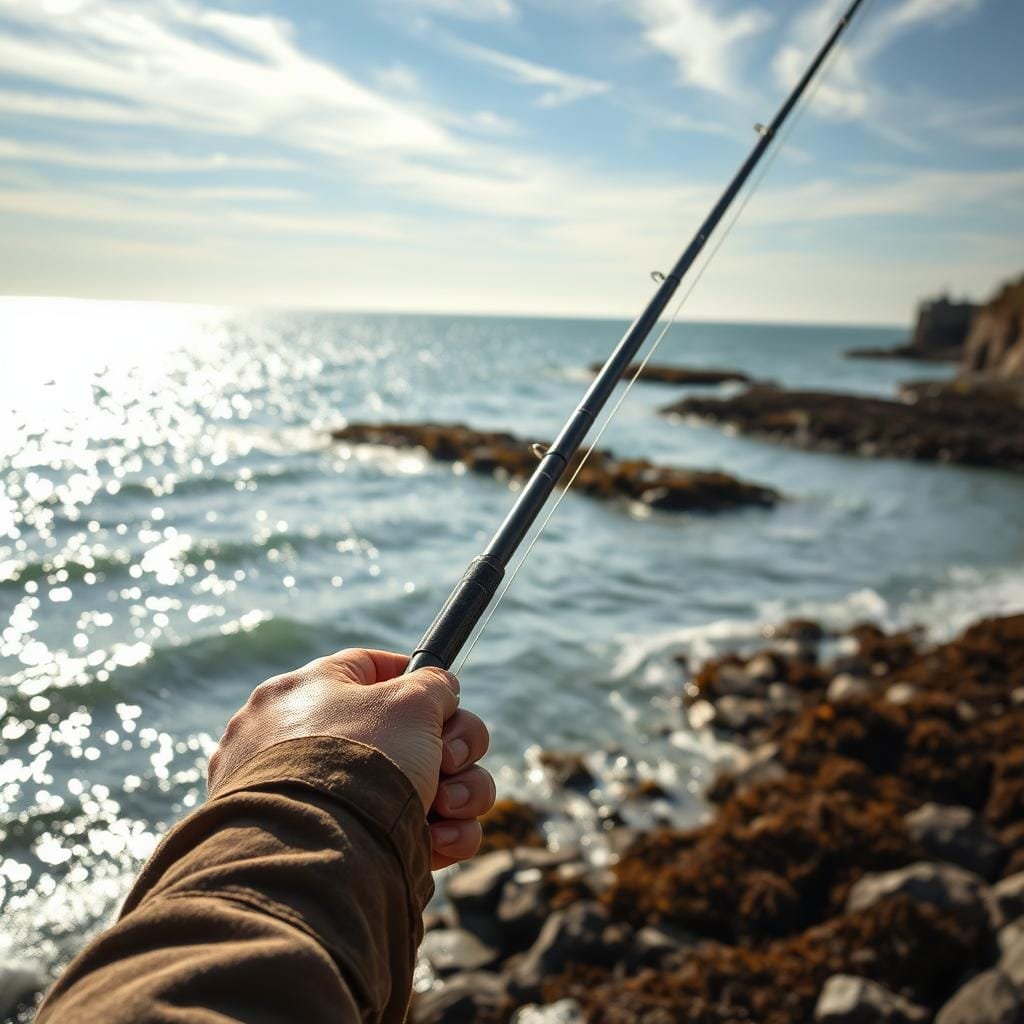
Learning to catch sea bass starts with knowing how to fish for them. We’ll cover everything from choosing bait to fishing techniques. This will help you have a great time fishing for sea bass.
To catch sea bass, you need to know about their habitat and behavior. The time of day, the tide, and what bait to use are all important. Using different sea bass angling methods can help you catch more fish.
- Bait Selection: Live baits like crabs, worms, and small fish work well. Artificial baits like jigs and soft plastics can also be good if used right.
- Tide and Time: Sea bass are best caught during high tide. They also like to eat early in the morning or late in the evening.
- Technique Variations: Try different ways of pulling your line to see what works. Also, change how deep you fish to match where the sea bass are.
Each of these tips is key to catching sea bass. By using these methods and adjusting them for local conditions, you can catch more fish.
Locating Prime Sea Bass Fishing Spots
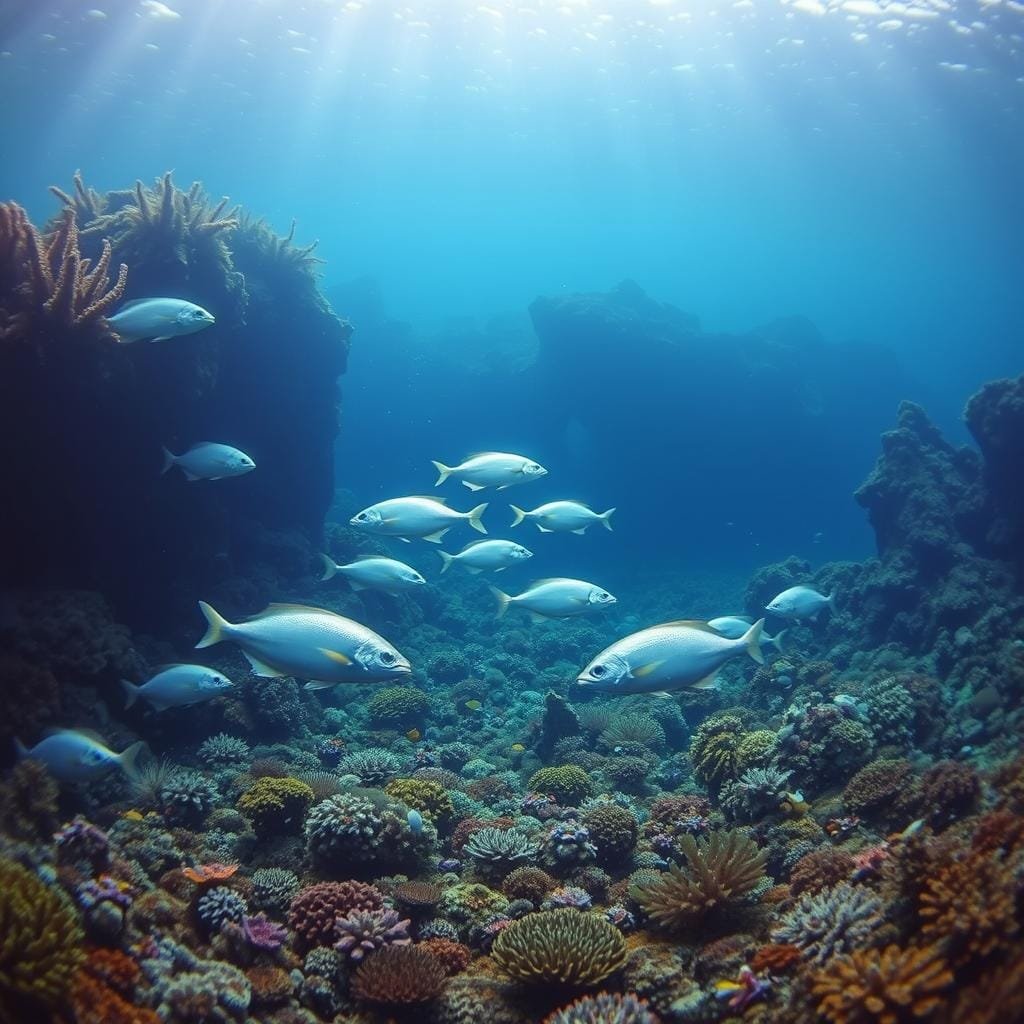
For both new and experienced anglers, finding the best places to fish is key. Sea bass live in places like reefs, wrecks, and jetties. These spots are perfect for catching sea bass.
Finding Hard Structures and Bottom Features
Looking for the right place to fish means checking out the underwater world. Reefs and wrecks are great because they offer food and shelter for sea bass. These spots are perfect for them to hide and hunt.
Identifying sea bass hotspots needs some help from technology. Today’s fishermen use ocean charts and sonar to find these spots. Here’s how to use these tools:
Utilizing Ocean Charts and GPS for Precise Locations
Ocean charts are essential for finding sea bass habitats. They show underwater maps and where fish tend to gather. GPS helps you find these spots exactly. Here’s how to use these tools:
- Study ocean charts to understand the locations of reefs, wrecks, and other underwater structures.
- Use GPS coordinates combined with local knowledge from fishermen and other ocean-going reports to reach these identified sea bass hotspots.
| Location Type | Technology Used | Frequency of Sea Bass Encounters |
|---|---|---|
| Reefs | GPS, Sonar | High |
| Wrecks | Sonar Systems, Ocean Charts | Medium to High |
| Jetties | Minimal Technological Use | Variable |
Using these methods can make your fishing trip better. Knowing how to use ocean charts and GPS helps you find sea bass. It also helps protect the ocean by fishing responsibly.
Effective Sea Bass Fishing Techniques
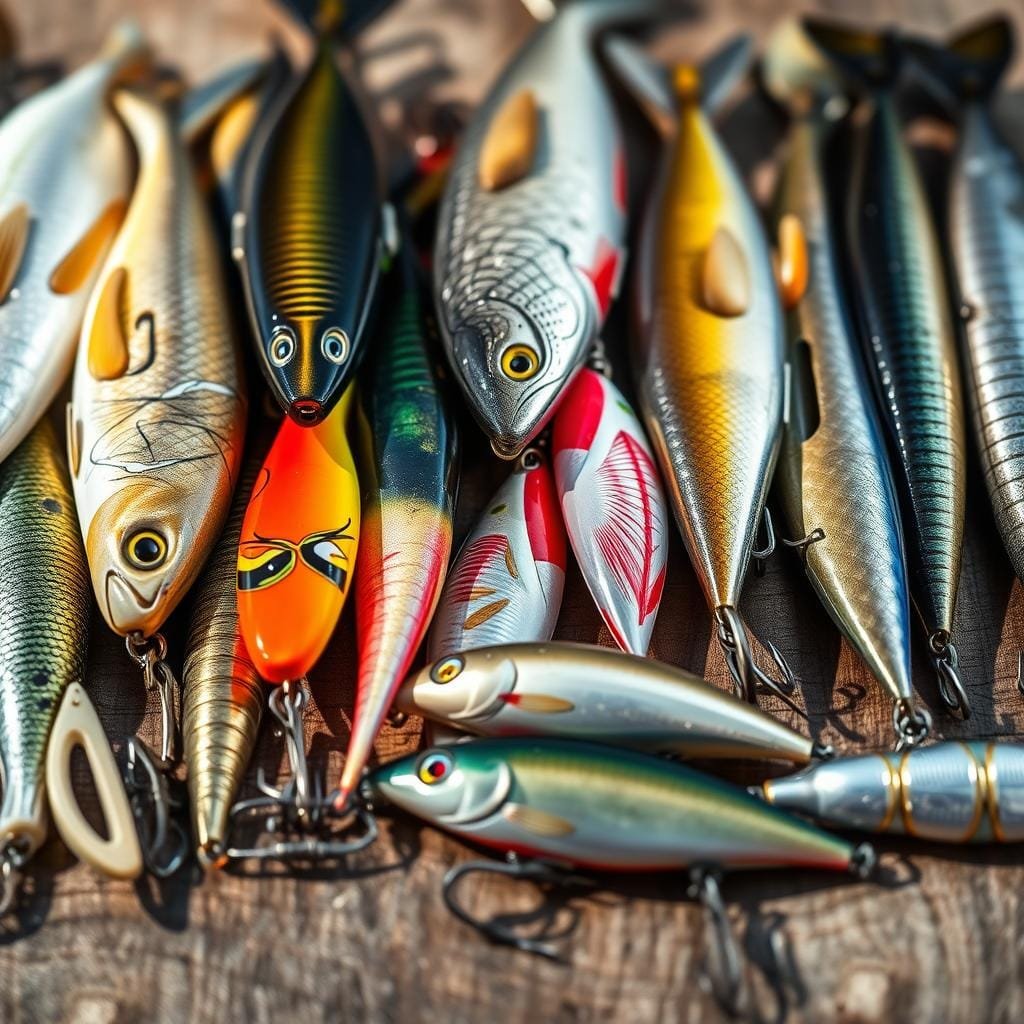
Learning to catch sea bass is more than just knowing where to fish. It’s also about how to use your baits and lures. This part talks about key techniques to help you catch more sea bass. We’ll look at how to present baits and the best ways to fish on the bottom or jig.
Bait and Lure Presentation Tips
To catch sea bass, it’s important to make your baits look like real food. Use lure techniques that make your baits move and look good. Here are some tips:
- Slow Jigging: Pull your line gently to make your bait move like a hurt fish.
- Live Bait: Hook your bait so it swims naturally. This will attract fish without hurting them.
- Scents and Sounds: Use scents or small devices that make sounds. This can make your lures more appealing.
Bottom Fishing vs. Jigging Strategies
Anglers often pick between bottom fishing and jigging to catch sea bass. Each method has its own benefits. Here’s a comparison to help you choose:
| Technique | Advantages | Best Use Case |
|---|---|---|
| Bottom Fishing | Keeps baits near the bottom, great for calm fish. | Works well in deep water with strong currents. |
| Jigging | Active method that gets bites with quick movements. | Best when sea bass are active in the middle of the water. |
Choosing the right method depends on the weather, water depth, and how active the fish are. Whether you’re using a jigging technique for sea bass or a bottom fishing for sea bass approach, it takes patience and skill. Each method needs careful planning to catch sea bass.
Mastering Sea Bass Fishing From Boats and Shore
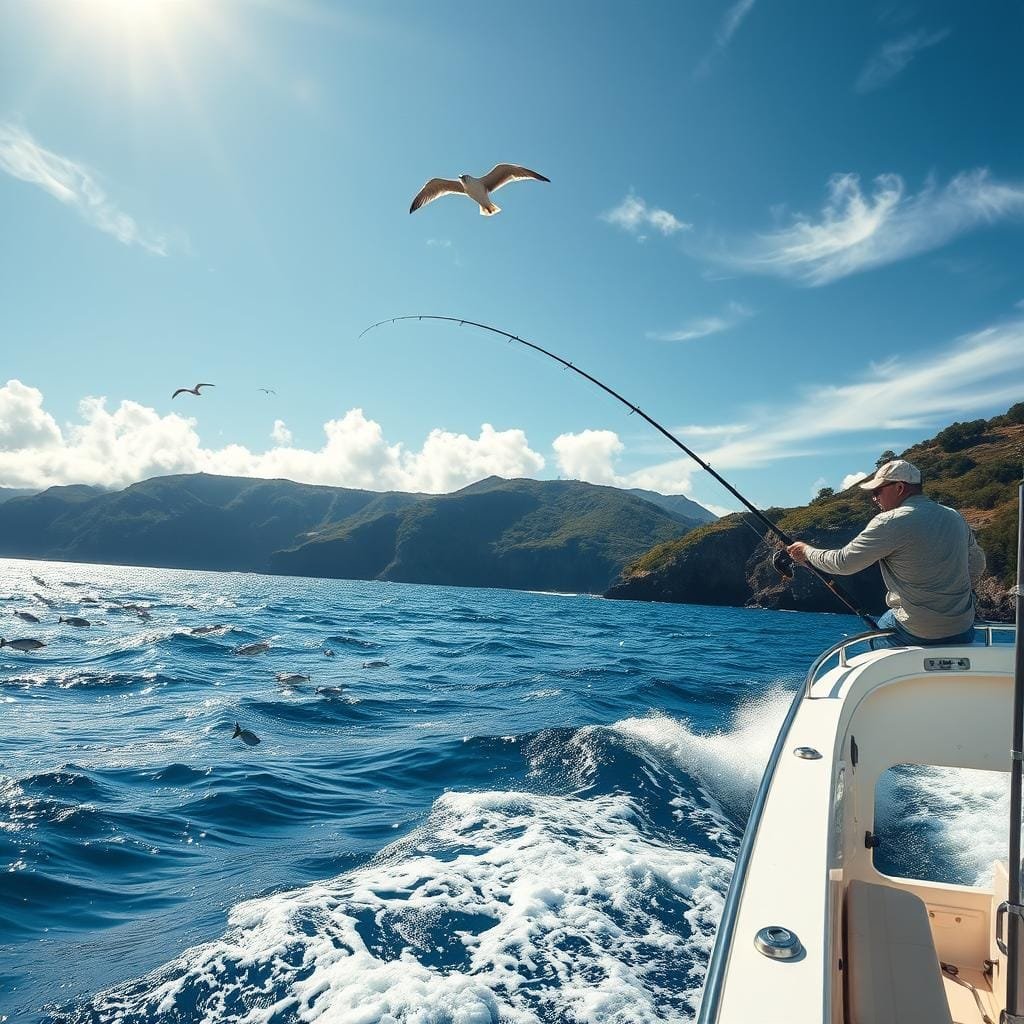
Fishing for sea bass from a boat or the shore is exciting. It’s a challenge for anglers. This part talks about how to fish from boats and the shore. It helps you catch more sea bass.
Boat fishing lets you reach deep waters where sea bass live. Shore fishing needs skill and knowing the area well. Both ways are fun and rewarding.
Tips for Successful Boat Fishing
Boat fishing for sea bass needs the right gear and a plan. You must use technology and know where sea bass live. Here are some tips for boat fishing:
- Get a good fish finder to find sea bass quickly.
- Look for places with deep water or underwater structures. Sea bass like these spots.
- Go fishing early in the morning or late in the evening. Sea bass are active then.
Being ready and smart makes boat fishing better. You’ll catch more sea bass.
Shore Fishing Tactics for Sea Bass
Shore fishing is different but just as fun. It’s about knowing the coast and where sea bass go. Look for tide pools, rocks, and estuaries for good fishing:
- Catch near rocks or ledges. Sea bass like these spots.
- Cast far and pay attention to the tides. This helps you catch more.
- Try different baits, like live ones and artificial lures. See what sea bass like best.
Fishing from boats or the shore takes patience and practice. Knowing your spot, time, and how to fish makes it better. You’ll have a great time catching sea bass and enjoying the sea.
Regulations and Conservation Practices
Sea bass fishing fans need to know about sea bass fishing regulations. It’s important to follow legal aspects of sea bass angling. This includes size limits, bag limits, and closed seasons.
These rules help keep the fish population healthy. They also make sure the sport can continue. It’s a legal and ethical duty to know these rules.
Being dedicated to sustainable sea bass fishing helps the species and the fishing experience. Following catch-and-release best practices is key. This is based on research like a study on survival rates of black sea bass.
Knowing the depth of catch is also important. It affects fish survival rates when released. Using methods like swim bladder venting helps in deeper waters.
This shows the need for ongoing education in conservation practices in angling. Applying these techniques shows respect for marine life. It also shows commitment to the sport’s future.
By choosing sustainable practices, anglers help sea bass fishing thrive. This makes it a great activity for future generations.
FAQ
What makes sea bass fishing ideal for beginners?
Sea bass fishing is great for newbies. There are lots of fish and they bite easily. This makes it a fun experience for beginners.
Can you describe the black sea bass?
The black sea bass is a fish found in coastal waters. It has a bluish-black color with light spots. It moves offshore and south in the fall and comes back in the spring.
What is the best time of year to fish for sea bass?
The best times to catch sea bass are in late spring and early summer. They also bite well at sunrise and sunset.
What are the ideal weather conditions for sea bass fishing?
Sea bass like fishing in low light. So, fishing at sunrise or sunset works best.
What rod and reel should I use for sea bass fishing?
Use a medium weight seven-foot rod. Pair it with a reel that can handle 20 to 30 pound-test line. This combo works well for sea bass.
What kind of bait works best for catching sea bass?
Sea bass eat a variety of things. They like squid, mussels, clams, and crabs. These baits work well in different fishing situations.
How do I find the best spots for sea bass fishing?
Look for reefs, wrecks, and jetties. Use ocean charts and GPS to find the best spots for sea bass.
What is the most effective technique for catching sea bass?
Bottom fishing and jigging are good techniques. They work well depending on the conditions and sea bass behavior.
Can I fish for sea bass from the shore?
Yes, shore fishing for sea bass can be rewarding. Target areas where fish gather, like straits and mouths. Use specific tactics, like focusing on pinch points and funnel areas.
Where can I find information about the regulations for sea bass fishing?
You can find sea bass fishing rules on state websites or through local fish and wildlife agencies.
Why is sustainable fishing important when fishing for sea bass?
Sustainable fishing helps keep sea bass healthy and protects the ocean. It means following rules and using conservation practices.