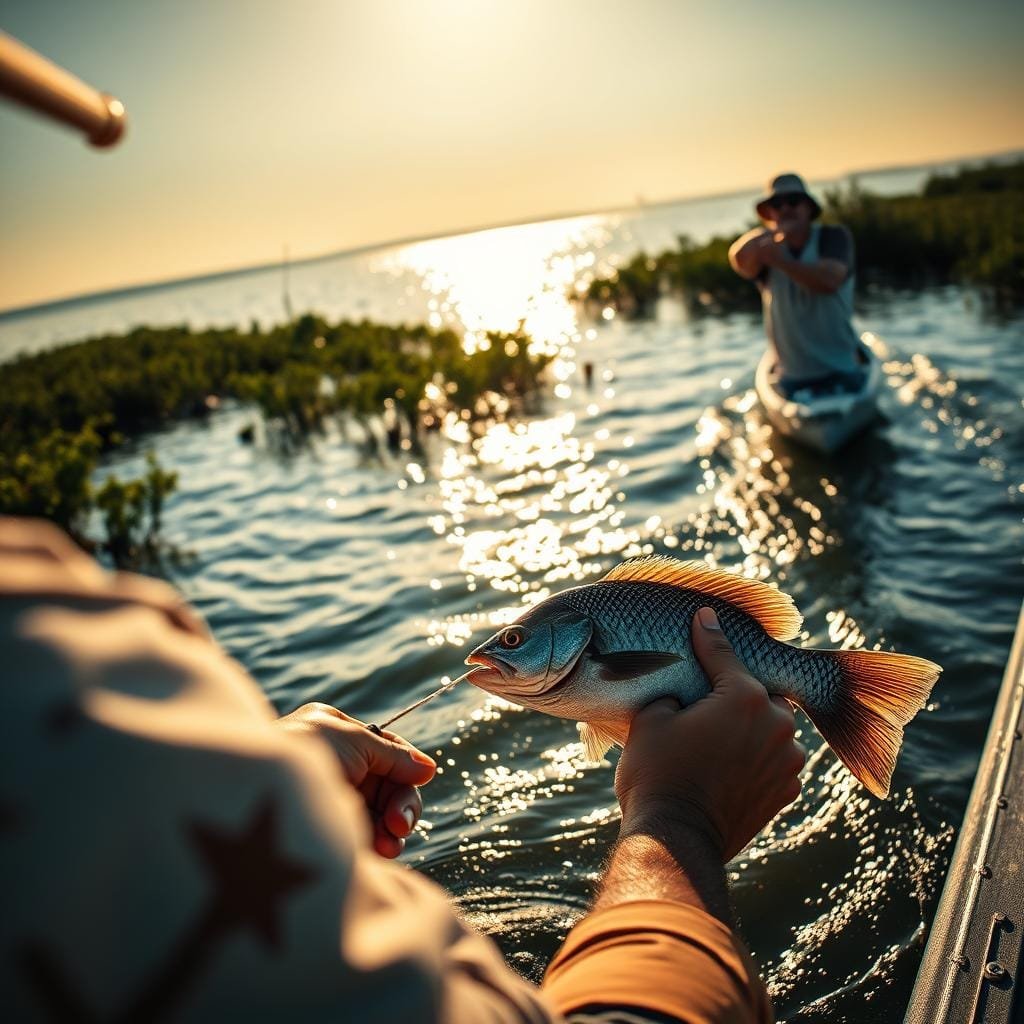
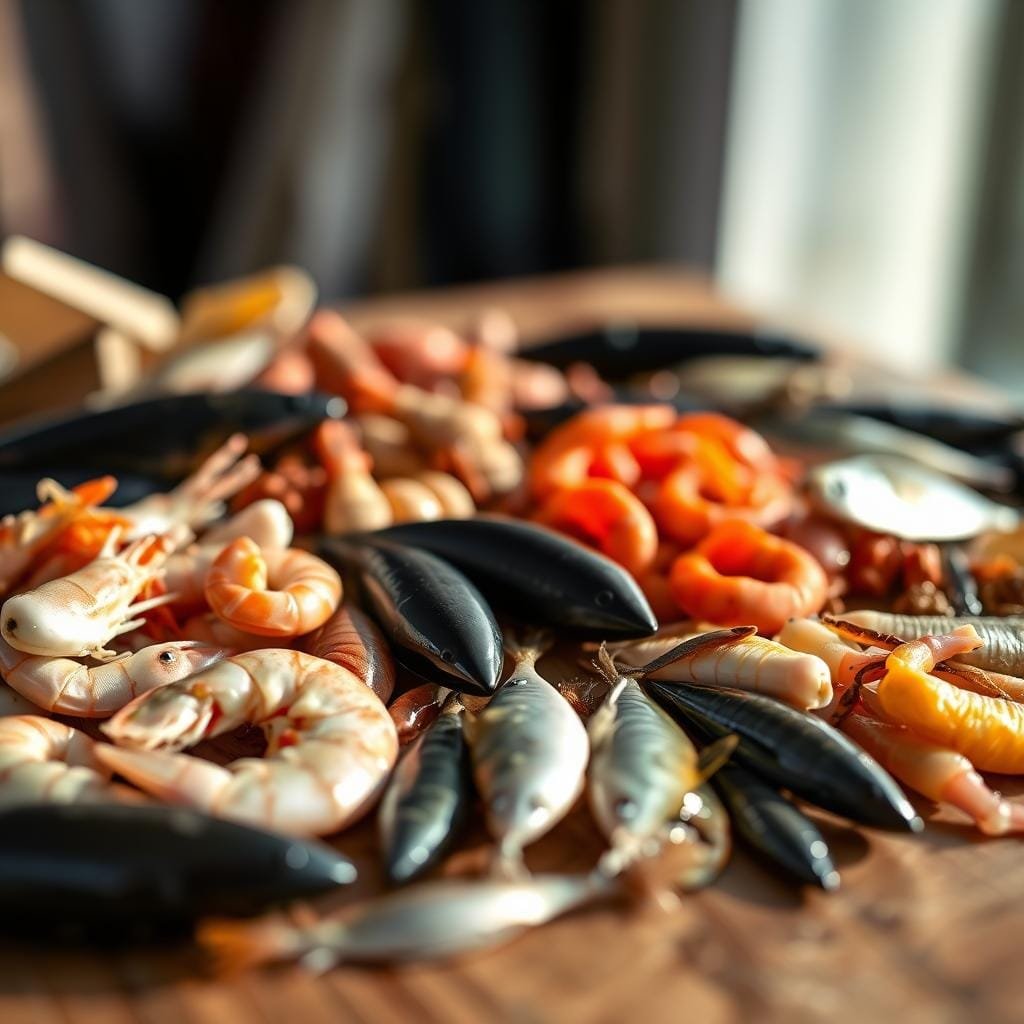
Black drum are big catches in Texas to the Carolinas and up the Atlantic Coast. They can grow up to 80 pounds in the Gulf. The biggest recorded black drum weighed 146 pounds.
When fishing in Florida passes, Texas jetties, or Carolina bridges, use scent. The best bait is fresh and smells good. It should sit on the bottom where the current can carry the smell.
Look for places like inlets, docks, oyster bars, river mouths, and surf zones. At night or in murky water, bait works better than lures because smell is more important.
It’s important to fish ethically. Release big fish and keep smaller ones for food. Use circle hooks that match the bait size for easy and quick releases. This method makes fishing for black drum fun and successful, whether in the Gulf or Atlantic.
Why Black Drum Crush Scented, Natural Offerings
Black drum use their nose to find food, not their eyes. That’s why scented bait works so well for them. Natural smells travel through the water, drawing them in.
Natural bait with scent catches more fish than plain bait. Brands like Berkley Gulp! and Fishbites Shrimp make bait smell like real food.
Powerful sense of smell: four nostrils that track scent trails
Black drum have four nostrils and a great sense of smell. They follow scent trails and test with gentle bites. Crabs, shrimp, and clams are their favorite smells.
They can easily crack open shells with their bony mouth plates. A bit of mullet or crab keeps them interested.
Bottom-feeding behavior over mud, sand, shell, and oyster reefs
They love to feed on the bottom, near oyster reefs. On mud and sand, they search for food, leaving behind silt. Keep baits on the bottom and let the scent work.
Oyster edges and bridge pilings help spread the smell. This makes it easier for drum to find bait.
When smell beats sight: night bites and stained-water advantage
Night fishing is great for black drum because they rely on smell. Lighted docks and bridges help guide them to bait.
Stained water also helps because fish feel safer. A light stain with some movement is perfect for catching them.
Core Bait Lineup: Shrimp, Crabs, Clams, and Mussels
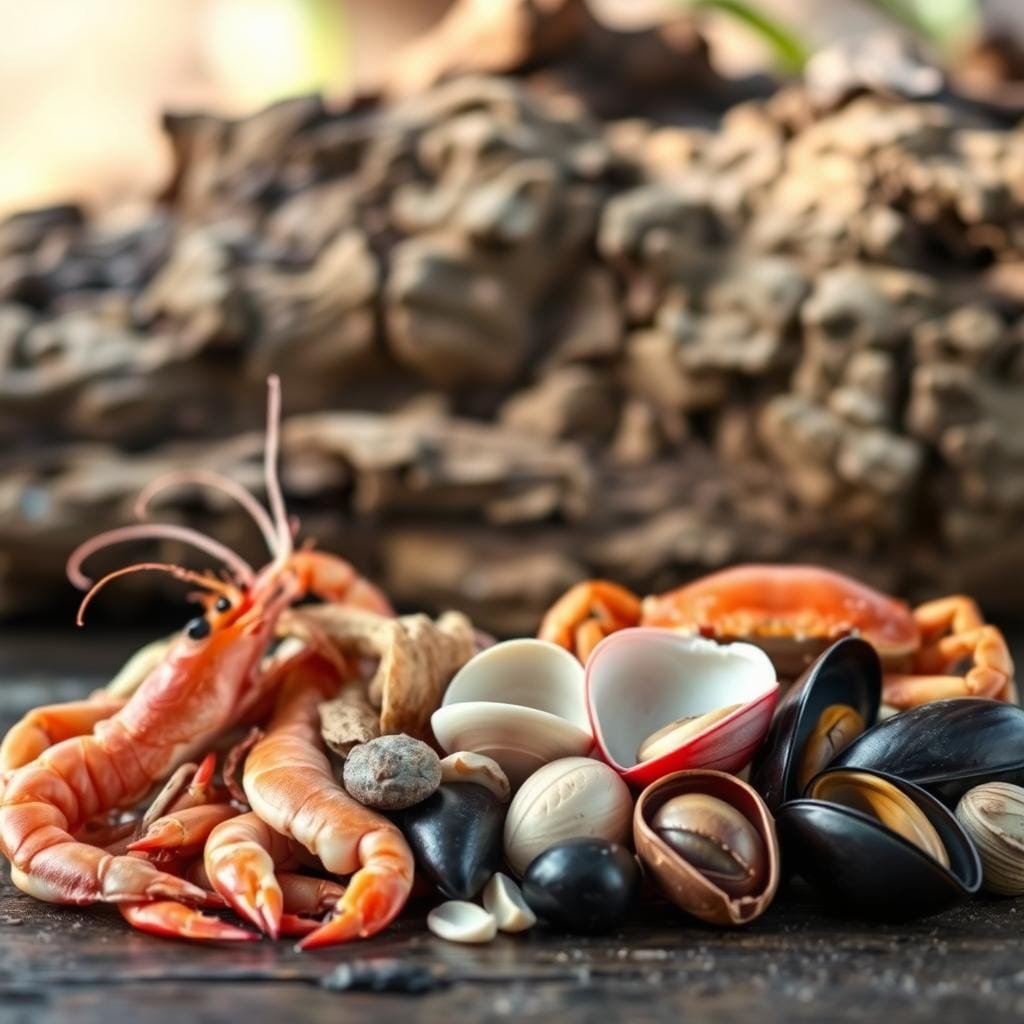
Keep it simple and scent-heavy. Coastal guides from Surf City to Topsail Island use a few natural baits. These baits stay on the bottom and smell good. You can find them at most tackle shops and bait stands.
Fresh or frozen shrimp as the everyday producer
Shrimp is the best bait for black drum for steady action. Fresh or frozen, it works well. Remove the head to make it smell better and thread it carefully.
Use it near channel edges, bridge pilings, and calm surf spots. It’s great for puppy drum that eat from the bottom.
Half blue crab for big surf drum; small pieces for oyster bars
For big surf drum, use a half blue crab. It stays on in waves and smells good. Crack the shell to let the juices out.
For shell flats, use small crab pieces. Around oysters, small pieces sit tight and attract fish quickly.
Clams and mussels that match natural forage on pilings and reefs
Clams and mussels are great for docks, jetties, and reef rubble. Thread soft meat on a short shank and add elastic if needed.
Drop it where barnacles, oysters, and shadow lines mix. It looks like what fish eat when mussel shells are around.
Cut mullet or pinfish to lay down long scent trails
When the current is strong, use cut mullet. Fillets or chunked pieces smell good and attract fish. Set it near bends, drop-offs, or channel mouths.
Pinfish cut bait works the same way. It’s firmer and holds together longer. Trim scales, expose flesh, and keep it on bottom until it loads the rod.
best bait for black drum
Fresh shrimp is the best bait for black drum. It’s easy to put on a jighead or a simple rig. Its smell brings fish quickly.
Use #1–2/0 circle hooks. Keep the bait steady. Let the smell work on moving tides or after dark.
Half a blue crab is great for surf giants. Crack the shell and thread a 4/0–5/0 circle hook through a leg socket. Pin it to the bottom. This setup stays in waves and resists pinfish pecks.
Clams and mussels are best near bridges, docks, and oyster bars. They match local food and often beat finbait. Thread soft meat carefully and refresh often for a strong scent.
For strong currents, use cut mullet or pinfish. These oily slabs last through strikes. Adjust weight so the bait stays on the bottom.
Match hook size to the bait. Shrimp and clams work with #1–2/0. Half blue crab needs 4/0–5/0. The best bait for black drum lands on the bottom and stays there until eaten.
Match Bait to Habitat: Inlets, Passes, Bridges, and Oyster Beds
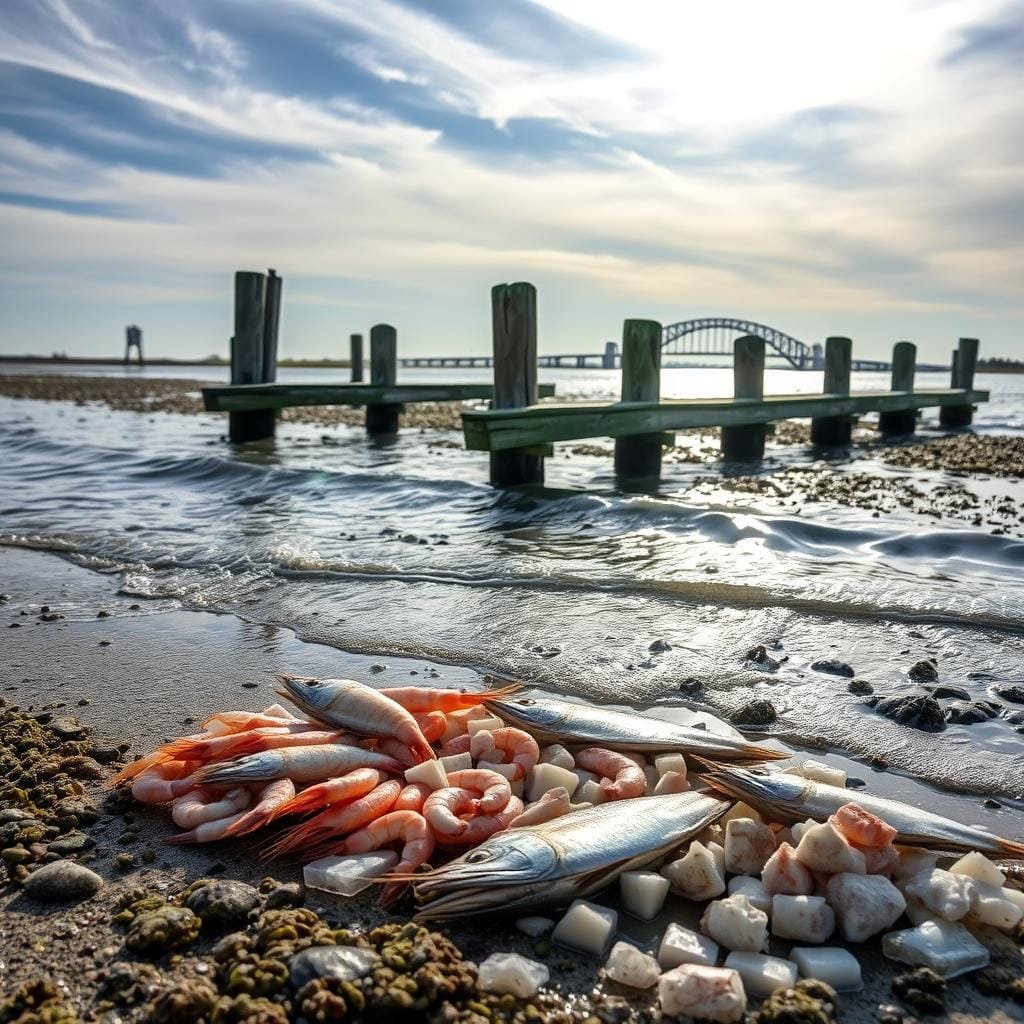
Black drum like places where water moves and brings them food. Start by fishing in areas with moving water. Then, adjust your tackle to fit the spot you’re in. Knowing the tide, bottom, and bait helps you catch more fish and avoid getting stuck.
Inlets and passes on moving water with manageable current
Look for spots where water swirls and bait collects. Inlets and passes are best when the tide is changing. Use a rig with mullet or shrimp and enough weight to stay on the bottom. Always be careful around sharp rocks and fast currents.
Bridge pilings, docks, and jetties that hold crunchy forage
Concrete and rock attract shellfish and crabs. Black drum near bridges like shrimp, clams, or crab pieces. Use a Carolina rig near the piling and let the scent go back into the water. Choose tackle that won’t break easily on oysters and mussels.
Oyster bars and shell bottom: prime crustacean zones
For oyster beds, use short leaders to avoid getting stuck. Try floating a shrimp or mussel where sand meets shell. For more tips on oyster beds and deeper areas, check out this guide on inshore species, habitats, and.
River mouths and surf lines where big drum patrol
Target sloughs and outer bars during a moving tide. River mouth surf black drum like half blue crab. Cast across the current, pull tight, and let the bait soak. This lets the scent spread through the water.
| Habitat | Best Tide Window | Primary Bait | Rig & Weight | Key Tackle Tip |
|---|---|---|---|---|
| Inlets & Passes | Just before/after peak flow | Cut mullet, fresh shrimp | Fish-finder with enough sinker to hold | Position on eddy seams to reduce drag |
| Bridges, Docks, Jetties | Moving tide with shade on structure | Shrimp, clams, small crab pieces | Carolina rig, 1–3 oz depending on flow | Use abrasion-resistant fluoro near shell |
| Oyster Bars & Shell | Mid-tide movement | Shrimp, mussels, clams | Short-leader float or light jig | Keep baits just above the shell line |
| River Mouths & Surf | Incoming or outgoing with steady rollers | Half blue crab | 4–6 oz to pin bait on sand | Cast across current and let scent soak |
Shrimp Done Right: Rigging That Converts Bites
Shrimp rigs that work well turn small bites into big catches. Make sure your bait stays on the bottom. Let the fish take the bait, and don’t pull too soon.
For live or fresh shrimp, use gear that lets the shrimp move naturally. This makes it look more real to the fish.
How to hook shrimp for surf fishing is all about handling, keeping bait alive, and the right water temperature. These things are important before you start fishing.
Thread shrimp on a jighead from the head for a natural curve
For fish that feed on sight in shallow water, use a jighead shrimp rig. Thread the shrimp from the head to make it look like it’s swimming. A small jighead keeps it near the bottom but lets it move.
Move the bait with short lifts and pauses. This makes the shrimp look alive without spinning or pulling off.
Knocker rig with live or fresh-dead shrimp near the bottom
The knocker rig is simple but very effective. Use a J- or circle hook with an egg sinker at the eye. This lets the bait sit on the bottom without much resistance.
Let the rig settle, then keep a bit of slack. When you feel the bait get “mouthed,” reel in to set the hook.
Pop the head off frozen shrimp to boost scent release
When using frozen shrimp, remove the head to release more scent. This attracts fish when it’s hard to see or when there’s a lot of pressure. Make sure the shrimp is facing the right way and change it often if fish keep stealing it.
This trick works well with a light jig or the same knocker rig when you need a strong scent trail.
Hook sizing for puppy drum vs. larger fish
Choose the right hook size for your shrimp, not just because you can. Use #1 to 2/0 hooks for most shrimp. They protect the fish’s mouth. Smaller hooks can also catch big fish, and some anglers use 2/0 for bigger baits or fast currents.
Make sure the hook point is exposed but not too much. This keeps the bait looking natural and helps you catch more fish.
Blue Crab Tactics for Giants in the Surf
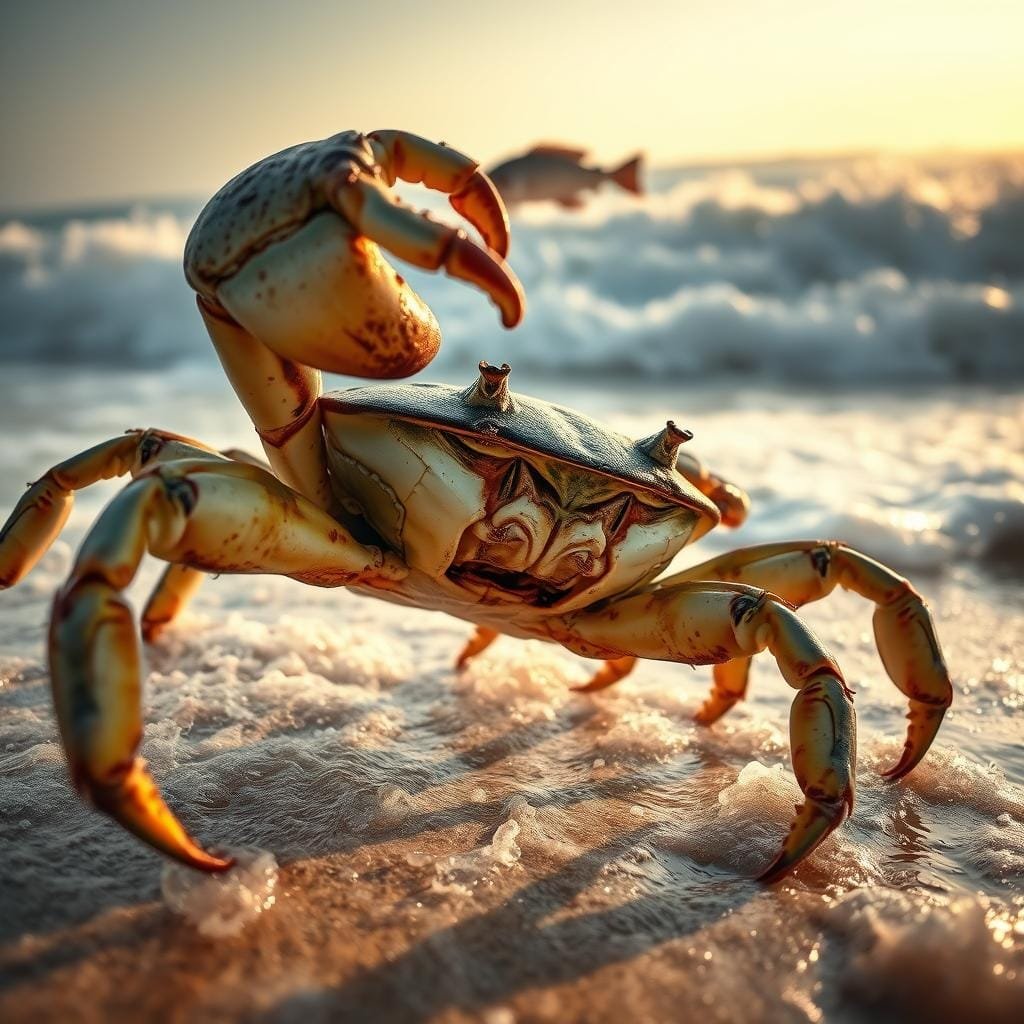
Big fish like big meals. A half blue crab is perfect when the waves are big. These tips keep your bait in place and your line tight.
Half-crab on 4/0–5/0 circle hooks with enough weight to pin bottom
Crack a blue crab and use a firm half for bait. A circle hook 4/0 5/0 drum rig works well. Add weight to keep the bait on the bottom.
This method keeps the bait steady in choppy water.
Heavy-duty surf tackle and steady pressure in breaking waves
Use long rods from Penn, Daiwa, or Shimano with strong reels. Choose 40–65 lb braid for a tough leader. Keep the rod low and apply steady pressure.
This helps guide fish off the bar and avoids pulled hooks. Be ready for strong runs and let the drag do its job.
Timing around tidal movement for scent dispersion
Plan your fishing around the tide to spread scent. Fish best before and after the tide is highest. This reduces snagging.
Move around to keep the scent active. Change your position with the tide to follow schools.
Puppy Drum in Winter: Easy Meals, Easy Baits
Cold snaps make young black drum go to calm spots. These spots have easy food close by. They are great to eat and easy to catch with the right bait.
Why 16–24 inch fish crush shrimp and small crab pieces
At this size, drum like easy food they can eat fast. Winter black drum shrimp or small crab pieces are perfect. The bite feels like a light touch—wait a bit before pulling the rod.
Warm-water refuges: rivers, deeper holes, and outflows
When the sea gets too rough, young drum go to rivers and bays. They like places with soft water. Near power plants, the water is warmer, making it a good spot.
Low to mid-70s water temps and incoming tide windows
Best fishing happens when the water is 72–75 degrees. In Florida’s Gulf, this is perfect. Tides bring warm water, making fish hungry. Set up at channel mouths for outgoing tides.
Light tackle, jigheads 1/8–1/2 oz to maintain bottom contact
Use a 2500–3000 spinning reel with 10–15 lb braid. Add a 15–20 lb fluoro leader for feel and protection. Choose a jighead weight that matches the current. Use shrimp or crab bits to match the bite.
Bridge Playbook: Shrimp and Clams Around Structure
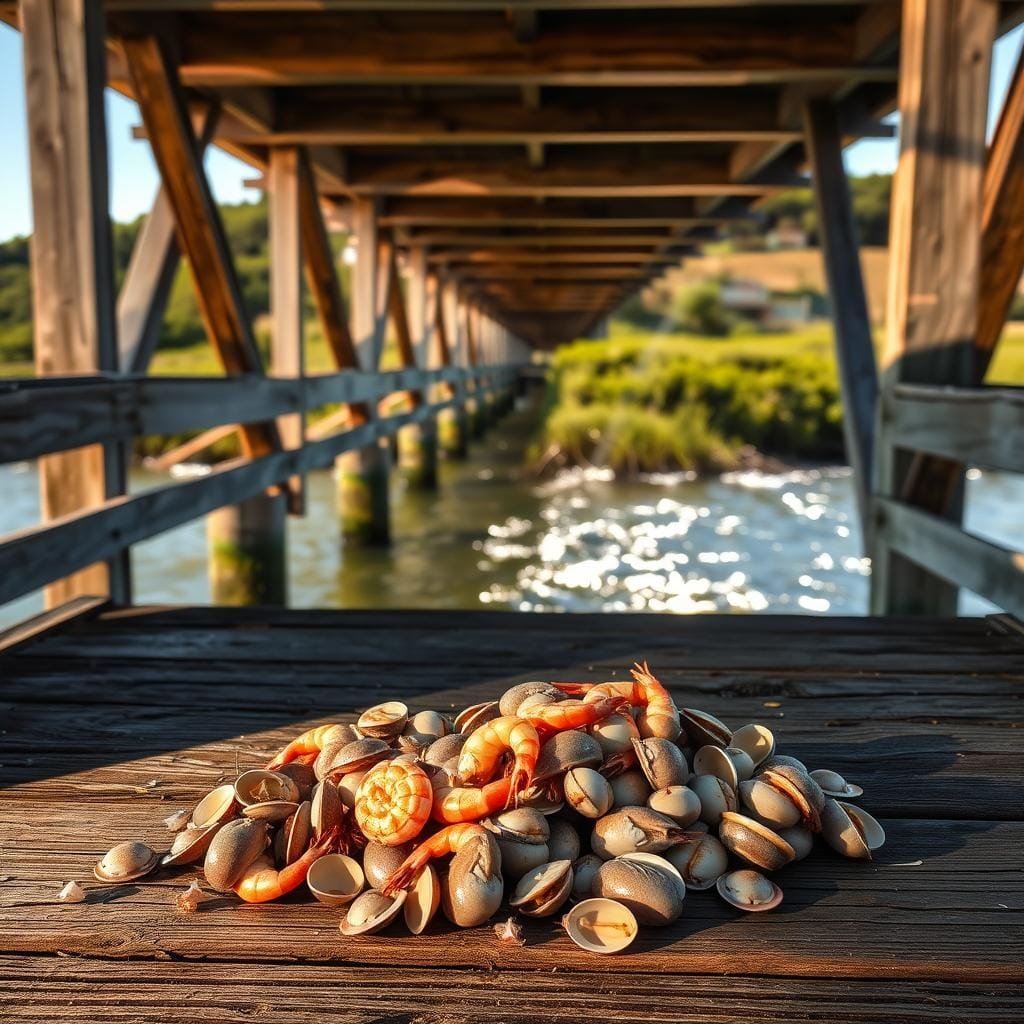
Bridges are great for fishing black drum because they trap food and water. Use a fish-finder rig to drop baits close to the pilings. Shrimp is the best bait, with clams and fiddler crabs good too.
Guide Wayne Crisco fishes in the Intracoastal Waterway. He uses fresh or frozen shrimp. He casts to the down-current side and waits for a bite.
Lee Parsons likes slow fishing near oyster beds. Strong water helps by moving scent. Tides and bends are key spots, like around Surf City bridges.
Choose bait that fits the structure. For shrimp, use a whole shrimp on a hook. For clams, use a clam strip. Move the rig slowly until you feel a bite.
- Rig choice: fish-finder rig bridge pilings with a 1–2 oz egg sinker in moderate flow; step up when current surges.
- Line and leader: 15 lb braid, 20–30 lb fluorocarbon to guard against shell and concrete.
- Target zones: up-current faces for scent lanes; eddies behind pilings where black drum stage.
- Local pattern: Surf City bridges black drum feed best on moving water; brief slack often means reset, not quit.
Hook, Line, and Weight: Dialing in the Presentation
Pressure‑shy fish like quiet rigs and precise choices. For bottom fishing black drum, pick the right hook, line, and weight. This depends on the current and how the bait sits. Let the fish find a calm meal and load the rod before you lift.
Tiny circle hooks for soft drum mouths; #1–2/0 for shrimp
Soft mouths need small hooks. Use #1 to 2/0 circle hooks for shrimp or clams. This matches the bait and hooks the jaw’s corner. For half blue crab, use 4/0–5/0 hooks without changing the bait’s look.
Carolina/fish-finder and knocker rigs to let fish inhale bait
A Carolina rig or knocker rig lets weight slide. This lets a drum inhale without feeling you. Keep leaders short near structure, longer on clean sand. Both rigs keep the bait where it needs to be and show honest bites.
Keep baits on bottom; detect those gentle “mouthing” bites
Drum like to root, pause, and test. Pin the bait and hold the rod low. You’ll feel faint taps turn into a steady load. Lift and reel, don’t swing. This method works well in current seams and along oyster edges.
Braid main line with fluoro leader for abrasion around shells
Use 10–15 lb braid to 15–20 lb fluoro leaders for feel and scuff resistance. Shorten leaders near oysters and rocks. Bump weight only enough to hold bottom. Jigheads in 1/8–1/2 oz help in shallow flats or deeper holes.
- Hooks: #1–2/0 for shrimp and clams; 4/0–5/0 for half crab
- Rigs: Carolina rig drum for current; knocker rig setup drum for tight quarters
- Line: 10–15 lb braid to fluoro black drum leaders of 15–20 lb
- Approach: Set the bait, wait for pressure, then lift and reel
| Component | Go-To Choice | When to Use | Why It Works |
|---|---|---|---|
| Hook Size | #1–2/0 circle for shrimp; 4/0–5/0 for crab | Soft bites, mixed sizes, surf or structure | Protects soft mouths and improves corner‑jaw hookups |
| Rig Style | Carolina rig drum | Moderate current over sand or mixed shell | Sliding weight lets fish inhale without feeling resistance |
| Compact Rig | Knocker rig setup drum | Bridge pilings, jetty pockets, tight eddies | Weight at the hook keeps bait pinned and tangle‑free |
| Main Line | 10–15 lb braid | Long casts, subtle takes, deep edges | High sensitivity transmits gentle “mouthing” taps |
| Leader | 15–20 lb fluorocarbon | Oyster bars, rocks, dock rub | Abraison resistance with low visibility |
| Weight Control | Egg sinker 1/2–2 oz; jigheads 1/8–1/2 oz | Hold bottom in current; crawl baits in flats and holes | Maintains contact so fish find a stable target |
Timing Your Bait Choices: Season, Tide, and Night Bites
Black drum eat all year, but the best time is late winter to spring. This is when they spawn, making big schools come inshore. February and March are the best months in many places.
For bait, use shrimp and crab. Change the size based on the fish and where you are.
In colder months, look for puppy drum in warm spots. Wait for the sun to warm the water. When it gets a bit warmer, fish start to bite.
Use the tide to your advantage. Incoming tide brings warmer water. Outgoing tide makes fish gather in deeper spots. Place your bait where the fish swim by.
Nighttime is great for drum fishing because they use their sense of smell. Try fishing near lighted bridges and in the surf. Use shrimp, clams, and half-crab for bait.
Pay attention to changes in the weather. Stronger tides happen during new and full moons. Fish inlets and passes when the tide is not too strong.
By knowing when to fish and where, you can catch more black drum. Use the right bait and timing for the best results.